


Activities by Age
The same activity lands very differently at three and at seven. These pages group ideas by what tends to work at each age — as a starting point, not a rule.
Activities
-

Easy Christmas Crafts for Toddlers
Easy Christmas crafts for toddlers ages 2–3: ten simple makes — a paper plate Santa, handprint reindeer, cotton snowman and more — with washable supplies and a tidy-up routine.
-
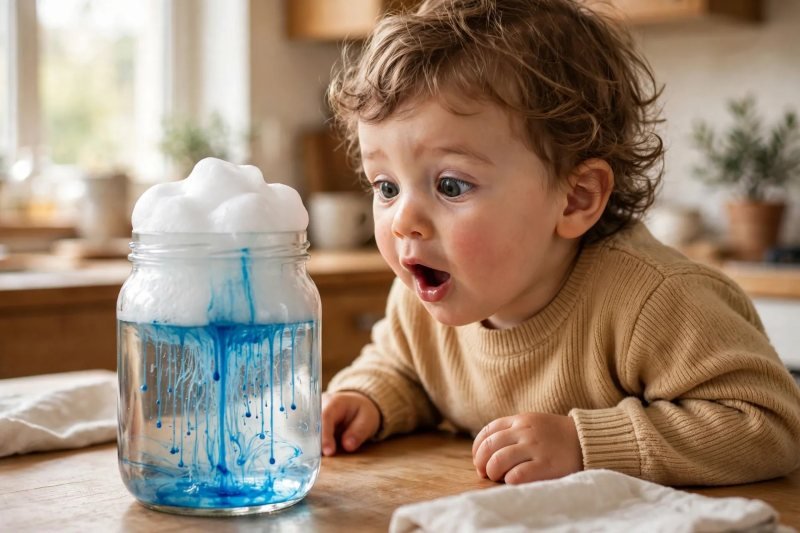
Rain Cloud in a Jar Experiment for Toddlers
Make it rain inside a jar with this gentle rain cloud in a jar experiment for toddlers — shaving-foam clouds, blue food-coloring rain, and real weather learning in ten minutes, with full safety notes for ages 2–3.
-

Toddler Girl Winter Outfits: Cozy Dresses and Warm Layers
Toddler girl winter outfits that actually stay warm: a soft base, a cozy dress, fleece tights and a warm coat — plus a step-by-step dressing routine for ages 2–3.
-
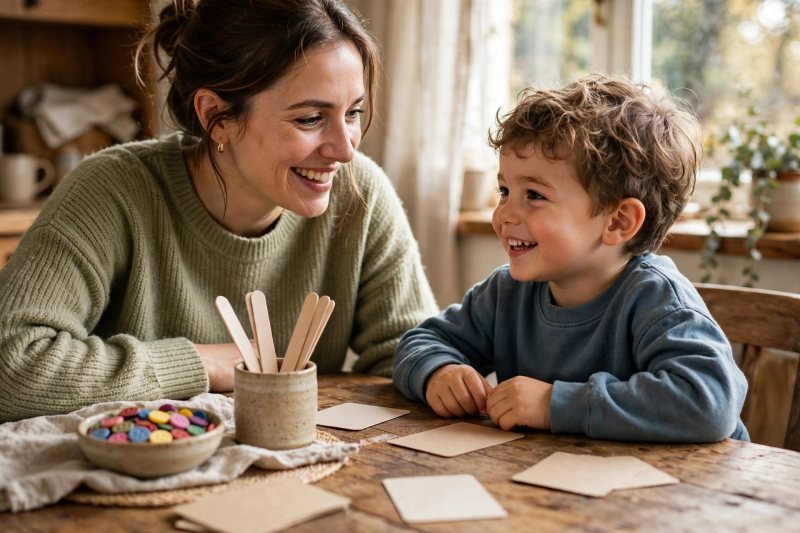
Sight Word Games: 15 Favorites (BANG!, Bingo, Treasure Hunts)
Fifteen tried-and-tested sight word games that make reading practice feel like play — BANG!, bingo, treasure hunts, swat-the-word and more, with full setup and rules for ages 4–5 using things you already own.
-

What Should My Child Know Before Kindergarten? The Honest Answer
What children really need before kindergarten: independence, confidence, and play-based foundations. An honest, reassuring Q&A for parents of four- and five-year-olds.
-

Kids Winter Outfits: A Layering Guide for Ages 6-8
Kids winter layering made simple for ages 6–8: a wicking base, a warm middle and a weatherproof shell, plus a step-by-step routine big kids can run themselves.
-

Best Moisturizer for Kids with Dry Skin
Finding the best moisturizer for kids comes down to three things: a fragrance-free cream or ointment, a patch test first, and the soak-and-seal habit — moisturizing within minutes of a lukewarm bath.
-

Cutting Toddler Hair at Home: A Safe Step-by-Step Guide
Learn how to cut toddler hair at home safely: blunt-tip scissors, small sections, guarded ears, and a calm step-by-step trim for ages 2–3 — plus when to stop and book a salon instead.
-
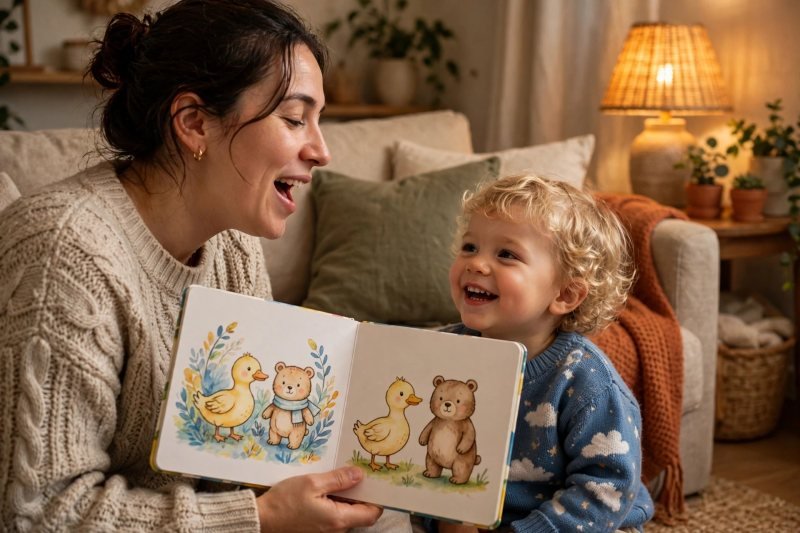
Nursery Rhymes for Toddlers: 20 Classics That Build Early Reading Skills
Twenty classic nursery rhymes for toddlers, each one quietly building early reading skills. Bouncy action rhymes, gentle bedtime songs, counting rhymes and silly favorites — every one trains the rhythm, rhyme and sound awareness your child needs before letters even make sense.
-
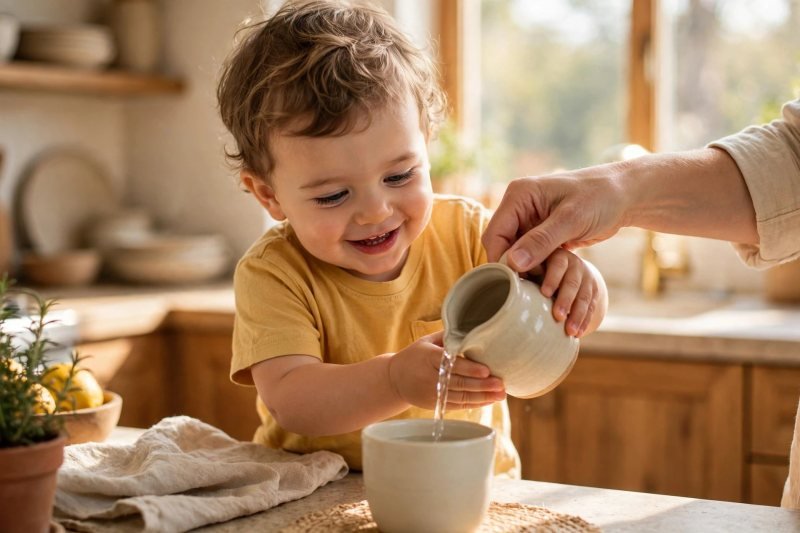
Easy Science Experiments for Toddlers: 10 Safe First Experiments (Ages 2–3)
10 safe, taste-friendly science experiments for toddlers ages 2–3 — sink or float, color mixing, fizzing colors, ice melting and more, all using things you already own.
-
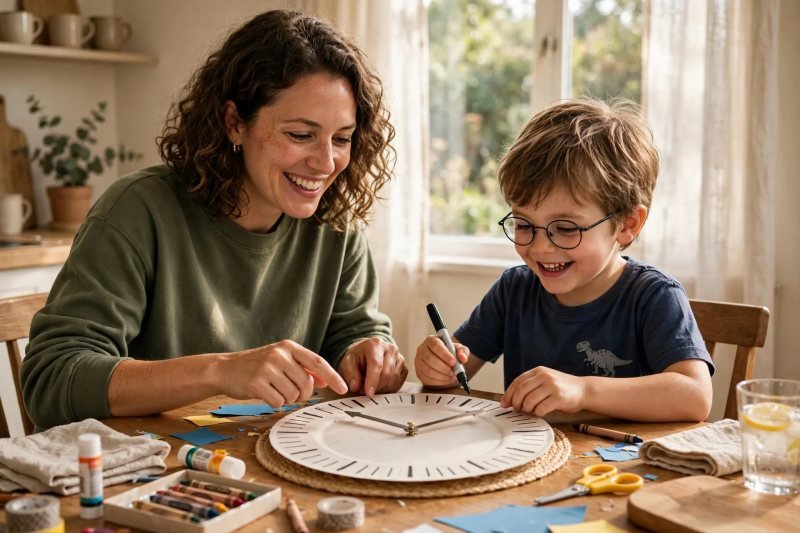
How to Teach a Child to Tell Time: A Step-by-Step Parent Guide
How to teach a child to tell time without tears: start with daily routines, then o'clock, half past, quarters and minutes — using a homemade clock and ten minutes of play a day.
-

Free Editable Name Tracing Worksheets (Type Any Name, Print Instantly)
Free editable name tracing worksheets — type any name and print instantly. Personalized name-writing practice for preschoolers ages 4–5, made easy.
-

How to Teach Your Child to Read at Home: The Complete Kindergarten Plan
A calm, step-by-step kindergarten reading plan for ages 5–6: phonemic awareness, letter sounds, blending and first books — in 15–20 gentle minutes a day.
-
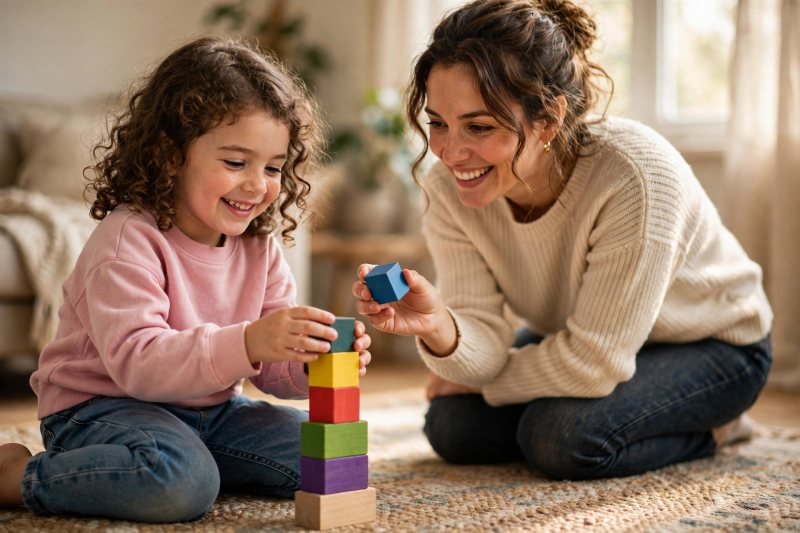
One More, One Less Games: The Easiest Bridge Into Addition
Nine one more one less games that turn counting into real addition and subtraction for 5- and 6-year-olds. Stack one more block, hop one square back, sneak one cookie away — every game teaches +1 and −1 with things you already own.
-
CVC Words for Kids: The First Words Your Child Can Sound Out
CVC words for kids are the first words children can truly sound out — like cat, bed, and sun. This guide gives parents the stretch-and-blend routine, first words by vowel, and six playful games.
-
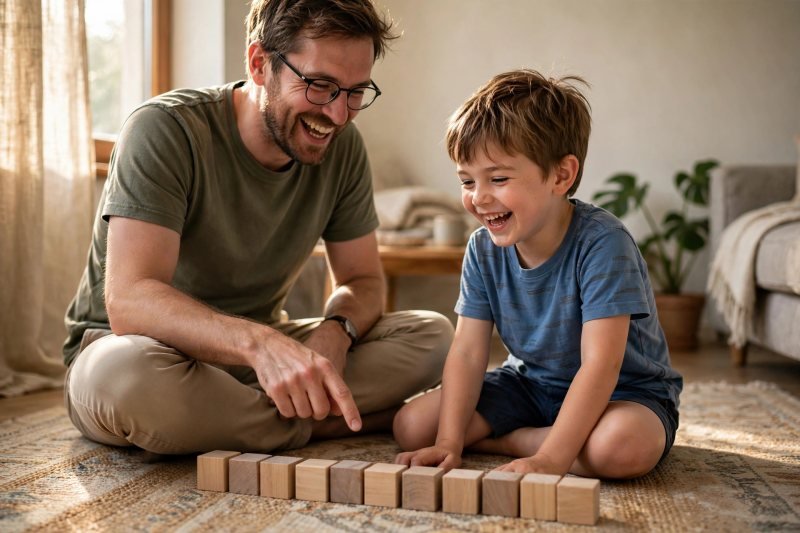
Counting to 100 Activities for Kindergarten (That Aren't Worksheets)
These counting to 100 activities for kindergarten turn the big milestone into play — no worksheets, no drill sheets. Ten hands-on ideas: hundreds-chart games, movement counting, 100-object collections, and estimation jars for ages 5–6.
-

Counting Backwards Activities: Build Number Fluency in Both Directions
These counting backwards activities turn the hardest counting skill into the funniest: the countdown. Ten playful games for ages 4–5 that build number fluency in both directions.
-
'CH' Words: 40 Digraph Words (Chip, Lunch, Watch)
40 ch words your 6- to 8-year-old can hear, spot, read, and sort by position — chip, lunch, watch — in a 10-step session with munch-and-crunch games and a tricky-ch detective round.
-
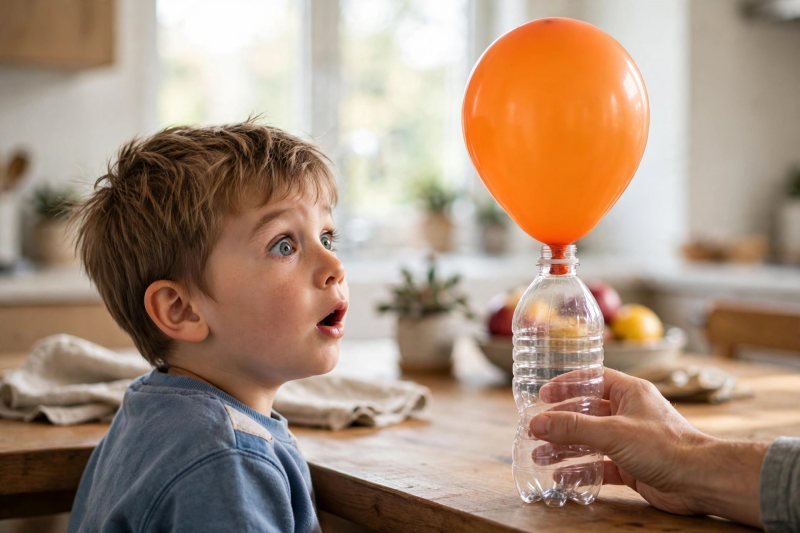
Blow Up a Balloon with Baking Soda and Vinegar
Drop baking soda from a balloon into a bottle of vinegar and watch the balloon inflate all by itself — a five-minute kitchen experiment that makes the invisible power of gas visible.
-
'At' Family Words: 20 Words That Rhyme With Cat (+ Free Word List)
20 -at family words — cat, hat, mat, sat, bat, rat, pat, flat, chat, that — one reading chunk, slider games, a word ladder, and a free printable word list.
-
'An' Family Words: 18 Words (Can, Fan, Man) for New Readers
18 real an family words — can, fan, man, pan, ran, tan, van, ban and more — taught as one reading chunk with the can-fan swap game and silly sentences.
-
1 Year Old Outings | Safe & Simple
The best attractions for 1 year olds aren't attractions at all — they're safe, sensory-rich places where a young toddler can touch, watch, and wander at their own pace. At this age, a fountain beats a theme park and a friendly goat beats a giraffe. This guide covers outings that
-
Toddler Play at Home | Simple Fun
At home activities for toddlers work best when they're woven into real life — not staged as events. The laundry room, the kitchen, and the bathtub are all activity venues if you look at them through toddler eyes. This guide gives you instant ideas plus a few setup projects, all u
-
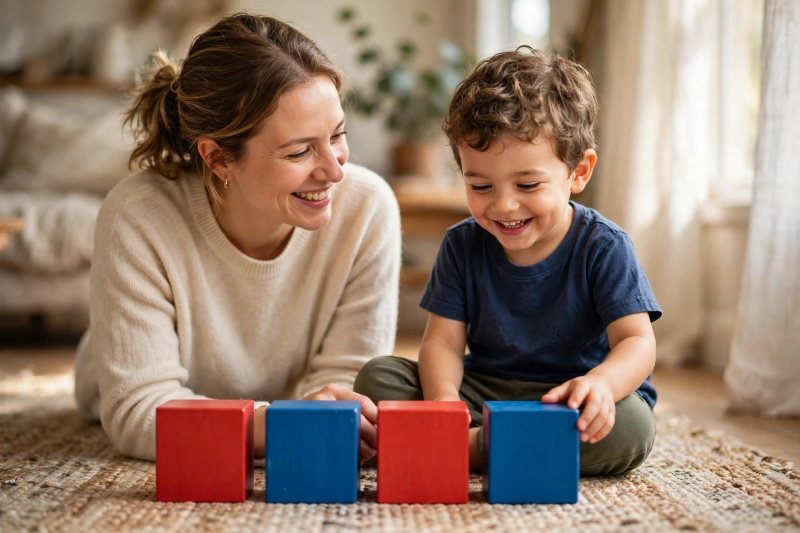
AB Patterns for Preschoolers: The First Pattern to Master
A step-by-step guide for parents on teaching AB patterns — the first pattern every preschooler should master. How to demonstrate, name, copy, extend, fix, and create repeating patterns with objects you already own, for ages 3–4.


Browse activities by age
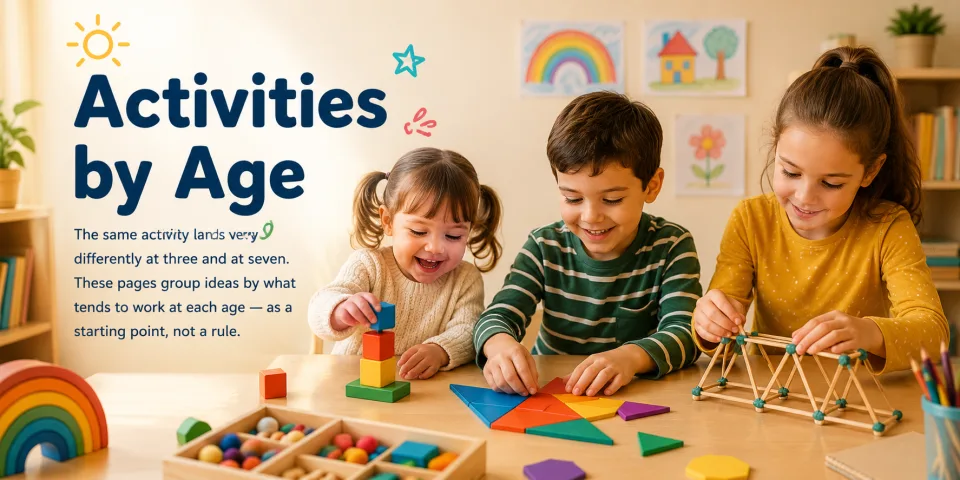
Ages here are a guide to attention span, hand strength and how much help a child is likely to need — not a judgement about what your child should be doing. You know them; if an activity for five-year-olds suits your three-year-old, use it.
Most activities also include a note on making them simpler for a younger child or more demanding for an older one, which is what makes them work for siblings playing together.
What you'll find here
-
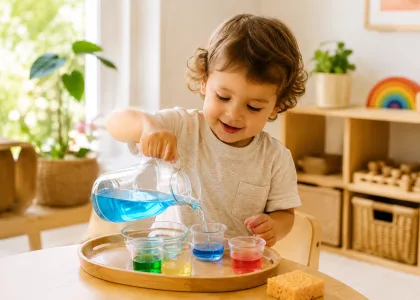
Toddlers, 2–3
Short, repeatable and very hands-on. Pouring, posting, squishing, filling and tipping out again. Expect five focused minutes and be delighted by ten.
-
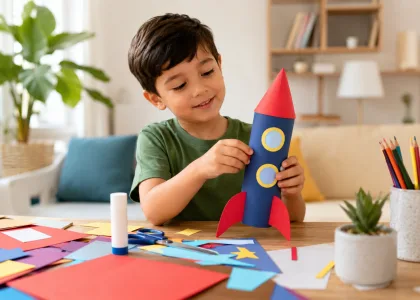
Preschool, 4–5
Longer projects with a beginning, a middle and something to show at the end. This is the age where an activity can hold up for half an hour.
-
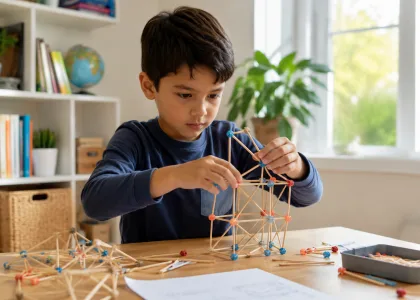
Early school, 6–8
Ideas with a challenge in them — building something that has to work, a puzzle with a right answer, a game with a rule they can argue about.
Every activity page repeats its age range at the top, so you never have to remember which section you came in through.