


Toddler Girl Winter Outfits: Cozy Dresses and Warm Layers
Toddler girl winter outfits that actually stay warm: a soft base, a cozy dress, fleece tights and a warm coat — plus a step-by-step dressing routine for ages 2–3.
Toddler girl winter outfits work in layers: a soft base (long-sleeve top and leggings), a cozy knit, corduroy or flannel dress, fleece-lined tights, a cardigan, and a warm coat — finished with socks, insulated boots, a hat covering the ears and mittens. Choose dresses in stretchy knits she can squat, twirl and climb in.

The short version
- Winter dresses work when layered: base layer under, fleece tights or thermal leggings below, cardigan and coat over.
- Choose knit, fleece, corduroy or flannel dresses with stretch — she must be able to twirl, squat and climb.
- A roomy, slightly swingy coat slides over dress skirts without bunching them.
- Mittens beat gloves at this age, and hats must cover the ears fully.
- Never buckle a car seat over a puffy coat — buckle snug, then lay the coat over like a blanket.
- Age
- Ages 2–3
Why kids love this
Toddler girls who love dresses do not stop loving them in January, and toddler girl winter outfits let her keep the twirl without the chill. The routine gives her real jobs — choosing between two dresses, pulling up her tights, working the zipper hand over hand — inside an order that never changes, so dressing feels like a game she is winning instead of a wrestle she is losing. Dresses also make the mid layers visible and fun: the cardigan goes on, the dress peeks out, the coat swings over the top. When a two-year-old can see the outfit coming together piece by piece, she cooperates with all of it.
What you'll need
- Base layers: soft long-sleeve tops and leggings (cotton or thermal knit)
- Winter dresses: knit sweater dresses, corduroy pinafores, flannel or fleece dresses
- Fleece-lined tights and thermal leggings
- Cardigans, chunky sweaters or fleece zip-ups
- A warm winter coat with a roomy, slightly swingy cut
- Warm socks and insulated boots
- A knit hat covering the ears (balaclava-style stays on best)
- Mittens with long cuffs
Before you start
1. Check the weather — windy days mean thermal leggings instead of tights and one more cozy layer. 2. Lay the outfit out in dressing order on the rug: base, dress, tights, cardigan, coat — boots, hat and mittens by the dresser. 3. Offer the dress choice now (two options, both weather-right) so the decision is made before dressing starts.
How to do it
-
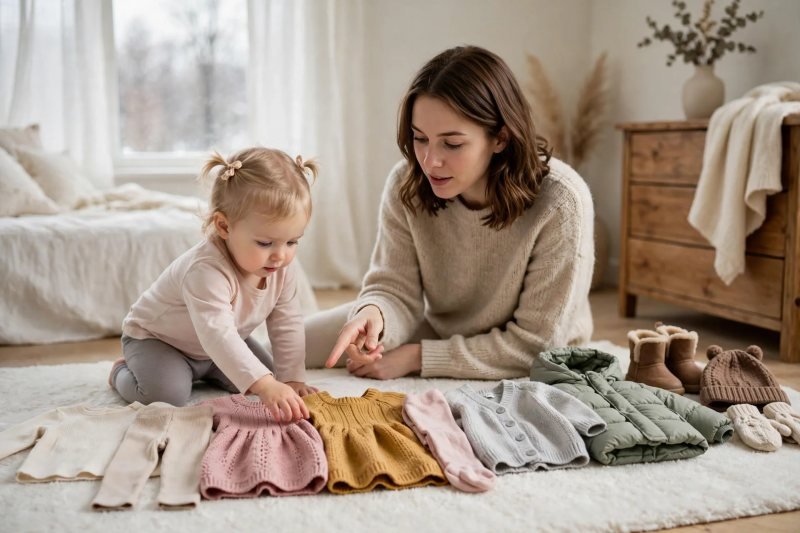
Lay out the cozy choices on the rug. Spread today's toddler girl winter outfits on the rug in dressing order — base layer; dress; tights; cardigan; coat — with boots, hat and mittens waiting by the dresser. Say, "First soft, then pretty, then warm!" and let her touch each piece and pick between two dresses; a choice at the start prevents a battle at the coat. The same runway routine works for every toddler in the family — the version in toddler winter outfits for ages 2–3 uses the identical order, so siblings can dress side by side. Naming each piece out loud builds clothing words while her hands stay busy and happy.
-
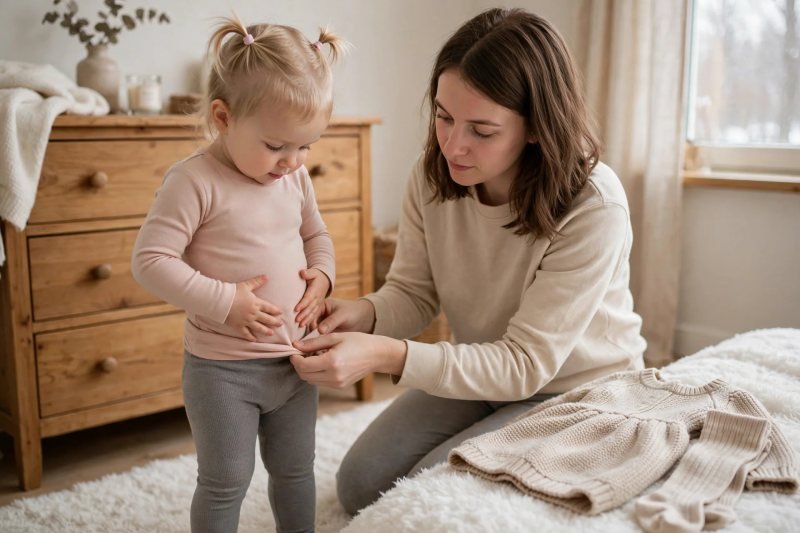
Start with the soft base layer. A snug long-sleeve top and leggings in cotton or a thermal knit go on first, smooth against the skin with no scratchy seams. Say, "Soft layer on — arms through the tunnels, one, two!" and count each arm as it pops through, then let her smooth the top down herself and tuck it in at the waist. This hidden layer does the quiet work: it keeps the dress from riding up, stops tights from slipping and adds real warmth without any bulk. If she fusses at a tag or seam now, fix it now — a base layer that annoys at home will annoy all morning.
-
Add the cozy dress — the star layer. This is where toddler girl winter outfits get their charm: a knit sweater dress, a corduroy pinafore over the base top, a soft flannel dress or a fleece dress, all in fabrics that stretch enough for climbing and squatting. Say, "Dress on — arms up like a star!" and guide it down over the base layer, then let her pat the skirt flat herself. A dress that passes the reach test — both arms to the sky without the hem pulling tight — is a dress she can actually play in. Save stiff, lined party dresses for indoors; winter dresses for real days are knits she can move in.

-
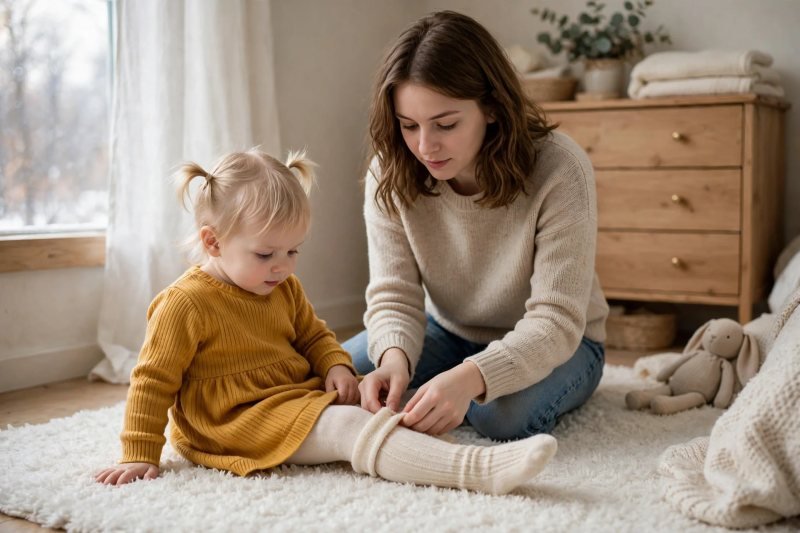
Layer fleece tights and warm socks. Bare legs under a dress are the fastest way to a cold toddler, so winter dresses always pair with fleece-lined tights or leggings under the dress, plus warm socks inside the boots. Say, "Tights are leg sweaters — feet first, then pull, pull, pull!" and let her help pull them up in stages while you steady the waistband. Check the toes have wiggle room and the waistband sits flat, not rolled. On the very coldest days, swap tights for thermal leggings under the dress — nobody sees the swap, and she stays warm through the whole outing.
-
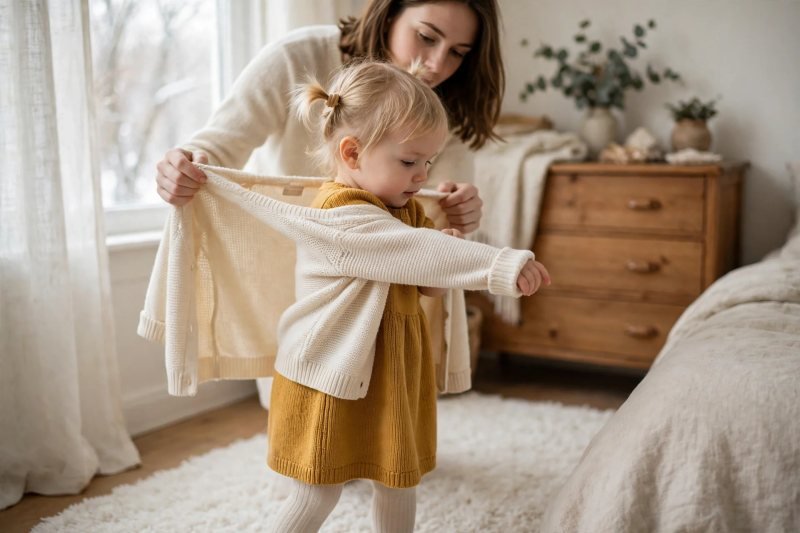
Add a cardigan or sweater over the dress. A soft cardigan, a chunky knit sweater or a fleece zip-up over the dress traps warm air and turns a fall dress into a winter outfit. Say, "Cozy layer — hug yourself warm!" and let her push her own arms through while you hold the sweater open like a doorway. Button just the middle button together, hand over hand — the rest can stay open so the dress still shows. This is the layer that comes off indoors at playgroup and goes back on at the door, so pick one she can manage with help: big buttons, a zipper or simple snaps.
-
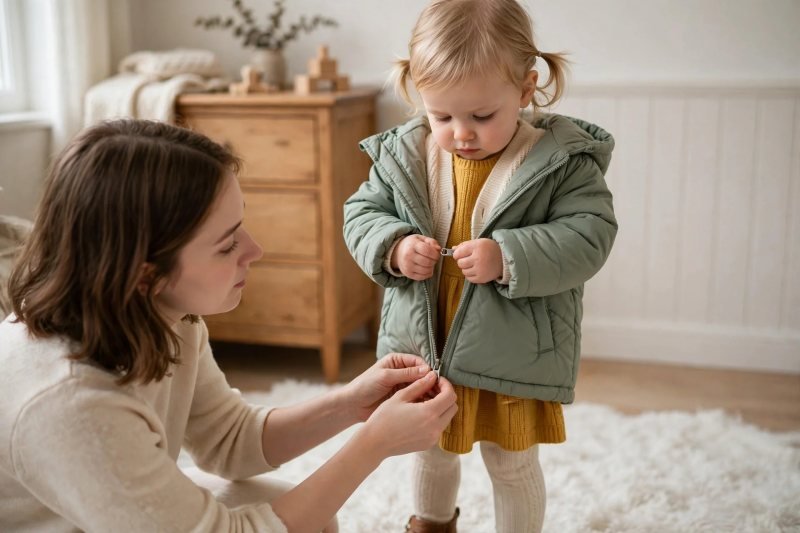
Zip the warm coat over everything. Hold the coat open and say, "Coat door is open — one arm in, now the other!" then guide the zipper with your hand over hers: "Zip goes up, up, up!" A coat for dress days needs room through the skirt — a slightly swingy or A-line cut slides over knit dresses without squashing them, and the same roomy-coat logic anchors the outfits in preschool winter outfits as she grows. Check the hem of the dress peeks out neatly below the coat and nothing is bunched at the back. Announce, "Warm and pretty — done!" and head for the door lineup.
-
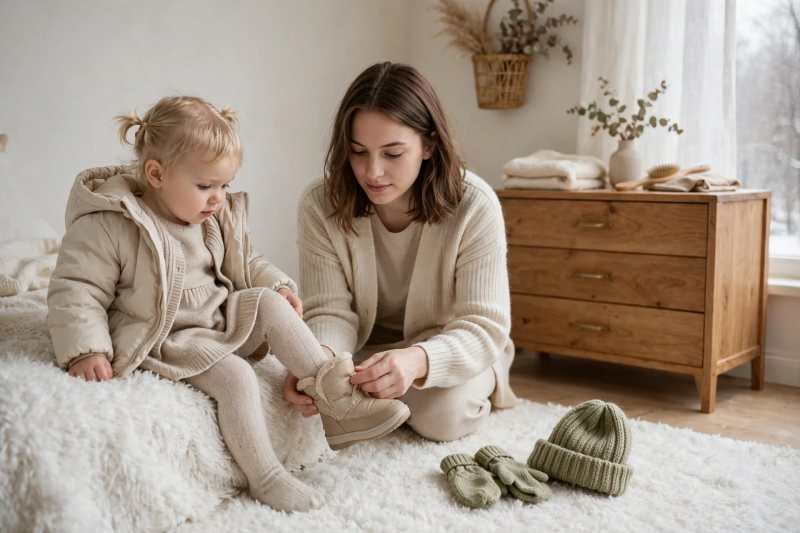
Finish with boots, hat and mittens. Sit her down by the dresser: warm socks are already on, so insulated boots pull straight over the tights — "Boots hug your feet, wiggle those toes!" A knit hat that covers the ears goes on next; hat-tossers do best with a balaclava-style hat or one that fastens under the chin. Mittens go on last, because mittened hands cannot work zippers: "Mittens are finger houses — all the fingers live together!" Tuck the mitten cuffs under the coat sleeves so no cold wrist gap opens when she reaches up. Final check together: "Boots? Hat? Mittens?" — her answers make her a partner in the routine.
-
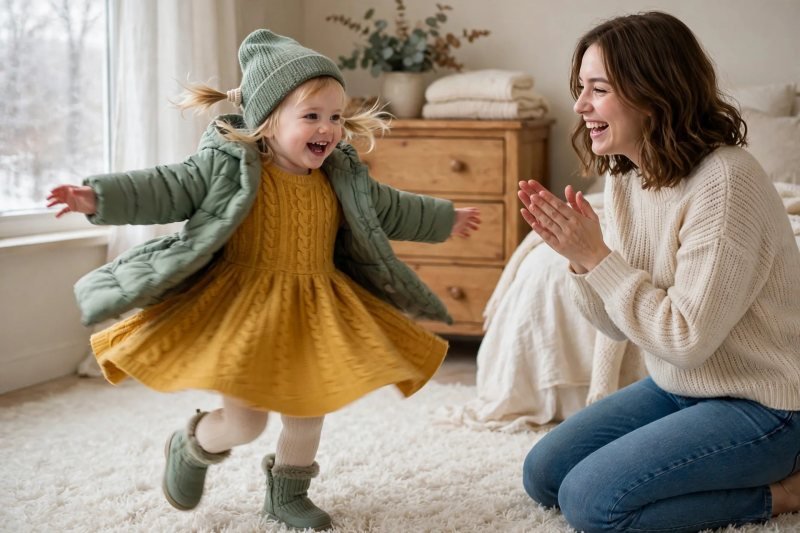
Do the twirl-and-wiggle test. Before anyone opens the door, test the whole outfit the toddler way: "Twirl! Now squat and grab a snowball! Now reach for the sky!" She should be able to twirl without the dress binding, squat without the tights pulling down and reach without the coat riding up past her waist. Dresses that fail the twirl test get a different cardigan or a legging swap now, at home, not a meltdown at the park. Layers should feel cozy, never stiff — if she waddles like a penguin, one layer is too bulky and comes off before you leave.
-
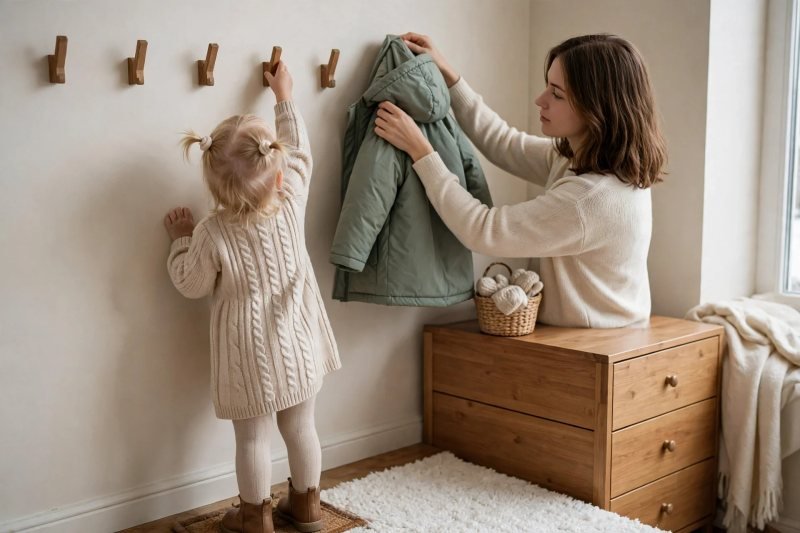
Head out, then come home cozy. Same order every time, a ritual not a scramble: "Boots on, hat on, mittens on, door open!" Outside, rosy cheeks are normal, but a quiet, shivery girl rubbing her face needs one more mid layer or an indoor break. Back home, run the routine in reverse: stomp the boots on the mat, hang the coat on a low hook she can reach, mittens into the basket by the door — always the same spot, so tomorrow starts organized. Say, "Unzip practice!" and let her work the zipper down while you steady the coat; going down is easier, so success comes fast, and the dress goes straight onto a hanger ready for its next outing.


Make it easier
Buy dresses with stretch — pull-on knit dresses skip the buttons and zippers entirely. Lay the full outfit on the rug the night before; mornings become dressing, not deciding. Keep one grab-and-go outfit ready: base set, fleece dress, tights and cardigan folded together.
Make it harder
Let her do one more job each week: this week she pulls up her tights; next week she starts the zipper. Add clothing words and colors — "your cranberry dress," "the speckled tights" — and let her find each piece. A getting-ready-to-go-out chart pinned by the dresser lets her follow the dressing order herself, picture by picture. Let her dress a doll or stuffed bear in the same order first, then "teach" the bear the routine.
Other ways to play it
- Snow-play day: swap the dress for a sweater and snow pants under the coat, or layer the dress over thermal leggings with full snow gear for short snow play.
- Mild winter day (around 45°F): base top, knit dress and regular tights with a medium coat is plenty; skip the cardigan. For more cold-weather play ideas once she is dressed, the winter hub gathers the season's outdoor activities in one place.
- Dressy occasion: a velvet or plaid dress over the base layer with opaque fleece tights, a neat cardigan and her best coat; pack play clothes for after.
- More cozy dress looks: a mustard knit sweater dress with speckled tights; a corduroy pinafore over a striped base top; a flannel dress with a cream cardigan; a fleece dress with thermal leggings; a denim pinafore with a turtleneck base; and a soft plaid dress with a chunky sweater over the top.
How it changes by age
- Age 2: expect strong dress opinions and wiggles in equal measure. Let her choose between two dresses, hold pieces and push her own arms through sleeves. Most twos cannot manage tights or zippers alone — your hands doing it with hers is the teaching. Build in five extra minutes and keep the room warm so undressing down to the base layer is not a shock.
- Age 3: threes can often pull up their own tights, get arms through cardigan sleeves and start the coat zipper with a steadying hand. Hand her the final checklist — "Boots? Hat? Mittens?" If a three-year-old suddenly refuses a favorite dress, check the base layer first: a scratchy seam or tight waistband is usually the real complaint.
What they're learning
Sequencing: base, dress, tights, cardigan, coat — steps that must happen in order. Independence: pulling up tights, pushing arms through sleeves and starting zippers are self-care wins. Body awareness: naming legs, waist, arms and ears while dressing builds the body map. Vocabulary: clothing, fabric and weather words — knit, fleece, windy, frosty — in daily context. Cause and effect: tights on, legs warm; hat off, ears cold. Fine motor control: buttons, zippers and boot-pulling strengthen the hand skills writing needs later.
Clearing up
Many parents retire dresses all winter, assuming pants are automatically warmer. Warmth comes from layers and covered skin, not from the garment category: a knit dress over a base layer with fleece tights is warmer than thin jeans with bare ankles. The other mix-up is the pretty-but-stiff party dress — lined, scratchy and impossible to squat in. Winter dress outfits for real toddler days are soft knits and corduroy she can climb in; the party dress keeps its job at the party, indoors, with the coat only worn for the trip there and back. For dress and layer looks beyond winter, the girls' outfit ideas hub gathers outfits for every season.
Questions parents ask
What should a toddler girl wear in winter?
Can toddler girls wear dresses in winter?
How do I keep a toddler girl's legs warm in a dress?
What kind of coat works best over toddler dresses?
Should toddler girls wear mittens or gloves?

save it for later
Pin this for the next rainy afternoon
Keep it on a board so it is there when you need it, rather than when you happened to find it.
Save to Pinterest

