


'CH' Words: 40 Digraph Words (Chip, Lunch, Watch)
40 ch words your 6- to 8-year-old can hear, spot, read, and sort by position — chip, lunch, watch — in a 10-step session with munch-and-crunch games and a tricky-ch detective round.
Ch words: the letters ch teaming up to make one /tʃ/ sound, as in chip, lunch, and watch. This 10-step parent-led session teaches 40 of them — 16 with ch at the start, 8 in the middle, 16 at the end — for ages 6–8.

The short version
- Ch is a digraph: two letters, one sound — /tʃ/, as in chip, lunch, watch.
- All 40 words are verified true /tʃ/ words, sorted by position: 16 start, 8 middle, 16 end.
- Sorting by position turns memorization into pattern-spotting.
- Munching games keep repetition joyful for ages 6–8.
- A short "tricky ch" round (school, chef) labels the exceptions.
- Age
- Ages 6–8
- Prep
- 10 min
- Play time
- 30 min
- Mess
- Low
- Difficulty
- Easy
- Where
- Indoor
Why kids love this
Every ch word earns a bite of snack, ending with your child crowned CH Champion. The list is sorted by where ch sits in each word — a real "aha."
What you'll need
- 40 word cards (words below, one per card, face-down); 3 baskets; a hand mirror
- A bowl of crunchy snacks (crackers, apple slices, popcorn); paper and crayons
Before you start
Write the 40 words on cards, set the baskets in a row, and shuffle the cards face-down. Practice ch yourself first: say "chip" and feel the burst of air — short and punchy, unlike smooth sh in "ship." Keep it a game, not a test. Funny wrong answers are welcome.
How to do it
-
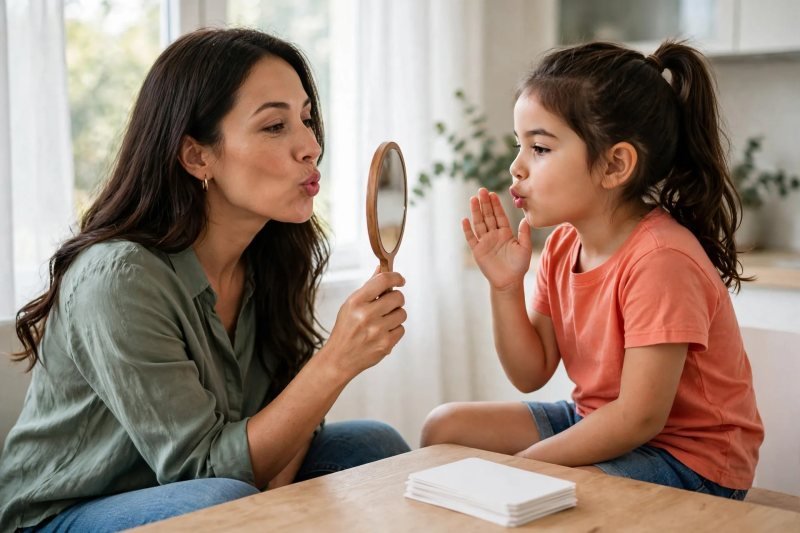
Meet the ch (mirror check). In the mirror, make the ch mouth together: lips rounded and pushed forward, a tiny pop of air — "ch!" Compare with sh: lips rounded, air flowing smooth and long. Say "chip, ship, chip, ship" and feel the difference on your palm.
-
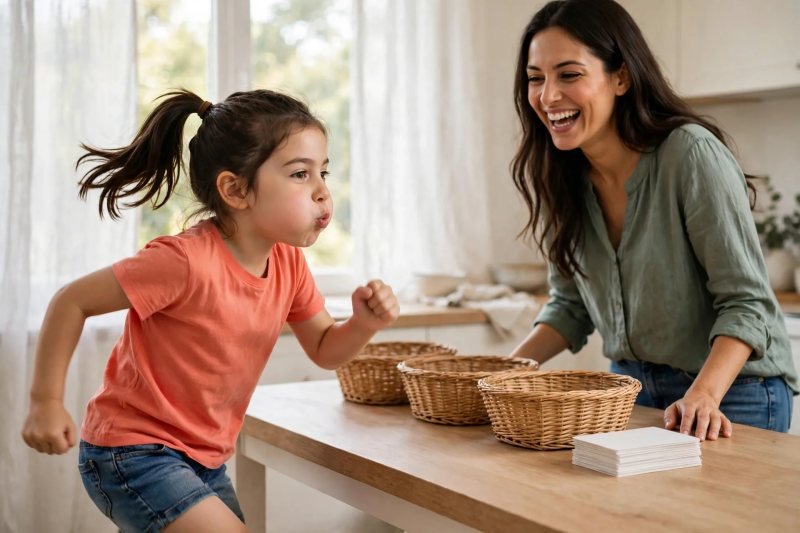
The choo-choo warm-up. Be trains: "ch-ch-ch-ch!" in short puffs while chugging around the room. After a few laps, feed the sound into real words: "choo-choo — ch-chip, ch-cheese, ch-chair!"
-
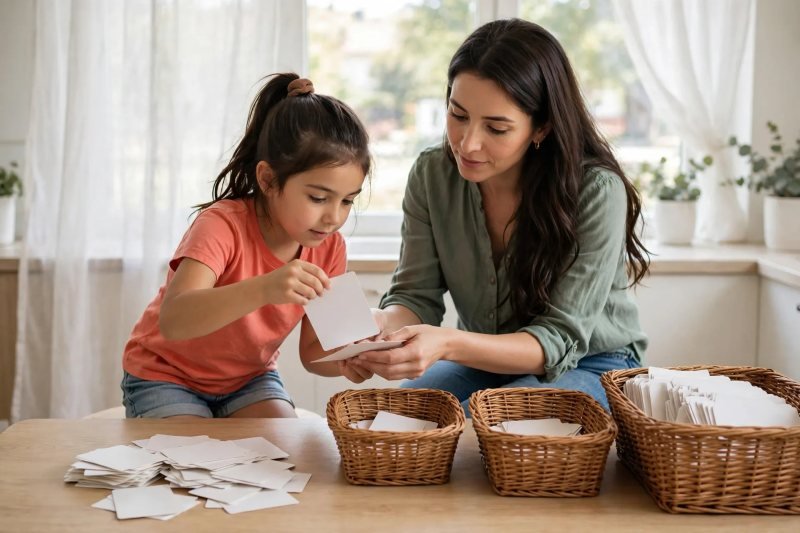
Position sort: build the 40-word list. Flip the cards one at a time, read each together, and ask: "Where does the ch live — start, middle, or end?" Sort into the three baskets — CH at the START (16): chip, chat, chin, chair, cheese, check, cherry, choose, chick, chalk, chimney, chest, chicken, child, chunk, charm; CH in the MIDDLE (8): teacher, kitchen, merchant, crutches, inches, luncheon, archery, butcher; CH at the END (16): lunch, watch, catch, match, peach, branch, bench, punch, munch, crunch, patch, ditch, fetch, stitch, ranch, witch. Read each basket back. Same sound every time — it opens, hides inside, or closes the word.
-
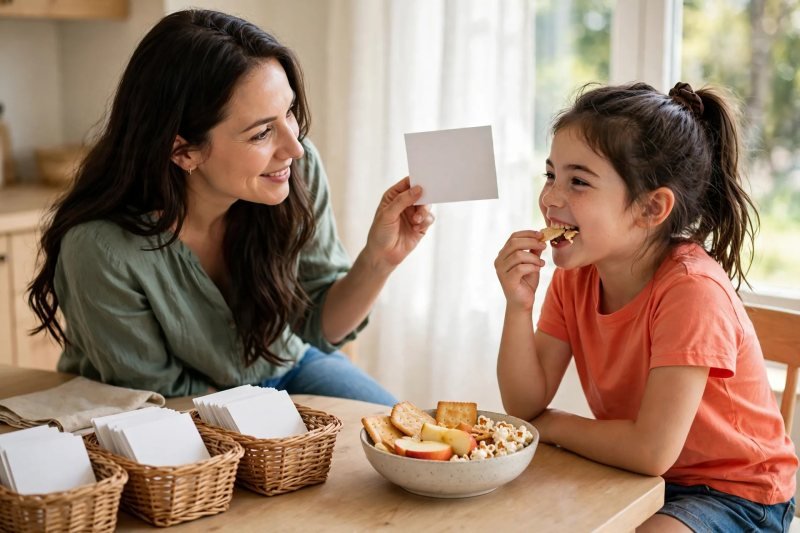
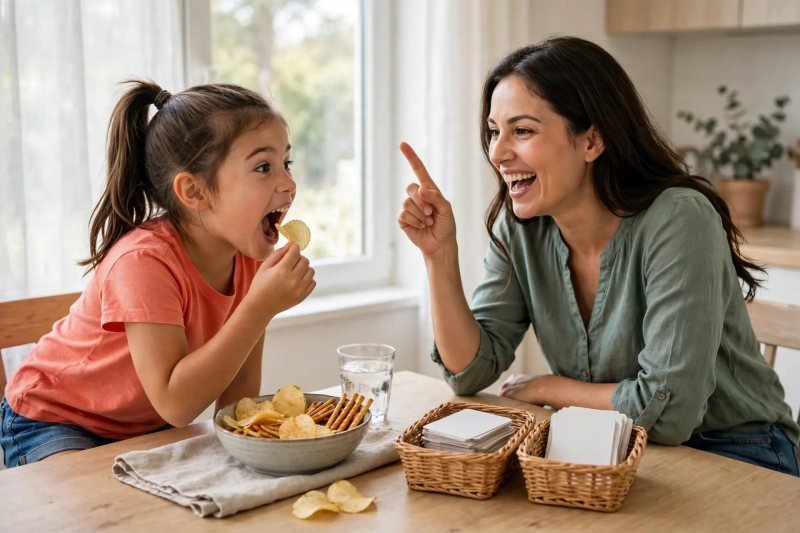
Munch and crunch munching game. Hold up a card and read it together — if it's a ch word, your child crunches one snack, saying it between bites: "MUNCH!" Sneak in fakes (cat, dog, run, big): no ch, no bite.
-
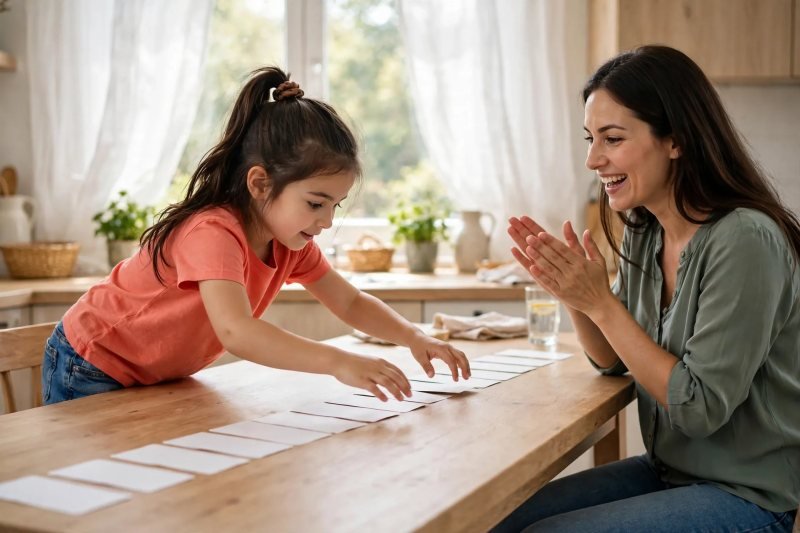
End-ch lineup race. Line the END-basket cards in a row and time how fast your child reads all sixteen — then shuffle and beat their own record.
-
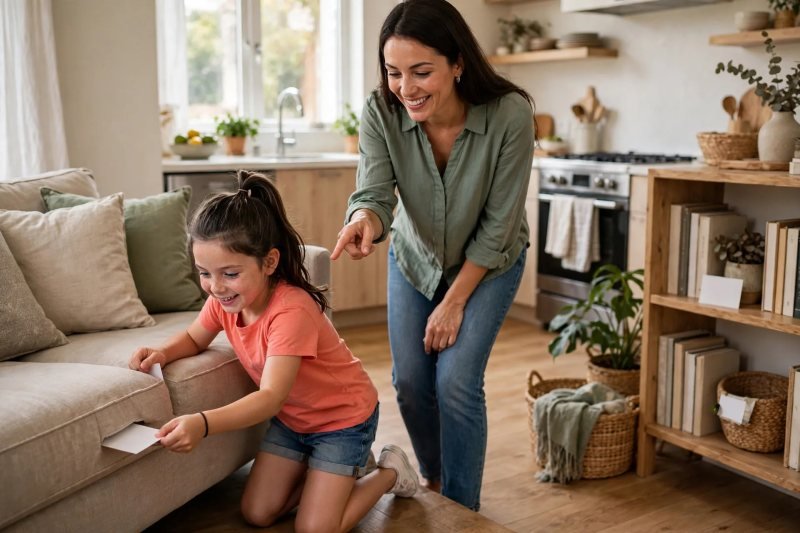
Middle-ch treasure hunt. Hide the eight MIDDLE-basket cards around the room. Give clues that don't name the word: "Find the one whose ch is in the middle — the person who helps you learn!" (teacher). Then your child hides cards and makes clues for you.
-
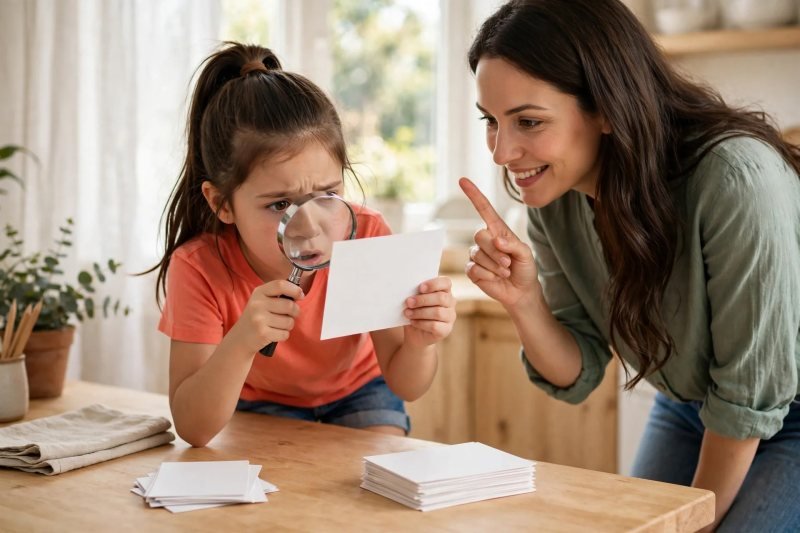
Tricky-ch detective round. Say these aloud and play detective: school, chef, chorus, character, stomach. The ch is there, but the sound is an impostor — /k/ in school, chorus, character, and stomach; /sh/ in chef. Sort them into their own pile — most ch words say /tʃ/ like chip, but a sneaky few don't. Meet the rest of the digraph family in alien words phonics practice, where sh, th and ng get their own silly word groups.
-
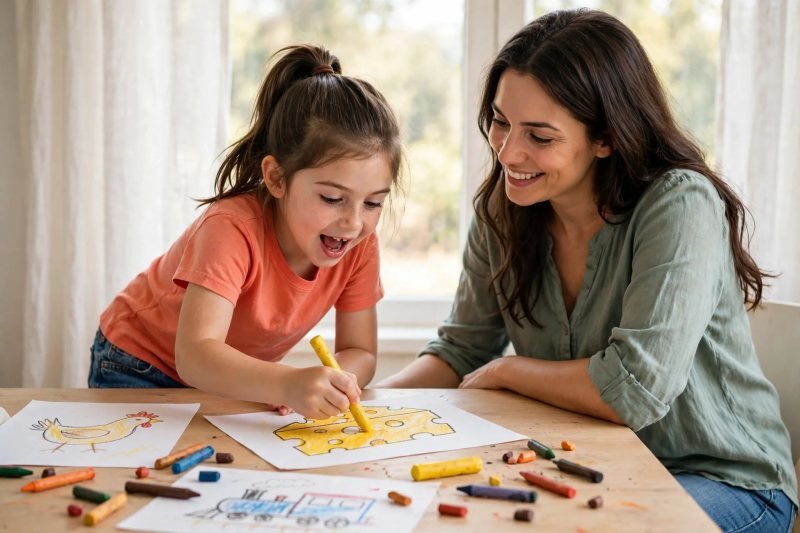
Draw-as-you-say sketch cards. Pick six favorite ch words. Your child draws each one while saying the word on every stroke: "ch-ee-se" while drawing the cheese. Tape the sketches on the fridge.
-
Ch-ch-charades. Act out ch words for each other to guess: chomping a chip, pointing at your wrist then eating popcorn for watch, pecking like a chick. No talking until someone guesses.
-
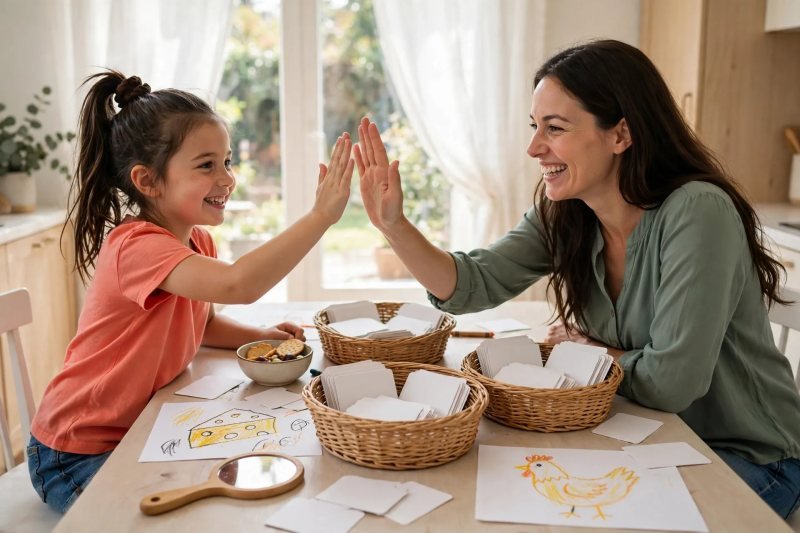
CH Champion round-up. Quick-fire finale: read all 40 cards as fast as your child can, then they read them back. End with the oath: "I am the champion of CH! Chip, lunch, watch — I've got them all!" High five.


Make it easier
Use just the START and END baskets; save middle-ch words for another day. Skip Step 7 — exceptions make more sense once the main sound is solid. Read each card yourself first and let your child echo it. If single sounds are still shaky, review single-letter sounds first before tackling digraphs.
Make it harder
Sort by ear: you read the word, they call "start, middle, or end." Dictation: you say a ch word, your child writes it, then checks the card. For the next phonics pattern after ch, try our a_e words list. Sentences from three baskets: "The child ate lunch with the teacher."
Other ways to play it
- Ch chomp monster: "pounce" only on cards with ch.
- Ch ball toss: a new ch word on every catch, no repeats.
- Bedtime ch whisper: whisper the START basket at lights-out.
How it changes by age
- At 6–8, children meet digraphs in early chapter books and spelling lists. The position sort turns a memorization list into a pattern they can see. Ages 4–5 can join Steps 2, 4, and 9 as sound games.
What they're learning
The ch digraph makes /tʃ/ — as in chip, lunch, watch. Positional awareness: the same sound opens (chip), hides inside (teacher), or closes (lunch) a word. Listening for sounds, not letters, via the Step 4 fakes. Keep building with our cvc words list and the phonics hub for what comes next.
Clearing up
Say ch as one short sound: chip, not cuh-hip. Reading ch as /k/ (like school)? Return to Step 1 — the sh/ch mix-up is the most common. One detective round is enough; the 40-word list is the real prize.
Questions parents ask
What is the ch digraph?
How do you teach ch words to a 6-year-old?
What are some examples of ch words for kids?
Why does ch sometimes sound like k?
How is ch different from sh?

save it for later
Pin this for the next rainy afternoon
Keep it on a board so it is there when you need it, rather than when you happened to find it.
Save to Pinterest


