


CVC Words for Kids: The First Words Your Child Can Sound Out
CVC words for kids are the first words children can truly sound out — like cat, bed, and sun. This guide gives parents the stretch-and-blend routine, first words by vowel, and six playful games.
CVC words — consonant-vowel-consonant words like cat, bed, and sun — are the first words kids can sound out. Stretch each sound (/k/…/a/…/t/), then say them faster until they merge into "cat." Ten minutes a day with word cards and games builds real decoding quickly.

The short version
- CVC words pair a consonant, a short vowel, and a consonant — cat, dog, sun — with no tricky spellings, so they are the best first words to sound out.
- Stretch-and-blend is the core technique: stretch each sound, then blend them together.
- Start with short a words and add one vowel family at a time.
- Age
- Ages 4–5
- Prep
- 5 min
- Play time
- 10 min
- Mess
- None
- Difficulty
- Easy
- Where
- Indoor
Why kids love this
Every young reader has a magic moment: they look at a word, stretch out its sounds, and hear a real word come out of their own mouth — and that moment almost always happens with a CVC word. Every letter plays fair: no silent letters, no tricky vowel teams, just three honest sounds blending into a word your child already knows. Cracking that code feels like magic, and short sessions with quick wins build the skill that leads to real books.
What you'll need
- Index cards or paper cut into cards, and a thick marker
- Magnetic letters or chunky letter tiles (optional but wonderful)
- A small hand mirror and a sand tray for tracing (both optional)
Before you start
What are CVC words? CVC means consonant-vowel-consonant: a one-syllable word like c-a-t, d-o-g, or s-u-n. The middle vowel always makes its short sound, so letter sounds alone are enough to decode it. Start once your child knows most letter sounds — not just the alphabet song. Which CVC words should I teach first? Begin with short a and add one vowel family at a time: Short a: cat, hat, mat, bat, sat Short e: bed, red, pen, ten Short i: pig, big, sit, win Short o: dog, log, hot, pot Short u: cup, sun, bus, run Start with the short a family. Write five family words on cards, one per card, in clear lowercase. Set out cards, mirror, and tiles on a distraction-free table. Pick a calm ten-minute window. Do one session a day — and stop while they still want more.
How to do it
-
Show the first card. Stretch each sound like taffy — /k/…/a/…/t/ — then say the sounds faster until they melt into "cat": that stretch-and-blend routine is the whole technique, and your job is to model it first, do it together, and only then let your child try alone. Lay down "cat" from your printable CVC words list and say, "Let's see how three letters make this word" — then stretch the sounds slowly yourself, exaggerating the slide from one sound to the next.

-
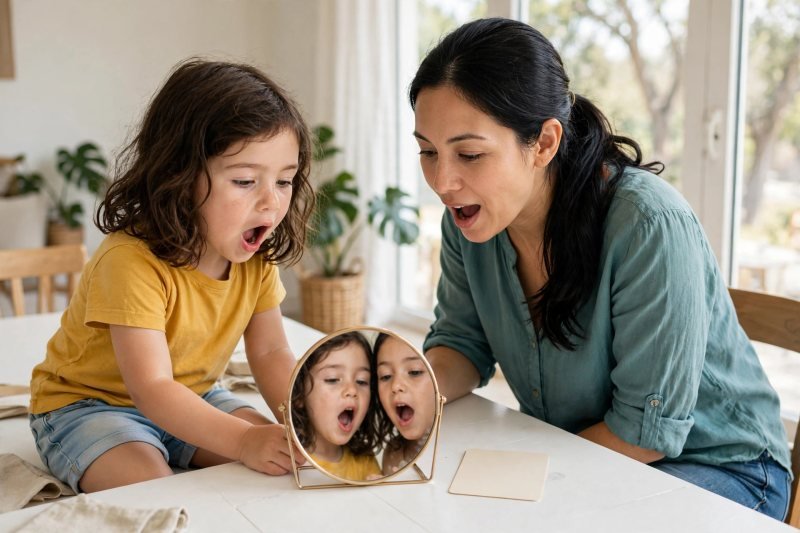
Start with the middle sound. The vowel is the anchor, so teach it first: stretch the short /a/ as in apple, holding it long and lazy, and say it together while you both watch your wide-open mouths in the mirror — then point to the card and tell your child this one sound sits in the middle of the whole word family they're about to meet.
-
Stretch all three sounds. Slide a finger under the letters left to right — /k/…/a/…/t/ — one unbroken ribbon of sound, never chopping the sounds apart or adding an "uh" after the consonants; the continuous glide is what lets them melt together, and this slow-build approach matches the blending sounds activities that train the same left-to-right habit.

-
Hand over the pointing. Give your child the finger-slide job: they run their finger under the letters while you stretch the sounds together with them — if they rush, grin and say, "Let's make those sounds loooong," and stretch one more time yourself so they can lean on your voice.

-
Blend it together. Now say the sounds a little faster — /kaaat/ melting into "cat!" — and let your child shout the whole word themselves; celebrate big, because this is the magic moment when print turns into a word they already know, and the confidence from this first success powers everything that comes after.

-
Change one letter. Swap c for b and ask, "The first sound changed — what does it say now?" — your child stretches and blends "bat," discovering that everything about the word stayed the same except one sound, which is the first real glimpse of how reading actually works.

-
Read the whole family. Lay out all five cards — cat, hat, mat, bat, sat — and read them across the table like a sentence: changing one letter shows how words are built, and noticing that the whole row rhymes makes it a natural warm-up for our benefits of nursery rhymes, which train the same listening ear from a different angle.

-
Play Sound Hop. Call out a word and your child hops once per sound — three hops for "d-o-g" — freezing mid-air on the last hop and shouting the blended word on landing: the whole-body movement locks in the one-sound-per-movement idea that shaky blenders miss at the table.

-
Play Word Hunt. Hide the cards around the room; your child hunts each one down and reads it aloud on the spot before the search continues — the burst of movement between reads keeps a wiggly five-year-old engaged far longer than sitting drills ever could.

-
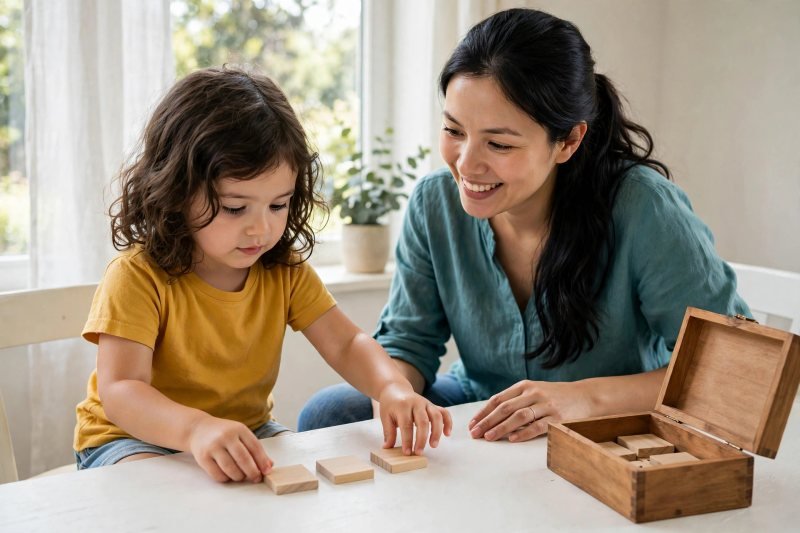
Build it, then stop happy. End the session with your child building one word from magnetic letters and reading it back to you — then pack up with specific praise ("You stretched every sound on 'sun'!") while they still want more, and when smooth builds-and-reads become routine, try a quick round of alien words phonics practice to see the new blending hold up under gentle time pressure.


Make it easier
If three sounds are too many, stretch just the first two ("ca"), then add the final sound. Stick to one vowel family for a week and keep sessions to five minutes. Tracing big letters in a sand tray while saying the sounds adds another path. Stretch along with your child — hearing your voice under theirs helps.
Make it harder
Once one family is easy, mix families — cat, bed, pig — so your child watches the middle vowel. Try a speed round: "Read all five before I count to ten." Have them build each word with magnetic letters first. Then bridge to four-letter short-vowel words like "frog," or a page of a simple phonics reader.
Other ways to play it
- Roll and Read. Number CVC words 1–6; your child rolls a die and reads the matching word.
- Word Family Sort. Mix words from two families; your child sorts them by ending sound.
- Read and Draw. Your child picks a card, reads the word, then draws it — decoding plus meaning is real reading.
- Sound Swap Race. Lay out c-a-t with the letter tiles and race to swap the middle letter — cat becomes cut, cut becomes cup — reading the new word each time. The middle sound is the hardest one to hear, so celebrate every correct swap.
How it changes by age
- What should my child know before starting CVC words?
- Most children are ready around ages four to five, once they know most letter sounds and can hear a word's first sound — try "What sound does 'sun' start with?"
- How long should a CVC practice session last?
- Ten minutes once a day is plenty — five happy minutes beats twenty grumpy ones. Patterns settle in between sessions, so short daily practice sticks better than one long session, and stopping while your child wants more keeps them eager for tomorrow.
What they're learning
Blending builds phonemic awareness (hearing sounds inside words), letter-sound knowledge, and the left-to-right habit behind all reading — plus the confidence that print holds meaning they can unlock. When blending clicks, our reading hub maps out what comes next.
Clearing up
Keep each vowel family's cards in its own envelope so tomorrow starts in seconds. No workbook is needed — cards, your voice, and ten minutes are the whole curriculum.
Questions parents ask
What are CVC words?
What age should kids start learning CVC words?
What are the first CVC words to teach?
How do you teach a child to blend CVC words?
How long does it take for a child to learn CVC words?
What is the difference between CVC words and sight words?

save it for later
Pin this for the next rainy afternoon
Keep it on a board so it is there when you need it, rather than when you happened to find it.
Save to Pinterest

