


Best Moisturizer for Kids with Dry Skin
Finding the best moisturizer for kids comes down to three things: a fragrance-free cream or ointment, a patch test first, and the soak-and-seal habit — moisturizing within minutes of a lukewarm bath.
The best moisturizer for kids with dry skin is a fragrance-free cream or ointment — pediatric sources commonly recommend options such as CeraVe, Aquaphor, Vanicream, or Eucerin. Patch test first, then use the soak-and-seal method: apply generously within a few minutes of a lukewarm bath, cover every dry zone, and repeat daily.

The short version
- Choose fragrance-free creams or ointments over thin lotions — they seal in far more moisture.
- Patch test every new product on one small area and check it over the next day before full use.
- Soak and seal: moisturize within a few minutes of a lukewarm bath, while skin is still damp.
- Apply generously in the direction hair grows, and work a spoken checklist of dry zones — cheeks, elbows, knees, hands.
- Call your pediatrician for cracked, weeping, or spreading skin, fever, or dryness that doesn't improve with consistent care.
- Age
- Ages 3–4
Why kids love this
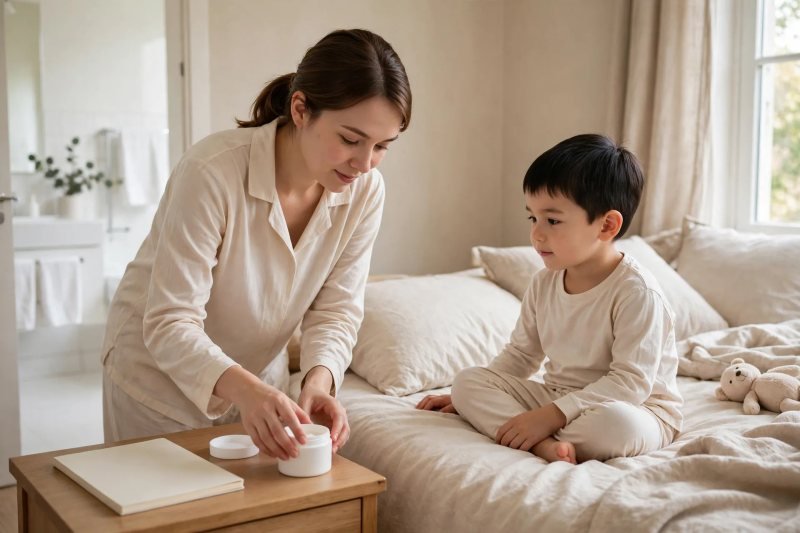
Dry, itchy skin makes kids miserable — scratchy pajamas, broken sleep, and constant rubbing at elbows and cheeks. The best moisturizer for kids is the one that ends that cycle, and kids quickly learn to love the routine itself: a warm bath, a silly "frosting" moment as the cream goes on, soft cotton pajamas, and skin that feels comfortable enough to forget about. When moisturizing becomes a cozy ritual instead of a chore, preschoolers start asking for it. Pair the ritual with our bedtime wind-down activities for the calmest end to the day.
What you'll need
- A fragrance-free moisturizing cream or ointment made for children or sensitive skin
- A gentle, fragrance-free cleanser for bath time (or plain water for very dry spells)
- A soft towel for patting — never rubbing — dry
- Soft cotton pajamas or clothing for after moisturizing
- A small notebook or phone note to track what you used and how the skin responded
- Lukewarm bath water — comfortably warm, never hot
Before you start
1. Look at the skin first, in good light: note where it is dry, rough, or itchy, and whether anything looks cracked, weeping, or unusually red — those change the plan (see Safety notes). 2. Keep the routine simple and repeatable — a short set of simple skincare steps for kids done the same way daily beats a shelf of products used randomly. 3. Set the tub or jar by the bath so the soak-and-seal step can happen within a few minutes of getting out.
How to do it
-
Read your child's skin before you shop. Stand your child in good light and look and feel slowly — cheeks, the backs of arms, elbows, knees, hands, and the tummy where waistbands rub. Say, "We are being skin detectives! Show me where it feels itchy or rough." Note what you find in plain words — dry and flaky, rough like sandpaper, pink and itchy — because the right product depends on the degree of dryness: mild dryness does well with a cream, while very dry, rough patches usually need the heavier protection of an ointment. This two-minute check also gives you the "before" picture every later product gets judged against.

-
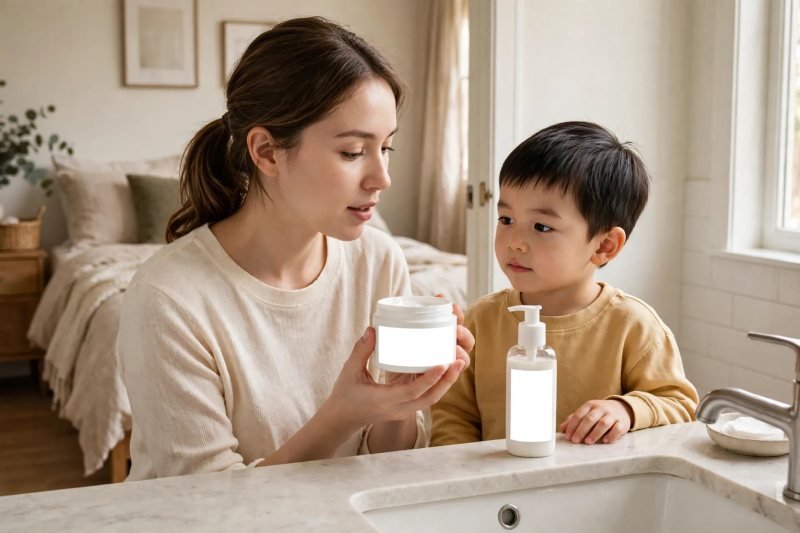
Choose a fragrance-free cream or ointment, not a thin lotion. In the store or online, read labels with three filters — fragrance-free (not just "unscented"), a cream or ointment rather than a runny lotion, and made for sensitive or children's skin. Pediatric guidance, including Nationwide Children's Hospital, commonly points to fragrance-free options such as CeraVe, Aquaphor, Vanicream, or Eucerin for children's dry skin, and any of these styles is a sensible place to start. Creams and ointments seal in far more moisture than lotions, which are mostly water and evaporate quickly. Say to your child, "We are picking the strong helper cream — the thick kind that stays and protects." One good product, used well, beats five bottles used occasionally.
-
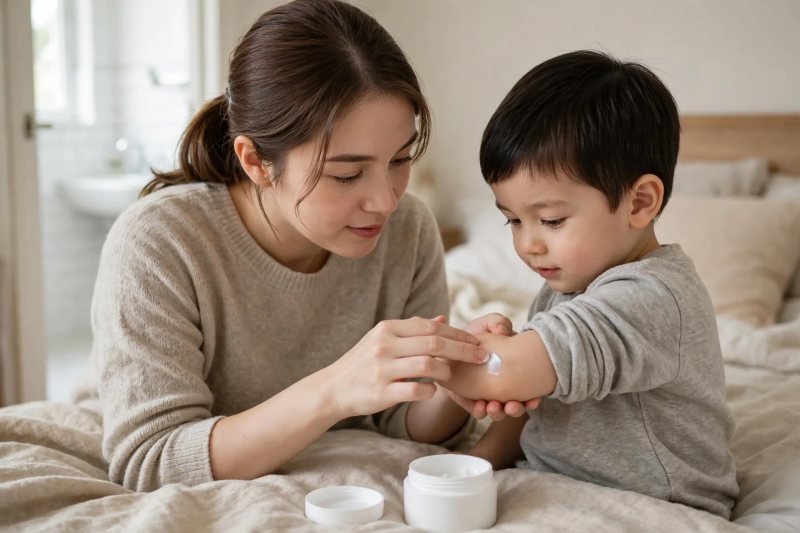
Patch test the winner before the full routine. The first time you use any new product, smooth a pea-size amount on one small area — the inside of the elbow or behind one knee — and wait, checking that spot over the next day for new redness, bumps, or extra itching. Say, "This is our test spot. The cream has to pass its test before it gets the whole job." A calm test spot means proceed; a spot that looks worse means rinse it off, do not use that product again, and try a different fragrance-free option. Patch testing feels slow and saves weeks of guessing when a child's skin dislikes something.
-
Bathe in lukewarm water, briefly and gently. Run the bath lukewarm — comfortably warm to your inner wrist, never hot, because hot water strips the oils dry skin cannot spare. Keep the bath short, use a gentle fragrance-free cleanser only where it is needed, and let your child play while the water does the softening. Say, "Warm like soup for a goldfish — not hot like soup for us!" This soak is the first half of "soak and seal": skin that has taken in water is ready to have that water locked in, which is exactly what the next step does.

-
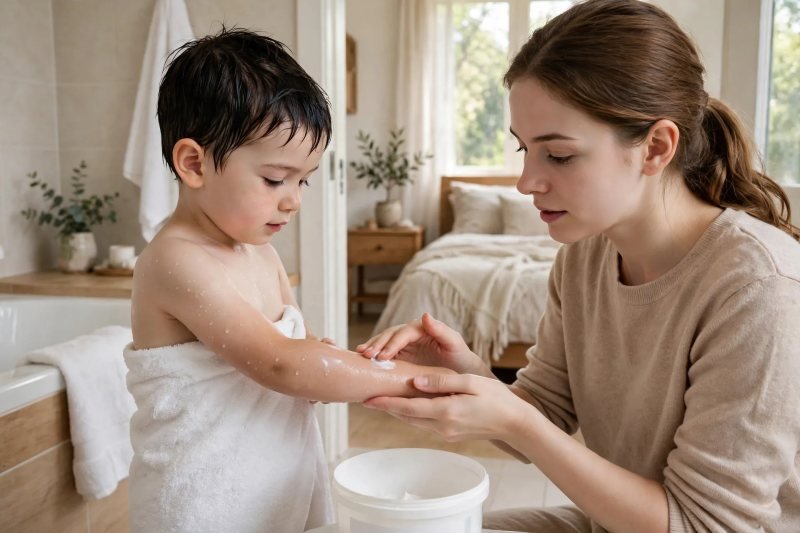
Soak and seal — moisturize within a few minutes of the bath. Lift your child out, pat — do not rub — with the soft towel until skin is just damp, and apply the cream or ointment right away, within a few minutes, while the skin still holds bath water. Say, "Pat, pat — now we seal the water in before it escapes!" Work quickly and cheerfully: this timing, more than any brand name, is what makes moisturizer work on kids' dry skin. If you wait until the skin is fully dry and tight, the same product will do noticeably less, so keep the tub parked beside the bath towels.
-
Apply generously, in the direction hair grows. Warm a generous amount between your palms and smooth it over each area in downward strokes, following the direction hair grows — rubbing upward against the grain can irritate the little follicles on arms and legs. Use enough that the skin looks evenly coated and feels slippery, not a whisper-thin film; for very dry patches, an ointment layer can go over the cream. Say, "Frosting the cake — nice and thick so it works all night!" Let your child "help" with one easy area like a forearm — helping hands scratch less and cooperate more.

-
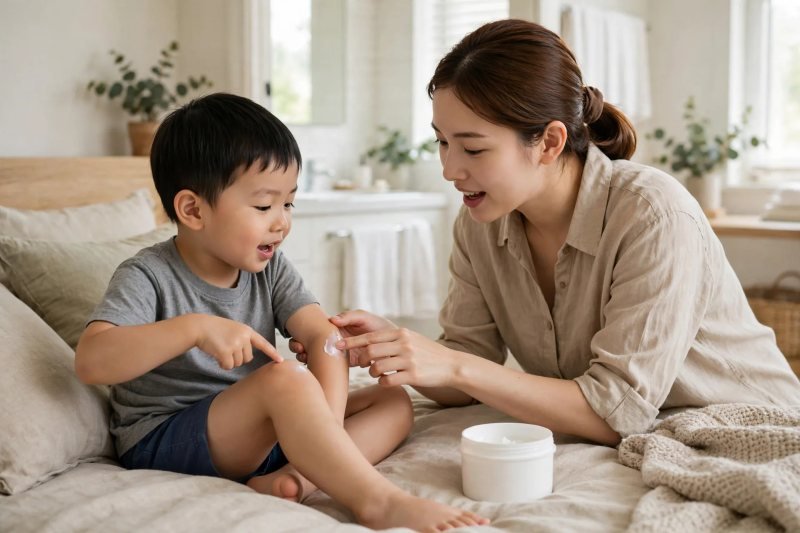
Cover the classic dry zones one by one. Work through the map you made in step 1 so nothing gets missed — cheeks and chin; the backs of the upper arms; elbows; hands and wrists where washing dries skin out; knees and shins; and any waistband or sock-line rub spots. Say each one as you go — "Cheeks, check! Elbows, check!" — and let your child call the checks once they learn the map. Dry skin in kids hides in the same places week after week, so a spoken checklist turns a rushed smear into complete coverage, and complete coverage is what ends the itch-scratch cycle at night.
-
Dress in soft cotton and make it the daily routine. Once the moisturizer is on, dress your child in soft, breathable cotton — pajamas at night, a cotton layer under rougher clothing by day — and avoid scratchy wool or tight synthetic layers directly on freshly moisturized skin. Then lock the habit in: moisturize at least once a day, ideally after the bath, and add a second quick round on very dry areas in the morning when skin is at its worst. Note what you used and how the skin looks in your little log, following the same kind of steady daily rhythm. Within a couple of weeks, your log — not advertising — tells you whether you truly found the best moisturizer for your kid.


Make it easier
Keep one tub by the bath and one small tube in the diaper or school bag so the routine survives busy days. Let your child choose which body part gets "frosted" first — choice turns a chore into a game. During a rough, very dry week, moisturize twice a day and shorten baths rather than adding new products.
Make it harder
Teach an older four-year-old to do their own arms and shins with a dollop you hand them, while you cover the hard-to-reach zones. Let them run the spoken checklist from step 7 — being the checker builds the habit for school-age independence. Review the log together weekly and let them report whether the itchy spots feel better, the same, or worse.
Other ways to play it
- Winter skin: switch to the heavier ointment style, moisturize twice daily, and run a bedroom humidifier if your home's air is very dry — ask your pediatrician what suits your child. For more cold-weather ideas, see our seasonal winter hub.
- Summer skin: a lighter fragrance-free cream may feel better after swimming; always moisturize after pool time, since chlorine and rinsing dry skin out.
- Very sensitive skin: choose the shortest ingredient list you can find, patch test every new product without exception, and introduce only one new product at a time.
How it changes by age
- Age 3: threes need the routine done for them, with narration and a job — holding the tub lid, calling the checklist, choosing the first spot. Keep baths short and the whole ritual playful, and expect to reapply after hand-washing on rough weeks. More activities for 3-year-olds build the same self-care independence.
- Age 4: fours can spread cream on easy areas themselves and report honestly where it itches most. Give them the log as a shared project — a sticker on calm-skin days makes progress visible and keeps everyone consistent. See our 4-year-olds hub for more ideas at this stage.
What they're learning
Body awareness: naming the dry zones and reporting itch honestly builds the body map and health vocabulary. Habit building: a fixed after-bath ritual teaches that daily care, done small and often, solves problems. Cause and effect: hot water makes skin tighter; cream after a bath makes it softer — early science they can feel. Patience and observation: patch tests and a two-week log teach that good answers take a little watching. Independence: spreading their own cream and running the checklist are real self-care skills.
Clearing up
Seal the tub or jar right away — open jars collect dust and little fingers. Wipe greasy handprints off the tub rim and faucet, rinse the bath if ointment made it slippery, and put the product back in its bath-side spot so tomorrow's soak-and-seal has no delay. Wash the towel regularly, since it picks up cream residue. Keep moisturizers stored where your child cannot help themselves unsupervised — creams are for skin, not for tasting or smearing on furniture.
Questions parents ask
What is the best moisturizer for kids with dry skin?
How often should I moisturize my child's dry skin?
What does "soak and seal" mean?
Why should kids' moisturizer be fragrance-free?
When should I take my child to the pediatrician for dry skin?
Is lotion or cream better for a child's dry skin?
Product names (CeraVe, Aquaphor, Vanicream, Eucerin) are given as commonly recommended fragrance-free examples per pediatric guidance (Nationwide Children's); no brand is endorsed over another and none sponsored this article. No statistics cited; improvement timelines are described qualitatively and parents are directed to their own two-week log and their pediatrician.

save it for later
Pin this for the next rainy afternoon
Keep it on a board so it is there when you need it, rather than when you happened to find it.
Save to Pinterest


