


'At' Family Words: 20 Words That Rhyme With Cat (+ Free Word List)
20 -at family words — cat, hat, mat, sat, bat, rat, pat, flat, chat, that — one reading chunk, slider games, a word ladder, and a free printable word list.
At family words are 20 words sharing the -at ending: cat, hat, mat, sat, bat, rat, pat, fat, flat, chat, that, spat, brat, splat, swat, gnat, vat, scat, Nat, and at. Teach ages 4–5 by chanting the -at chunk, then swapping the first letter with slider cards (cat to hat to mat). Add a floor word ladder, stretch the two-letter onsets, and finish with the free printable word list.

The short version
- One chunk (-at) plus a swapping first letter gives 20 readable words.
- Start with the starter eight: cat, hat, mat, sat, bat, rat, pat, fat.
- Slider cards make the onset swap physical and memorable.
- Stretch clusters (fl-, ch-, th-, sp-, br-, spl-) earn slow blending practice.
- Gnat's g is silent and splat's spl- is three letters — fun surprises, not traps.
- Finish with the free printable word list and the all-family sentence.
- Age
- Ages 4–5
- Prep
- 5 min
- Mess
- None
- Difficulty
- Easy
- Where
- Indoor
Why kids love this
Learning at family words feels like cracking a secret code. Your child discovers that "-at" never changes — only the first letter swaps — and suddenly cat turns into hat, mat, bat, sat. That slider moment — reading a brand-new word all by themselves — lands like a magic trick. Add a word ladder to climb, a hunt for the silent g in gnat, and a printable list to star and hang: twenty minutes of "I can read!" pride.
What you'll need
- Cardstock or index cards (about 25)
- A thick marker
- Scissors
- A large envelope or folded card to make a "slider pocket"
- The free printable -at word list (see Downloads below)
- Crayons or star stickers
- Painter's tape
- A magnifying glass (optional, for the sound-detective round)
Before you start
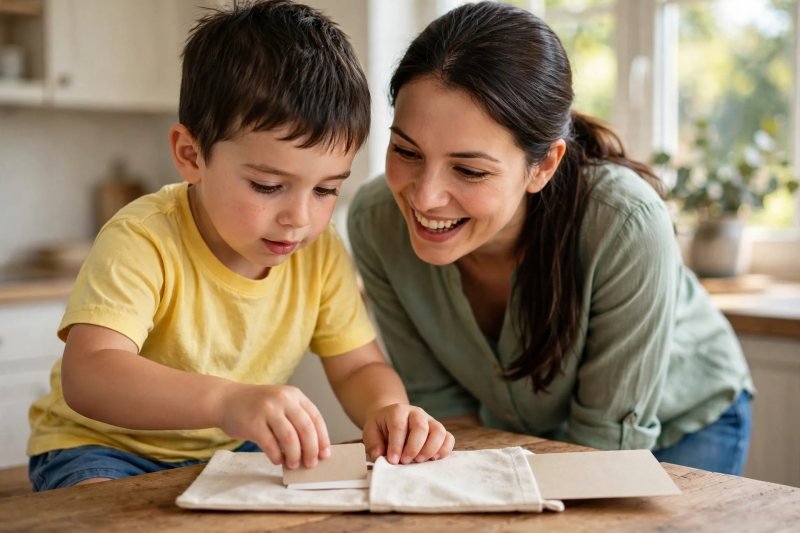
Make the cards: one big "-at" chunk card; starter letters c, h, m, b, s, r, p, f (one per card); stretch onsets fl, ch, th, sp, br, spl, sw, gn, v, sc, N (one per card). Make the slider: cut two short slits across an envelope front and tuck the -at card behind so its ending peeks through. Print the free -at word list. Clear a table or rug, and keep the painter's tape handy for the ladder in step 4.
How to do it
-
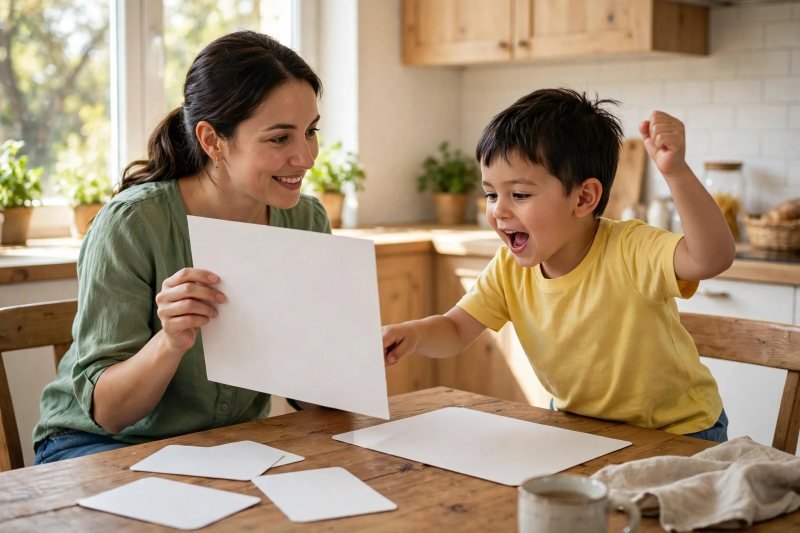
Meet the chunk. Hold up the big -at card: "This little chunk never changes — it says 'at.'" Chant it three ways: whisper, song, roar. Your child traces the card while saying it. That chunk is theirs now.
-
Play the cat-hat swap. Slide "c" into the pocket beside -at: "/k/… at… cat!" Your child swaps in h (hat), m (mat), b (bat) — they swap, you cheer. Same ending, new beginning: the whole trick of at family words.
-
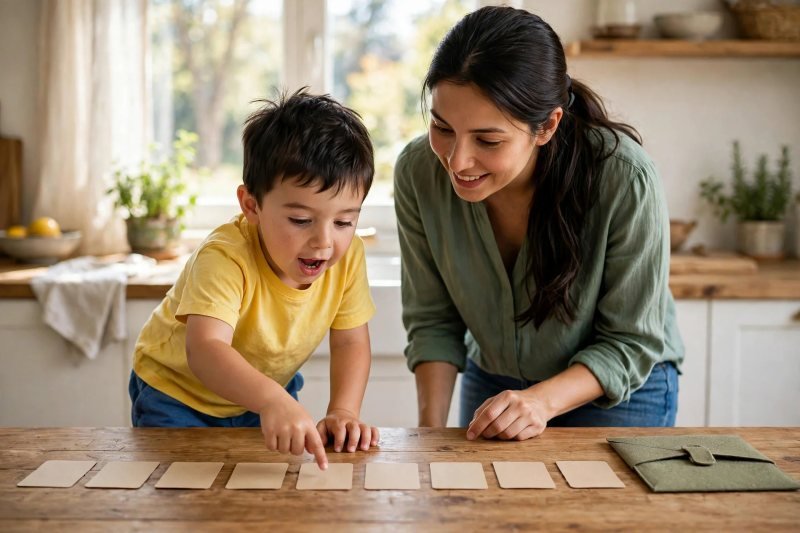
Read the starter eight. Add s, r, p, f: sat, rat, pat, fat. Line them up like a parade and read them together. Stumble? Cover the first letter, read "-at," uncover, blend.
-
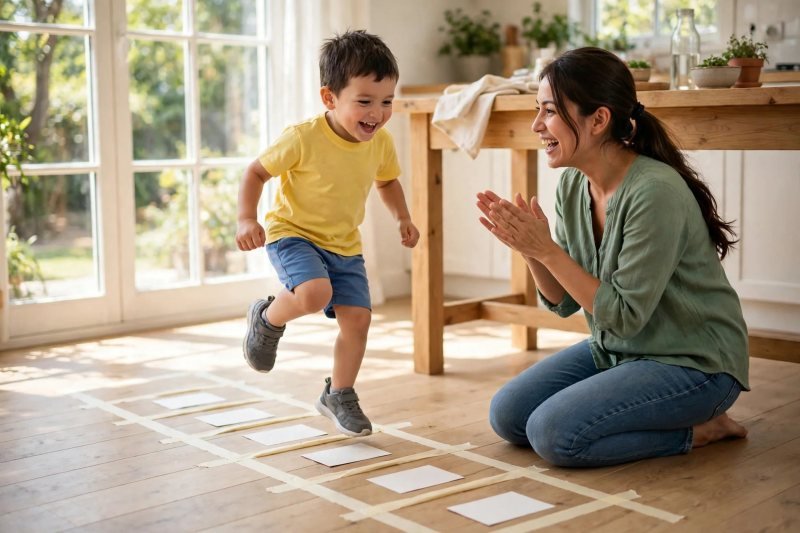
Climb the word ladder. Lay tape rungs across the floor, one card per rung: cat, hat, mat, sat, bat. Each rung changes only one letter. Your child hops rung to rung, reading each step. Reach the top — summit celebration.
-
Stretch the clusters. Some members start with letters glued together. Stretch the beginning slowly — "ffff…lat," "chhh…at," "thhh…at" ("th" hums like in "this") — and let the blend snap onto "-at" when it is ready. Slow is fast.
-
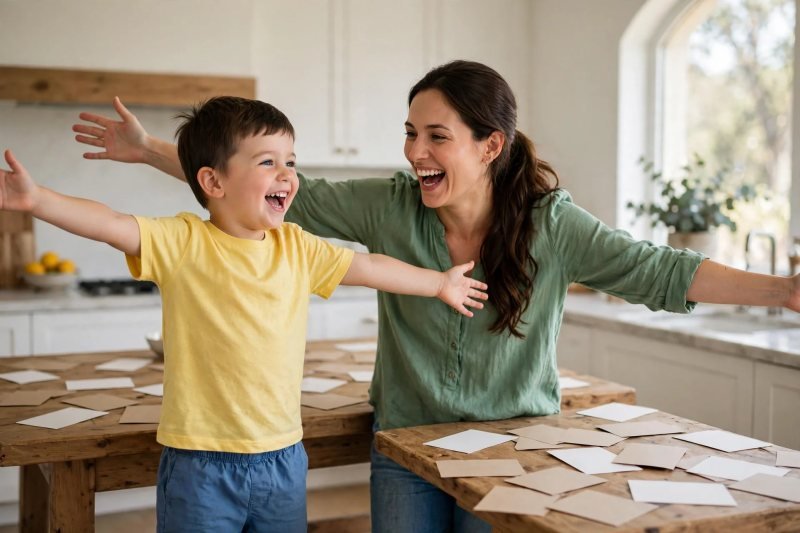
Meet the twist crew. Spat, brat, splat, swat — bouncy words with bigger beginnings. Spl- is three letters in a trench coat. Say each like a sound effect, strike a pose, let your child echo it.
-
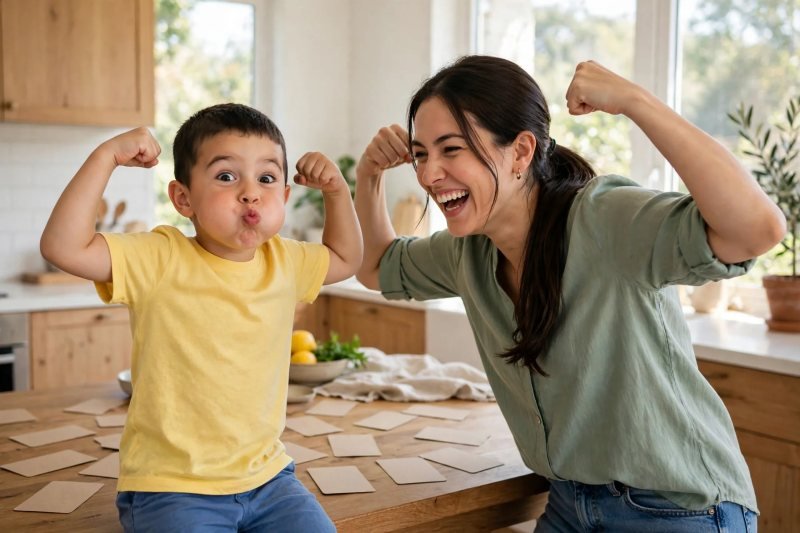
Finish the family. The last five: gnat (shh — the g is silent, so it sounds like "nat"), vat, scat (silly singing: "shoo-be-doo-bop!"), Nat (a nickname), and at itself — the chunk was a word all along. Twenty words, one family.
-
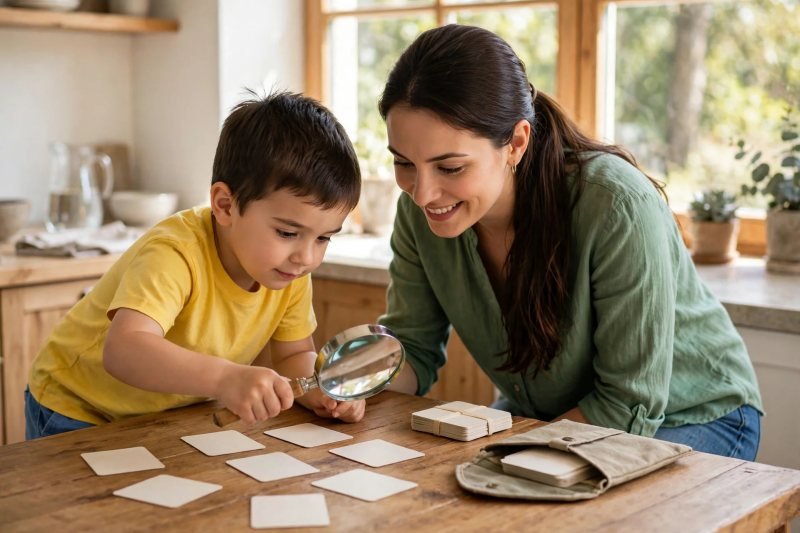
Read the free word list. Sit with the printable. You point, your child reads; star every word read without help. Struggling? Read it together — the stars are for trying, too.
-
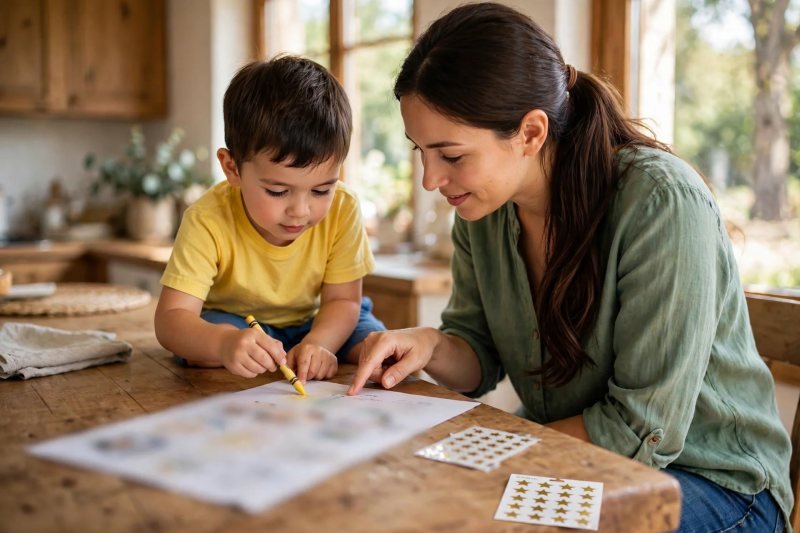
Sort the family. Mix the -at cards with outsiders (dog, sun, pig). Two piles: "cat family" and "not family." Your child reads each card, then files it. Wrong pile? Read the ending together: "Does it say -at?"
-
Read the all-family sentence and hang the list. Read together, slowly: "The fat cat sat on the flat mat!" Every word but "the" and "on" is a family member. Tape the starred list to the wall — their first reading trophy.


Print it out
Make it easier
Start with just three words (cat, hat, mat) and add one new friend per day. Chant the chunk alone until it is automatic: "at… at… at." You say the first sound, your child says "-at," then you blend it together — teamwork blending counts.
Make it harder
Dictate: you say a family word, your child builds it with the onset cards. Speed ladder: time the floor-ladder climb, then try to beat the record. Copy the starter eight with crayons — writing cements the pattern.
Other ways to play it
- Sidewalk version: chalk one giant -at on the driveway with starters around it, and hop from starter to starter, reading each.
- Car version: call-and-response — you say "cat," your child answers with any family word. No repeats.
How it changes by age
- The sweet spot is 4–5: most children know letter sounds and are beginning to blend. Younger siblings can chant the chunk and echo the words — real pre-reading work. Six-year-olds can use the ladder as a warm-up before harder families. The kindergarten hub has more activities matched to ages 4–5.
What they're learning
Onset-rime: splitting a word into its first sound and ending chunk — the skill behind early decoding. Blending: joining onset + chunk into a whole word, first slowly, then at speed. Chunking: reading "-at" as one unit — the shortcut that makes early reading fast. Pattern recognition: one shared ending unlocks twenty words — and transfers to the next family. Spelling: mapping sounds to letters when they build and copy the words. Decodable words: every one of the 20 words can be sounded out with the chunk they just learned — real reading, not memorizing. If your child loved the hearing-rhymes side of this family first, our Words That Rhyme With Cat article plays the same 20 words as pure rhyme games for younger ears. More sound-play lives on our phonics hub, and the reading hub gathers every early-reading activity in one place.
Clearing up
Rhyming or reading? Both. The family rhymes because every word shares the -at chunk — the chunk your child learns to read. Should my child memorize all 20 words? No — the goal is the pattern. The words are practice; the chunk is the prize. What if my child just guesses from the first letter? Normal. Cover the onset, read "-at" together, uncover, blend. Repeat every time — the habit replaces the guessing. When do we move to the next family? When the starter eight are read easily on two different days — confidence first.
Questions parents ask
What are at family words?
What are the 20 at family words?
How do I teach my 4-year-old to read at family words?
Why is gnat spelled with a silent g?
What is the difference between at family words and words that rhyme with cat?
What should my child learn after the at family words?
The free printable word list lives in the Downloads section below (the "Print it out" block): all 20 words in their three groups, with a star column for read-it-myself victories. Print a fresh copy for every victory lap.
Which 20 words are in the -at family? Every word below shares cat's exact -at ending. Master the starter eight first, then grow into the rest.
The starter eight: cat — a furry pet that says meow; hat — what keeps your head warm; mat — the rug by the front door; sat — what you did when you sat down; bat — flies at night, also a baseball stick; rat — a mouse's bigger cousin; pat — a gentle touch, like on a puppy; fat — plump and round, like a pumpkin.
The stretch words: flat — smooth, not bumpy, like a pancake; chat — a friendly little talk; that — a pointing word: "that cookie!"; spat — a tiny quarrel over the last cookie; brat — a very mischievous kid. These start with two-letter teams — a little more blending muscle.
The twist crew: splat — the sound of mud hitting the wall; swat — to shoo a fly away; gnat — a tiny flying bug, the g is silent so it sounds just like "nat"; vat — a giant tub, like the ones pickles swim in; scat — silly nonsense singing: "shoo-be-doo-bop!"; Nat — a nickname for Nathan or Natalie; at — the tiny word that says where: "at home," "at school." Bigger beginnings and funny surprises — the reward round.

save it for later
Pin this for the next rainy afternoon
Keep it on a board so it is there when you need it, rather than when you happened to find it.
Save to Pinterest

