


Kids Winter Outfits: A Layering Guide for Ages 6-8
Kids winter layering made simple for ages 6–8: a wicking base, a warm middle and a weatherproof shell, plus a step-by-step routine big kids can run themselves.
Kids winter layering for ages 6–8 uses three layers: a wicking base (merino or synthetic top and leggings), a warm mid layer (fleece or light puffy), and a waterproof outer shell (coat and snow pants). Add a hat, neck gaiter, gloves or mittens and waterproof boots, then run a quick movement check before heading out.

The short version
- Kids winter layering has three jobs: a wicking base layer, an insulating mid layer and a waterproof outer shell.
- Never use cotton for the base layer — it stays cold and damp; choose merino wool or synthetic fabrics.
- Dress your child in one more layer than you would wear, then run the movement check: squat, reach, twist, march.
- Seal the gaps: hat over the ears, gaiter at the neck, cuffs tucked over sleeves.
- Never buckle a seat belt or harness over a puffy coat — buckle snug first, then lay the coat over like a blanket.
- Age
- Ages 6–8
Why kids love this
Six- to eight-year-olds want to dress themselves, and kids winter layering gives them a system they can master: three layers, three jobs, one order. Instead of a daily battle over a bulky coat, your child gets real decisions — reading the forecast, picking the mid layer, running the movement check. Kids who understand why each layer exists stop stripping everything off at recess, because they know the small adjustments instead: unzip a little, gaiter up, hood on. Once everyone's dressed, our winter activities for kids gallery rounds up cold-day play ideas worth braving the weather for.
What you'll need
- Base layers: merino or synthetic long-sleeve tops and leggings or long underwear (no cotton)
- Mid layers: fleece pullovers, a light puffy jacket, wool sweaters
- Outer shell: a waterproof winter coat with a hood; snow pants or a waterproof bib
- A knit hat that covers the ears
- A neck gaiter or short scarf (tucked inside the coat)
- Waterproof gloves or mittens with long cuffs
- Wool or wool-blend socks
- Waterproof insulated boots
- A spare pair of socks for the school bag
Before you start
1. Check the forecast together — temperature, wind and snow decide how many layers the day needs. 2. Lay the full outfit out in dressing order the night before: base, mid, shell, then extras. 3. Keep a drying spot by the door for wet gloves, socks and boots so tomorrow's gear starts dry.
How to do it
-
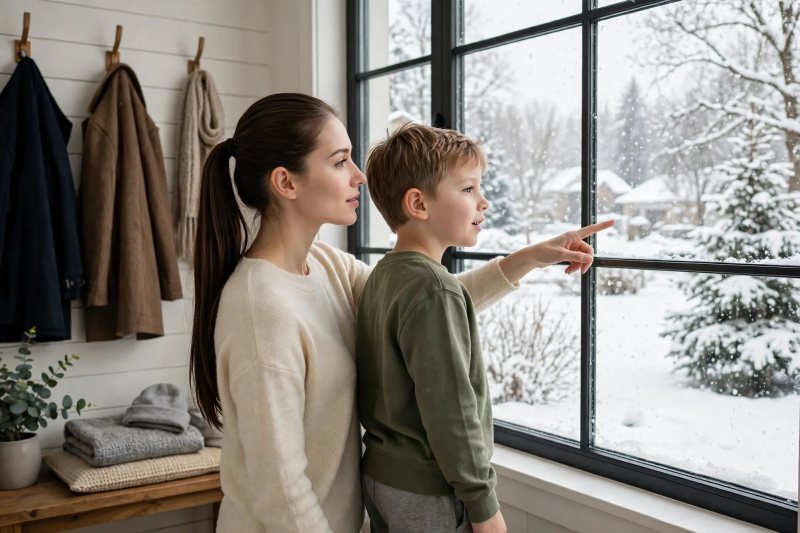
Check the forecast together first. Before any clothes come out, look at the temperature and wind with your child and say, "Cold, windy or wet — the weather picks our layers today." A calm 35°F morning needs a very different stack than a windy 20°F one. Let your child read the numbers out loud and guess what the day will feel like; that guess makes the rest of the routine theirs. Agree on the plan together — base, middle, shell, extras — before you open a single drawer.
-
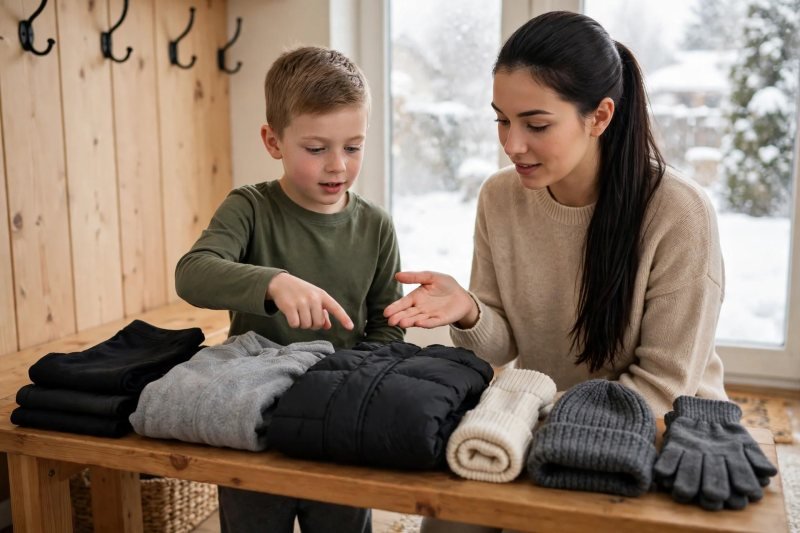
Lay out the layer runway. Spread the whole outfit out in dressing order on the bench — base layer; mid layer; outer shell; then socks, hat and gloves — like a runway your child can scan in one glance. Say, "First wicks, then warms, then shields," and let them point to each job as you name it. Younger siblings learning the same routine can start with the simpler version in toddler winter outfits for ages 2–3 and graduate to this one. Naming the layers out loud builds the vocabulary your child needs to dress independently.
-
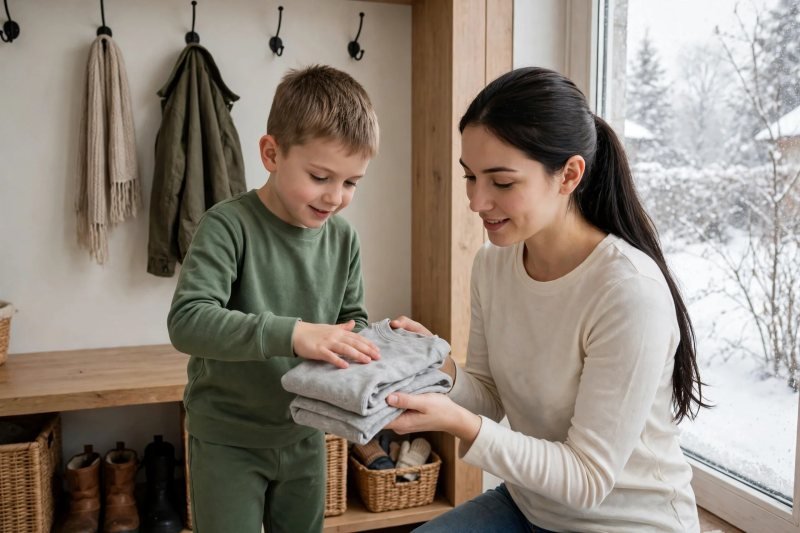
Start with the base layer — the wicking layer. This is the layer against the skin: a snug long-sleeve top and leggings or long underwear in merino wool or a synthetic blend, never cotton, which stays cold when it gets damp. Say, "Base layer on — smooth and snug, no bunching," and have your child smooth the fabric at the wrists and waist themselves. It should fit close like a second skin without pinching; if they are tugging at it now, it will annoy them all day. Tuck the top into the bottoms so no cold air sneaks in at the waistband during the first big bend of the day.
-
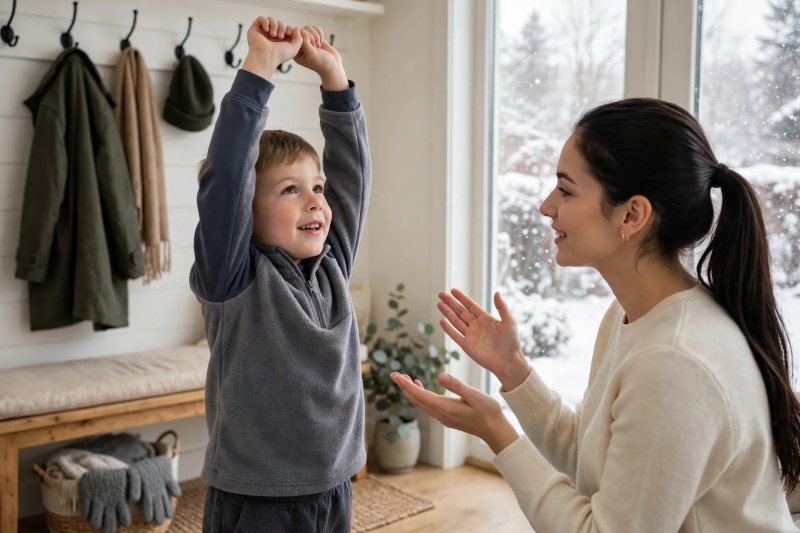
Add the insulating mid layer — the warmth layer. This layer traps body heat: a fleece pullover, a light puffy jacket or a wool sweater over the base, with fleece pants or insulated joggers on truly cold days. Say, "This is the blanket you wear — puffy means warm," and let your child press the fabric to feel the loft spring back. One mid layer handles most school days; add a second thin fleece only for deep cold or long outdoor stretches. Check the fit by having them raise both arms overhead — the mid layer should ride up without pulling the base layer out of its tuck.
-
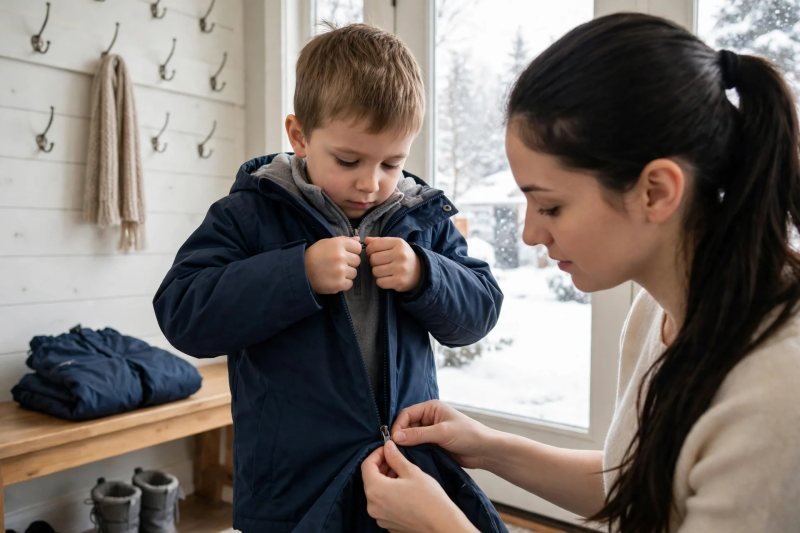
Finish with the outer shell — the weather shield. The shell blocks wind and sheds snow and drizzle: a waterproof winter coat with a hood, plus snow pants or a waterproof bib for sledding, recess in slush or a long walk. Say, "Shell on last — it guards the layers under it," and practice the full zip together, your hand ready but theirs doing the work. The same base-middle-shell logic works for younger kids in preschool winter outfits. Check the coat hem covers the waistband when your child bends forward, and that cuffs close snugly over the mid layer sleeves.
-
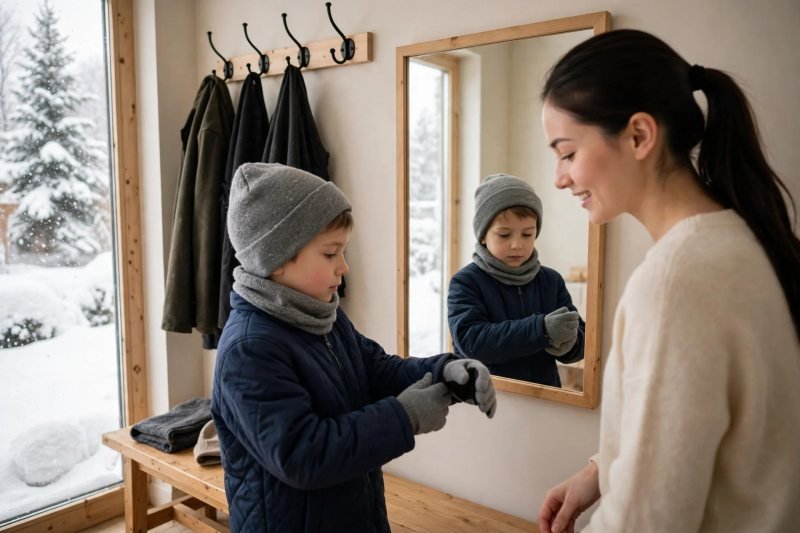
Protect the head, hands and neck. Extremities chill first, so gear them deliberately: a hat that covers the ears; a neck gaiter or a short scarf tucked inside the coat; and waterproof mittens or gloves with long cuffs over the coat sleeves. Say, "Ears covered, neck sealed, cuffs tucked — no gaps for the wind," and let your child do the final gap check in a mirror. Most 6- to 8-year-olds manage gloves fine and like the finger freedom, but mittens stay warmer on the coldest days. Skip long scarves on climbing frames and slides, and choose coats without hood or waist drawstrings, which are a strangulation risk on playground equipment.
-
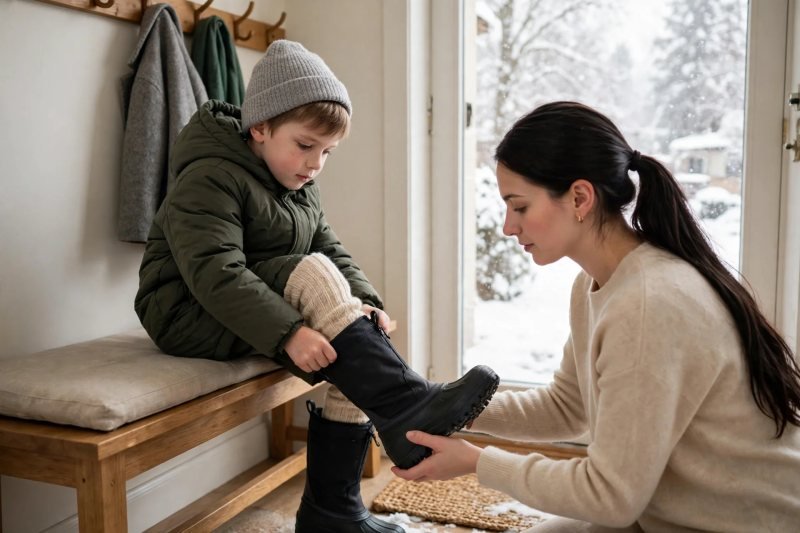
Pull on warm socks and waterproof boots. Socks do quiet, essential work: one pair of wool or wool-blend socks beats two pairs of cotton, which bunch and chill damp feet. Say, "One good pair, smooth to the toes," and have your child check for wrinkles before the boot goes on. Boots should be waterproof, insulated and roomy enough to wiggle toes in — a thumb's width of growing room is fine, a slipping heel is not. Fasten every strap and check the tongue sits flat; a folded tongue becomes a sore spot by lunchtime. Keep a spare pair of socks in the school bag for slushy days.
-
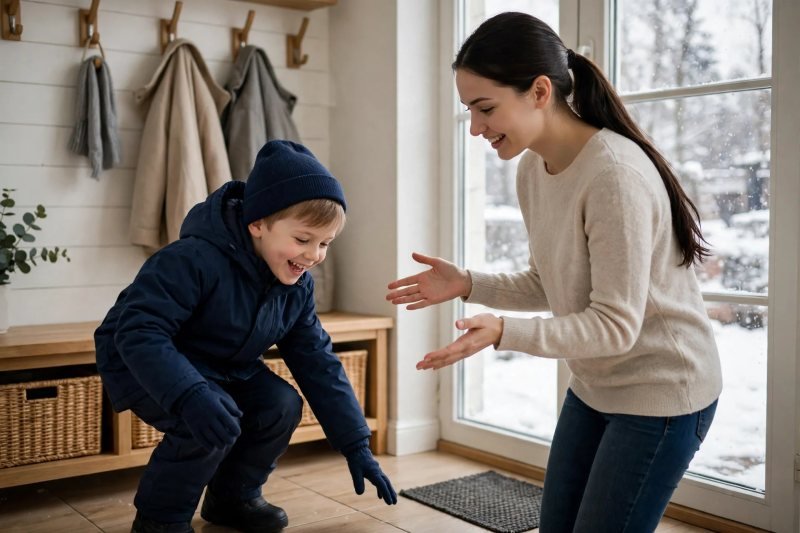
Run the movement check before the door opens. Layers only work if your child can still move like a kid, so test them: squat down and touch the floor; reach both arms to the sky; twist side to side; march ten steps; then sit cross-legged like circle time. Say, "If you can move, you can play — stiff means we swap a layer." Anything that pinches, rides up or makes them waddle gets traded for a thinner piece before you leave, not complained about at the bus stop. This two-minute check is the step most families skip and the one that prevents nearly every mid-day meltdown about winter clothes.
-
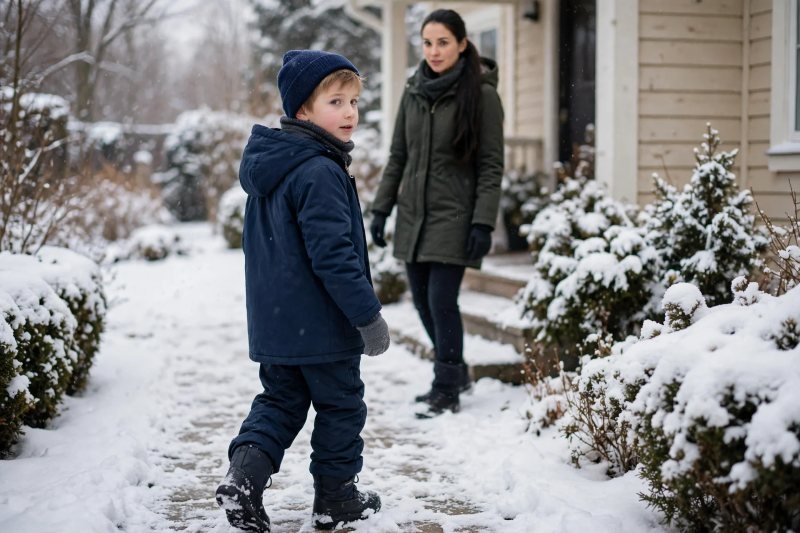
Head out and read the day as you go. The first five minutes outside are the real fitting room. Say, "Tell me what your body says — just right, too warm or too cold?" and teach the adjustment moves: unzip the shell a few inches if they are heating up on the walk; pull the gaiter up if the wind picks up; add the hood for snow. Remind them of the car rule too: the puffy coat comes off before buckling, because seat belts cannot tighten snugly over bulky layers — buckle first, then lay the coat over their lap like a blanket.
-
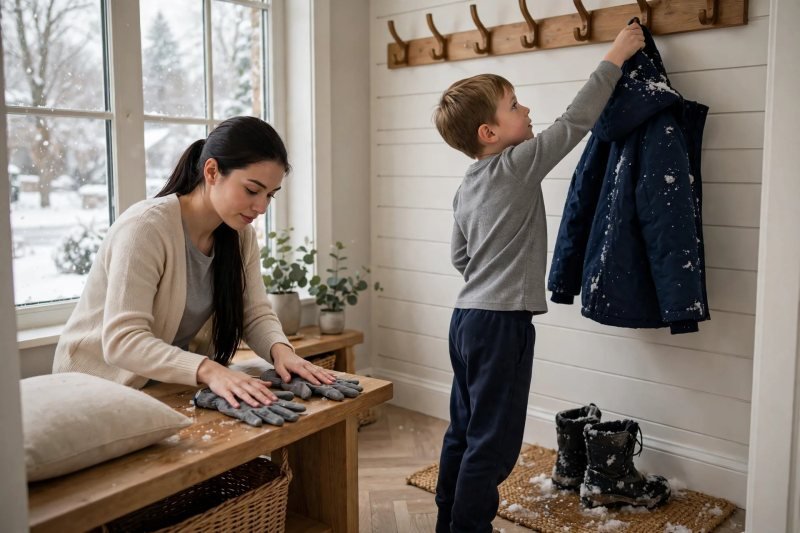
Come home and reset the layers. End the day with the same order you started it: boots off on the mat; shell hung on its hook; damp layers spread where air can reach them; tomorrow's base layer checked and laid out if the forecast repeats. Say, "Layers away in order — tomorrow-you says thanks," and let your child run the reset themselves while you supervise. Wet gloves and socks go straight to the drying spot. This three-minute routine keeps the entryway sane and means tomorrow's runway is half built before bedtime.


Make it easier
Lay the whole runway out the night before so mornings are just dressing, not deciding. Use a one-piece base set (matching top and leggings) so there is nothing to coordinate. Turn the morning forecast check into a game with our winter scavenger hunt printable. Keep mittens instead of gloves for the coldest weeks — faster on, warmer, fewer lost fingers to thread.
Make it harder
Hand over the forecast check: your child reads the weather and proposes the layer plan for you to approve. Teach self-regulation challenges — one adjustment at a time (unzip, gaiter, hood) instead of removing layers. Let them pack their own school bag with spare socks and gloves the night before.
Other ways to play it
- Sledding and snow-play day: full shell with snow pants, waterproof mittens and a balaclava-style gaiter; pack extra dry socks and gloves.
- Mild winter day (around 40°F): base layer plus a warm coat is often plenty; keep the mid layer in the bag as backup. Browse our seasonal winter hub for more cold-weather ideas.
- Below-freezing and windy: keep all three layers, add a second thin fleece and make sure the gaiter seals the neck gap.
- Rainy winter day: swap snow pants for waterproof rain pants over the base layer and choose the longest waterproof shell you have.
How it changes by age
- Age 6: sixes can dress in order with the runway laid out, but still need help judging the weather and checking gaps at cuffs and waist. Keep narrating the three jobs — wick, warm, shield — and do the movement check together every time until it becomes their habit.
- Age 7: sevens can usually run the whole routine with a spot check. Hand them the forecast step and the evening reset, and check the neck seal and boot straps before the door opens. A layer they chose is a layer they will actually wear.
- Age 8: eights can own the system end to end: forecast, runway, dressing, adjustments outside and reset. Your job shrinks to a weekly fit check — an outgrown base layer shows first at the wrists, so check sleeve and ankle length mid-season.
What they're learning
Systems thinking: three layers with three different jobs — wicking, insulating, shielding — is a real system they can explain. Independence: a full dressing and reset routine they can run without an adult. Body awareness: reading their own signals — too warm, too cold, just right — and adjusting one thing at a time. Vocabulary: forecast, wind chill, waterproof, insulate and wick, practiced in real context. Responsibility: drying, hanging and laying out gear so tomorrow works. Safety judgment: why belts must sit snug without a puffy coat, and why drawstrings stay off playground gear.
Clearing up
The biggest mix-up is thinking warmth means bulk: one giant stiff coat a child can barely move in. Warmth comes from the system — a wicking base that keeps skin dry, a lofty mid layer that traps warm air, and a shell that keeps wind and wet out. Doubling up cotton socks is another slip; two damp cotton pairs are colder than one wool pair. And a great coat over a cotton tee still fails, because cotton stays cold and wet against the skin once your child starts running around.
Questions parents ask
What are the three layers for kids in winter?
How many layers should a 7-year-old wear in winter?
Why should kids avoid cotton as a winter base layer?
Should my child wear mittens or gloves in winter?
How do I know if my child is wearing too many layers?
How should kids dress for school recess in winter?

save it for later
Pin this for the next rainy afternoon
Keep it on a board so it is there when you need it, rather than when you happened to find it.
Save to Pinterest

