


'An' Family Words: 18 Words (Can, Fan, Man) for New Readers
18 real an family words — can, fan, man, pan, ran, tan, van, ban and more — taught as one reading chunk with the can-fan swap game and silly sentences.
An family words are 18 words sharing the -an ending: can, fan, man, pan, ran, tan, van, ban, plan, scan, span, clan, than, bran, flan, Dan, Jan, and an. Teach ages 4–5 by chanting the -an chunk, then swapping the first letter with the can-fan game: can becomes fan, man, pan. Add the hopping word ladder and man-in-the-van silly sentences for joyful practice.

The short version
- One chunk (-an) plus a swapping first letter gives 18 readable words.
- Start with the starter eight: can, fan, man, pan, ran, tan, van, ban.
- The tin-can swap makes the onset change physical and memorable.
- Stretch teams (pl-, sc-, sp-, cl-, th-) earn slow blending practice.
- Than sounds a little lazier in everyday speech — a fun talking point, not a trap.
- Finish with Dan, Jan, the tiny word "an," and the starred word list.
- Age
- Ages 4–5
- Prep
- 5 min
- Play time
- 20 min
- Mess
- None
- Difficulty
- Easy
- Where
- Indoor
Why kids love this
It starts with a can-can kick — legs flying, everyone chanting "an! an! an!" — then the magic: a tin can where letters go in and new words come out. Drop in f and can becomes fan. Drop in m and it is man. Then the toy van rolls in and sentences get gloriously silly: "The man ran with the fan in the van!"
What you'll need
- Index cards or cardstock (about 25)
- A thick marker
- An empty tin can, washed and dried (the "word can")
- A small toy van, or a shoebox decorated as a van
- Painter's tape
- A paper hand fan (or a folded sheet of paper)
- Crayons or star stickers.
Before you start
1. Write "-an" big on one card — your family chunk card, bigger than the rest. 2. Write one starter letter per card: c, f, m, p, r, t, v, b. 3. Write one stretch beginning per card: pl, sc, sp, cl, th, br, fl. 4. Write D, J, and "an" on three cards for the name twins and the tiny word. 5. Copy the 18-word list below onto paper for the starring round in step 10. 6. Lay a ladder of painter's-tape rungs across the floor and park the toy van nearby.
How to do it
-
Kick off with the can-can. Learning an family words is a moving-day game: the whole family packs into one van, and the van only rolls when your child reads the words. Hold up the big -an card: "This little ending says 'an,' and it never changes." Three can-can kicks together — one kick per chant: "an! an! an!" Your child traces the card while saying it. Chant the "-an" chunk until it sticks, swap the first letters like changing hats, and finish with sentences too silly to read just once.

-
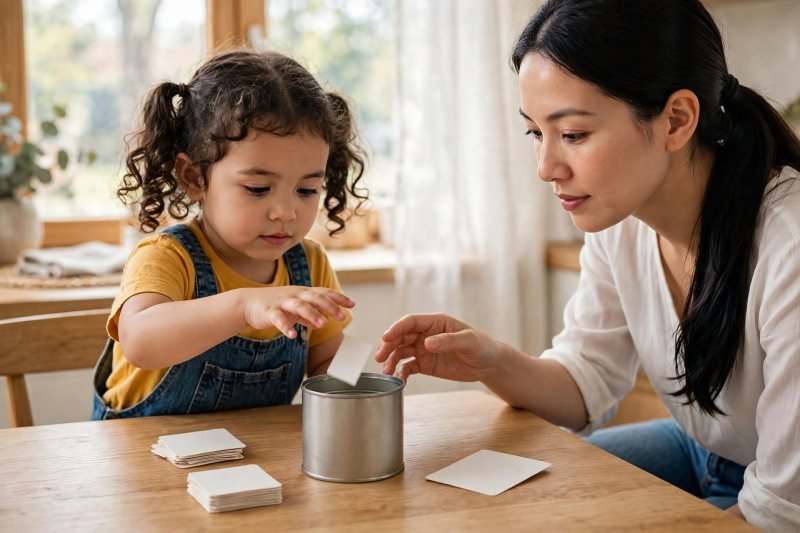
Play the can-fan swap. Drop the "c" card into the tin can with a clink, pull it out, and park it before -an: "/k/… an… can!" Now your child drops in f — fan! Then m (man), then p (pan). Same ending, new beginning.
-
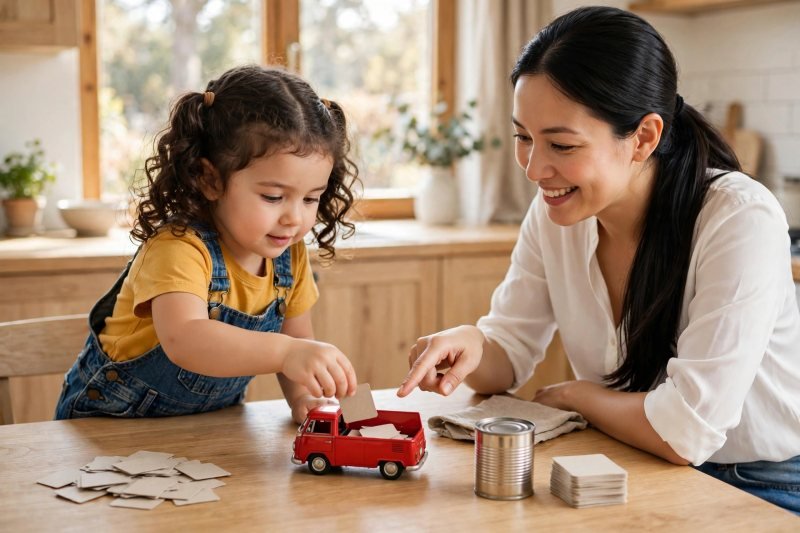
Pack the van. Mix the starter eight cards with outsiders like dog, sun, and pig. Your child reads each card — only -an words ride in the van. Wrong passenger? "Does it say -an?"
-
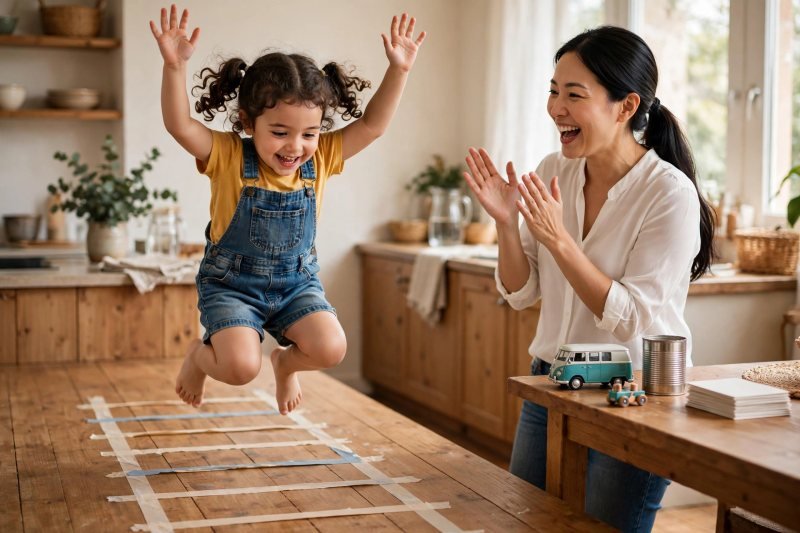
Hop the word ladder. Tape rungs down the hallway: can, pan, ran, man, fan, van, tan, ban. Each rung changes only one letter. Hop rung to rung, reading each word before the next hop. Last rung — arms up!
-
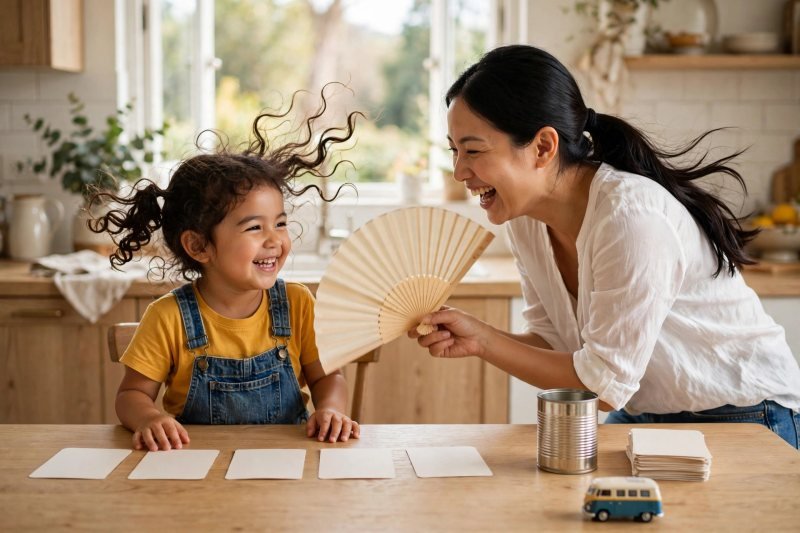
Fan the words. Lay five family cards in a row. Your child reads each one; after every correct read, waft the paper fan like a victory breeze. Miss one? Stretch it together ("/v/… an… van!"), then earn the breeze.
-
Make man-in-the-van silly sentences. Deal three cards each and build the silliest sentence you can from family words: "The man ran with the fan in the van!" Read them back in your most dramatic voice.
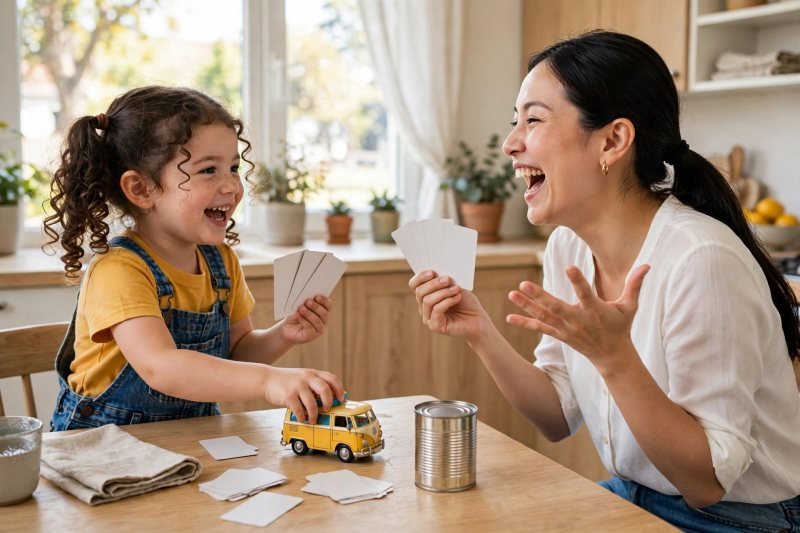
-
Stretch the crew. Some members start with letter teams: plan, scan, span, clan, than. Stretch the team slowly — "sssccan" — then let it snap onto "-an."
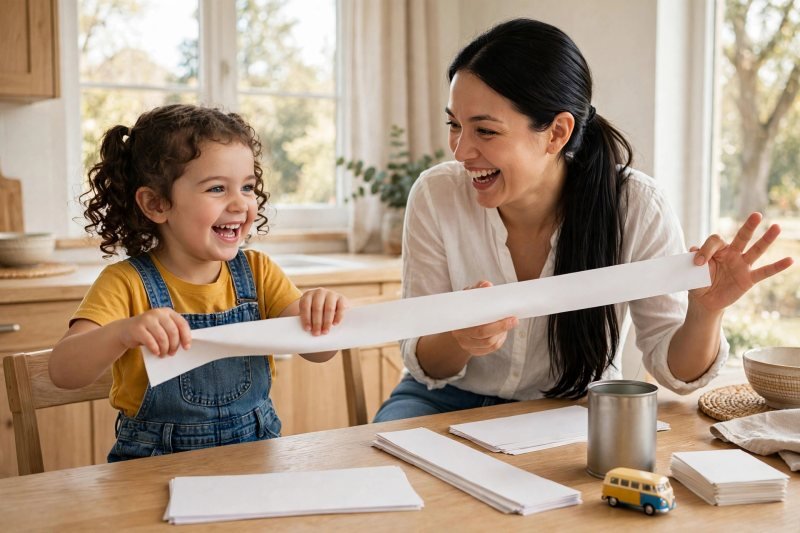
-
Taste the food pair. Two family members live in the kitchen: bran and flan. Say them, build them with the cards, and if you have them, taste them — crunchy bran, wobbly flan.
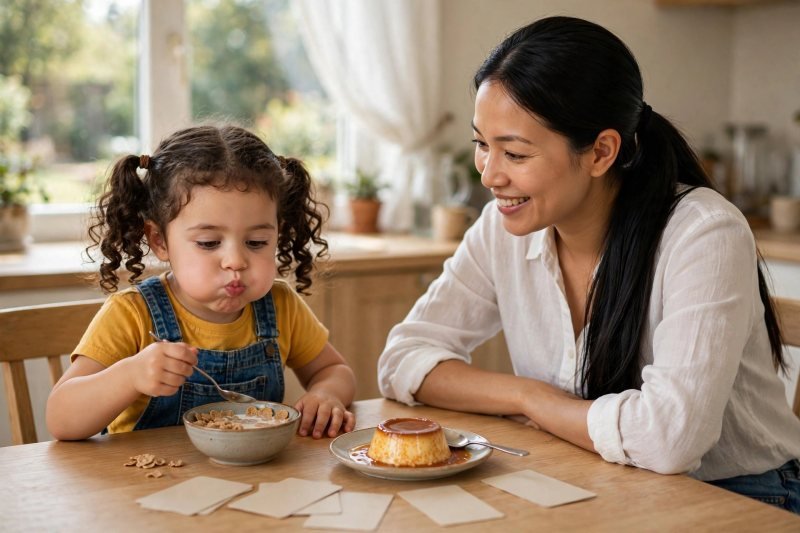
-
Meet the name twins. Dan and Jan are names, and names start big: capital D, capital J. Play pairs: flip two cards, keep the match, read the word to claim it.
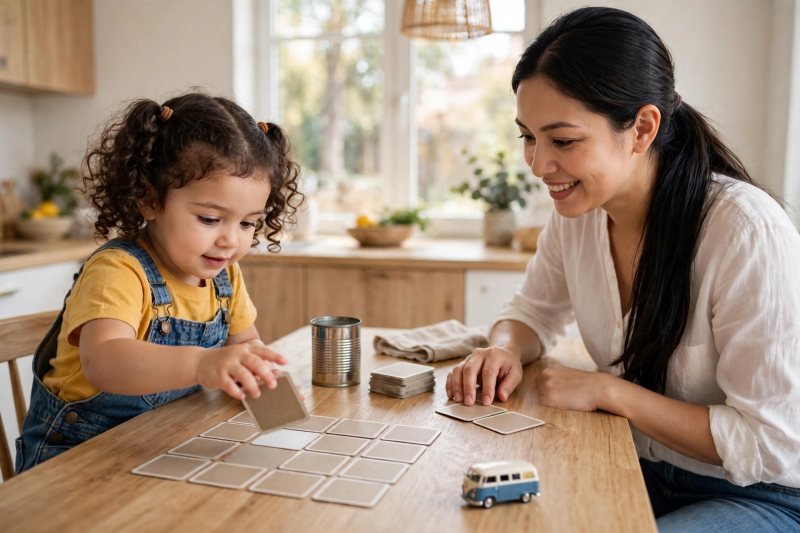
-
Learn the tiny word "an" and star the list. Last card: "an" — the little word before vowel sounds: an apple, an egg, an ant. Then sit with your copied list: your child reads all 18 words and stars every one read without help. Tape the starred list to the fridge.



Make it easier
Start with three words (can, fan, man) and add one new family member per day. You say the first sound, your child says "-an," then blend together — teamwork reading counts.
Make it harder
Dictate: you say a family word, your child builds it with the letter cards. Copy the starter eight with crayons — writing cements the pattern.
Other ways to play it
- Driveway version: chalk one giant -an on the pavement, write starters around it, and hop starter to starter reading each.
- Car version: you say "can," your child answers with any family word. No repeats.
How it changes by age
- The sweet spot is 4–5: most children know letter sounds and are beginning to blend. Younger siblings can do the can-can kicks and echo the words — real pre-reading work. The kindergarten hub has more activities matched to ages 4–5.
What they're learning
Onset-rime: splitting a word into its first sound and ending chunk — the skill behind early decoding. Blending: joining onset + chunk into a whole word, first slowly, then at speed. Chunking: reading "-an" as one unit — the shortcut that makes early reading fast. Pattern recognition: one shared ending unlocks eighteen words, and the idea transfers to every family after this one. Decodable words: every one of the 18 words can be sounded out with the chunk they just learned — real reading, not memorizing. If your child loved hearing rhymes before reading them, our Rhyming Words for Preschoolers article plays with the same listening muscles for younger ears. More sound-play lives on our phonics hub, and the reading hub gathers every early-reading activity in one place.
Clearing up
Should my child memorize all 18 words? No — the goal is the pattern. The words are practice; the chunk is the prize. What if my child just guesses from the first letter? Normal. Cover the starter, read "-an" together, uncover, blend. The habit replaces the guessing. When do we move to the next family? When the starter eight are read easily on two different days — confidence first, then the next chunk.
Questions parents ask
What are an family words?
What are the 18 an family words?
How do I teach my 4-year-old to read an family words?
Does "than" really rhyme with can?
What is the difference between at family words and an family words?
What should my child learn after the an family words?
Which 18 words are in the -an family? Every word below shares can's exact -an ending. Master the starter eight first, then grow into the rest.
The starter eight: can – fan – man – pan – ran – tan – van – ban. can — a metal tin that holds soup; also "I can read!". fan — it blows cool air on a hot day. man — a grown-up person. pan — a flat pot for cooking eggs. ran — what you did when you ran across the yard. tan — the color sunshine paints on skin. van — a big car that carries the whole team. ban — to say "no more!" to something.
The stretch crew: plan – scan – span – clan – than. These start with two-letter teams, so they take a little more blending muscle. plan — deciding what to do next, like a birthday plan. scan — to look all over, like scanning the sky. span — how far something stretches, like a bird's wings. clan — a big, big family group. than — a comparing word: "bigger than a mouse".
The food pair: bran – flan. bran — the healthy, crunchy part of cereal grains. flan — a sweet, wobbly dessert.
The name twins and the tiny word: Dan – Jan – an. Dan — a boy's nickname, short for Daniel. Jan — a girl's nickname, short for Janet. an — the tiny word before vowel sounds: an apple, an egg.
Copy the 18-word list onto paper before the session, so the starring round in step 10 flows without pausing.

save it for later
Pin this for the next rainy afternoon
Keep it on a board so it is there when you need it, rather than when you happened to find it.
Save to Pinterest

