


Counting to 100 Activities for Kindergarten (That Aren't Worksheets)
These counting to 100 activities for kindergarten turn the big milestone into play — no worksheets, no drill sheets. Ten hands-on ideas: hundreds-chart games, movement counting, 100-object collections, and estimation jars for ages 5–6.
The best counting to 100 activities for kindergarten skip the worksheets: count 100 real objects into groups of ten, count 100 steps or hops, play counting games on a homemade hundreds chart, and guess-then-count with an estimation jar. Count daily in short bursts and supply the tricky decade words cheerfully when they stall.

The short version
- Count real, touchable things — 100 blocks, 100 shells, 100 steps — not numbers on a page.
- Group by tens from the start; ten towers of ten is the clearest picture of 100.
- The only hard parts are the decade words (twenty-nine → thirty); supply them and move on.
- Movement counting holds a 5-year-old's attention far longer than sitting still.
- Guess-then-count games build estimation alongside the number sequence.
- Short daily bursts beat one long session — five minutes of happy counting wins.
- Age
- Ages 5–6
- Prep
- 5 min
- Play time
- 15 min
- Mess
- Low
- Difficulty
- Easy
- Where
- Both
Why kids love this
Because a hundred is gloriously, ridiculously BIG — and nobody is making them write it down. They get to shout numbers at full volume, jump on the tens, guard a treasure collection of 100 shells like a dragon, and win races by counting. The number 100 stops being a worksheet box and becomes something they climbed, hopped, collected, and conquered.
Why is counting to 100 a big kindergarten milestone? Counting to 100 is when numbers stop being a short song and start being a system. The stretch to 100 teaches the real prize — the repeating tens pattern (twenty, thirty, forty…) that makes every bigger number predictable. Kids who grasp it stop memorizing and start figuring numbers out, the thinking behind place value and addition later.
How can my child practice counting to 100 without worksheets? By counting things that matter to them. A hundred is hard to picture on a page but easy to feel: a hundred hops, a hundred pasta shells, a hundred steps down the sidewalk. Each idea below gives your child a reason to keep counting, and the repetition teaches quietly in the background. Rotate through them over a few weeks — variety keeps a 5-year-old coming back for the next ten. One trick that works well: keep a simple tally on the fridge, ten small boxes a day, and let your child check one off after every counting burst. Watching the boxes fill shows them that 100 is built piece by piece, not memorized in one go.
What should I do when my child gets stuck at 29 or 39? Celebrate — getting stuck means they have learned the pattern and just need the next "decade word." The jumps from twenty-nine to thirty and thirty-nine to forty are the only genuinely hard moments, because the tens words don't sound like the numbers that build them. Supply the word cheerfully — "thirty-nine… forty!" — and keep going. Never restart from one; that teaches that mistakes erase progress.
How do I know counting to 100 is really sticking? Watch for unprompted use: counting stairs unasked, announcing "like a hundred" crackers in the box, correcting you when you skip a number in a story. Another tell: starting somewhere other than one. Ask "start at 47 and keep going" — picking up mid-stream means the sequence is truly learned. When counting backward from 100 by tens is smooth, try addition games for kindergarten or explore the math hub for what comes next. For younger siblings, our counting games for preschoolers build the same skills through play.
What you'll need
- Blocks, LEGO bricks, or any stackable toys (about 100 pieces)
- Dried pasta shells, pebbles, buttons, or pinecones for the collection
- A clear jar (for the estimation game)
- Nine sheets of paper + tape (hundreds-chart game board)
- A big soft foam die + a toy car (dice race)
- Masking tape (race path)
- A small bag or pouch (the 100-collection mission)
- Sidewalk, stairs, and a neighborhood to walk in
Before you start
Gather about 100 small countable objects (blocks for the towers; pasta or buttons for the collection — they can overlap). Tape the nine paper sheets into a 10-by-10 grid for the treasure hunt board. Lay a masking-tape zigzag path on the rug for the dice race. Everything else needs nothing but shoes and a little outdoor space.
How to do it
-
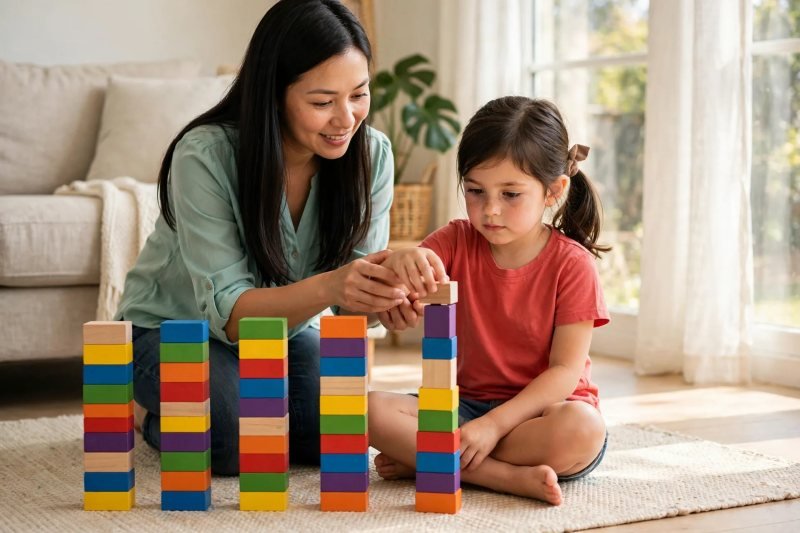
Ten towers of ten. Build ten block towers, ten blocks each, counting each tower as it grows. Then count the towers: ten towers of ten is one hundred. Seeing 100 as ten neat groups is the most useful picture of a hundred a kindergartner can get. (Pairs with our counting to 20 activities.)
-
The sidewalk hundreds walk. Count every step to 100 — you count first, and within days your child will charge ahead shouting the tens. Hop the tens, stomp the fives, tiptoe the rest. Two minutes, and real energy burned.

-
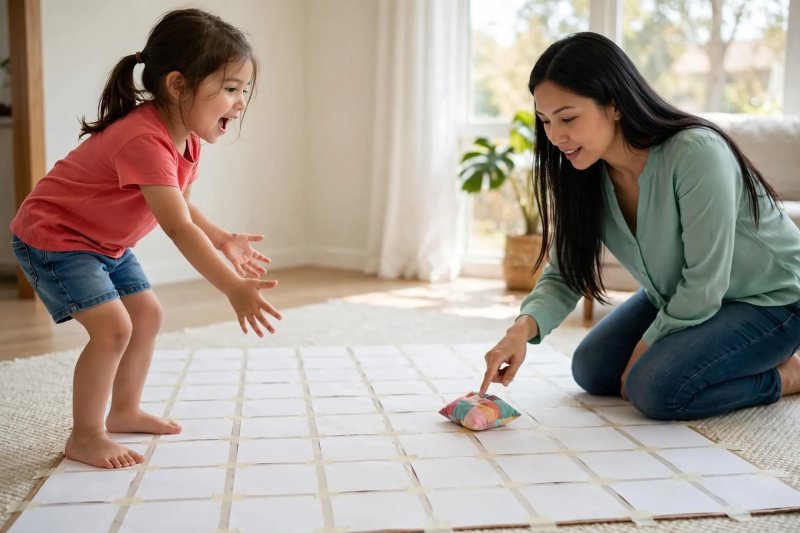
Hundreds-chart treasure hunt. Tape nine paper sheets into a big blank 10-by-10 floor grid. Toss a beanbag on, then count on from where it lands — forward near the start, backward near the end.
-
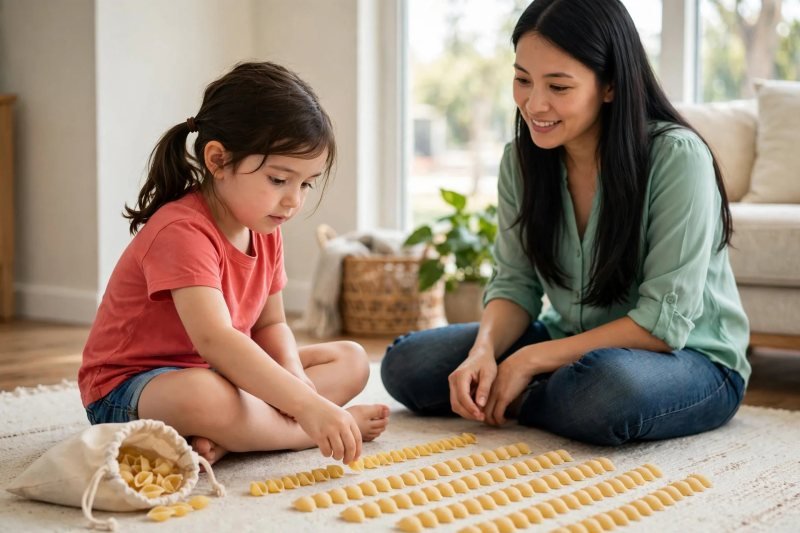
The 100-shell collection. Mission: collect 100 of something — pasta shells, pebbles, buttons. Count them into groups of ten, each group its own row. Kids guard these collections fiercely and recount them unprompted, which is the whole point.
-
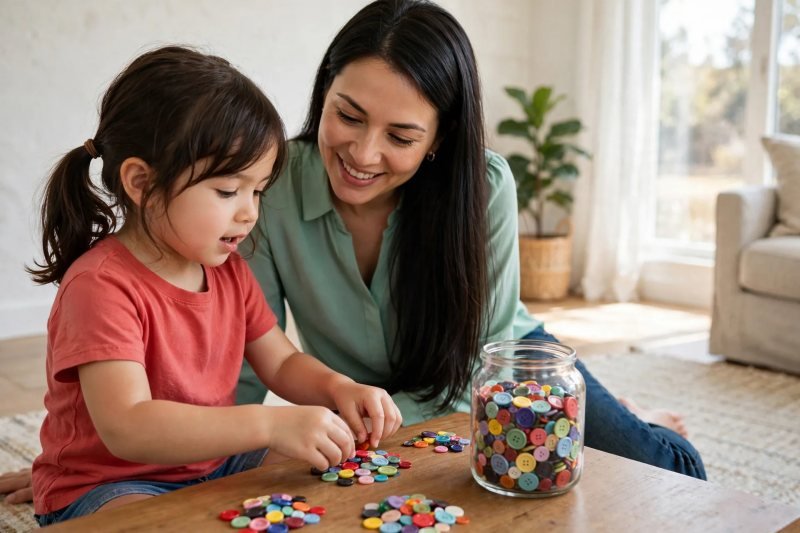
The estimation jar. Fill a clear jar with buttons or beans. Ask "how many are in there?", take the guess seriously, then count them out together in tens. The guess-then-check loop builds early estimation. Refill weekly with something new.
-
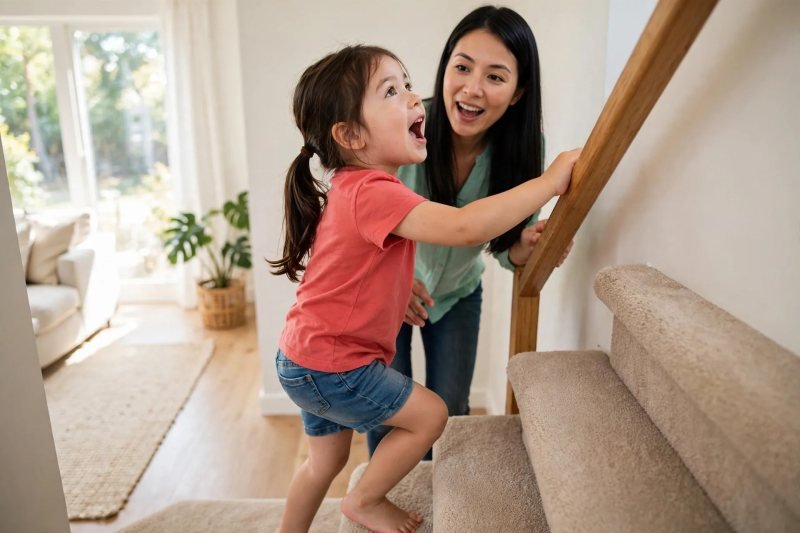
Staircase to 100. Count the stairs on every climb and keep a running total across the day. Twelve stairs times eight trips is 96 by dinner — suddenly someone is very motivated to make one more trip. Real numbers on real legs stick.
-
Skip-count jumps. Count by tens to 100 with a big jump on each ten — "ten! (jump) twenty! (jump)…" Then try fives. Skip counting is the bridge to multiplication, learned here as a jumping game years before the times tables.

-
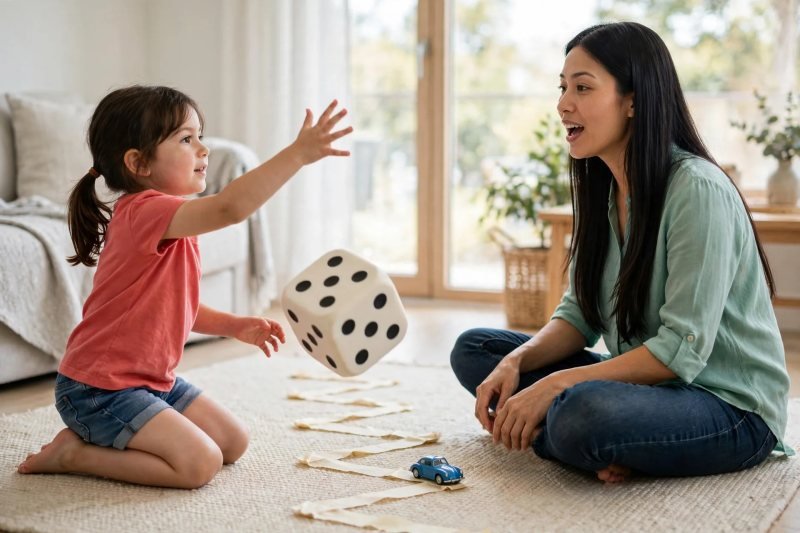
Dice race to 100. Lay a masking-tape zigzag on the rug. Roll a big foam die, move a toy car that many marks, and count the car's total aloud each turn. First car past 100 wins. Counting on from the car's spot ("forty-three… forty-four, forty-five!") is the hidden lesson.
-
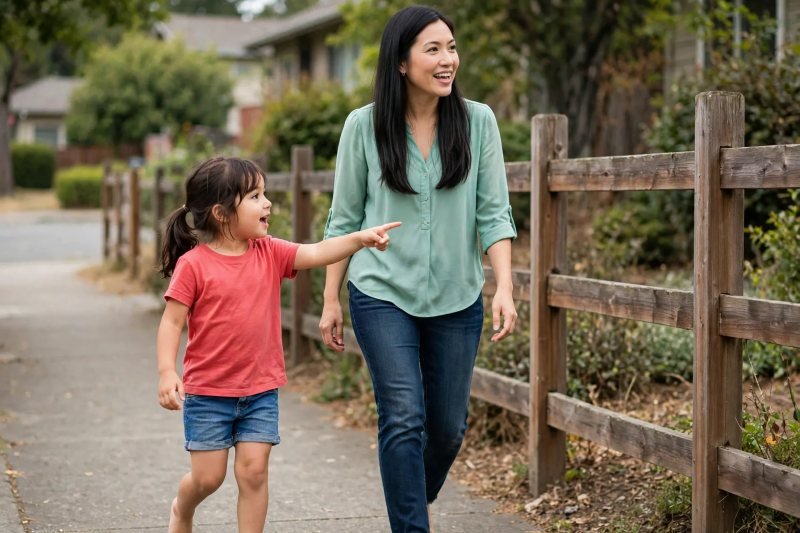
Fence-post counting walk. Pick something plentiful — fence posts, mailboxes — and count them on a walk while your child spots and points. Around post 40 the numbers wobble, which is exactly the practice the tens pattern needs.
-
The hundred-song week. Sing the count to 100 across the week — ten numbers a day, adding the next ten each morning. By Friday the whole hundred has a melody. Singing locks in sequence memory like nothing else.



Make it easier
Start with counting to 50; stretch to 100 once 50 feels easy and a little boring. Count by tens only at first (10, 20, 30… 100) — shorter and punchier. You say the hard decade words; your child echoes them, then takes over. Lean on the movement activities — the body remembers what the sitting brain forgets.
Make it harder
Count backward from 100 by tens, then by ones. Start mid-sequence: "start at 63 and keep going" — no restarting from one. Count by fives and twos all the way to 100. Estimate first, always: "how many steps to the corner?" then count and compare. Roll two dice in the race and add them before moving.
Other ways to play it
- Night-count: count stars, or count 100 breaths at bedtime (you will rarely reach 100).
- Water count: count 100 drops from a faucet into a cup — slow and splashy.
- Sound count: close eyes and count 100 claps, stomps, or drum taps.
- 100-day challenge: count one special object into a jar each day for 100 days.
- Backwards week: do every activity counting down instead of up.
How it changes by age
- Ages 5 to 6. Younger siblings (3–4) can join the movement games and echo the tens — our counting activities for toddlers has ideas sized for them. At 5, expect wobbly decade words and proud, loud counting; at 6, expect faster sequences and first attempts at fives and tens. When 100 feels small, it is time for 200.
What they're learning
The base-ten pattern: the tens repeat predictably — the insight behind place value. One-to-one correspondence at scale: touching each of 100 objects exactly once. Cardinality: the last number said is the total — a hundred means 100 things. Estimation: guessing, then checking — the beginning of number sense. Skip counting foundations: tens and fives as a rhythmic, physical pattern. Counting on: starting from a number other than one and continuing. Persistence: sticking with a long count is genuine stamina training.
Clearing up
Blocks go back in the bin (count them in — bonus round). The paper grid folds up; the masking-tape path peels off the rug. The jar lives on a shelf for weekly refills; the 100-collection gets its own special bag. Two minutes, and your child will almost certainly recount the collection on the way back in.
Questions parents ask
At what age should a child be able to count to 100?
What comes after counting to 100?
Should I correct my child when they skip numbers counting to 100?
How long does it take a kindergartner to learn to count to 100?
What if my child can say the numbers but can't count 100 objects?
Resist the urge to test. The moment counting to 100 becomes a performance ("go on, show grandma"), some of the joy leaks out. Keep it inside games and routines, and the milestone will arrive on its own — usually announced at top volume halfway down the sidewalk.

save it for later
Pin this for the next rainy afternoon
Keep it on a board so it is there when you need it, rather than when you happened to find it.
Save to Pinterest


