


7-Year-Olds
Activities for 7-year-olds.
Seven is the age of getting into things: collecting, sorting, organising, making a club, keeping a notebook, becoming briefly and intensely expert in one subject.
Activities can have several steps and a genuine difficulty to them. Simplifying too far is the usual mistake — a seven-year-old given something obviously easy will say so.
This is also a good age for making things for other people: cards, presents, a game to teach a younger sibling.
Activities
-

Ways to Make 10p: Coin Combinations Worksheet Fun (UK)
Can your child find every single way to make 10p? This hands-on UK worksheet activity uses real 1p, 2p, 5p and 10p coins to hunt down all 11 coin combinations that add up to ten pence — satisfying money maths practice for ages 6–8.
-

Money Worksheets for Kids: Counting Coins Printables
These money worksheets for kids turn spare change into math practice: counting coins printables for ages 6–8 covering coin values, skip counting, and mixed-coin totals — one skill per page.
-
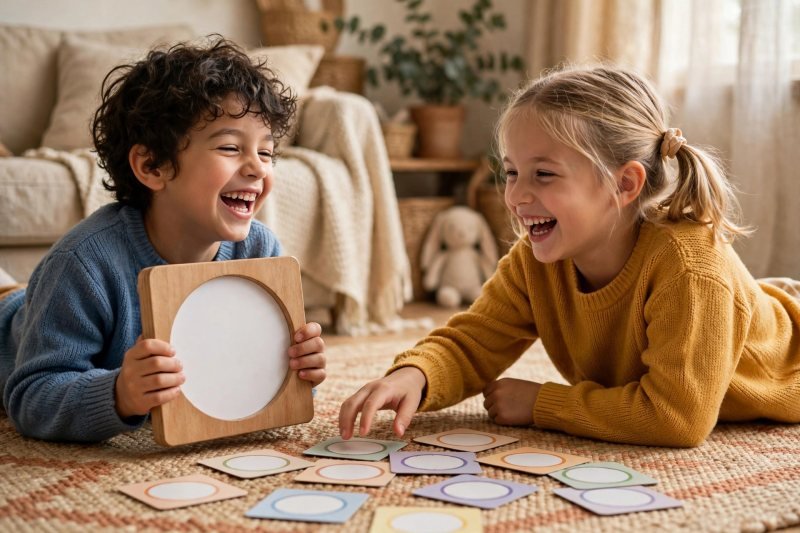
Telling Time Games for Kids: 10 Ways to Practice the Clock
Ten telling time games for kids ages 6–8 that turn o'clock, half past, and quarter past into play — bingo, scavenger hunts, human clocks, and a pretend appointment book. Short rounds, real times, things you already own.
-

Telling Time Worksheets: O'Clock, Half Past and Quarter Past
A telling time worksheet pack for ages 6–8: o'clock, half past, and quarter past practice with draw-the-hands tasks, a homemade-clock answer check, and a 20–30 minute session plan that makes clock reading automatic.
-
Telling Time to the Half Hour: Half Past Made Simple
One playful 15-minute lesson that teaches six- to eight-year-olds half past times: the straight-down rule, the drifting hour hand, and the "name the number it left" trick.
-

Measuring in Centimetres: Worksheets and Activities (UK)
Ten measuring in centimetres activities for 6–8-year-olds: proper ruler technique, millimetre counting, draw-to-length worksheets, and a guess-and-record chart — hands-on metric fun with zero mess.
-
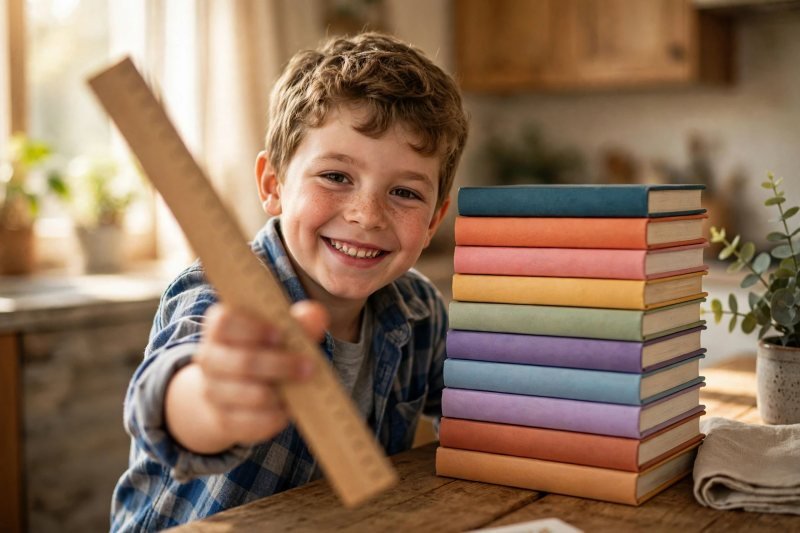
Measuring With a Ruler: A Kid's First Guide
A kid's first guide to measuring with a ruler for ages 6–8: find the zero, read the inch marks, land on half-inches, and measure real things around the house.
-

Estimation Activities for Kids: 10 Guess-and-Check Games
Ten estimation activities for kids ages 6–8 that turn guessing into real math practice: jar guessing games, how-many-steps challenges, and guess-then-measure experiments. Guesses land in sensible ranges (tens, not thousands), and every guess gets counted, measured, or weighed to check it.
-
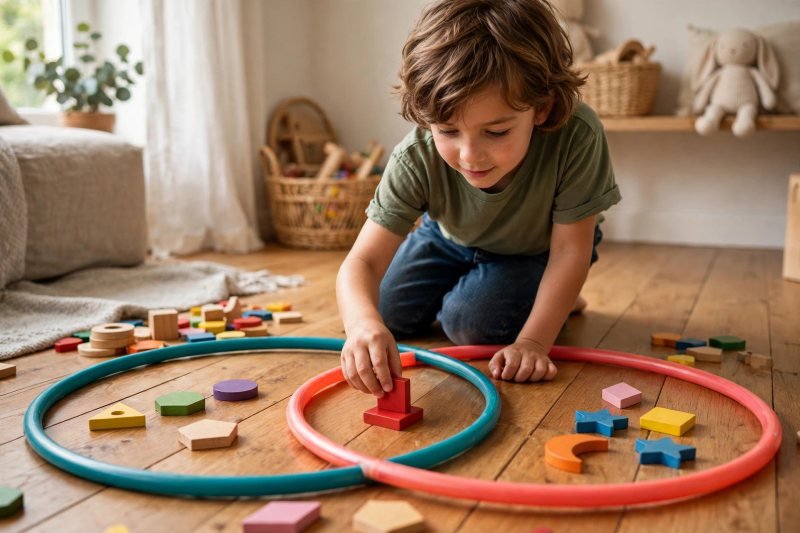
Sorting by Two Attributes: 3 Venn Games for Kids
Two overlapping hoops, two rules, one tricky middle: kids sort by two attributes at once.
-

Odd and Even Numbers Games
Odd and even numbers games turn math into a team sport: ten screen-free games where kids ages 6–8 draft numbers onto the Odd Team or the Even Team — sorting, tossing, racing, and hunting their way to confidence.
-

Number Patterns for Kids: Odd, Even and Skip-Counting Sequences
Number patterns for kids click when odd and even become two teams to join. Ten activities take ages 6–8 from the leftover test through the evens to 40, the 5s and 10s to 100, and spot-the-rule cards.
-

Growing Patterns for Kids: Spot the Rule and Extend It
These growing patterns activities for kids turn "what comes next?" into a detective game for ages 6–8. Build block staircases, chain toothpick squares, and stack growing triangles — then spot the rule that makes each pattern grow and extend it yourself.
-

Symmetry Activities for Kids: Mirror Play and Pattern Blocks
Hands-on symmetry activities for kids — mirror play, paper folding, and pattern blocks — that turn the line of symmetry into a real discovery for ages 6–8.
-

Sunburn Treatment for Kids: Calm First Aid for Sore Skin
Sunburn treatment for kids, calmly and honestly: get out of the sun, cool the skin for about ten minutes, moisturize gently, offer fluids, avoid home-remedy mistakes, and know exactly which signs mean see a doctor promptly.
-
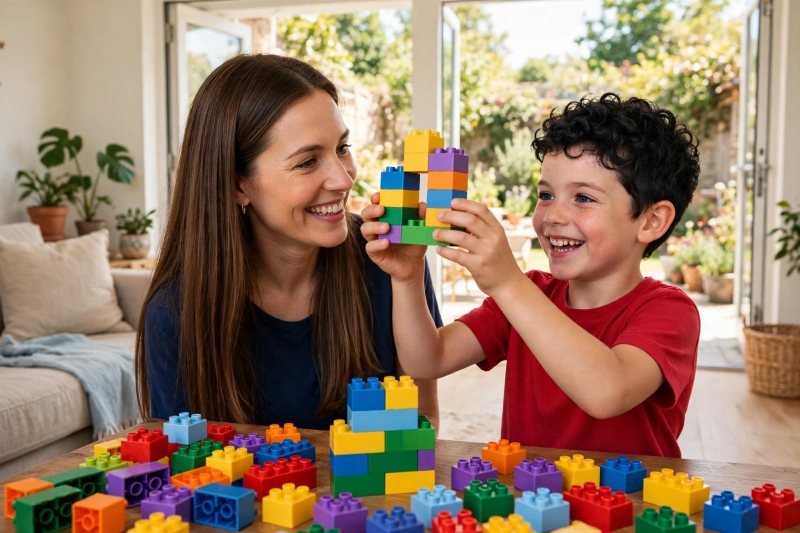
Lego Birthday Party Ideas: Build the Best Bash Ever
A Lego birthday party for a seventh birthday, built around colorful building bricks: brick-color decorations, a free-build station, two friendly contests, brick-shaped food, a cake with seven candles, and a group-build finale.
-

Subtraction Number Bonds: The Inverse Facts Kids Must Know
Ten steps to teach 6–8-year-olds that subtraction number bonds are addition facts turned inside out — if 7 + 3 = 10, then 10 − 7 = 3. Fact triangles, hidden-part games, making change.
-

Subtraction Facts to 10: 10 Strategies That Work
A 10-day plan that builds real subtraction facts to 10 fluency for ages 6–8 — no worksheets, no timed tests, no drilling. Ten thinking strategies (think addition, fact families, ten pairs, counting back), five minutes a day, said out loud together.
-

Subtraction Word Problems: Real-Life Stories Within 10
Subtraction word problems kindergarten learners can actually picture: 10 real-life take-away stories within 10, acted out with counters, drawn before-and-after, and said as full subtraction sentences. Ages 6–8.
-

Big Kid Fall Outfits: Back-to-School Style for Ages 6-8
Kids fall outfits for ages 6–8, built the big-kid way: one coordinated capsule per child, 8 named school-ready looks from Denim Days to Picture Day, and a night-before system that lets them dress themselves in minutes.
-

Number Bonds to 20: 10 Games for First and Second Grade
Ten hands-on games to help your 6- to 8-year-old master number bonds to 20 — pairs like 17 + 3. Treasure splits, snap cubes, and a shopkeeper game with real coins.
-

Doubles Addition Games: 10 Playful Ways to Master 1+1 Through 10+10
Ten doubles addition games for ages 6–8 that make 1+1 through 10+10 stick for good: mirror matching, double dice, domino doubles hunts, card slap, pair hunts, ten-frame twins, snack doubles, doubles bingo, hopscotch, and an honest bridge to doubles-plus-one. Every game sets up in minutes with things you already own.
-

Teen Numbers Activities That Make 11–20 Finally Make Sense
These teen numbers activities turn 11–20 from a memorized chant into real understanding for ages 6–8. With ten-frames, bean bundling, and the honest story of eleven and twelve, your child discovers the base-ten structure hiding inside every teen number: 13 is simply 10 + 3.
-

Skip Counting by 2s, 5s and 10s: Games That Make It Click
Skip counting by 2s, 5s and 10s turns number lines into rhythms kids can feel in their feet. These ten active games take ages 6–8 from 2, 4, 6, 8 up to 40 and the 5s and 10s all the way to 100 — and weave in the real-life skills that make it stick: counting nickels and dimes, reading minutes on a clock, and the ideas behind multiplication.
-

How to Help a Struggling Reader in 1st Grade: 9 Evidence-Based Steps
How to help a struggling reader in 1st grade: 9 practical, evidence-based steps — daily read-alouds, phonics games, decodable books, teacher partnership, and when to ask for extra support.


