


Ways to Make 10p: Coin Combinations Worksheet Fun (UK)
Can your child find every single way to make 10p? This hands-on UK worksheet activity uses real 1p, 2p, 5p and 10p coins to hunt down all 11 coin combinations that add up to ten pence — satisfying money maths practice for ages 6–8.
There are exactly 11 ways to make 10p using UK 1p, 2p, 5p and 10p coins: 10p; 5p+5p; 5p+2p+2p+1p; 5p+2p+1p+1p+1p; 5p+five 1p coins; five 2p coins; four 2p coins+two 1p coins; three 2p coins+four 1p coins; two 2p coins+six 1p coins; one 2p coin+eight 1p coins; and ten 1p coins. This worksheet activity has children discover each combination with real coins.

The short version
- There are exactly 11 coin combinations that make 10p — no more, no less
- Uses real UK 1p, 2p, 5p and 10p coins for hands-on money maths
- Children work through 11 coin trays from the easiest combination to the trickiest
- Builds addition to 10, skip-counting in 2s and 5s, and systematic thinking — the same adding-to-10 practice as counting to 10 activities
- No mess, 30–40 minutes, ideal for ages 6–8 (UK Year 2–3)
- A printable worksheet PDF accompanies the published article
- Age
- Ages 6–8
- Prep
- 5 min
- Play time
- 35 min
- Mess
- None
- Difficulty
- Easy
- Where
- Indoor
Why kids love this
Most money worksheets ask children to add up prices. This one flips the challenge: here are the coins, now find every way to make 10p. It feels like a treasure hunt rather than homework. Children handle real money, hear the clink of coins on the table, and get the small thrill of discovering a combination nobody in the family had thought of. There are exactly 11 ways to make 10p, and hunting for the last one or two keeps children absorbed far longer than a page of sums. Filling the final tray brings a real sense of completion — they have solved the whole puzzle.
What you'll need
- Real UK coins: at least ten 1p coins, five 2p coins, two 5p coins and one 10p coin
- The Ways to Make 10p worksheet (a printable PDF is included with the published article — see Notes)
- Plain paper and a ruler, if you prefer to draw your own 11 coin trays
- A pencil or crayon for ticking off each finished combination
- Small bowls or a muffin tin for sorting the coins (optional but helpful)
Before you start
1. Gather your coins and wipe any sticky ones — pocket coins pick up grime. 2. If you are not printing the worksheet, draw 11 long empty rectangles ("coin trays") on plain paper, one row per combination, with room to lay coins inside. 3. Tip all the coins onto the table and ask your child to sort them into four piles by colour and size: copper 1p coins, copper 2p coins, silver 5p coins and silver 10p coins.
How to do it
-
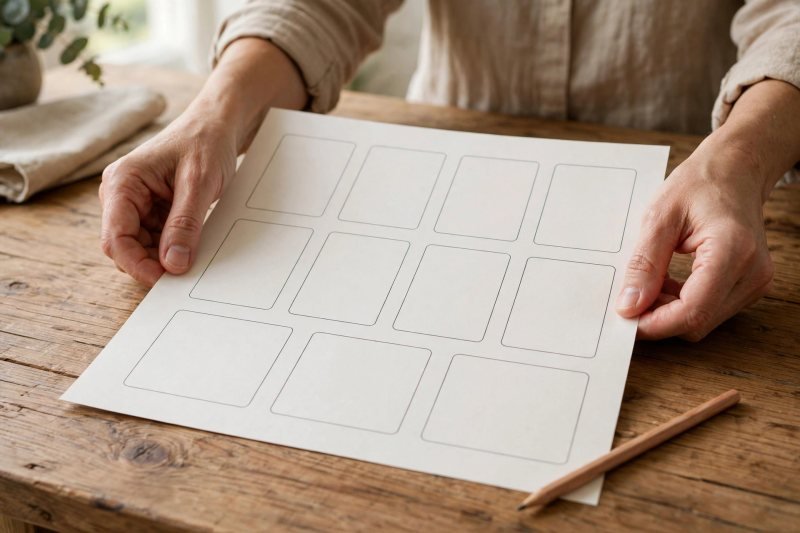
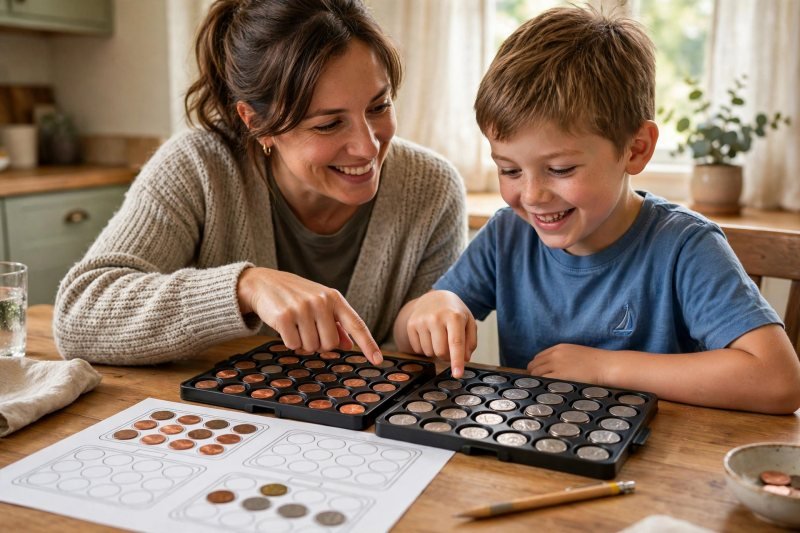
Set out the worksheet — Set out the worksheet with its 11 empty coin trays, printed or hand-drawn, and put the pencil nearby.
-
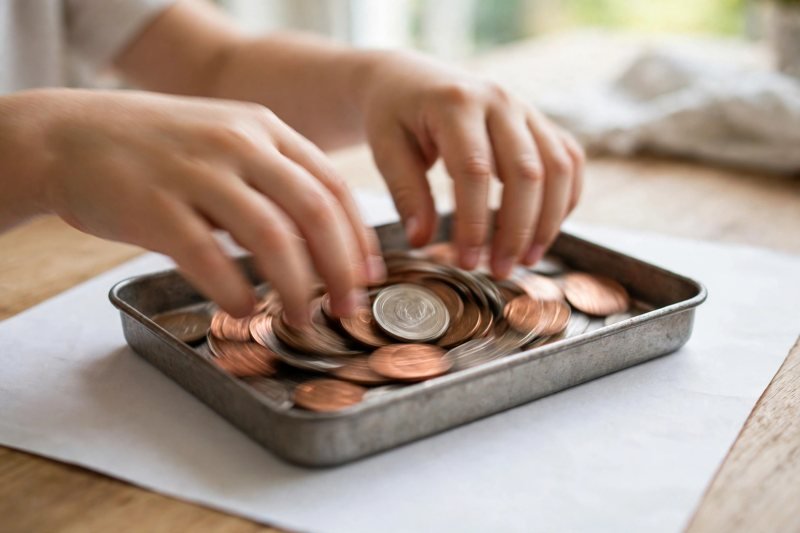
Sort the coins into four piles — Empty the coins onto the table and sort them into four piles: 1p, 2p, 5p and 10p.

-
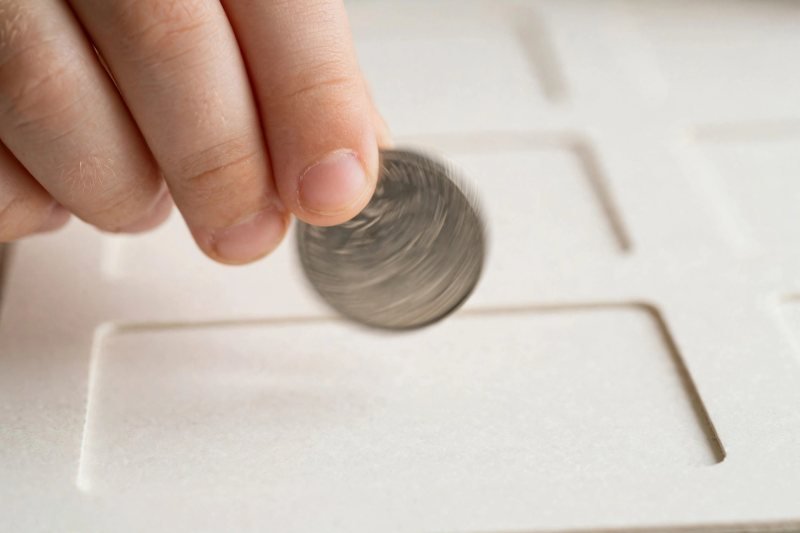
Start with the easy win — one 10p coin — Start with the easy win: place a single 10p coin in the first tray. That is combination number one.
-
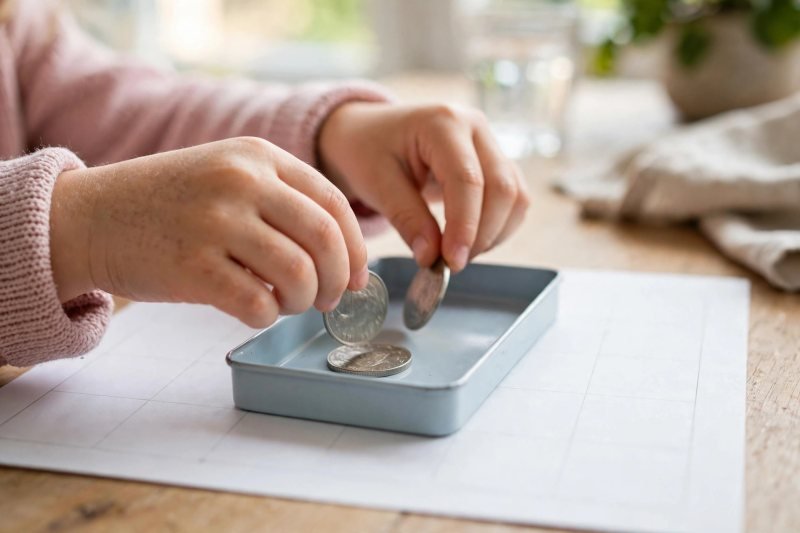
Build 10p from two 5p coins — Build 10p from two silver 5p coins and lay them side by side in the second tray.
-
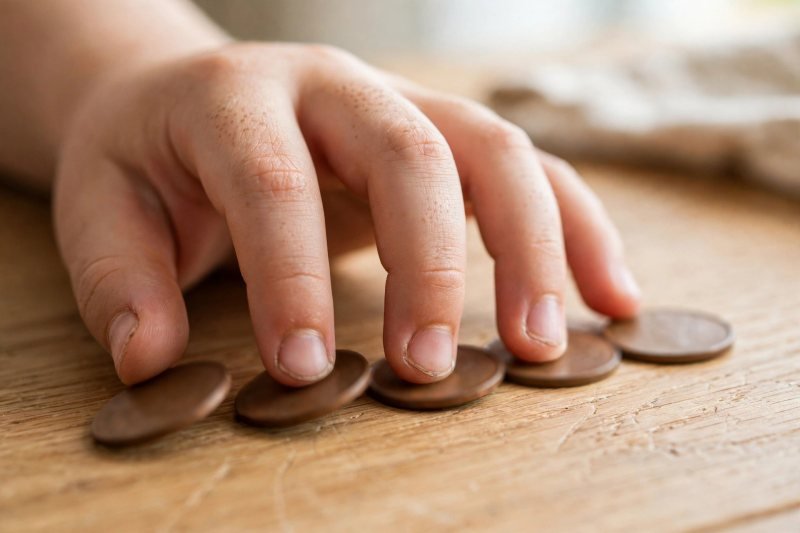
Count five 2p coins into the third tray — Count five copper 2p coins into the third tray, adding as you go: 2, 4, 6, 8, 10p.
-
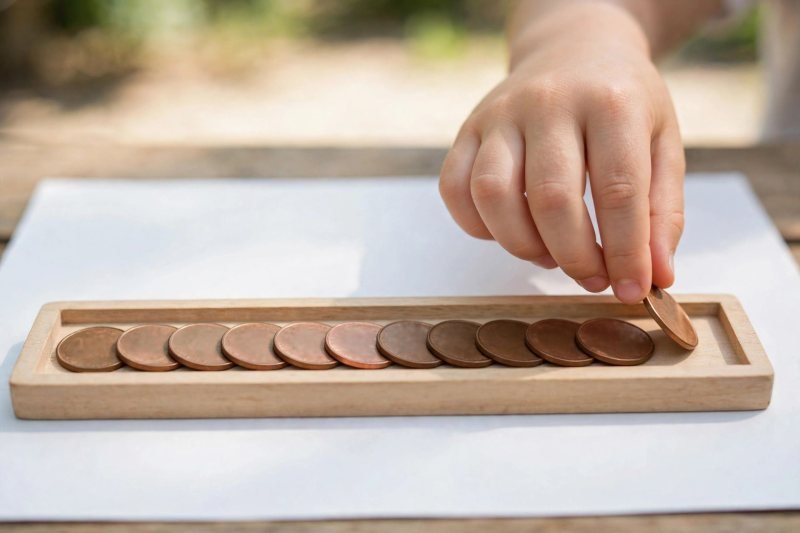
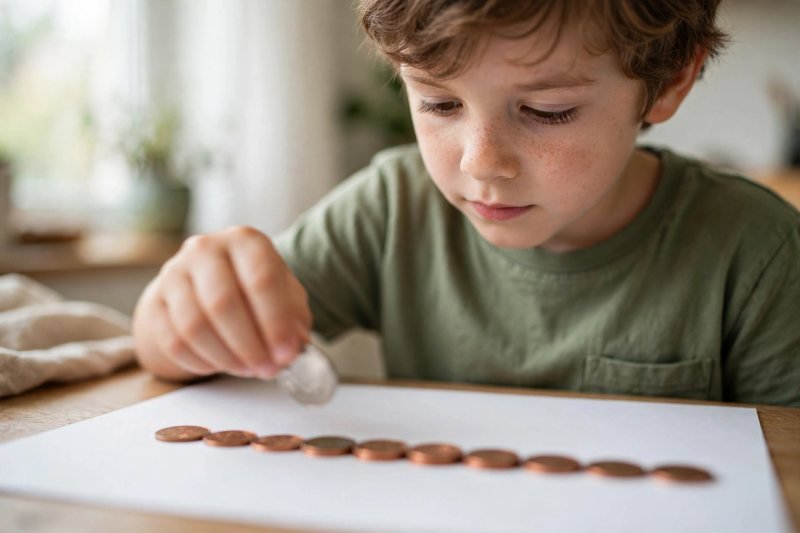
Line up ten 1p coins — Now the fiddly one: line up ten 1p coins in the fourth tray, counting carefully to ten pence.
-
Mix a 5p with 2p and 1p coins — Mix it up in the fifth tray: one 5p coin, two 2p coins and one 1p coin (5 + 2 + 2 + 1 = 10p).
-
Keep the 5p and change the rest — Keep the 5p coin but change the rest: in the sixth tray lay 5p + 2p + three 1p coins, and in the seventh tray lay 5p + five 1p coins.
-
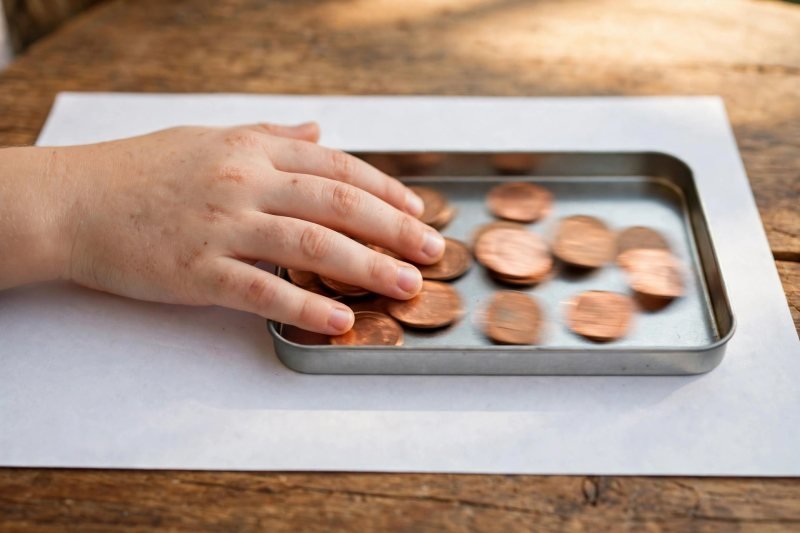
Mix only 2p and 1p coins — Drop the 5p and mix only 2p and 1p coins in the next three trays: four 2p coins plus two 1p coins, then three 2p coins plus four 1p coins, then two 2p coins plus six 1p coins.
-
Fill the final tray and check all eleven — Fill the eleventh and final tray with one 2p coin and eight 1p coins, then count all eleven trays with a grown-up, adding each one up to check it really totals 10p.


Print it out
Make it easier
Begin with just three trays: the single 10p coin, two 5p coins, and ten 1p coins. Add the rest another day. The adult places the coins while the child counts each tray aloud and ticks it off — the same counting practice as counting coins activities. Draw the coin values inside each tray as a guide, so your child is matching rather than inventing — a ten frame shows the same adding-to-10 idea visually.
Make it harder
Turn the coins face down so your child works from size and edge alone, then flip them to check. Set a timer and see how quickly they can find all 11 combinations — then try to beat their own record. Move on to "ways to make 20p", which uses 20p, 10p, 5p, 2p and 1p coins and has many more combinations.
Other ways to play it
- Coin detective: a grown-up lays out a secret combination; the child feels each coin, names it, and works out the total.
- Shopkeeper: price toy-shop items at 10p each and "buy" them with a different combination every time — no repeats allowed.
- Pairs: draw the 11 combinations on cards (coins as simple circles) and play a matching game, pairing each card with its written total.
How it changes by age
- This activity suits ages 6–8, matching what children practise in Year 2 and Year 3 maths in the UK, where recognising coins and solving money problems are part of the curriculum. Confident 5-year-olds can join in with the first three or four trays while an adult counts alongside them. If your 8-year-old finds it easy, jump straight to the "make it harder" ideas.
What they're learning
Adding to 10 using real coin values (1p, 2p, 5p, 10p) — the same number bonds to 10 idea, built with real coins. Recognising UK coins by colour, size and value Counting in 1s, 2s and 5s — the building blocks of skip-counting — skip-counting by 2s, 5s and 10s practises the same skill. Systematic thinking: working through possibilities without missing any or repeating Checking their own work by re-adding each combination — quick dice addition games keep the adding fluent.
Clearing up
Count the coins back into a money box or purse — good extra counting practice. Recycle scrap paper; keep the finished worksheet if your child wants to show a grandparent.
Questions parents ask
How many ways can you make 10p with UK coins?
What coins do children need for this 10p activity?
What is the easiest way to make 10p?
How does this activity help with Year 2 maths?
Can younger children try the 10p combinations worksheet?
The printable Ways to Make 10p worksheet PDF is attached to the published article via the CMS Downloads repeater ("Print it out" block). All 11 combinations were verified arithmetically: the complete set of multisets of {1p, 2p, 5p, 10p} summing to 10p.

save it for later
Pin this for the next rainy afternoon
Keep it on a board so it is there when you need it, rather than when you happened to find it.
Save to Pinterest


