


Sorting by Two Attributes: 3 Venn Games for Kids
Two overlapping hoops, two rules, one tricky middle: kids sort by two attributes at once.
Sorting by two attributes means sorting objects by two rules at once: two overlapping hoops, one rule per hoop, and a middle for objects that satisfy both. A red square goes in the overlap; a red circle in the red ring; a blue square in the square ring; a yellow triangle outside. Finally, kids invent their own rules.

The short version
- Two overlapping hoops = two rules; the middle holds objects that satisfy both.
- Every object has an address: both, one-only, or neither (outside).
- Three rounds: blocks, numbers (even vs multiples of 3), animals (water vs feathers).
- Finale: your child invents the rules and judges your sorting.
- Age
- Ages 6–8
- Prep
- 10 min
- Play time
- 40 min
- Mess
- None
- Difficulty
- Medium
- Where
- Both
Why kids love this
Sorting by two attributes has a magic moment no one-rule game can match: the middle. A red square is both red AND square, so it goes where the hoops cross. Every object gets an address, and defending it out loud is half the fun.
What you'll need
- 2 hula hoops (or 2 loops of yarn, about 6 feet around each)
- About 30 small objects: red squares, red circles or triangles, non-red squares, non-red non-squares — pattern blocks are ideal
- 20 blank index cards + a marker (number round), a basket, and 10–12 small toy animals: a duck, penguin, fish, whale, owl, sparrow, cat, dog, plus a few more
Before you start
1. Clear a big patch of floor — the hoops need room on all sides. 2. Lay the hoops overlapping, with a generous center where both cross. 3. Toss the game-1 objects into the basket.
How to do it
-
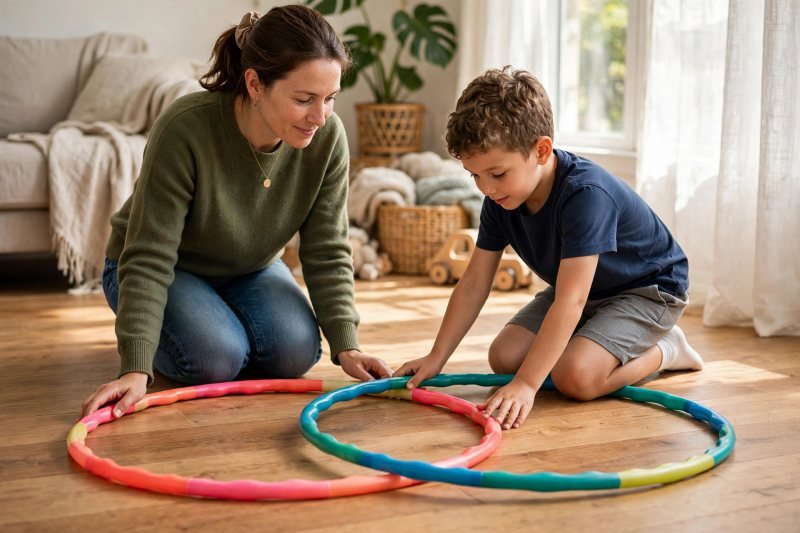
Lay down two overlapping hoops. Set the hoops so they cross like a sideways figure eight, with a middle big enough for several objects.
-
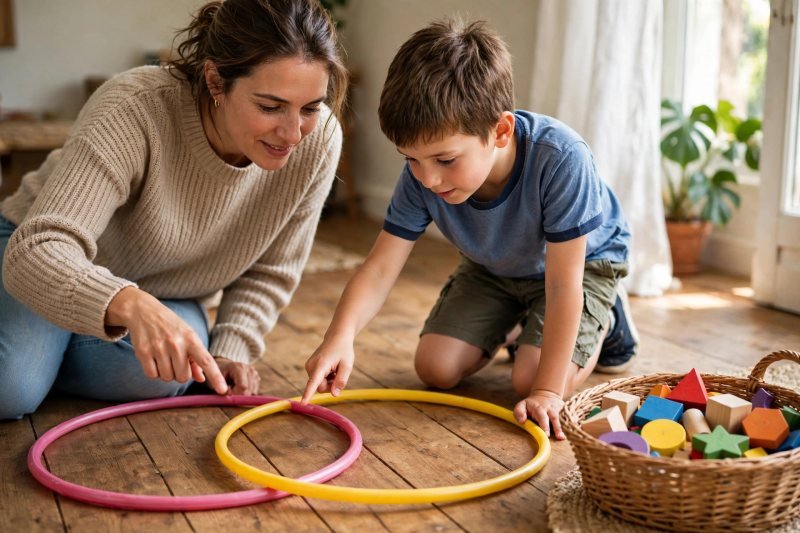
Name the two rules out loud. "This hoop: RED things only." Point right: "This hoop: SQUARE things only."
-
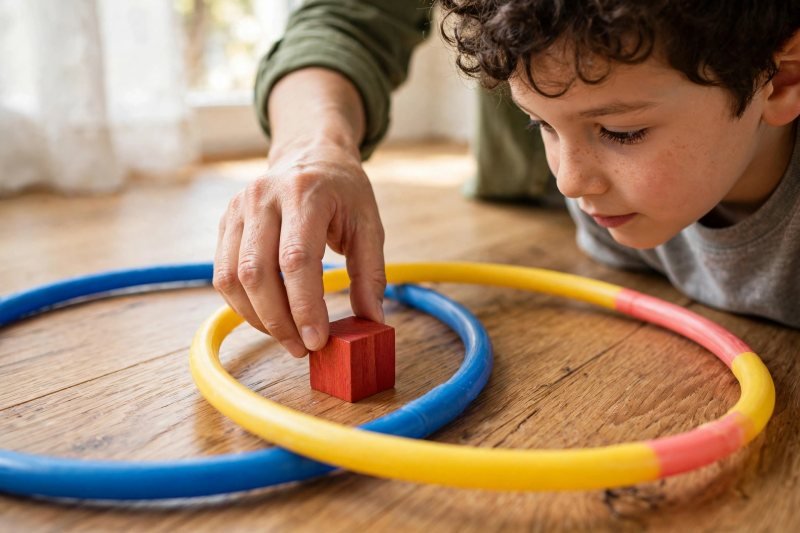
Post the first "both" object yourself. Hold up a red square: "Red? Yes. Square? Yes. It goes where the hoops meet — the middle!"
-
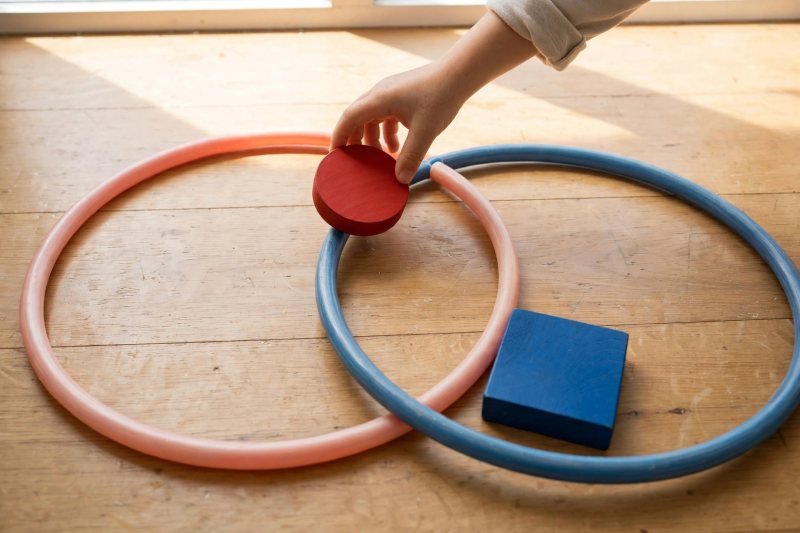
Place one one-rule-only object in each ring. A red circle goes in the red hoop but not the middle. A blue square goes in the square hoop, outside the middle.
-
Put a "neither" object outside the hoops. Hold up a yellow triangle. "Red? No. Square? No. It fails both rules, so it lives outside."
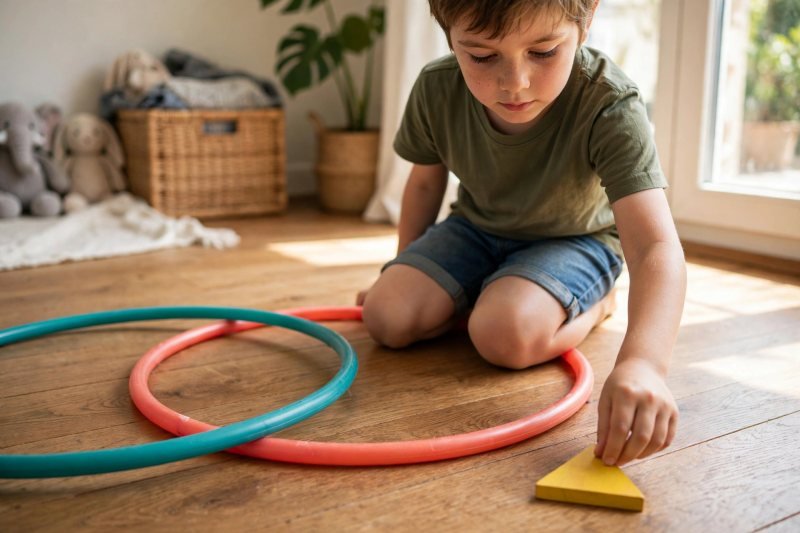
-
Let your child sort the rest. Hand over the basket. They ask both questions per object — "Red? Square?" — and defend the address. Save fixes for the check round.
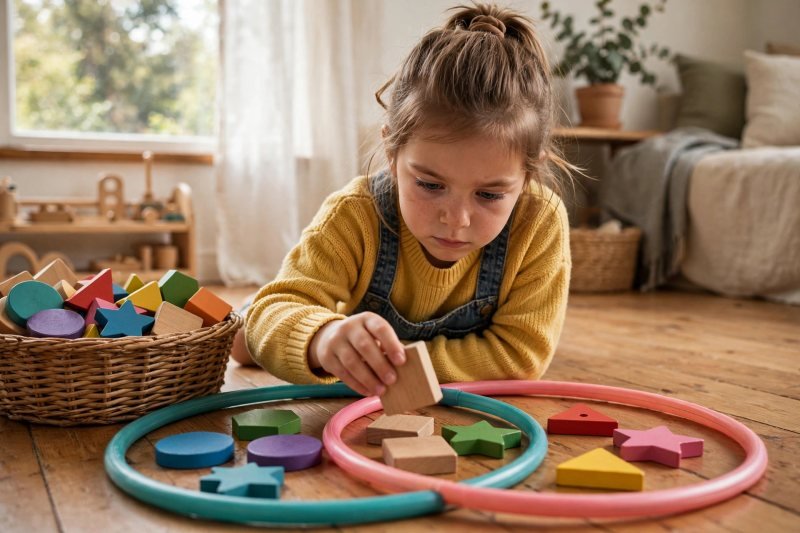
-
Check the Venn together. Test three or four objects with both questions: "This sits in the red ring — is it red? Is it square?" Move strays together, letting the questions decide.
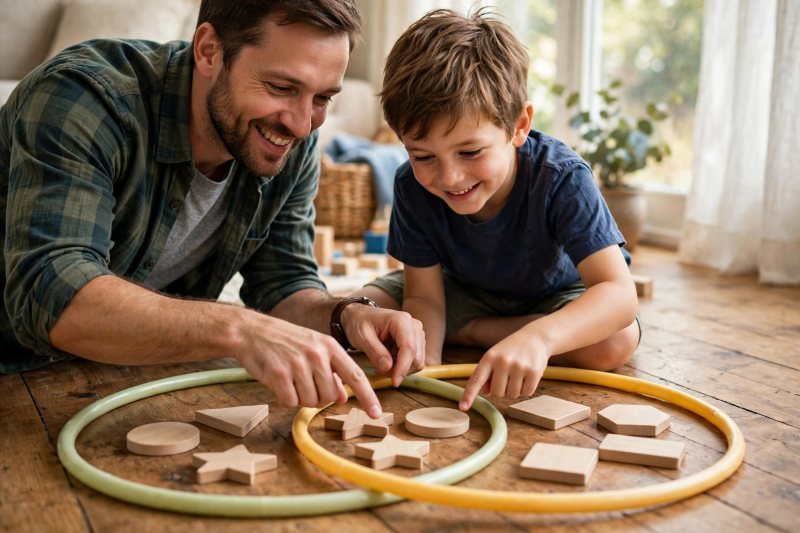
-
Round two: numbers with new rules. Deal number cards 1–20 face up. "This hoop — EVEN numbers. This hoop — MULTIPLES OF 3." Model four: 6 in the middle, 4 in the even ring, 9 in the multiples-of-3 ring, 5 outside. Then your child sorts the rest.
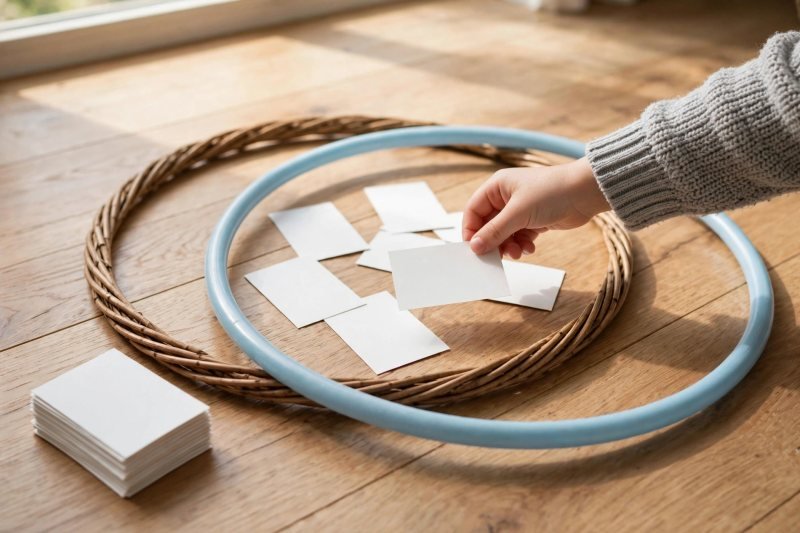
-
Round three: animals. New pair: "LIVES IN WATER vs HAS FEATHERS." The duck swims into the middle, the fish takes the water ring, the owl the feathers ring, the cat outside. Hand over the rest.
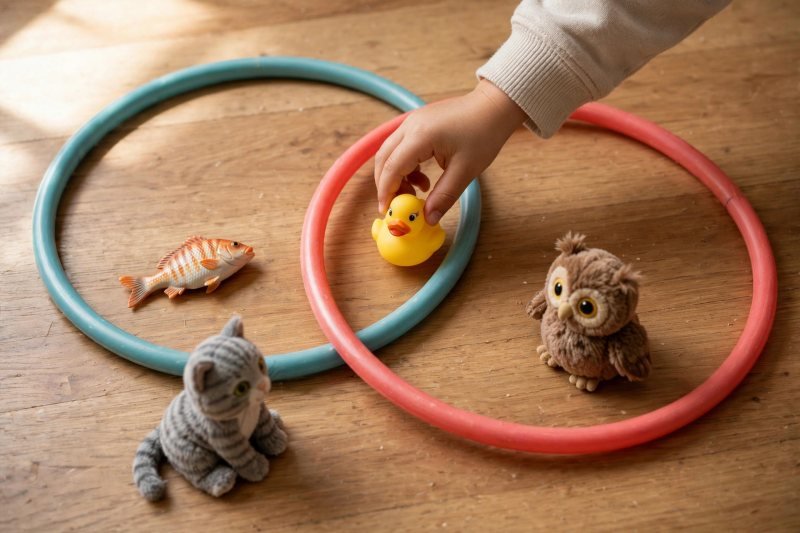
-
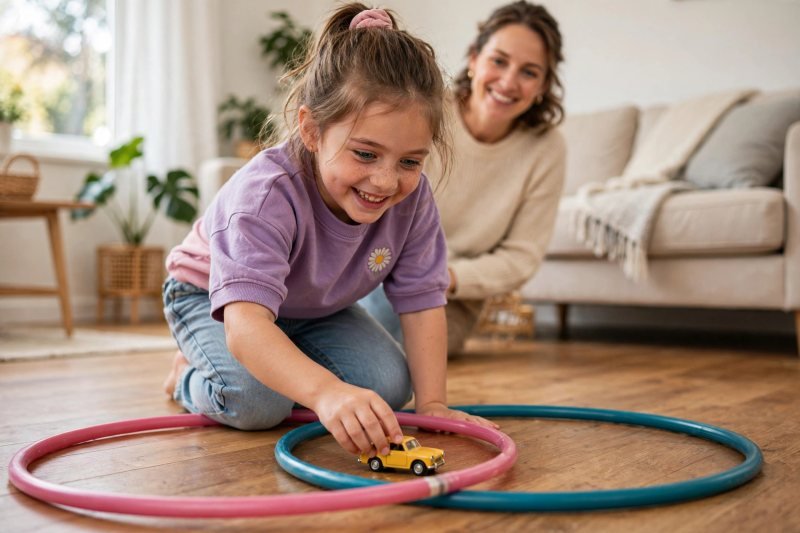
Let your child invent the two rules. "Your turn — pick any two rules." Favorites: WHEELS vs RED (a red car takes the middle) or ROUND vs SOMETHING WE EAT. You sort; they judge.


Make it easier
Run game 1 only the first day — one attribute pair per sitting until the middle clicks. Pick rules with plenty of middle objects (red vs square beats round vs wooden).
Make it harder
Add a third hoop: three attributes, one tiny center where all three cross. Play Mystery Venn: you place three objects silently; your child guesses the rules. Numbers to 50 with EVEN vs MULTIPLES OF 5 — the middle holds multiples of 10; counting games for preschoolers build the same counting fluency.
Other ways to play it
- 1. Snack Venn. SALTY vs CRUNCHY: pretzel sticks take the middle; a pickle the salty ring; carrot sticks the crunchy ring; a banana outside.
- 2. Toy-box Venn. SOFT vs SHAPED LIKE AN ANIMAL: a teddy bear earns the middle; a pillow the soft ring; a plastic dinosaur the animal ring; a toy truck outside.
- 3. Closet Venn. HAS STRIPES vs LONG SLEEVES: a striped long-sleeve shirt takes the middle; striped shorts the stripes ring; a plain sweater the sleeves ring; plain socks outside.
- 4. Nature Venn. IS A STICK vs LONGER THAN YOUR HAND: a long stick hits the middle; a short stick the stick ring; a long leaf the length ring; a pebble outside.
- 5. Sticker Venn. Draw two big overlapping circles on paper. HAS AN ANIMAL vs IS SHINY: a shiny dolphin sticker takes the middle.
How it changes by age
- At 6: Keep it concrete — blocks and toys, big hoops. Say the two questions for them at first; the middle needs a few modeled examples before it clicks.
- At 7: Number cards work now. Let them argue placements — justifying the address is the thinking.
- At 8: They run the whole game: invent rules, deal objects, judge your placements.
- Younger siblings: Start with single-attribute sorting games before adding a second rule around age 5 or 6.
What they're learning
Logical AND: an object must satisfy both rules to enter the middle — the rings are sets, the overlap their intersection Classifying by two criteria at once — the thinking behind charts and tables Number patterns: evens, multiples, and their overlap Shape sorting activities: single-rule shape sorting is the on-ramp before two rules at once
Clearing up
Dump everything back into one basket; the kit lives in one corner.
Questions parents ask
What does sorting by two attributes mean for kids?
At what age can kids understand Venn diagrams?
What objects work best for Venn sorting games?
My child keeps putting everything in the middle. What should I do?
How is sorting by two attributes different from regular sorting?
Leave the hoops out for a few days — kids replay Venn games alone; the middle is magnetic. Don't rescue a wobbly sort mid-game. The check round teaches more than a correction. Younger siblings can start with counting activities for toddlers before they join the number round.

save it for later
Pin this for the next rainy afternoon
Keep it on a board so it is there when you need it, rather than when you happened to find it.
Save to Pinterest


