


Teen Numbers Activities That Make 11–20 Finally Make Sense
These teen numbers activities turn 11–20 from a memorized chant into real understanding for ages 6–8. With ten-frames, bean bundling, and the honest story of eleven and twelve, your child discovers the base-ten structure hiding inside every teen number: 13 is simply 10 + 3.
The most effective teen numbers activities teach 11–20 as "one ten plus some ones": fill a ten-frame, rubber-band ten sticks into a bundle, then build each teen as bundle plus loose ones. Say each "the backwards way" first ("ten-four," then "fourteen"). Explain that eleven and twelve are the two rule-breakers.

The short version
- A teen number is one ten plus some ones — 13 is a full ten-frame plus 3 loose beans.
- Say each teen "backwards" first ("ten-seven" → "seventeen") to expose the pattern.
- Eleven and twelve break the pattern — the weirdness is memorable.
- The rubber-banded bundle turns "ten" into an object they can hold.
- Age
- Ages 6–8
- Prep
- 5 min
- Play time
- 20 min
- Mess
- None
- Difficulty
- Easy
- Where
- Indoor
Why kids love this
There's real satisfaction in snapping a rubber band around exactly ten sticks and declaring, "That's one ten!" Your child builds every number by hand, fills the ten-frame to the brim, and learns why "thirteen" sounds so odd. No worksheets, no drilling.
What you'll need
- 30 dried beans, buttons or small counters
- 20 wooden craft sticks (or straws cut in half)
- A few rubber bands or hair ties
- Paper and a marker for drawing a ten-frame
- A paper bag for the mystery game
- An egg carton (for Step 10)
Before you start
Draw a ten-frame on paper: a rectangle split into two rows of five boxes, nice and roomy. Pour about 30 beans into a bowl within arm's reach. Bundle nothing yet — your child assembles the first bundle themselves in Step 4.
How to do it
-
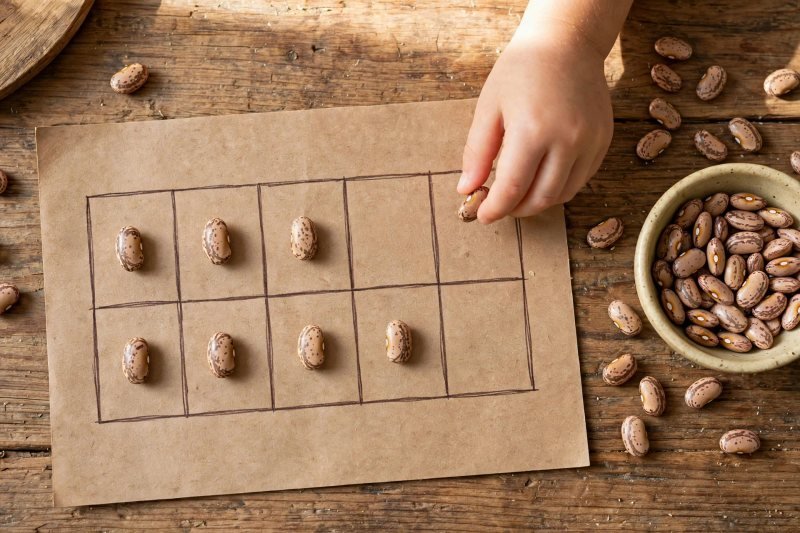
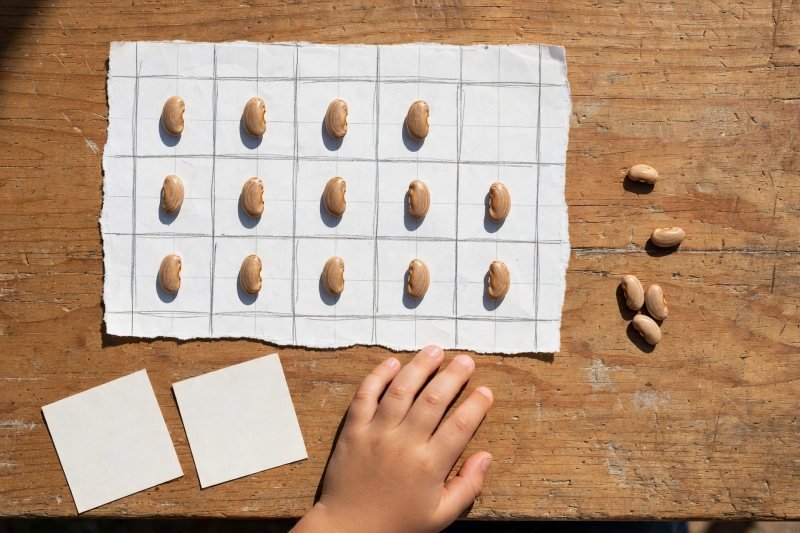
Draw your ten-frame. Sit down together with the paper and marker and draw one big rectangle split into two rows of five boxes, leaving each box roomy enough for a bean. Ask your child to count the empty boxes with you, touching each one: "1, 2, … 10." Then say the line that carries the whole activity: "This frame holds exactly ten — no more, no less." Everything about the teen numbers comes back to filling this frame, so take a moment to let that sink in before any beans appear. If counting to 10 is still shaky, start with these counting to 10 activities before you draw — the frame makes far more sense once 1 to 10 is steady.

-
Fill the frame and name the ten. Hand your child the bowl and let them place one bean in each box, counting aloud as they go. When the last box is full, hold the frame up and say it plainly: "One whole ten. Not ten little ones — one TEN." Let them feel the difference: ten separate beans can be ten ones, but inside this frame they are one ten. If a bean rolls off, that is part of the game — pick it up, count again, and enjoy the moment the frame is finally full.
-
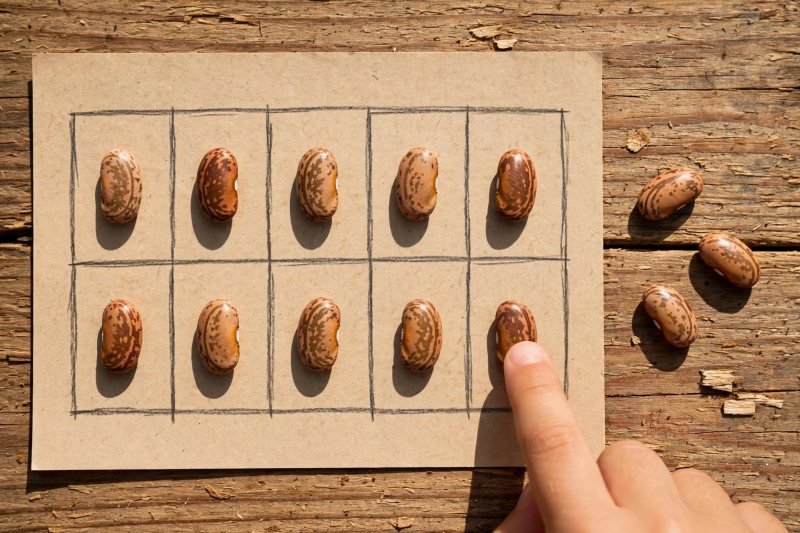
Build thirteen the honest way. Slide three extra beans beside the full frame and ask, "What do we have?" Wait for it: "Ten — and three more." Then give it its real name: "We call that THIR-teen." Share the secret hiding in the word: "thir" is an old word for three and "teen" means ten, so thirteen literally means "three-ten." Have your child say it the backwards way first — "ten-three" — and then the regular way, "thirteen." Build 11, 12, and 14 the same way, always with the full frame plus the loose ones beside it.
-
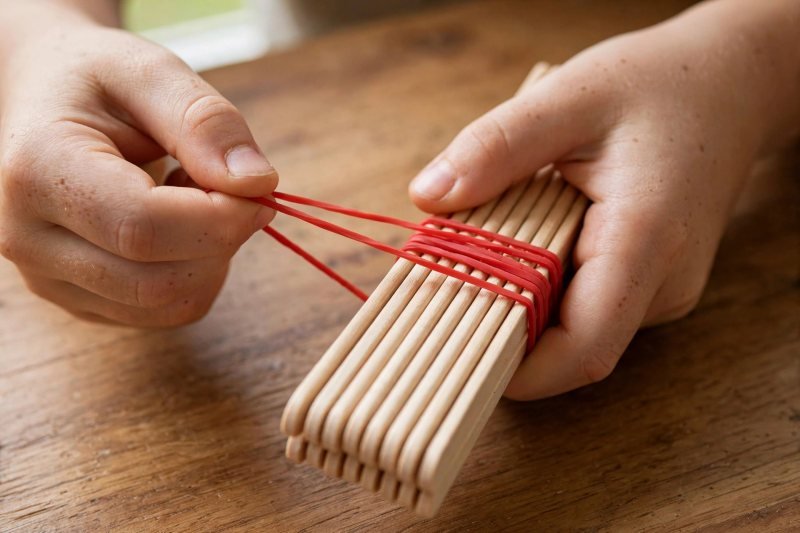
Bundle a ten that sticks together. Hand your child ten craft sticks and a rubber band and let them count the sticks out one by one, then wrap the band around the middle so the sticks move as one solid piece. Shake it gently and say, "That's one ten, all in one piece." From now on every teen number is a two-piece puzzle: the bundle, plus loose ones. Keep this bundle on the table for the rest of the session — it is the reference ten your child will reach for again and again.
-
Pair the bundle with loose sticks. You name a teen from 11 to 19, and your child builds it: the bundle plus the loose sticks to match. Say, "Sixteen?" and watch them grab the bundle and six loose sticks. After a few rounds, flip the roles — your child builds a teen in secret, holds it up, and you have to name the number. If they hesitate, point at the two parts and ask, "How many tens? How many ones?" The answer is always sitting right there in their hands. Once naming feels easy, try asking "what is two more than sixteen?" without building it — and when your child is ready for the other direction, these subtraction games pick up where the teen work leaves off.

-
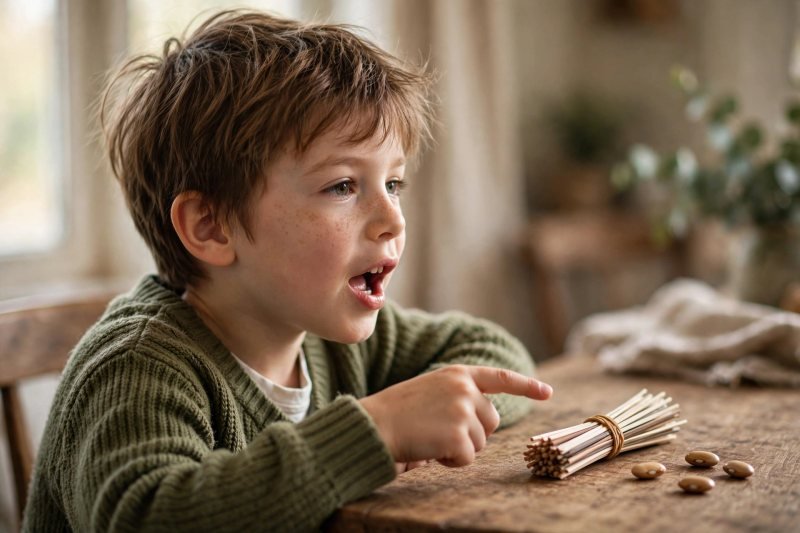
Say it backwards, then forwards. Hold up the bundle plus four loose sticks and name it the backwards way first — "ten-four" — then the regular way: "fourteen." Work through every teen from 11 to 19 this way, backwards first, forwards second, until the pattern is doing the talking. If the number words themselves are still wobbly, warm them up first with these counting to 20 activities so the sequence is steady before the structure work begins. Once the backwards naming feels easy, the regular names start to make sense on their own.
-
Meet the two rule-breakers. Here is the honest truth to share with your child: eleven and twelve refuse to follow the pattern. Every other teen announces its ones — thir-teen, four-teen — but eleven hides its one and twelve hides its two, which is why the names feel so confusing at first. Build both the honest way, a full frame plus one bean and a full frame plus two beans, and say them out loud together: "Ten and one… eleven. Ten and two… twelve." If your child invents "eleventeen" or "oneteen," smile — it means the pattern is working and they are applying the rule where English cheats. Tell them so, replay this rule-breaker talk, and give it a week of the games in Steps 8 and 9; the invented names fade once the correct ones get enough play.
-
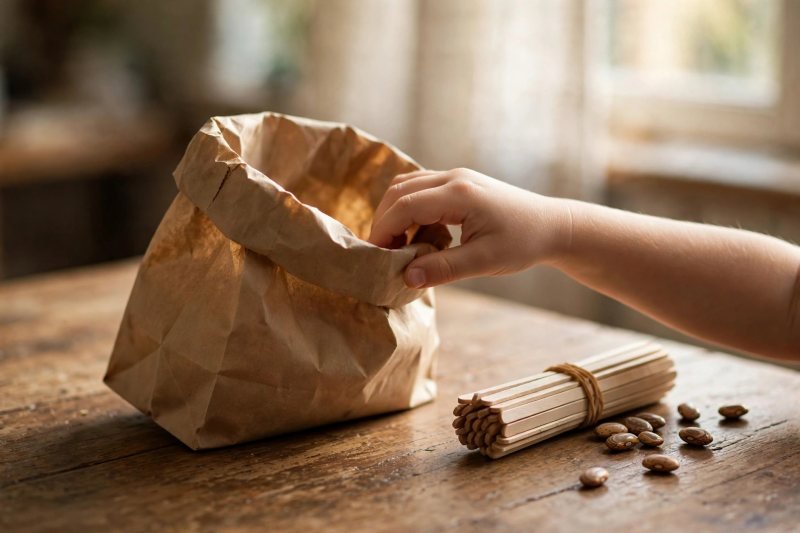
Play teen detective. Drop the bundle and a handful of loose sticks into the paper bag and shake it. Your child reaches in without looking, pulls the pieces out, and names the number: "Ten and five… fifteen!" Play until you have caught every teen from 11 to 19, and make a show of it when eleven or twelve appear — "A rule-breaker! Ten and one… eleven!" If the bag feels too tricky, skip it and build the mystery number in the open instead; the naming is the point, not the hiding.
-
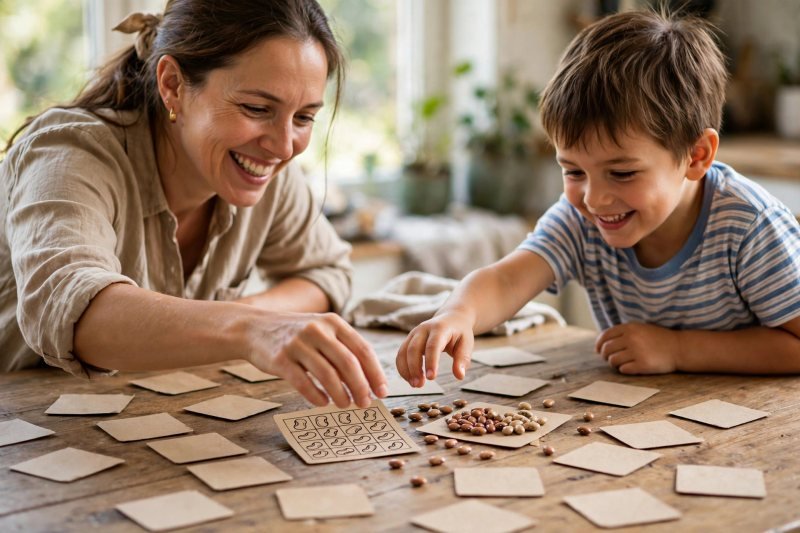
Race the ten-frame sort. Scatter nine face-down cards on the table — a full ten-frame or a small loose pile drawn on each card, or real beans placed on the cards if you prefer. Flip two cards at a time: if they pair into a teen, call it both ways — "ten-nine… nineteen!" — and keep the pair. If they do not pair, flip them back and try again. Once the pairs feel easy, the number bonds to 10 activities play the same ten-frame game from the addition side, which is a natural next challenge for a child who has the teens down.
-
Hunt real teen numbers. Close the math out in the real world. Open the egg carton and count together: "A full carton is twelve — one ten plus two." Show a recipe calling for a baker's dozen and count out thirteen rolls. Then walk the house finding groups of 11 to 20 — books on a shelf, spoons in a drawer, socks in a pile — and each time ask the same two questions: "How many tens? How many ones?" When your child can answer without building it first, the structure has landed. Little ones tagging along can join the hunt too — these counting activities for toddlers keep younger siblings busy at the same table.



Make it easier
Stay inside 11–15 for a week before touching 16–19. Keep one built bundle-and-sticks teen on the table as a reference all session. Skip the paper bag in Step 8 and build the mystery number in the open.
Make it harder
Build 20, then 21: "Two tens… and one more? That's twenty-one!" — the doorway to the twenties. Ask "What's two more than 16?" or "What's one less than 18?" without building it. Have your child build two teens at once and tell you which is bigger, and how many more ones it has. When they are ready for the other direction, the subtraction games linked in Step 5 pick up where the teen work leaves off.
Other ways to play it
- Two-color teens: red beans for the full ten, white beans for the extras — the color split shows the structure at a glance.
- Giant floor frame: tape a ten-frame on the floor; your child hops in with beanbags to fill it.
- Teen restaurant: your child is the chef; you order "sixteen!" and they serve one bundled ten plus six loose beans.
How it changes by age
- Built for ages 6–8, the window when most children move from reciting the teens to understanding them as ten plus ones. Younger siblings (4–5) can join Steps 1–4 as helpers. If your child already builds teens fluently, the ten-frame game in Step 9 plays just as well from the addition side. Still on 1–10? Start with the counting to 10 activities linked in Step 1.
What they're learning
Place value: a teen number is one ten plus some ones (10 + n) The meaning behind the teen names, including the eleven/twelve irregulars One-to-one correspondence while filling the ten-frame Composing and decomposing 11–19 — the foundation of adding past 10 Math vocabulary: ten-frame, bundle, ones, "ten and five"
Clearing up
Slide the beans back into the bowl — count them by bundling tens as you go ("one ten, two tens, three ones"). Keep one rubber-banded bundle ready; it's tomorrow's reference ten. Wipe the table; no glue, paint or water was harmed.
Questions parents ask
At what age should kids understand teen numbers?
What is the base-ten trick for teaching 13?
Why is eleven so hard for kids to understand?
How are teen numbers activities different from counting to 20?
What comes after the teen numbers?
Twenty minutes, a couple of times a week, beats one long session. Run Steps 5–9 as a five-minute game before dinner a few nights in a row — the structure sinks in through the hands first. Why teen numbers confuse kids: the English names fight the math. Children learn 1–10 as single sounds and expect 11–20 to behave the same. Instead they get two names, eleven and twelve, that reveal nothing, followed by a pattern (thir-teen, four-teen) half-hidden by pronunciation. And a child can recite 13–19 without knowing that 15 is a ten with five loose ones. The names and the structure tell two different stories until someone shows them together — which is exactly what the ten-frame and the bundle do. Is a 6-year-old behind if teen numbers do not click yet? Not at all. Reciting 11–20 is typically a kindergarten skill, but understanding teen numbers as ten plus ones is first-grade work, and the range is wide. What matters is the sequence: solid counting to 10, then a real sense of one full ten, then the teens. If 13–19 is still shaky, warm up the number words first with the counting to 20 activities linked in Step 6. Younger siblings (4–5) who want to join in can play alongside with the counting activities for toddlers linked in Step 10 while the older child works the teens.

save it for later
Pin this for the next rainy afternoon
Keep it on a board so it is there when you need it, rather than when you happened to find it.
Save to Pinterest


