


Telling Time Games for Kids: 10 Ways to Practice the Clock
Ten telling time games for kids ages 6–8 that turn o'clock, half past, and quarter past into play — bingo, scavenger hunts, human clocks, and a pretend appointment book. Short rounds, real times, things you already own.
The best telling time games for kids turn clock practice into play: Time Bingo, a clock scavenger hunt, and a "What's the Time, Mr Wolf?" chase each drill o'clock, half past, and quarter past in 10–20 minute rounds. Short, playful, and frequent beats worksheets — one game a few times a week builds real clock confidence at ages 6–8.

The short version
- Telling time games for kids work because the child reads clocks to win — urgency beats worksheets every time.
- Start with o'clock only, add half past next, then quarter past; never stack a new time on a wobbly one.
- The hour hand's "in-between" position is the hardest part — the Human Clock game targets it directly.
- Let your child run the game (caller, wolf, shopkeeper): the child in charge reads ten times more clocks.
- Ten minutes, three to four times a week, beats one long weekend session.
- Weave real clock checks into the day — before dinner, before bed — once the basics click.
- Age
- Ages 6–8
- Prep
- 15 min
- Play time
- 20 min
- Mess
- None
- Difficulty
- Medium
- Where
- Both
Why kids love this
Every game here is something children would happily play anyway — a chase, a treasure hunt, a shop to run, a race to win. The clock just comes along for the ride, so the reading practice sneaks in without a single groan about math. Kids this age also love being the expert: calling the times in Bingo, playing the wolf, running the appointment book. The child in charge of the clock reads it ten times more carefully.
What you'll need
- A toy teaching clock with movable hands (or a homemade paper-plate clock)
- Index cards or sticky notes and crayons or markers
- One die (borrowed from any board game)
- A kitchen timer or phone timer
- A long strip of paper (a cut-open grocery bag works) for the timeline
- Stuffed animals, for the pretend shop
- Small tokens: dried beans, buttons, or pebbles for Bingo
Before you start
Almost none. The outdoor chase needs zero setup. For the card games — Bingo, Memory Match, Dominoes, the Scavenger Hunt — spend ten minutes one evening drawing clock faces on index cards: nine faces per Bingo card, word-and-face pairs for Memory, mismatched halves for Dominoes, single times for the hunt. One batch of cards covers four games.
How to do it
-
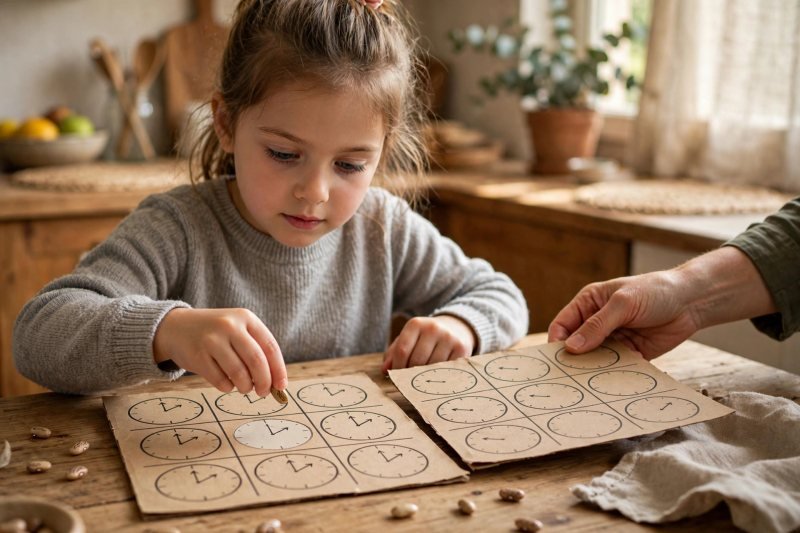
Time Bingo. Hand-drawn bingo cards, nine clock faces each — a mix of o'clock, half past, and quarter past. You call the times ("Quarter past four!") and players cover the matching face with a bean. First to three in a row shouts "Time!" and proves it by reading the winning times back. Next round, your child is the caller — secretly the best reading practice of all.
-
What's the Time, Mr Wolf? The playground classic, clock edition. The wolf stands ahead, back turned; the rest chant "What's the time, Mr Wolf?" The wolf calls a time — "Three o'clock!" — and everyone takes that many steps forward. At any moment the wolf can shout "Dinner time!" and the chase is on. Caught players become the wolf. Best in a yard or park.

-
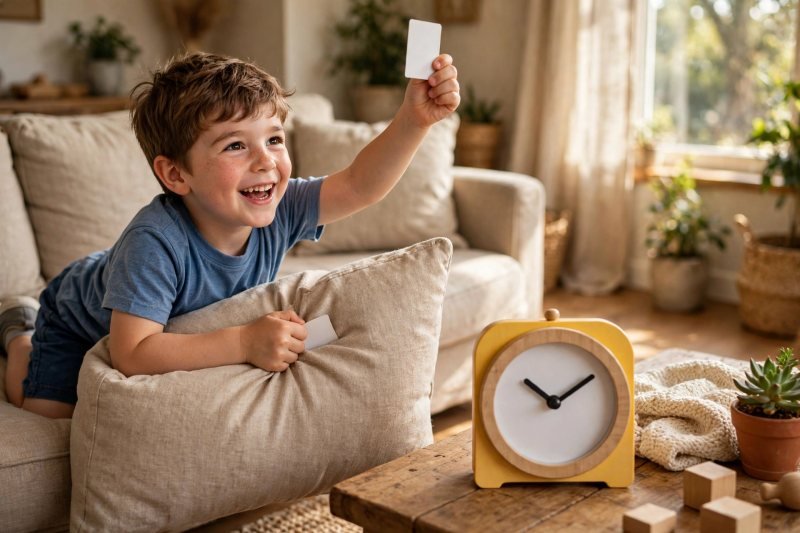
Clock scavenger hunt. Hide eight to ten time cards around one room. Your child hunts one card at a time, and each find must be "unlocked": set the toy clock to that exact time and read it aloud before hunting the next. Line all the cards up in time order at the end for a bonus round. Ten minutes, zero screens, a clock-reading rep in every find.
-
Human clock. Your child lies on the rug and becomes the clock — one arm the short hour hand, the other the long minute hand. Call a time: "Quarter past two!" They stretch into position, long arm to the 3, short arm just past the 2. The single best game for the trickiest skill in telling time: where the hour hand really sits. Siblings can play as a pair, one hand each.

-
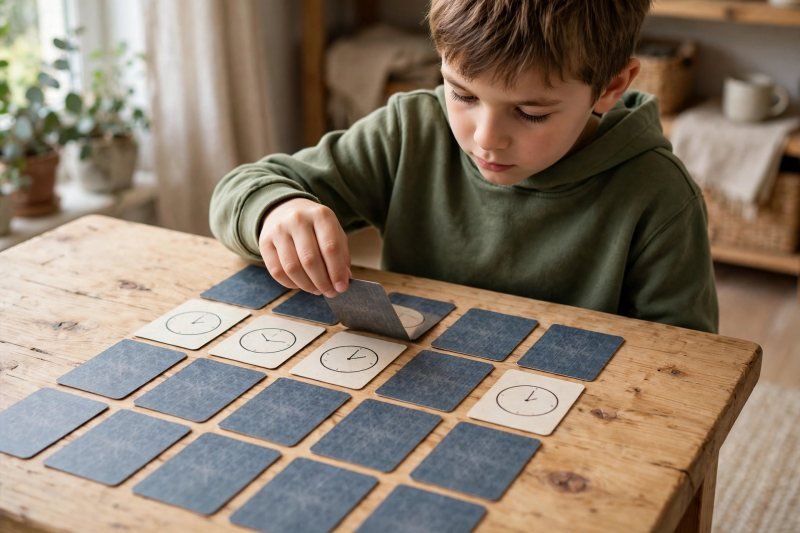
Time memory match. Twelve cards: six clock faces, six matching word cards ("half past nine"). Shuffle, lay them face down, flip two per turn, keep the pairs you match. Start with o'clock pairs only; shuffle in half past and quarter past as confidence grows. Matching words to faces builds the same recognition skill digital clocks demand later.
-
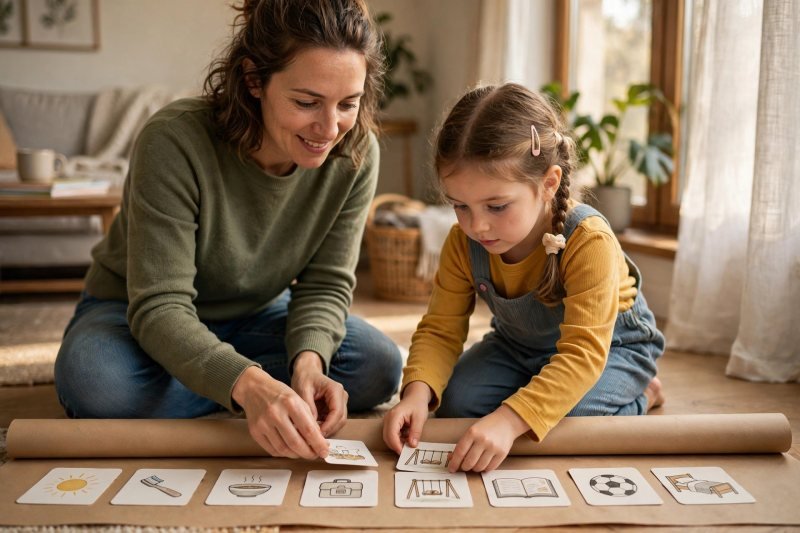
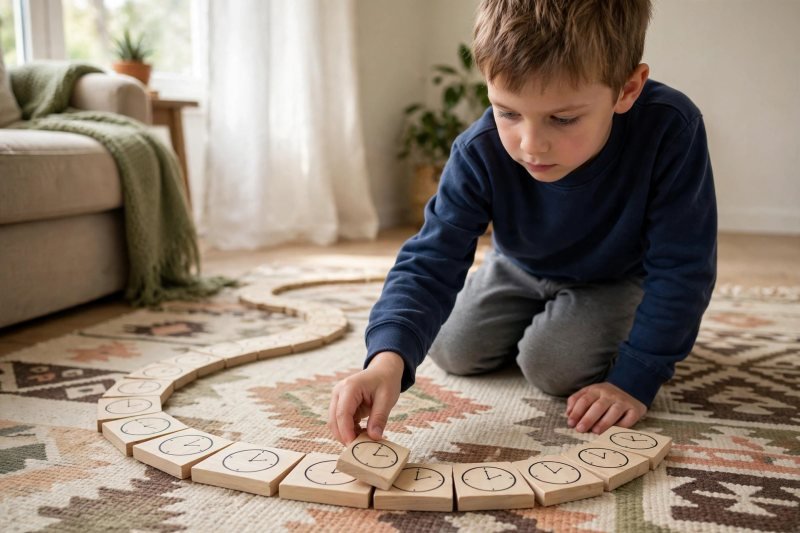
Day timeline race. Lay a long paper strip on the floor — one whole day. Make cards for real moments: wake up at 7 o'clock, the bus at half past 8, lunch at half past 12, soccer at quarter past 4, bedtime story at half past 7. Your child orders them along the strip, then you quiz: "What comes between lunch and soccer?" Times anchored to a day they actually live.
-
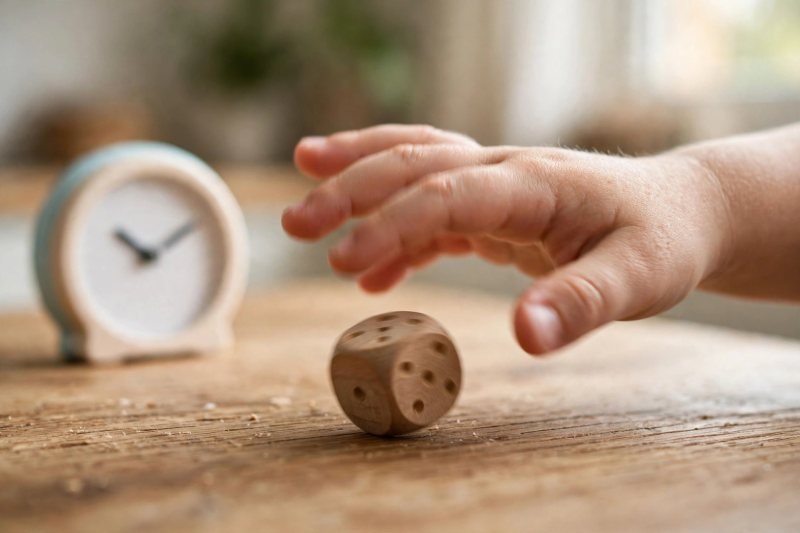
Dice roll the time. Roll once for the hour (1–6), again for the minutes: 1–2 means o'clock, 3–4 half past, 5–6 quarter past. Set the toy clock, read it, score a point if right — first to ten wins. Two dice make hours up to 12 when 1–6 feels easy. Pure chance keeps it fair between siblings: the six-year-old can genuinely beat the eight-year-old.
-
Clock dominoes. Index-card dominoes: one half a time in words, the other a clock face — deliberately mismatched. Chain them by matching "quarter past five" to its face; first to lay every tile wins. It plays exactly like real dominoes, so children learn the rules in seconds and spend all their brainpower on the clock faces.
-
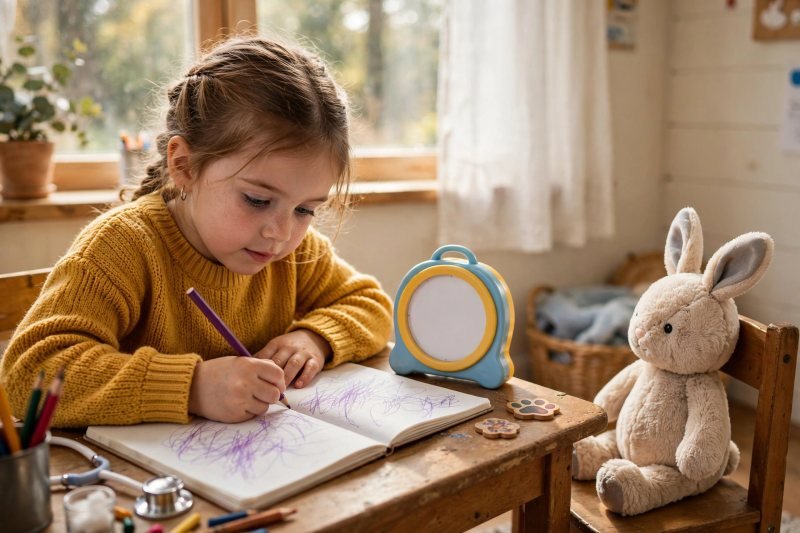
Appointment book. Your child runs a pretend clinic or vet's office; stuffed animals need appointments. "Can Biscuit come at half past three?" They write it in a notebook and set the waiting-room clock as each "patient" arrives. Writing the times, reading them back, managing the schedule — glorious bossy pretend play nobody recognizes as practice.
-
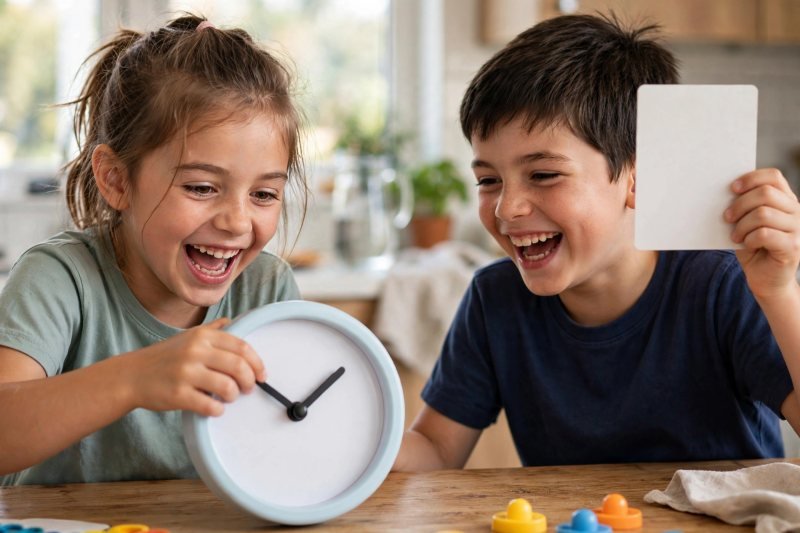
Beat-the-clock relay. Two players, one toy clock each. Flip a time card; both race to set their clock and shout the time. Fastest correct setting keeps the card; seven cards wins. Final round: thirty seconds per card on the kitchen timer. The game for children who know the basics and need fluency — reading the clock fast, without thinking. Play these in any order — each game stands alone, and a 10-minute round of any one of them is a complete practice session.


Make it easier
Start with o'clock-only Bingo, Memory Match, and Scavenger Hunt. Add half past next week, quarter past the week after. Let your child set the clock first, then read it — building a time is easier than decoding one. Play as teams: parent plus child versus another pair, so there is always a helper. Keep rounds to ten minutes. If o'clock itself is still wobbly, our full parent guide to teaching time rebuilds the foundation in one sitting. More hands-on number play: our counting games for preschoolers keep the same playful rhythm for younger siblings.
Make it harder
Add quarter to times (minute hand on the 9) once quarter past is solid, then five-minute intervals. Dice game: two dice for hours 1–12, and a third roll for exact minutes. Beat-the-clock with a thirty-second timer per card — fluency under gentle pressure. Memory Match with all twelve pairs at once, or against the clock. Write the matching digital time (3:30) under each face — a gentle first step toward reading both clock styles.
Other ways to play it
- - Outdoor version: Mr Wolf and the scavenger hunt were born for the yard or park — hide time cards along a fence or between trees.
- - Car version: Human Clock arms in the back seat, plus "spot the time" — first to point out an o'clock on a shop sign wins.
- - Sibling version: the older child is the caller, the wolf, or the shopkeeper; the younger matches o'clock only.
- - Tournament version: play all ten across a rainy weekend, score chart on the fridge — most points by Sunday wins the Clock Champion crown.
- - More role play: our pretend play collection has shop, clinic, and kitchen games that pair perfectly with the appointment book.
How it changes by age
- Ages 6–8. Sixes should live in o'clock and half past for a while, with short rounds and team play. Sequencing games like our sequencing activities for preschoolers build the same ordering sense the timeline game uses. Sevens are usually ready for quarter past and the faster games. Eights can handle the full set: quarter to, five-minute intervals, timed rounds, the trickiest Memory layouts. Follow your child's ease, not the birthday — no prize for rushing to quarter past.
What they're learning
Reading o'clock, half past, and quarter past on analog faces — the core skill, drilled ten ways. Where the hour hand really sits: halfway between numbers at half past, just past the number at quarter past — targeted directly by the Human Clock and Dice games. Matching time words to clock faces (Memory Match, Dominoes) — the recognition skill digital clocks need later. Sequencing a day (Timeline) — time as something that passes, not just instants on a dial. Reading under gentle pressure (Beat-the-clock) — the step from "can do it" to "can do it fast."
Clearing up
Two minutes: cards back in a zip bag, tokens in a jar, toy clock on the shelf. The day timeline strip can live on the fridge — it doubles as tomorrow's actual schedule. Let the winner of the last game be in charge of "closing up the clock shop."
Questions parents ask
How can I make practicing telling time fun instead of a worksheet battle?
At what age should my child learn to tell time?
My child keeps mixing up the hour and minute hands. What actually helps?
Should I teach my child to read analog or digital clocks first?
How long should a telling-time game last?
Short and often beats long and occasional. One ten-minute game after dinner, three times a week, builds more clock confidence than a weekend marathon. Dice games build number fluency too — our dice addition games use the same roll-and-play rhythm for adding up. Let them win sometimes — a child who wins keeps playing, and a child who keeps playing learns the clock.

save it for later
Pin this for the next rainy afternoon
Keep it on a board so it is there when you need it, rather than when you happened to find it.
Save to Pinterest


