


Number Bonds to 20: 10 Games for First and Second Grade
Ten hands-on games to help your 6- to 8-year-old master number bonds to 20 — pairs like 17 + 3. Treasure splits, snap cubes, and a shopkeeper game with real coins.
Number bonds to 20 are the pairs of numbers that add up to 20 — 19 + 1, 18 + 2, 17 + 3 and so on through 10 + 10, plus each pair in reverse. They are a first and second grade target in early math, best taught through short, hands-on games where children see, touch, and chant each pair until recall is automatic.

The short version
- Pairs summing to 20: 19 + 1 down to 10 + 10 (and reverses).
- Twenty of something, split two ways, in every game.
- Anchor on bonds to 10: 13 + 7 is the 3-and-7 bond plus ten.
- Little and often — one short game a day.
- Every bond hides a subtraction: 16 + 4 = 20 gives 20 − 16 = 4.
- Age
- Ages 6–8
- Prep
- 10 min
- Play time
- 20 min
- Mess
- None
- Difficulty
- Easy
- Where
- Both
Why kids love this
Pirates, bath ducks, and treasure chests — every game ends with a satisfying "I knew that!"
What you'll need
- 20-hole muffin tray, 20 counters, 20 snap cubes, 20 stacking cups
- 20 gold coins (play coins or gold buttons), 2 small boxes, 20 rubber ducks and a small net
- Soft ball, cardboard disc and split pin, play cash register, real coins, stairs
Before you start
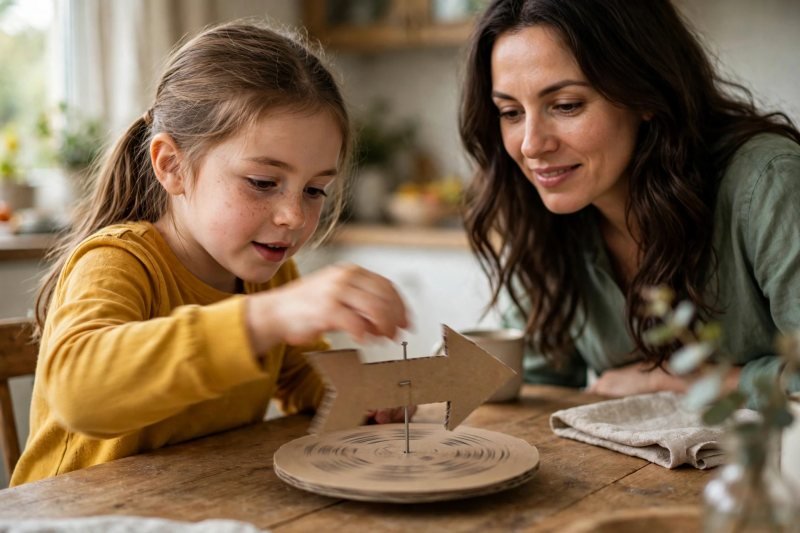
Count the sets of 20 together. Make the spinner: a cardboard disc marked 10 to 19, with an arrow on a split pin. Lay out one game at a time so the table stays clear and each pair gets its moment.
How to do it
-
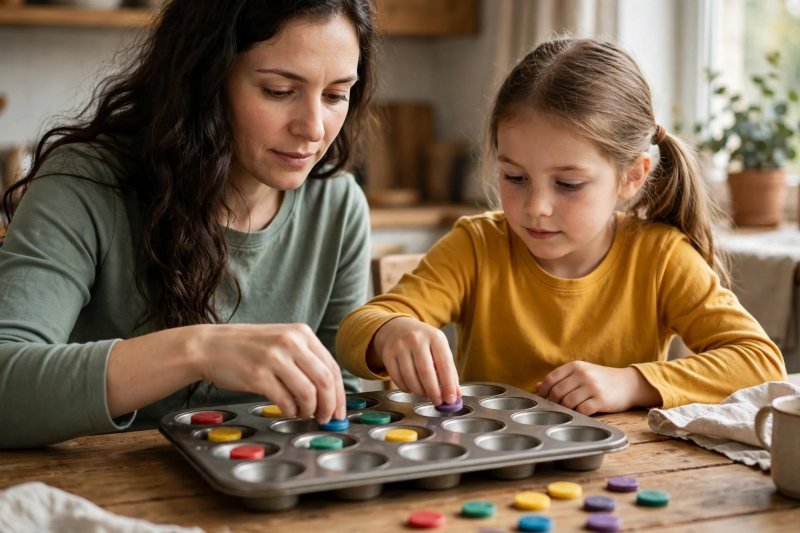
Set up the double ten-frame tray and find the missing part. Press 13 counters into a 20-hole muffin tray and leave the rest of the holes empty, so your child can see the gap as clearly as the filled spaces. Say, "Thirteen are in — how many empty holes are left?" Let your child fill the gaps one counter at a time, counting aloud as each hole fills, then say the bond together: "13 and 7 make 20!" Swap roles and let your child choose the starting number while you fill the gaps. If your child has not met ten-frames yet, the ten-frame activities collection is the gentlest place to start. Tray mastered: the next game snaps the same idea apart.
-
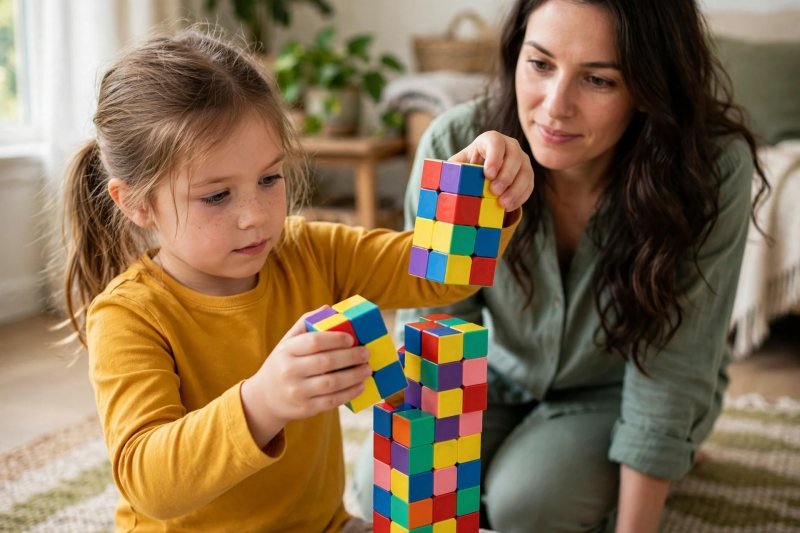
Snap a 20-cube tower in two and count both parts. Build one tower of 20 snap cubes with your child, counting each cube as it clicks on, then hold it flat on the table and snap it in two with a satisfying click. Count each part separately — "This side has 18, that side has 2" — then put the bond into words together: "18 and 2 make 20!" Snap the tower back together, hand it to your child, and let them choose where to break it this time. The snap is the hook: children who will not sit for a worksheet will break towers all afternoon. Ask, "Can you break it so one side has 15?" and watch them count their way there. Tower snapped: the cups game splits the same twenty a new way.
-
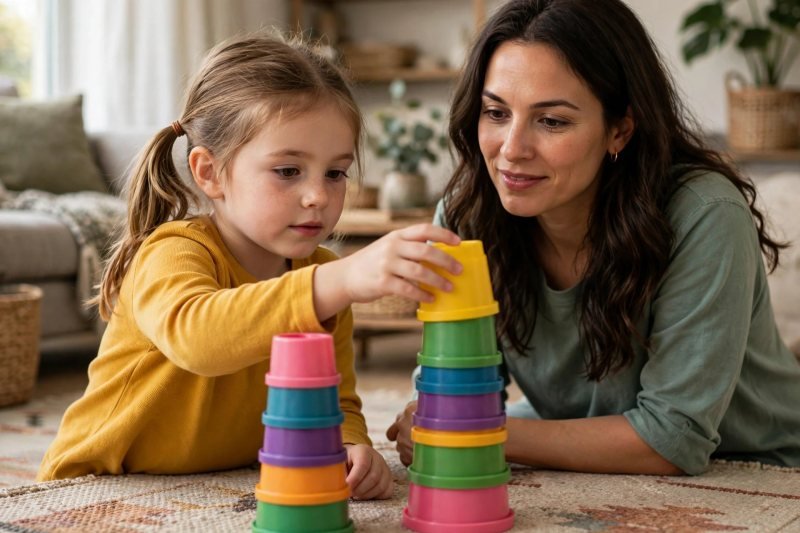
Split 20 stacking cups into two towers. Set out 20 stacking cups in one pile and ask your child to build two towers — any split they like — then count each tower together: "14 and 6 make 20!" Knock the towers down, rebuild, and try a split you have not tried yet, keeping a running list of the pairs you find on a scrap of paper. The list is the learning: after four or five splits, children start spotting the pattern that one side grows by one as the other shrinks by one. The counting to 20 activities collection builds the same forward-and-back fluency if counting to 20 still wobbles. Cups counted: the pirates are waiting with their treasure.
-
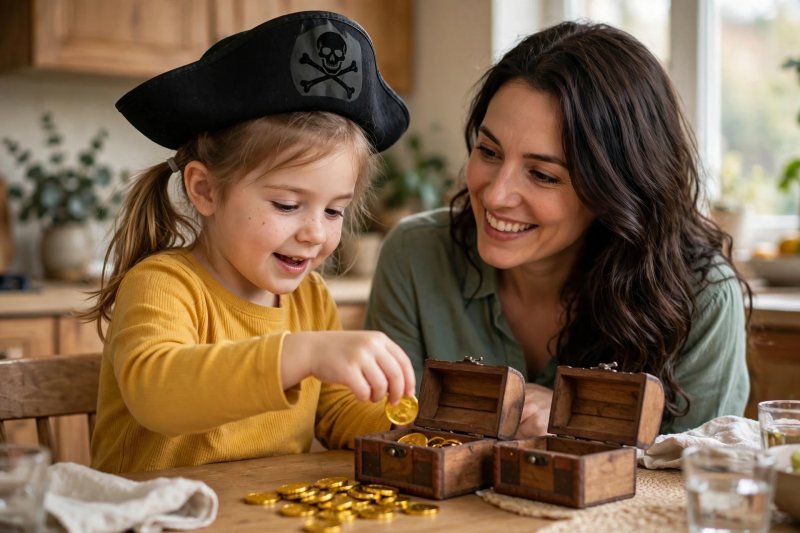
Split the pirate treasure between two chests. Hide 20 gold play coins in two small boxes and declare the game in your best pirate voice: "Twenty gold coins, two chests — split the treasure!" Your child deals the coins between the chests however they like, counts each chest, and announces the bond like a pirate: "17 and 3 make 20, arr!" Then re-hide the coins and play again, aiming for a split you have not found yet. If a split repeats, ask, "What happens if we move one coin from this chest to that one?" — the answer, 16 and 4, teaches the one-more-one-less pattern without a single worksheet. Treasure split: the ducks need rescuing next.
-
Rescue the bath ducks and count what is left. Float 20 rubber ducks in the bath and hand your child a small net. They scoop ducks out one at a time while you count the catch together; then count the ducks still swimming and say the bond: "8 caught and 12 still swimming — 8 and 12 make 20!" Keep scooping until the bath is empty, saying a new bond at every stop. The water makes the missing part visible: the ducks left behind are the part your child is learning to find without counting. Dry the ducks and the net when you finish, and count them back into their tub — one last bond in disguise. Ducks rescued: the stairs turn the same idea into a climb.

-
Climb the staircase and count the steps that remain. Stand at the bottom of the stairs together and climb slowly, counting each step aloud until you stop at step 12. Ask, "We have climbed 12 — how many more steps to 20?" Let your child count the steps still ahead, one by one, then say it together: "12 and 8 make 20!" Walk back down and stop at a different step — 15, or 9 — and solve the new missing part on the way up. The stairs work because the answer is under your child's feet: the steps already climbed and the steps still to go add up to the whole staircase. Stairs climbed: the ball game makes the same bond fast.

-
Toss the ball and call the missing partner. Stand a few feet apart with a soft ball and toss it back and forth. Each time you catch it, call a number — "16!" — and your child shouts the partner as they catch: "4!" Start slow, one toss per bond, then speed up as the answers come faster. If your child hesitates, let them count up from your number on their fingers — "17, 18, 19, 20, that's 4" — and praise the counting, not just the speed. Swap roles so your child calls the numbers and you have to answer; children love catching a parent out. Keep it to a few minutes so the game stays quick and fun. Ball caught: the spinner picks the next number for you.

-
Spin the bond spinner and beat the wobble. Spin the cardboard arrow and watch it land — say it lands on 15. Your child shouts the partner, "5!", before the arrow stops wobbling. Ten spins each, then swap who spins and who answers, keeping score with tally marks if your child likes a contest. When a bond is slow, trace it back to the bond to 10 underneath it: 15 and 5 is the 5-and-5 bond with ten added on top. If bonds to 10 still need practice, the number bonds to 10 activities collection is the place to secure them first — every pair here is built on one. Spinner spun: the shopkeeper is open for business.
-
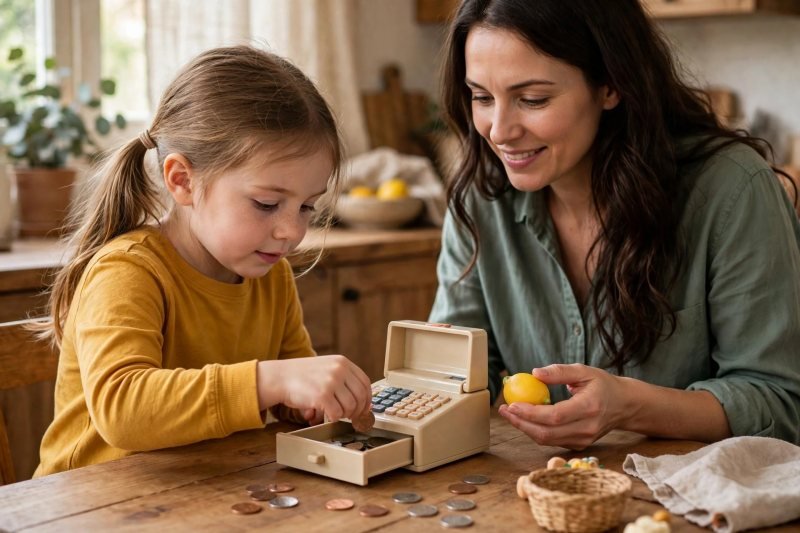
Play shopkeeper and pay 20 cents. Set up a play cash register and price a toy at 20 cents. Your child pays with real coins — a dime and three pennies makes 13 cents — then works out what is still owed: "20 minus 13 is 7 — I need 7 cents more." Hand over the missing 7 cents (a nickel and two pennies, or seven pennies) and count the whole payment together: "13 and 7 make 20 cents!" Change the price tag and play again, letting your child be the shopkeeper who counts the coins and gives the change. If your child is still building confidence with smaller totals, the addition games for kindergarten collection starts with sums to 10. Shop closed: one last game chants every pair at once.
-
March around the room chanting all ten pairs. March in a circle together, clapping or stomping the beat, and chant every pair from 19 and 1 down to 10 and 10: "19 and 1, 18 and 2, 17 and 3, 16 and 4, 15 and 5, 14 and 6, 13 and 7, 12 and 8, 11 and 9, 10 and 10 — all make 20!" Start slow, then march faster each round, and let your child lead the chant once they know the order. The chant is the glue: after a week of marching it, the pairs start arriving without counting. And every bond hides a subtraction fact — 16 and 4 make 20, so 20 minus 16 is 4 — which the subtraction activities for kindergarten collection picks up next. March done: ten pairs, ten games, and a child who knows them well.



Make it easier
Start with 10 + 10, then 19 + 1 and 18 + 2. Link to bonds to 10: 13 + 7 is the 3-and-7 bond plus ten. One game a day, not all ten at once.
Make it harder
Flip bonds to subtraction: 8 + 12 = 20 hides 20 − 8 = 12. Stretch to 30 and 100: 25 + 5 = 30, then 70 + 30 = 100. Quick-fire: how many partners in 30 seconds?
Other ways to play it
- Dice target 20: roll two dice, add the spots — say 9 — then find what makes 20: "9 needs 11!"
- Daisy split: pick 20 daisies; share into two bunches: "9 and 11 make 20."
- Water-pistol squirt: chalk 1 to 19 on the patio. Call "14!"; your child squirts "6!"
- Bedtime whisper bonds: lights low — whisper "19…", they whisper "1".
How it changes by age
- Ages 6–8, when children in first and second grade meet bonds to 20. Secure bonds to 10 first; confident 5-year-olds can try 10 + 10.
What they're learning
All ten bonds to 20: 19 + 1 through 10 + 10 (and reverses). The addition–subtraction link: 17 + 3 = 20 reveals 20 − 17 = 3. Missing-part problems: "12 and what make 20?" Money math: making 20 cents with real coins.
Clearing up
Count everything back into sets of 20 — a final bond in disguise ("16 and 4 make 20!"). Dry the ducks and net; put the rest back in the tub.
Questions parents ask
What are number bonds to 20?
At what age should children learn number bonds to 20?
Why are number bonds to 20 so important?
How do number bonds to 20 help with subtraction?
Number bonds to 20 are the pairs of numbers that add up to 20 — 19 + 1 through 10 + 10, and every pair in reverse. They matter because they power bridging through 10: 13 + 7 comes much faster once the 3-and-7 bond is known. They also unlock column addition and flip into subtraction, since 17 + 3 = 20 reveals 20 − 17 = 3. The teaching approach here is simple: every game uses twenty of something, split two ways, and little and often beats one long session. Bonds reward repetition without drill — if one game gets groans, swap to another. Celebrate quick recalls; fluency grows as children notice they are getting faster. If your child is ready to stretch past 20, the counting to 100 activities collection carries the same split-and-count thinking up to 100.

save it for later
Pin this for the next rainy afternoon
Keep it on a board so it is there when you need it, rather than when you happened to find it.
Save to Pinterest


