


Measuring With a Ruler: A Kid's First Guide
A kid's first guide to measuring with a ruler for ages 6–8: find the zero, read the inch marks, land on half-inches, and measure real things around the house.
Measuring with a ruler has three moves: line one end of the object up with the zero (not the 1), look straight down at the other end, and read the nearest number — the shorter marks halfway between are half-inches. With those three habits, kids ages 6–8 can measure anything flat, tall, or long and get the same answer twice.

The short version
- Line the object's end up with the 0 — never the 1; that is the classic first mistake.
- Look straight down at the far end (no side-eye reading) and read the nearest long numbered line.
- The slightly shorter marks halfway between the numbers are half-inches: "four and a half inches."
- Guess before you measure — estimating first makes every reading stick; counting games for preschoolers use the same guess-then-check loop.
- Two measurers getting the same number proves the inch is the same everywhere.
- Age
- Ages 6–8
- Prep
- 5 min
- Play time
- 30 min
- Mess
- None
- Difficulty
- Easy
- Where
- Indoor
Why kids love this
A ruler is a grown-up tool with real numbers on it, and that is exactly why your child wants one. They have measured with blocks and footsteps and paper strips; now they are ready for the instrument itself. The catch is that rulers punish sloppy technique — start at the wrong mark and the number lies. Ten steps build three habits: line up the zero, look straight down, and read what the far end touches.
What you'll need
- A 12-inch wooden or plastic school ruler with an inch edge (most US rulers show inches on one edge and centimeters on the other — use the inch side, the one with the bigger numbers and wider spacing)
- A crayon, a pencil, and a picture book
- Paper and a pencil for the measurement log
- 5 sticky notes for guesses
- Masking tape (optional, for the standing-up step)
Before you start
1. Flip the ruler to the inch side and check it is not cracked or splintered. 2. Gather the crayon, pencil, and picture book on a clear table. 3. Tear off 5 sticky notes and set the log paper and pencil nearby. 4. Clear one long table edge — you will need a full ruler's length of clear space.
How to do it
-
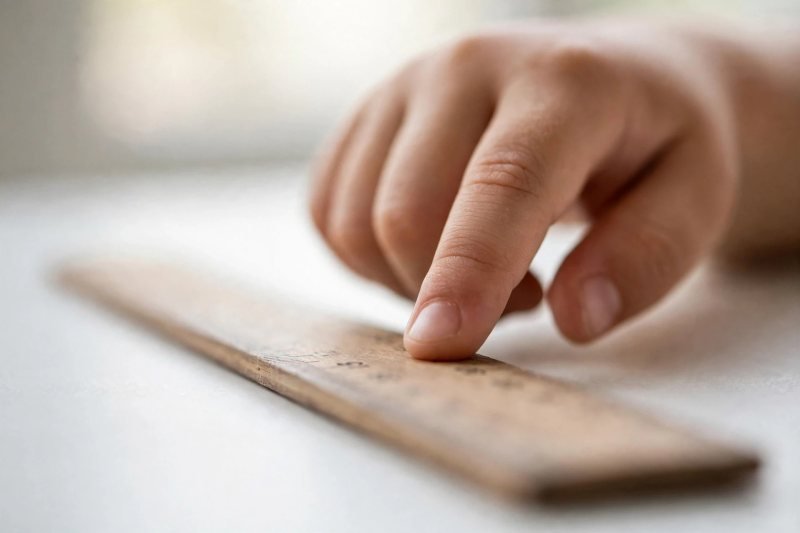
Find the zero — every ruler has a starting line. Run your child's finger along one end of the ruler. The 0 often is NOT at the very edge — a small blank space usually comes first. That little line marked 0 is the starting line, and every measurement begins there. Have them tap it and say "zero" out loud. Ceremonial, but it sticks.
-
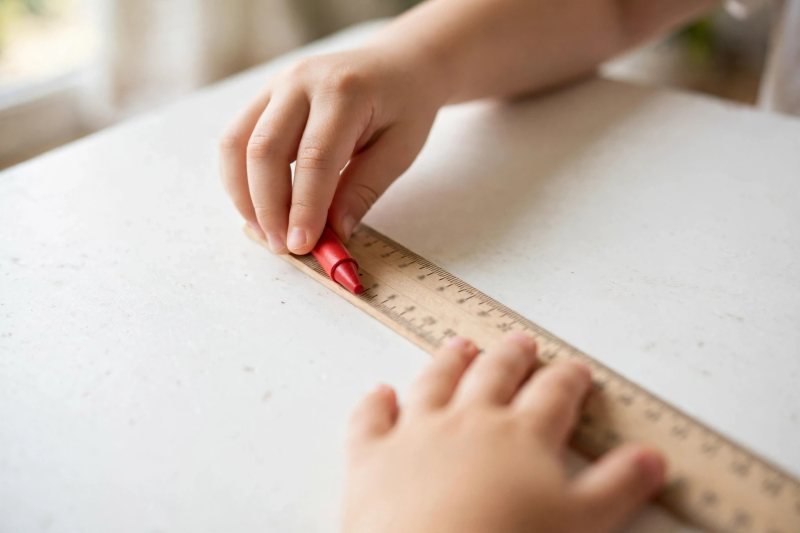
The zero rule — line the object up with the 0, never the 1. Lay the crayon alongside the ruler and slide it until one end sits exactly on the 0 mark. Not the 1 — the 0. This is the mistake nearly every child makes first, and it adds a whole phantom inch to every reading. Hold the crayon steady with one finger while the other points at the zero.
-
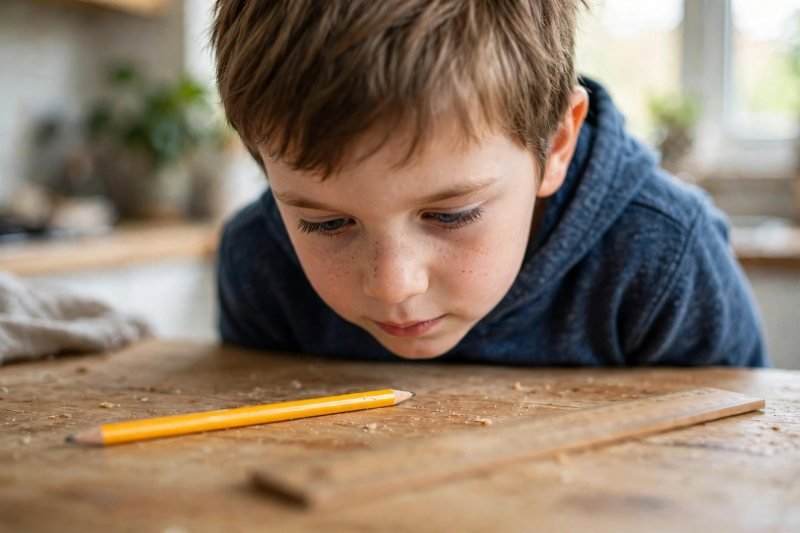
Read the number where the crayon ends. Keep the crayon parked on the zero and follow it to the far end. Look straight down at the ruler right there. Whichever long numbered line sits closest to the crayon's end is the length: "The crayon reaches the 4, so it is 4 inches long!" Write it in the log: crayon — 4 inches.
-
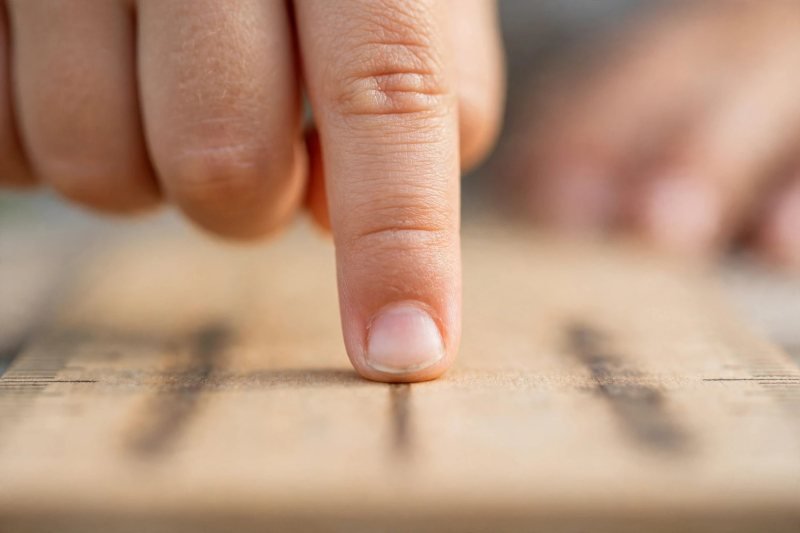
Meet the half-inch. Point between any two whole numbers: there is a slightly shorter line sitting exactly halfway. If an object ends on that middle line, it is "four and a half inches." Count one together: "4 … halfway … 5." Tell them the middle lines are the ruler's way of saying "in between" — and real objects land there all the time.
-
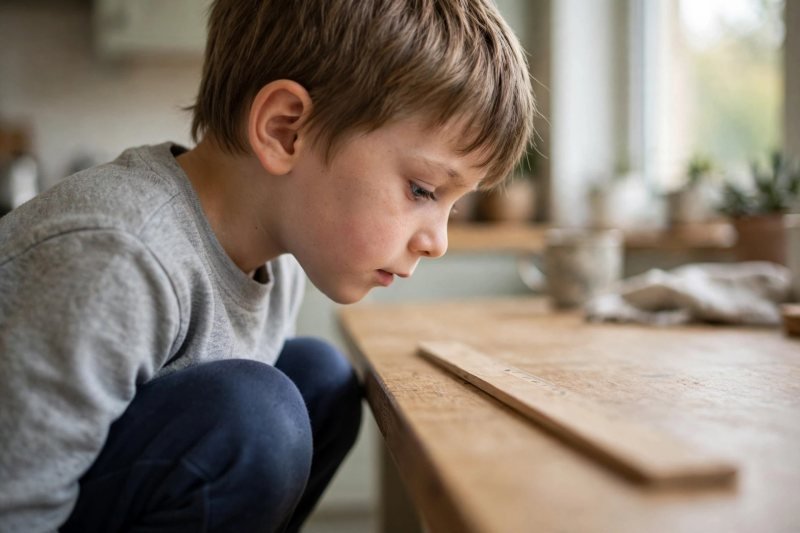
The eye trick — look straight down. Lean until your eyes hover directly over the object's end. Peek from the side instead and the number appears to shift — try it on purpose, then look straight down for the truth. Real measurers always read from directly above.
-
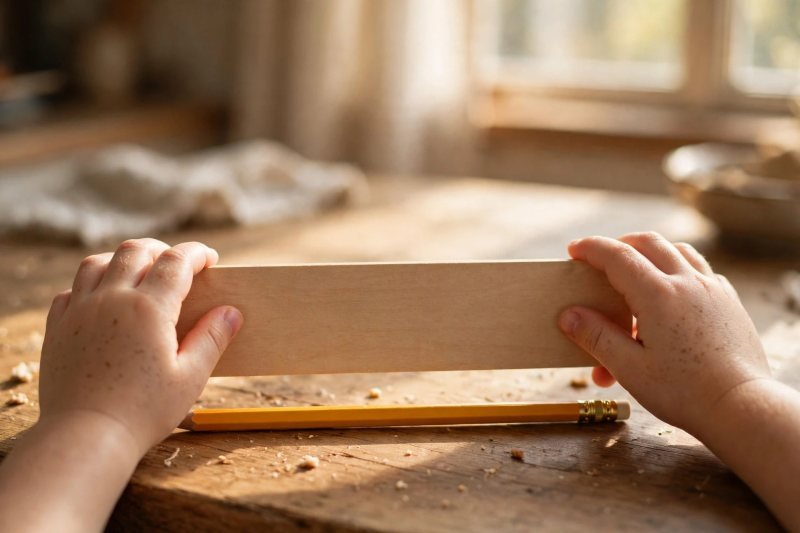
Measure the pencil, then the book. Line the pencil's eraser end up at 0, read the far end: "About 7 inches!" Now the picture book: "About 10 inches!" Log both. If the book lands on a halfway line, celebrate — the half-inch knowledge from step 4 gets its first real workout. For more measuring games, try our measuring length activities.
-
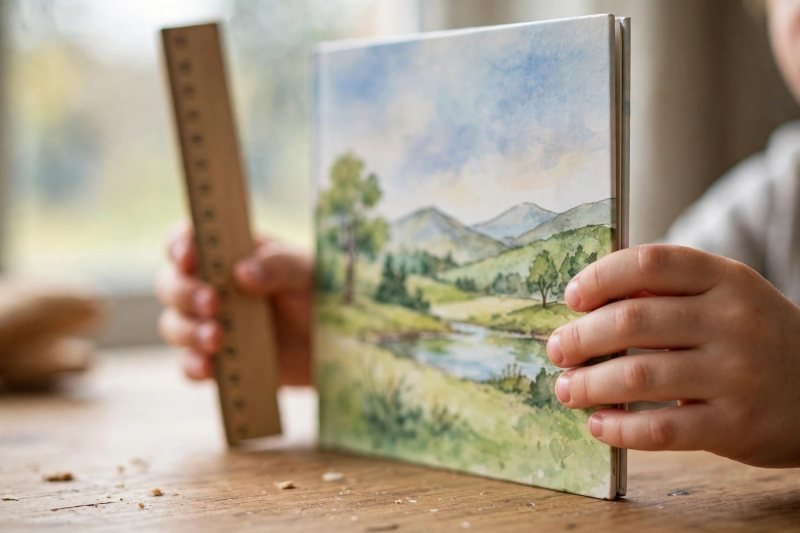
Measure something standing up. Prop the picture book upright and set the ruler beside it with the zero at the table surface. Read at the top edge: "The book is 9 inches tall!" Same ruler, same moves — zero at the bottom, read the far end. Tall things get measured bottom-to-top, and the zero always starts at the base. Try a mug or a water bottle next.
-
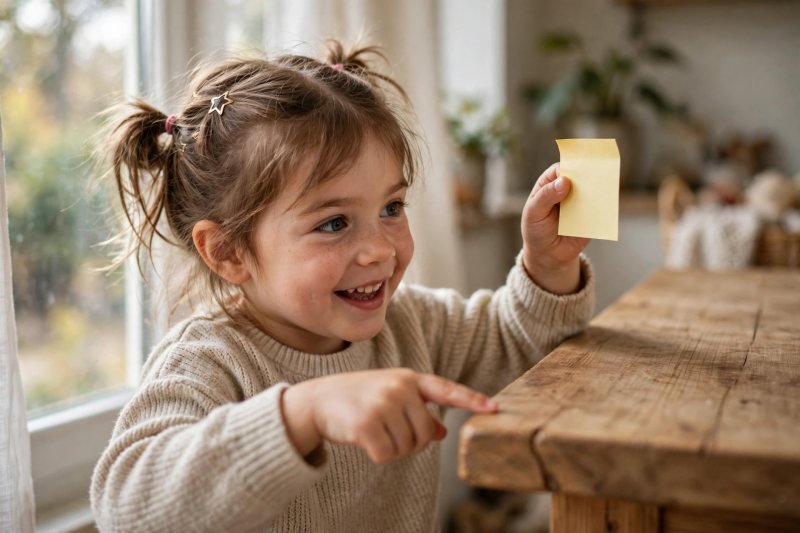
Guess first, then measure. Stick a note on the table edge: "How many inches do YOU think this is?" Your child studies it, commits to a number, and writes the guess down. Then measure — if the table is longer than the 12-inch ruler, mark where 12 lands, slide the ruler forward from there, and add the rest. "The table is 22 inches wide!" Compare guess and truth.
-
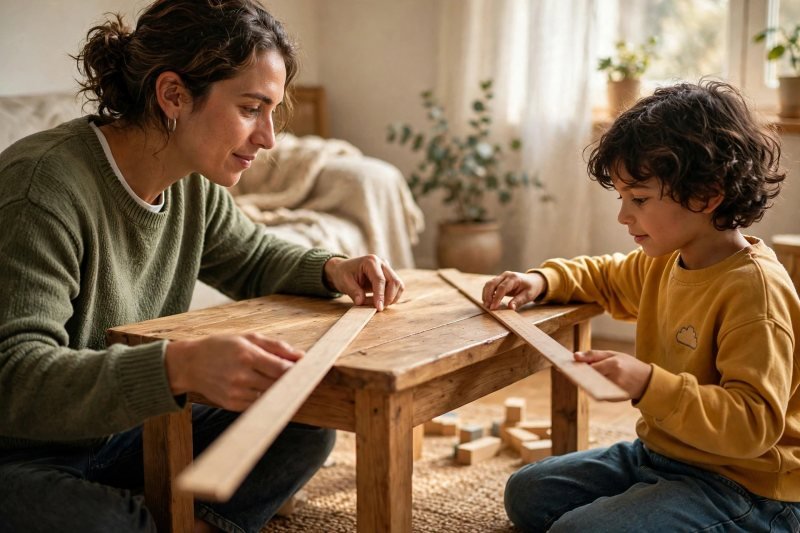
Two measurers, one answer. You measure the picture book alone; your child measures the same book alone. Compare numbers. If they match, you have just proved the best thing about standard units — the same object gives the same answer for everyone. If they do not match, hunt the mistake together like detectives: zero lined up? Eyes straight down?
-
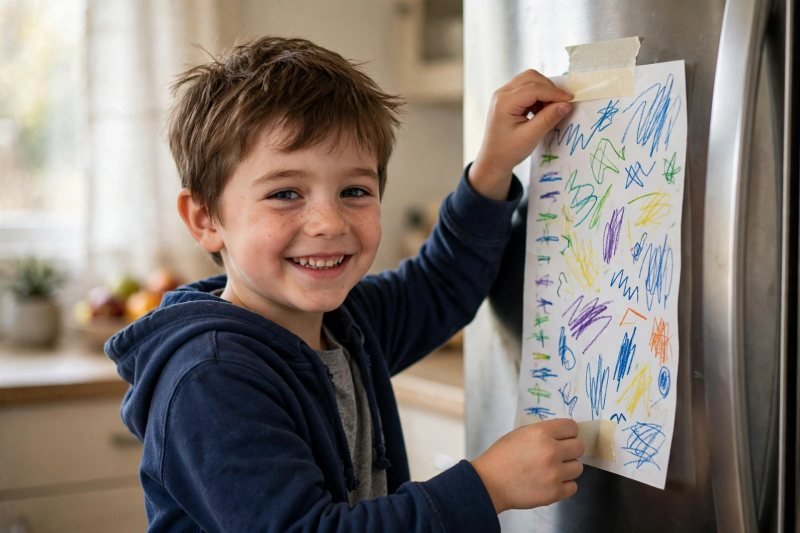
Build the measure chart. Draw a chart of everything you measured — crayon, pencil, book, table — with each length beside it. Your child's first real data set, in their own handwriting. Tape it to the fridge, where all great science is displayed.


Make it easier
Start with objects that land exactly on whole inches — crayons and small books before anything else — and count each mark aloud together, the same count-aloud play as counting activities for toddlers. You hold the ruler steady while they read the number; split the job. If the centimeter edge distracts, cover it with a strip of masking tape.
Make it harder
Introduce the quarter-inch: the next-shortest lines sit halfway between a whole number and the half-inch line — "four and a quarter." Try feet math: a foot is 12 inches, so how many inches short of a foot is that 10-inch book? Counting in twelves is a first taste of number patterns for kids. Measure to the nearest inch and round: a 4-and-a-half-inch crayon rounds to 5.
Other ways to play it
- Tape-measure hallway: Stretch a tape measure down the hallway — big numbers, big fun, same zero rule.
- Growth chart: Measure everyone's height in inches on the doorframe once a month and watch the numbers climb.
- Ruler hunt: Flip it around — "Find something in this room exactly 6 inches long." Reverse measuring sharpens estimating.
How it changes by age
- Six-year-olds are learning the ritual: zero at one end, eyes straight down, read the far end. Keep objects flat on the table and stick to whole inches plus the half-inch. Seven- and eight-year-olds run the whole procedure themselves — taller and longer things, re-measuring to check their own work, and questions about the quarter-inch marks. Follow that curiosity.
What they're learning
The core skill of standard measurement: aligning the zero, reading to the nearest marked unit, and trusting that an inch is the same inch everywhere. Along the way come estimating before measuring, recording real data, and the scientist's habit of checking work — measure twice, read once. For families coming from measurement activities for preschoolers — the compare-and-order play with blocks and hand spans — this is the technique lesson those concepts were waiting for. Holding the ruler steady and lining objects up exactly is careful hand work too — the same steady hands as fine motor activities for preschoolers.
Clearing up
Ruler back in the pencil box, with the log paper kept beside it. Sticky notes into the recycling. Hang the measure chart on the fridge.
Questions parents ask
What is the correct way for a child to measure with a ruler?
Why does my child keep starting at the 1 instead of the 0?
When should kids learn to read a ruler?
Should kids learn inches or centimeters first?
How do you teach half-inches to a child?
How can I make ruler practice fun for kids?
For younger siblings not yet ready for a real ruler, sorting activities for toddlers offers single-rule sorting play — ordering by length is the same compare-and-order skill, without numbers yet.

save it for later
Pin this for the next rainy afternoon
Keep it on a board so it is there when you need it, rather than when you happened to find it.
Save to Pinterest


