


Telling Time to the Half Hour: Half Past Made Simple
One playful 15-minute lesson that teaches six- to eight-year-olds half past times: the straight-down rule, the drifting hour hand, and the "name the number it left" trick.
Telling time to half hour means reading half past times on a clock: the long minute hand points straight down at the 6, and the short hour hand sits halfway between the hour number and the next one — 3:30 is the hour hand between 3 and 4. Teach it in one playful 15-minute lesson once o'clock is solid, using the rule "name the number the hour hand just left."

The short version
- Half past has one rule: long minute hand straight DOWN at 6, hour hand halfway to the next number.
- Teach telling time to half hour only after o'clock is solid — three to five days of spot checks first.
- "Name the number the hour hand just LEFT" kills the classic 3:30-as-"half past four" mistake.
- The straight-down check is the mirror image of the straight-up o'clock ritual — one procedure, two directions.
- One 15–20 minute lesson with the reused paper-plate clock, then two-minute daily spot checks on real clocks.
- Don't add quarters yet — one rule per lesson is what makes this click.
- Age
- Ages 6–8
- Prep
- 5 min
- Play time
- 18 min
- Mess
- None
- Difficulty
- Easy
- Where
- Indoor
Why kids love this
Half past feels like unlocking a secret level. The long hand does the exact opposite of the o'clock rule — straight DOWN instead of straight up — and the hour hand is caught mid-walk between two numbers, which kids find deliciously sneaky. They catch it, name where it came from, and read times that sound wonderfully grown-up: "half past seven!"
What you'll need
- The paper-plate learning clock from the o'clock lesson
- A clear glass
- A small jug of water
- Star stickers
Before you start
1. Dig out the learning clock and check both hands still spin. 2. Pour the glass half full of water — you'll use it to make "half" physical. This lesson runs on the clock they already love.
How to do it
-
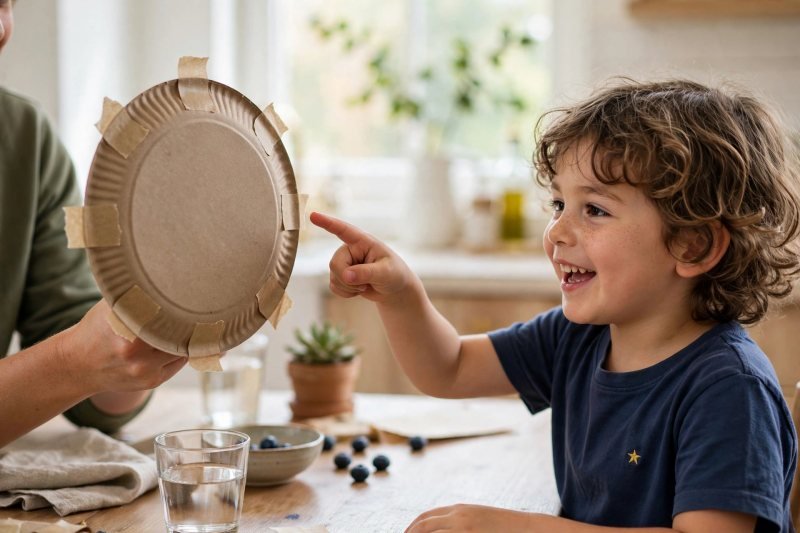
Warm up with an o'clock check. Hand over the learning clock. "Show me four o'clock" — long hand straight up, short hand on 4. One more: seven o'clock. The straight-up rule should come back in seconds.
-
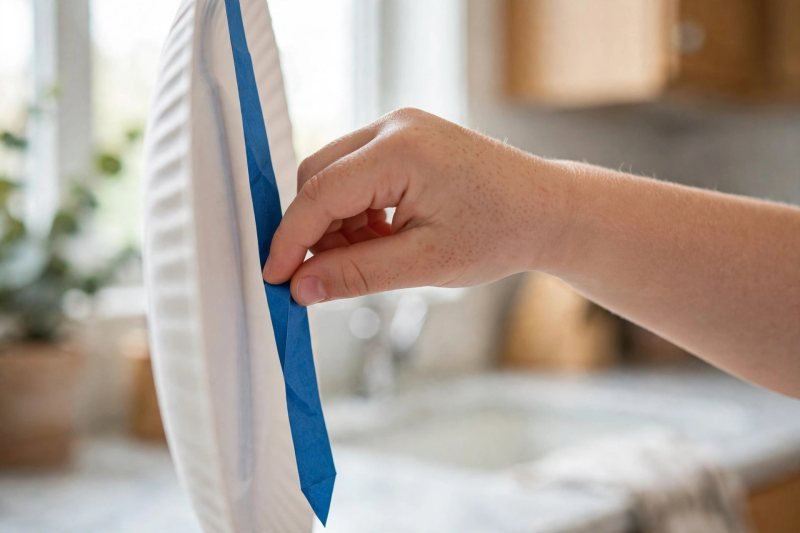
Set the straight-DOWN rule. Slide the long blue hand to point straight down at the 6. "Long hand straight DOWN means half past. Straight up was o'clock — straight down is half past. This never changes." Let them slide it up and down, saying the words.
-
Make "half" real with the glass. Hold up the half-full glass. "The clock is a whole hour. The long hand walked from the top to the bottom — HALF the hour is gone." Let them drink "the bottom half" and say it with you: "Half past."

-
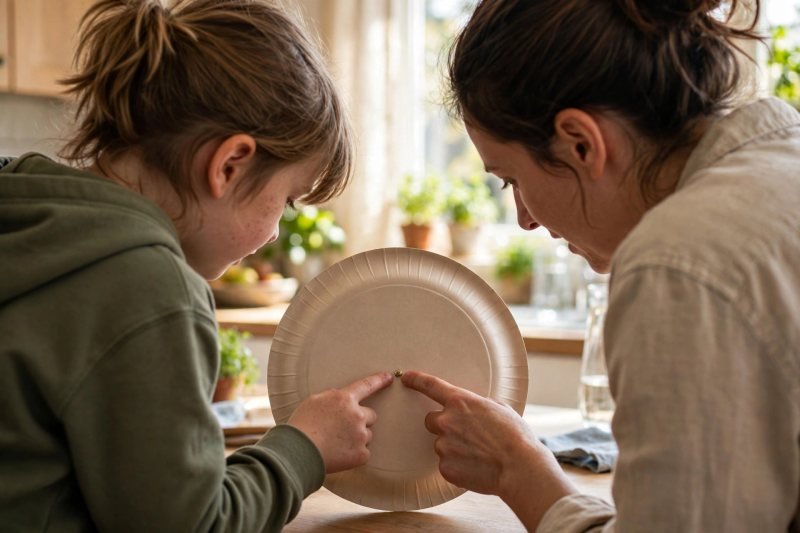
Catch the drifting hour hand. Set the clock to 3:30 — long hand down on 6, short hand halfway between 3 and 4. "Whoa — where's the short hand? Not ON the 3 anymore!" The hour hand never waits still; as the minutes pass it drifts toward the next number, and at half past it's exactly halfway there. The naming trick: "The hour hand is BETWEEN — so name the number it just LEFT. It left 3: half past THREE."
-
Read your first half past together. Long hand straight down? "Half past!" Hour hand between 3 and 4, left the 3? "Half past three!" Drumroll it. Then set 7:30 — long hand down, short hand halfway between 7 and 8 — and let them announce "half past seven!" on their own.

-
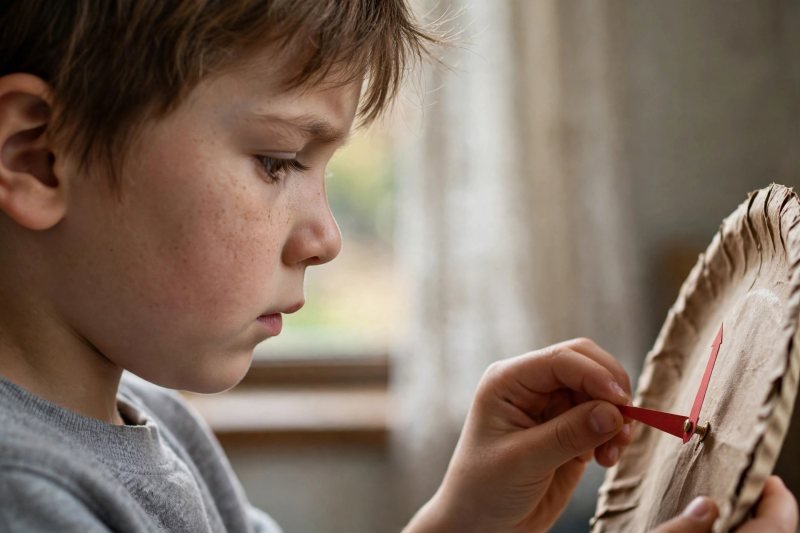
March the half pasts around the clock. Long hand stays down. Walk the short hand from half past one (between 1 and 2) to half past twelve (between 12 and 1), your child calling each one — the ordered march is a sequencing activity for preschoolers with a clock face. If they name the approaching number ("half past four!" at 3:30), just smile: "Where did it leave? Half past THREE."
-
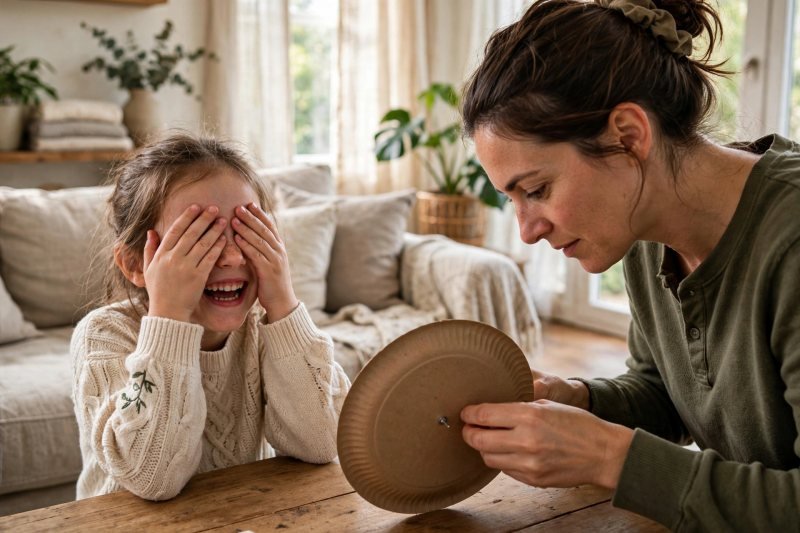
Play "halfway hideout." Your child covers their eyes while you set a half past — say 9:30. They uncover and check out loud: "Long hand straight down? Half past! Between 9 and 10 — it left 9 — half past nine!" Three or four rounds, then switch: they set, you read.
-
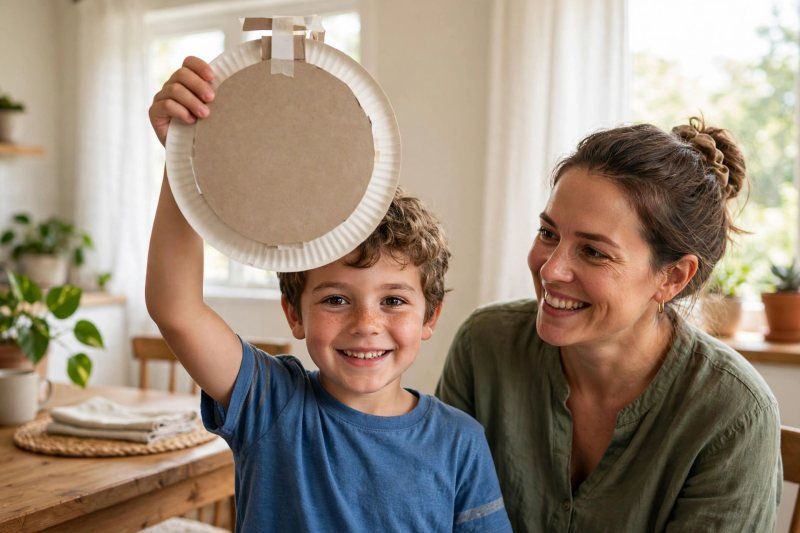
Swap roles and get it wrong on purpose. They set the half pasts; you read. Then make the classic mistake — "Half past FOUR!" at 3:30. Let them correct you with full drama: "Nooo — it LEFT the 3! Half past THREE!" Being the expert on the trickiest part cements it.
-
Go on a half-past hunt. Walk the house reading every analogue clock at half past: "Long hand straight down, hour hand between 6 and 7 — half past six!" None at half past right now? Set the learning clock to the nearest and compare its halfway hand with the wall clock's.

-
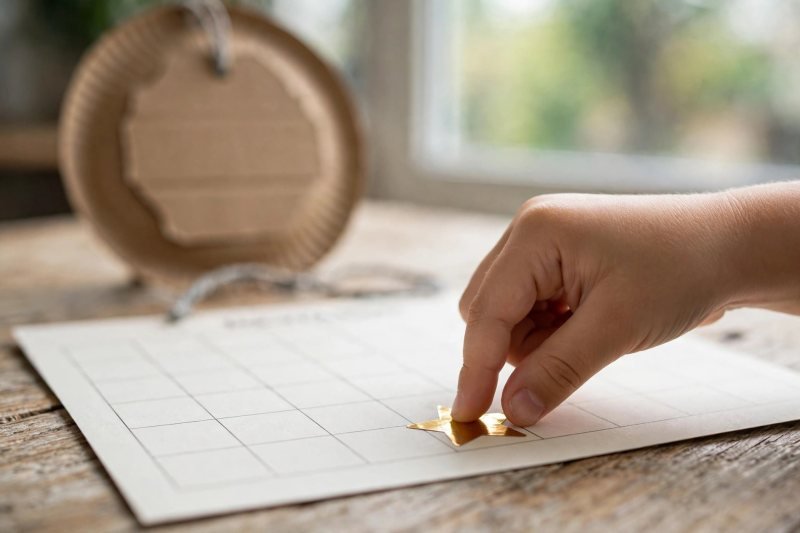
Sticker the win and tease quarters. A star per half past read, on the fridge chart. Then set the long hand sideways at the 3 and grin: "Straight up was o'clock. Straight down was half past. Next time — sideways."


Make it easier
Keep it to half pasts 1:30 through 6:30 for the first day — the full twelve can wait. If the drifting hour hand is the sticking point, practise with ONLY the short hand: park it between 3 and 4 and ask "which number did it leave?" until the answer is instant. If the numbers themselves wobble, our number recognition activities for preschoolers rebuild the foundation first. If "half past" vocabulary wobbles, "thirty" is a fine stand-in — the rule matters more than the phrase.
Make it harder
For quick readers: mix o'clocks and half pasts in the same round ("straight up or straight down?"). Graduate to a real clock. Connect the dots: the long hand traveled 30 minutes to reach the bottom — six jumps of five — the skip-counting they may already know. Ask "what time will it be in half an hour?" and watch them think in time, not just read it.
Other ways to play it
- Half-past meals: announce the day's anchors as half pasts — "Lunch is at half past twelve!" — and let your child declare it when the kitchen clock agrees.
- The 30-minute timer: set a 30-minute kitchen timer for play, then read the clock together when it rings: "The long hand walked from the top to the bottom — half the hour is gone!"
- Appointment cards: line up stuffed animals; your child "books" each a half-past appointment and announces it per customer: "Half past two for you, Bear!"
How it changes by age
- Built for ages 6–8, once o'clock is solid — three o'clocks read in a row without hesitation. A five-year-old who flew through o'clock can try, but give o'clock three to five days first. If your child can't yet count to 30, a little skip-counting practice smooths the path — our counting to 100 activities build the number range first.
What they're learning
The concept of a half — a first step into fractions; the honest mechanics of the hour hand's drift; position vocabulary (between, halfway, straight down); elapsed-time sense (30 minutes as half an hour); and the reading ritual — long hand first, then name the number the hour hand left — that carries into quarters.
Clearing up
Just keep the learning clock on the fridge next to the o'clock stars — you'll reuse it for quarters, and "name the number it left" is about to become your child's favourite correction.
Questions parents ask
How long does it take a child to learn to tell time to the half hour?
My child calls 3:30 "half past four" — how do I fix it?
Should I teach "half past three" or "three thirty"?
My child ignores the minute hand and just reads the hour — what helps?
Can I teach half past if o'clock is still shaky?
Is telling time to the half hour harder than telling time to the hour?
Don't add quarter past "while you're at it" — one rule per lesson is what made o'clock click. If half past is shaky after one sitting, replay the hideout game tomorrow. Three half pasts read in a row without hesitation means they're done — and our full parent guide to teaching time maps out quarters and beyond.


