


Big Kid Fall Outfits: Back-to-School Style for Ages 6-8
Kids fall outfits for ages 6–8, built the big-kid way: one coordinated capsule per child, 8 named school-ready looks from Denim Days to Picture Day, and a night-before system that lets them dress themselves in minutes.
Kids fall outfits for ages 6–8 work best as a per-child capsule: about 6 tops, 4 bottoms, and 3 layers in two coordinating colors, plus a dressy set, rain gear, sneakers, and boots. Those pieces style 8 named looks, and a night-before routine — weather check, outfit hung, backpack staged — lets kids dress themselves.

The short version
- Build one capsule per child: 6 tops, 4 bottoms, 3 layers, 1 dressy set, rain gear, 3 pairs of shoes.
- Two-color palette per kid makes every top match every bottom — no wrong answers at 7 a.m.
- 8 named looks cover the whole fall: School Classic, Denim Days, Flannel Day, Sweater Set, Practice Ready, Picture Day, Rain Ready, Weekend Layers.
- Sunday vetoes, Tuesday peace: outfit opinions get spent at the weekend sort, not on school mornings.
- The night-before three-point check — weather, look, pack — is the system that makes it all run.
- Age
- Ages 6–8
- Prep
- 30 min
- Play time
- 60 min
- Mess
- Low
- Difficulty
- Easy
- Where
- Indoor
Why kids love this
Big kids have opinions — about comfort, about what everyone else is wearing, about the shirt that is somehow suddenly unacceptable. This session hands them the stylist's clipboard: they help count the capsule, name the looks, and pre-approve every outfit on a calm Sunday, which means weekday mornings get a decision that was already made by the world's toughest critic — themselves, three days earlier. Getting dressed becomes execution, not negotiation, and they walk out feeling like the outfit was their idea. It was.
What you'll need
- Per child, the capsule targets: 6 tops (mix of tees, a polo or button shirt, 2 flannels), 4 bottoms (jeans, khakis or chinos, leggings or joggers, a skirt with shorts underneath or cords)
- 3 layers per child: a hoodie or sweatshirt, a denim or utility jacket, a puffer vest
- 1 dressier set per child for picture day and events
- Weather gear: a rain jacket per child, plus a knit hat for the first cold snap
- Shoes per child: everyday sneakers, sturdy boots, rain boots
- Two low hooks or a small rail per child for the night-before outfit
- Backpacks by the door, because the outfit system and the backpack system are the same system
- A laundry basket per room and a donate bag for outgrown pieces
Before you start
Pull each child's fall clothes out separately — sibling capsules are built one kid at a time, then checked for hand-me-down gold. Growth-check everything: pants get the flood test (ankle showing while standing = too short for this year, whatever the tag says) and tops get the reach test. Lay out a week's worth of hooks or rail space per child before styling — the looks need somewhere to live. Agree the house rules up front: school looks are chosen Sunday, worn as chosen; wild self-expression gets weekends and after-school hours.
How to do it
-
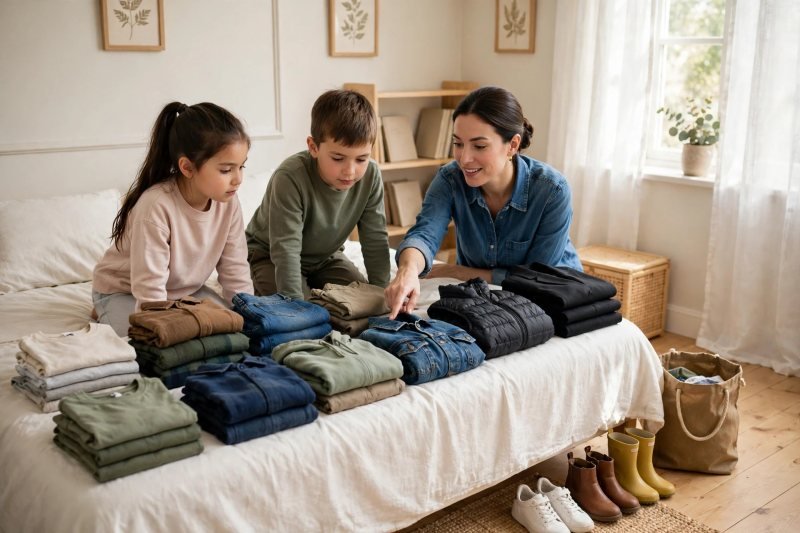
Run the Sunday sort and count each capsule honestly. Big-kid fall dressing is won or lost on Sunday, not at 7:40 on Tuesday. Lay out everything that survived the growth check and count it per child: 6 tops, 4 bottoms, 3 layers, 1 dressy set, rain gear, and 3 pairs of shoes. The palette rule that makes it all work is the same one from the toddler years, grown up: two main colors per kid (say navy and gray for one, rust and denim for the other) plus neutrals, so tops and bottoms can't clash. Kids fall outfits succeed on exactly this — a small, coordinated set beats a stuffed closet because every combination is already approved. Let each child veto one item now, on Sunday, with feeling — a veto spent here is a meltdown saved on Wednesday. For ready-made starting points for a younger sibling, the toddler fall outfits guide runs the same Sunday-sort logic at ages 2–3 — compare the two capsules side by side and hand down whatever still fits the palette. Counted, paletted, vetoed: style the first school look.
-
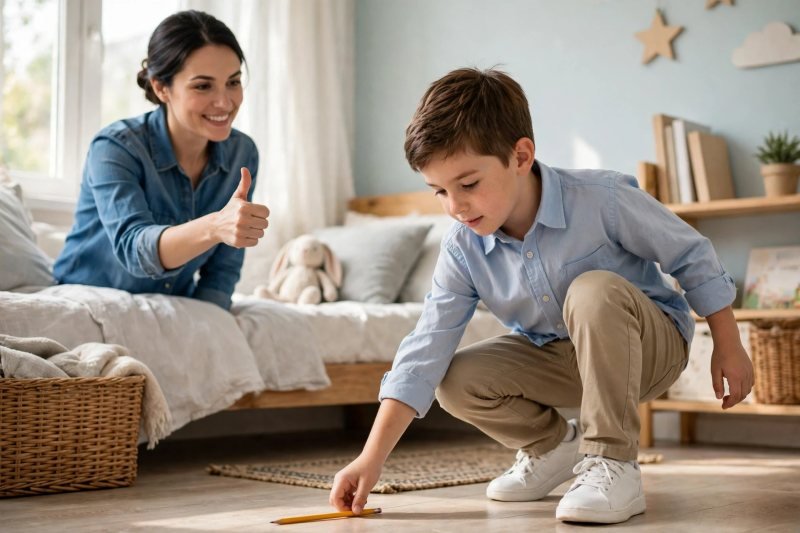
Style Look 1, School Classic: polo or button shirt, khakis, clean sneakers. The dependable Monday uniform: a polo or a soft button-down shirt, khaki chinos or dark jeans, and the cleanest sneakers in the house. It reads "ready" in the school doorway without a single uncomfortable element, which is the whole trick at this age — the best school outfit is the one they forget they're wearing by first recess. Fit checks for self-dressers: collar lying flat, buttons they can redo alone in a bathroom mirror, waistband that stays up through a full day of sitting, standing, and monkey bars. Have each kid do the classroom simulation: sit cross-legged, reach overhead, squat for a dropped pencil. Passes all three? Look 1 is locked. On to the look they'll ask for by name.
-
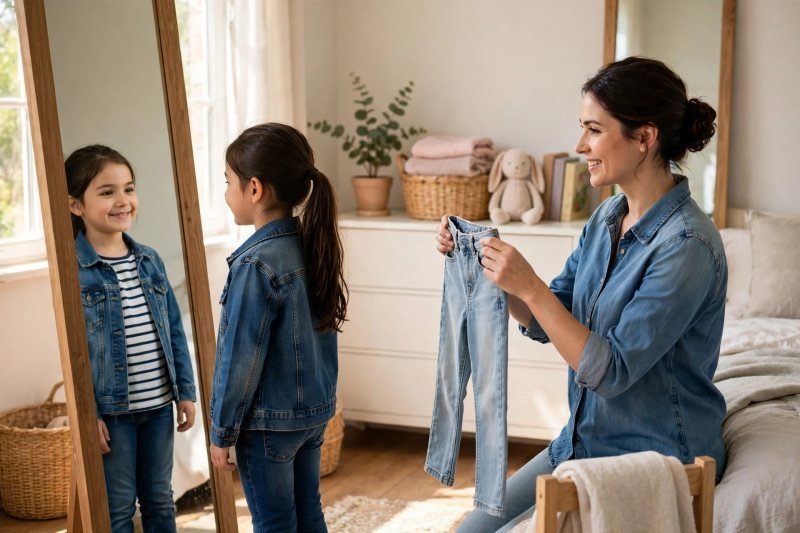
Style Look 2, Denim Days: jean jacket, plain tee, different-wash jeans. Double denim, big-kid edition: a denim jacket over a plain tee — solid color or stripes, nothing with characters they're aging out of — and jeans in a clearly different wash so the outfit reads styled, not matched-by-accident. The jacket is the hardest-working layer in the capsule: bus-stop mornings, chilly classrooms, and the walk home are three different climates, and one removable layer covers all of them. Denim Days also teaches the first real style concept they'll ever use: contrast. Light top, dark bottom (or the reverse) — show them both in the mirror and let them pick their house style. Locked in the mirror, chosen by the wearer: that's a look that will actually get worn. Next, the fabric of fall itself.
-
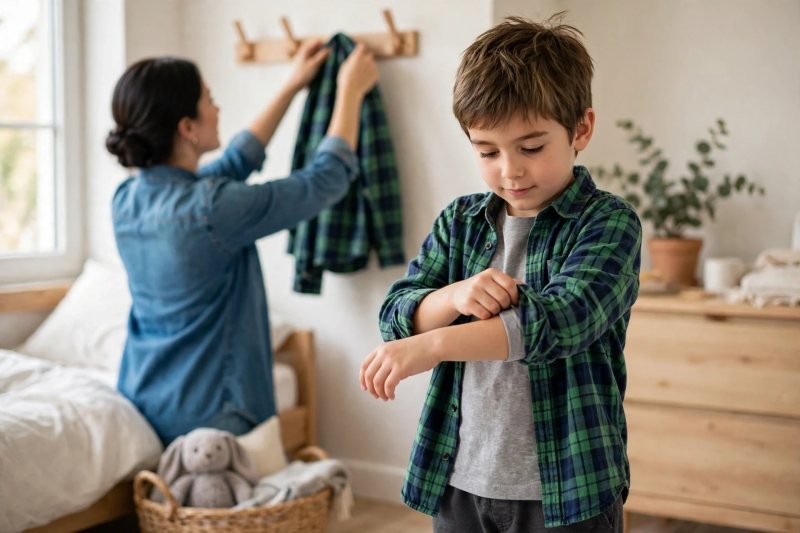
Style Look 3, Flannel Day: plaid shirt worn open over a tee, leggings or joggers. The flannel is fall's flag, and big kids wear it best open over a tee like a light jacket — sleeves ready to push up, warmth that adjusts by buttoning. Underneath: leggings for one kid (with the school rule-check — every school has a take on leggings, know yours), joggers for the other, boots or sneakers by weather. Flannel Day is the look that survives a field trip: layers for the bus, pockets for treasures, and a shirt that looks better a little rumpled. Teach the one-flannel skill: hanging it back up instead of floor-dropping it buys a second wear before laundry, because flannels over tees barely get dirty. Frugal and stylish is a fine early lesson. Look 3 approved: dress it up one notch.
-
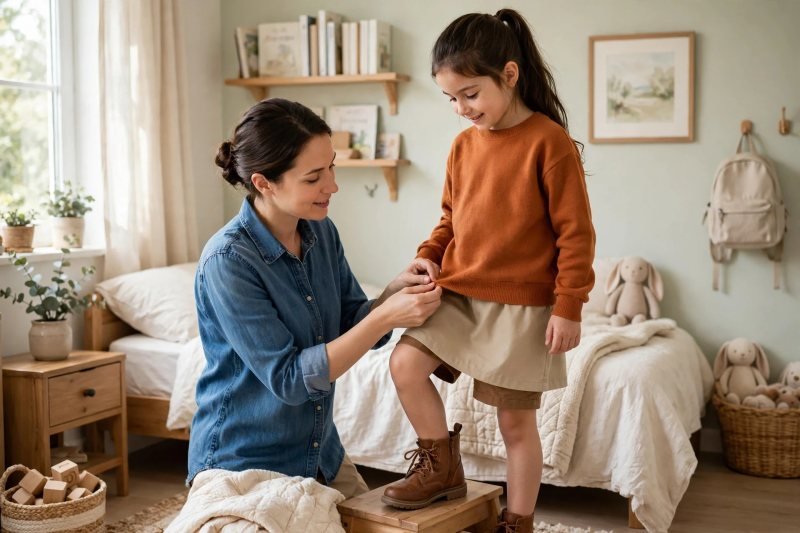
Style Look 4, Sweater Set: crewneck sweater, skirt-with-shorts or cords, boots. The polished weekday look: a crewneck sweater over a tee, with a skirt that has shorts underneath (non-negotiable for playground dignity) or corduroy pants, finished with the sturdy boots. This is the assembly-presentation-grandparents-visiting look that still passes the recess test, and the sweater-over-tee build means classroom heat is solved by removing one layer. Color lesson worth teaching at the mirror: one "loud" piece per outfit — the rust sweater OR the plaid skirt, not both shouting at once. Big kids absorb this instantly and start art-directing their siblings, which you can allow, briefly, for entertainment. The same sweater-over-tee build carries into colder months — the preschool winter outfits guide layers it up for younger kids, and the logic is identical here. Look 4 locked: now the one designed for days that end at practice.
-
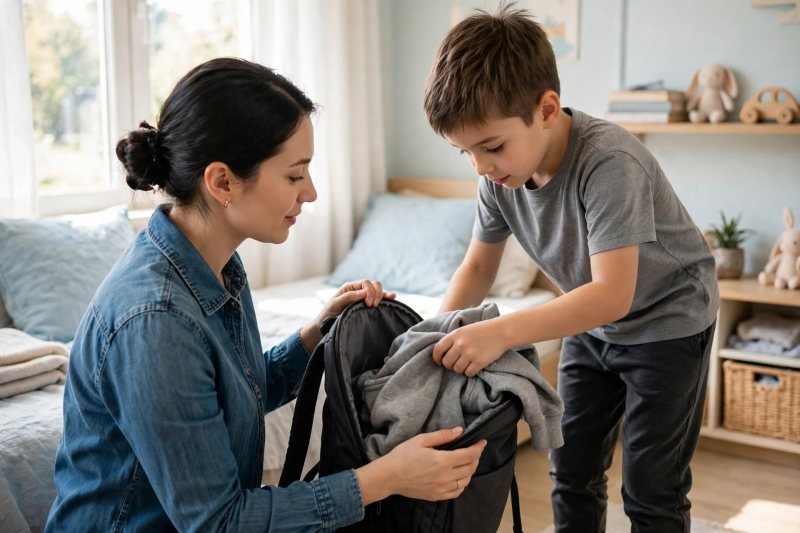
Style Look 5, Practice Ready: athletic tee under the hoodie, joggers, sneakers. School days that roll straight into soccer, dance, or martial arts need an outfit with a second act: a breathable athletic tee as the base (worn all day under the hoodie or sweatshirt), joggers that work in class and on the field, and the everyday sneakers. At practice time, the top layer goes in the backpack and the kid is ready — no full costume change in a locker room line. The backpack math matters: the removed layer must actually fit alongside books and a water bottle, so test-pack it once on Sunday. Practice Ready is also the capsule's most-laundered look; if your child has three practice days, the honest fix is a second athletic tee, not heroic laundry timing. Look 5 packed: time for the camera.
-
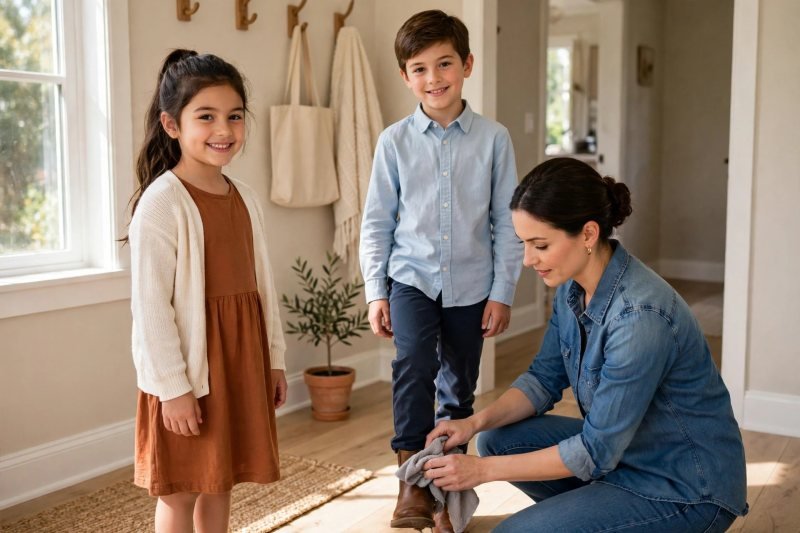
Style Look 6, Picture Day: the dressy set, coordinated but not matching. Picture day strategy for siblings: coordinate the palette, never match the outfits — matching reads costume; coordinated reads family. Her dressy set: a soft dress with a cardigan, or the sweater look leveled up; his: the button shirt with chinos and the boots given a wipe. Keep both inside the capsule palette and the school photo will sit beautifully next to last year's. The practical picture-day rules, learned by every parent exactly once: dress them after breakfast, send the layer for the inevitable pre-photo recess, and choose fabrics that don't show every wrinkle from the bus ride. Hair plan the night before, not in the car. Look 6, camera-ready: now dress for the weather that cancels nothing.
-
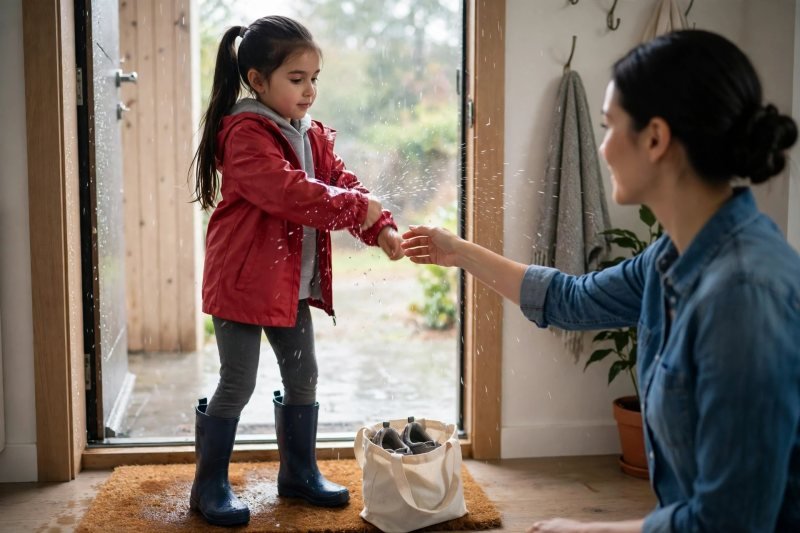
Style Look 7, Rain Ready: rain jacket over the hoodie, quick-dry bottoms, rain boots. Rainy school days run on their own spec: the rain jacket over the hoodie (hoods layered, both down once inside), bottoms that dry fast — joggers and leggings beat jeans, which stay wet and heavy through math class — and rain boots for the walk, with school shoes in the backpack if the day demands them. Fit-check rain boots standing: heel stays put, toes have room; a boot that slops is a boot that trips. The same pack-a-spare thinking behind our toddler swimwear guide applies here — dry clothes waiting at school make wet play worry-free, so send the spare set along instead of hoping the rain holds off. After school, the whole look has one job: everything hangs on the hooks by the door to dry, nothing migrates wet into the closet. Rain Ready turns the worst-dressed day of the week into a system instead of a scramble. Look 7 hung to dry: one look left, for the days with no bell at all.
-
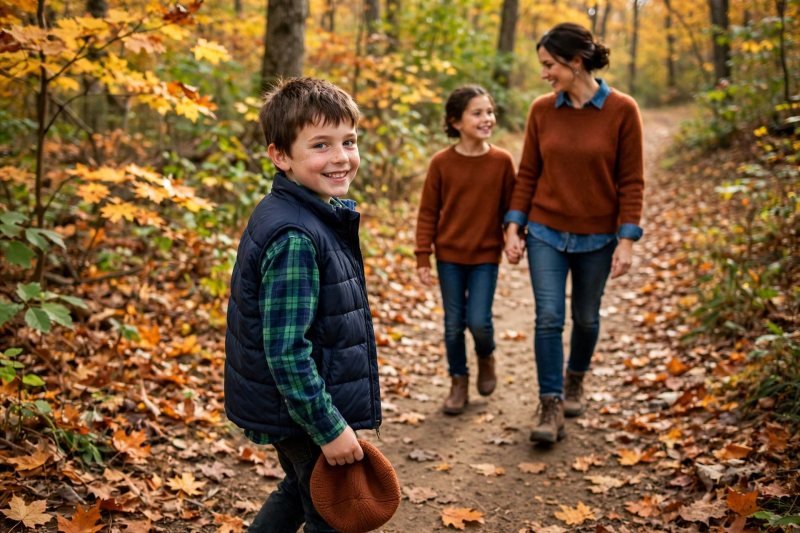
Style Look 8, Weekend Layers: vest over flannel, trail shoes, hat by the door. Weekend fall means trails, orchards, and games in the park — the heart of the fall season this capsule is built for — and the capsule handles it without a single new purchase: puffer vest over the flannel (Look 3, leveled up), the sturdiest bottoms, trail shoes or boots, and the knit hat living in the vest pocket for the first truly cold morning. The vest-over-flannel build is the fall layering masterclass in one outfit: core warm, arms free, two ways to adjust without stopping the hike. Siblings in their different palettes read as a team in photos without a hint of matching. Weekend Layers is also the hand-me-down proving ground — whatever survives this look weekly is what you buy again next year. Look 8 trail-tested: the wardrobe is done; now build the habit that runs it.
-
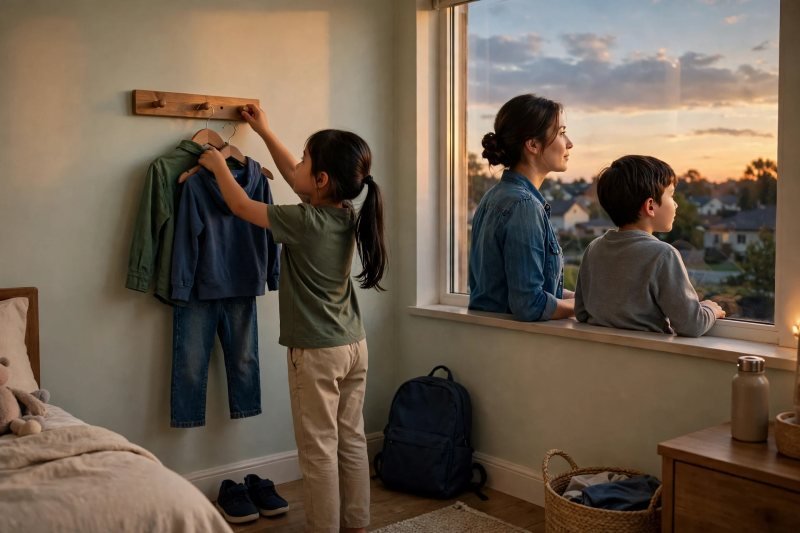
Install the night-before system: weather check, look hung, backpack staged. Eight looks are only potential energy until this step makes them kinetic. Every evening, each child runs the three-point check — say it like a game and it sticks like one: "Weather, look, pack." First, check tomorrow's weather together (a real skill, and the difference between Rain Ready and regret). Second, hang tomorrow's complete look on the hook — top, bottoms, layer, socks, underwear, shoes underneath — chosen from the Sunday-approved looks, so the only morning decision left is none at all. Third, stage the backpack by the door with tomorrow's layer math already solved. Ten minutes at night usually buys a calmer morning; kids who run their own system start inventing improvements, which is how this capsule hands off, piece by piece, to the seasonal winter outfits collection when the cold arrives. Run it for a week and the 7 a.m. outfit negotiation usually shrinks to a quick check at the hook — fittingly, since the whole three-point check is a tiny memory game they play against yesterday's selves. System installed: dressed for the season, on their own.


Make it easier
One child, minimal capsule? Four tops, three bottoms, two layers still cover a school week with Sunday laundry. Skip sibling coordination entirely if mornings are survival mode — the night-before hook alone delivers most of the benefit. Photo-averse styling: lay-flat photographs of each look on the rail work for kids who'd rather point than discuss. A suddenly rejected shirt is information, not defiance: check seams, tags, and waistband rub first, and spend the Sunday veto on it rather than arguing on a school morning.
Make it harder
Give each kid a small seasonal budget decision: one wildcard item of their choosing that must still match the palette — negotiation, math, and style in one purchase. Promote them to laundry captains for their own capsule: sorting by palette, checking pockets (flannel pockets especially), and hanging flannels straight from the wash. Let them art-direct a sibling or a parent's fall look using the contrast and one-loud-piece rules — teaching a rule is the final proof of learning it.
Other ways to play it
- Uniform-school version: the capsule becomes the after-school and weekend wardrobe, and the night-before system extends to laying out the uniform plus tomorrow's layer.
- Warm-fall version: swap sweaters for a second hoodie each, boots become optional, and Rain Ready does the heavy lifting until the first cold snap.
- Growth-spurt version: buy bottoms with adjustable waists a half-size up and let the flood test, not the calendar, retire pieces — mid-year replacements slot into the palette.
How it changes by age
- Ages 6–8: the guide as written — kids style and dress themselves inside a parent-built system; vetoes happen Sunday, not Tuesday.
- Ages 4–5: same capsule logic with more adult help: fewer looks (five is plenty), picture menus instead of rails, and boots they can pull on alone.
- Ages 9–10: hand over the Sunday sort itself; your job becomes palette approval and the laundry calendar — the system stays, the management transfers.
What they're learning
Executive function: the night-before check (weather, look, pack) is planning, sequencing, and follow-through in a trench coat. Real math: capsule counting, rotation planning, and a wildcard budget are arithmetic and money skills with immediate feedback. Style literacy: contrast, palette, and one-loud-piece are genuine design principles they'll use for decades. Self-reliance: a child who dresses independently, appropriately, and on time has built a morning superpower.
Clearing up
The Sunday sort leaves each room with a working system, not a pile: outgrown pieces into the donate bag, keepers back in palette order, hooks loaded for Monday, rain gear drying by the door. Photograph each child's rail once — when a piece wears out mid-season, the photo is your shopping list: same palette, same job, one size up.
Questions parents ask
What should kids wear to school in fall?
How many school outfits does a child need?
What are the best fall shoes for school kids?
How do you layer kids' outfits for fall?
How can kids get dressed faster on school mornings?

save it for later
Pin this for the next rainy afternoon
Keep it on a board so it is there when you need it, rather than when you happened to find it.
Save to Pinterest


