


Skip Counting by 2s, 5s and 10s: Games That Make It Click
Skip counting by 2s, 5s and 10s turns number lines into rhythms kids can feel in their feet. These ten active games take ages 6–8 from 2, 4, 6, 8 up to 40 and the 5s and 10s all the way to 100 — and weave in the real-life skills that make it stick: counting nickels and dimes, reading minutes on a clock, and the ideas behind multiplication.
Skip counting by 2s, 5s, and 10s means counting in jumps instead of one by one: 2, 4, 6, 8…; 5, 10, 15, 20…; 10, 20, 30, 40…. Kids ages 6–8 learn it fastest through movement games — clapping, hopping, and shaking a beat — because the rhythm makes the pattern stick — the foundation for counting money, telling time, and multiplication.

The short version
- The three key sequences: 2s to 40, 5s to 100, 10s to 100.
- Movement games (clap, stomp, hop, shake) beat worksheets for locking patterns in.
- Skip counting by 5s is the skill behind reading minutes on an analog clock.
- Skip counting by 5s and 10s is the skill behind counting nickels and dimes.
- Grouping by 2s, 5s, and 10s is the concrete meaning of multiplication before tables appear.
- Age
- Ages 6–8
- Prep
- 10 min
- Play time
- 30 min
- Mess
- None
- Difficulty
- Easy
- Where
- Both
Why kids love this
Skip counting feels like a rhythm game, not a math lesson. Clapping through the 2s — 2, 4, 6, 8, 10 — gives kids a beat to ride, and the pattern clicks into place. The 5s bounce between endings — 5, 10, 15, 20 — and the 10s march to 100 in big confident jumps, so big numbers suddenly come easy. Add hopping, high-fives, toy-car races, and a scavenger hunt, and the practice feels like play — while underneath it, kids are learning to count money, read a clock, and think in groups.
What you'll need
- Painter's tape or sidewalk chalk (hopscotch grid and number line)
- A printed 1–100 chart, plus two crayons or highlighters
- About 20 play nickels and 20 play dimes
- A toy car or small figurine
- Hand shakers (sealed containers with dried beans work)
- A real analog clock or toy clock
Before you start
1. Tape or chalk a 10-square hopscotch grid and a 10-foot line on the floor. 2. Print or draw a 1–100 chart; set it out with two colors. 3. Sort play coins into two bowls: nickels in one, dimes in the other. 4. Seal the bean shakers with tape around the lids and clear a safe open space.
How to do it
-
Clap-stomp the 2s to 40. Count 1 through 40 together, clapping the evens and stomping the odds, calling out only the evens: 2, 4, 6, 8, 10, 12, 14, 16, 18, 20, 22, 24, 26, 28, 30, 32, 34, 36, 38, 40. The rhythm wires the sequence into muscle memory, and the stomp gives the odd numbers a job so they stop pulling attention away from the pattern. If your child loses the place, do not correct mid-flow — stop, clap the last safe number together, and restart from there. If counting to 100 itself is still wobbly, warm up first with our counting to 100 activities and come back to the 2s once the straight count feels steady.

-
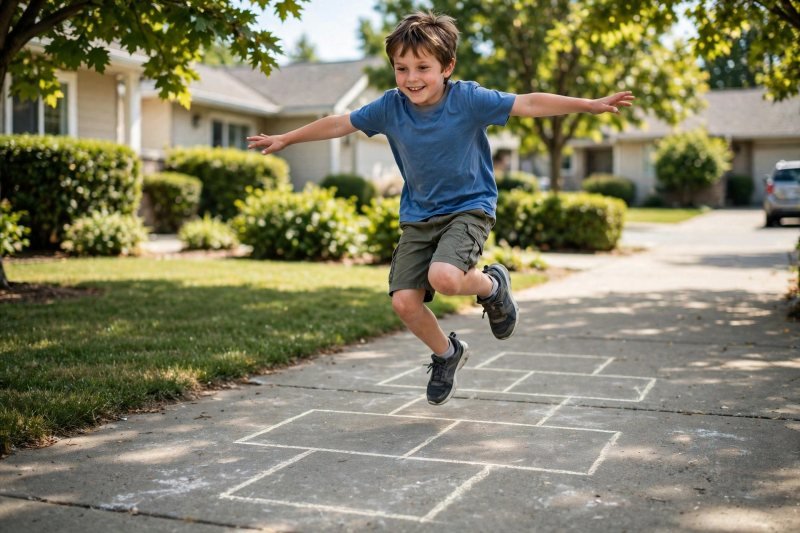
Hopscotch by 2s. Hop the grid calling the 2s in order — square one is "2," square two is "4" — and keep going until the grid runs out, then turn and hop back naming the numbers again. Lose the count or land wrong-footed and you start over, which is the game, not a punishment: the restart is what forces the sequence to be rebuilt from the beginning instead of guessed. Two rounds each, and let your child chalk the next grid themselves — drawing the squares is part of owning the count.
-
High-five the 5s to 100. Trade high-fives through the 5s — 5, 10, 15, 20, 25, 30, 35, 40, 45, 50, 55, 60, 65, 70, 75, 80, 85, 90, 95, 100 — you call "5," your child calls "10," and so on. Point out the alternating 5 and 0 endings as you go: every number ends in 5 or 0, and the tens climb in order underneath. When the rhythm is steady, swap roles so your child leads, and try it faster — speed is the reward for a pattern that has truly landed, not the way to force it.

-
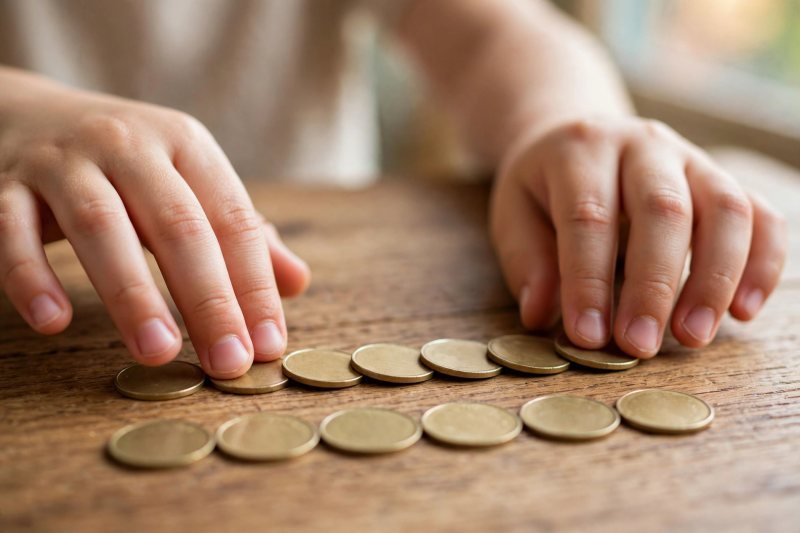
Run the nickel and dime relay. Slide one nickel per number counting by 5s — 5, 10, 15, 20 — then switch to dimes and count by 10s — 10, 20, 30, 40, 50, 60, 70, 80, 90, 100. Nickels and dimes are skip counting by 5s and 10s in disguise — that is why five nickels make a quarter and ten dimes make a dollar — so let your child say the coin's value out loud with each slide. For more coin-counting play once the relay feels easy, our money games for kids turn the same skill into shop games.
-
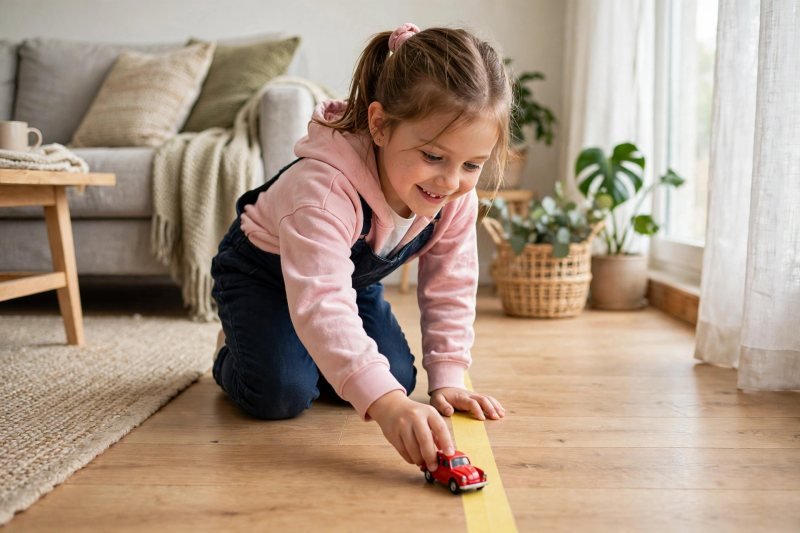
Race the toy car along the number line. Drive the toy car along the tape line in 2-jumps, chanting 2, 4, 6, 8 and on to 40, one jump per number, and let the car pause at each landing so the count and the distance match. Then race: you take 5-jumps, your child takes 2-jumps, and you finish first — bigger skips cover ground faster, and losing the race is the lesson, not the problem. Swap the jumps and race again, then ask which jump size won and why; a child who can explain it has understood it.
-
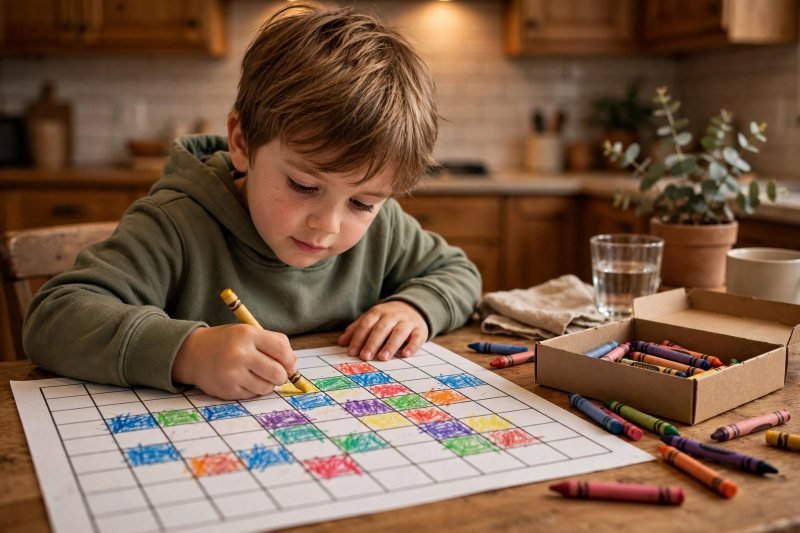
Hunt for treasure on the hundred chart. Color every 2s number on the 1–100 chart in one color and every 10s number in the other, working slowly down the rows so the pattern builds instead of being rushed. Stand back when the chart is done: the columns light up into perfect vertical stripes — the "secret pattern" made visible — and the 10s column sits inside the 2s stripes like a spine. Ask your child to predict where the next colored square will land before coloring it; predicting is what turns coloring into counting.
-
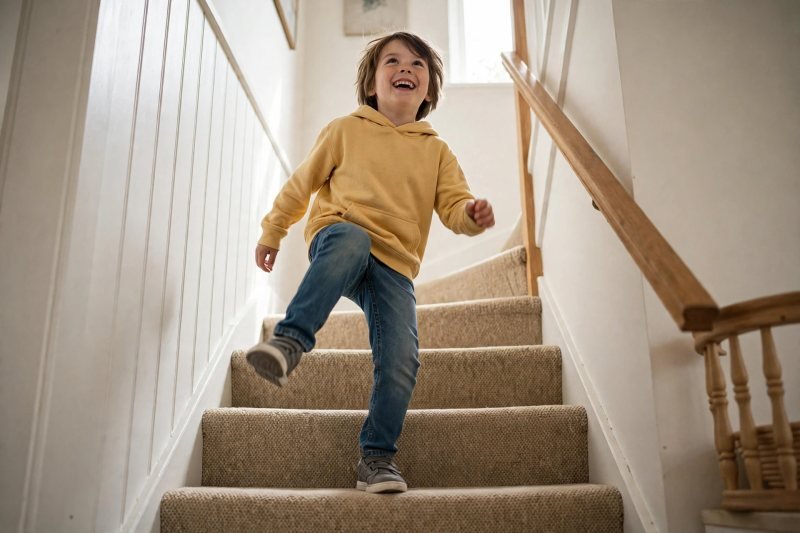
Climb the stairs in 10s. Climb the stairs counting by 10s, one step per number: 10, 20, 30, 40, 50, 60, 70, 80, 90, 100 — and loop back down if the stairs run out, counting the same numbers on the way down. No stairs? March in place with big exaggerated steps, lifting the knees high so each 10 gets a whole-body beat. The 10s are the easiest sequence and the proudest win, so let this be the game you return to on tired days when the 2s feel hard.
-
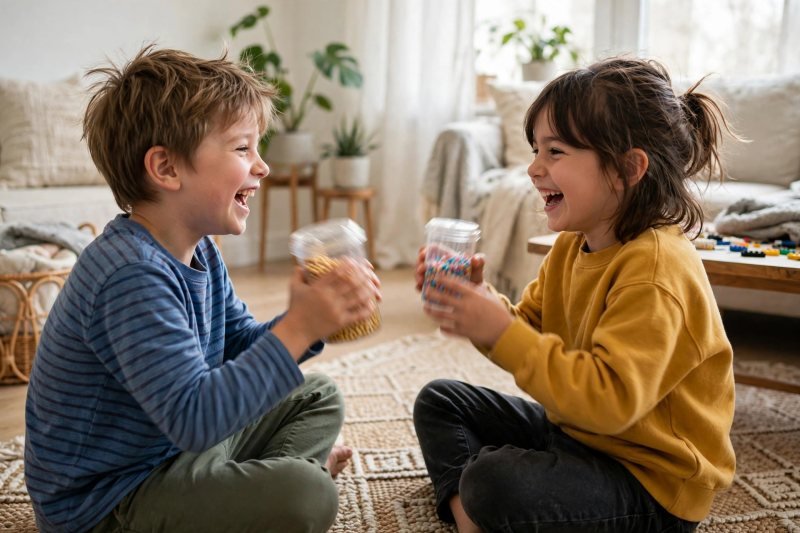
Shake the rhythm and chant the counts. Shake to a steady beat and chant one full sequence per round: 2s to 40, then 5s to 100, then 10s to 100, keeping the shake even so the numbers land on the beat instead of racing ahead of it. Let your child lead with the shaker — setting the tempo means owning the count — and if the beat wobbles, slow it down together rather than stopping. Try it with eyes closed once the sequence is solid; taking the eyes out of the game proves the pattern lives in the ears and the hands now.
-
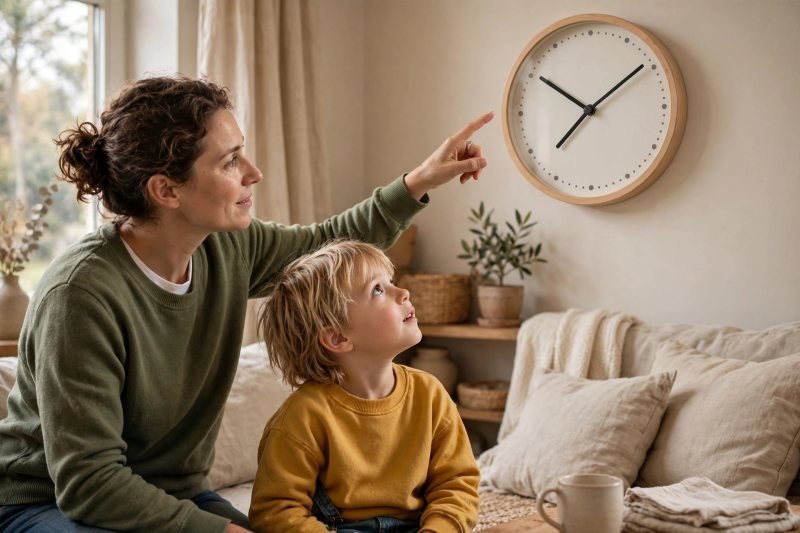
Take the minute-hand mission on the clock. Point to each clock number and name its minutes: 1 is 5 minutes, 2 is 10, 3 is 15, all the way to 60 — the whole face reads 5, 10, 15, 20, 25, 30, 35, 40, 45, 50, 55, 60. Every minute mark is the 5s sequence in disguise, so a child who can skip count by 5s can already read the minute hand. Ask for real times next — "show me 25 minutes past" — and let your child move the hand there; our how to teach a child to tell time takes the same clock and builds the full telling-time routine from it.
-
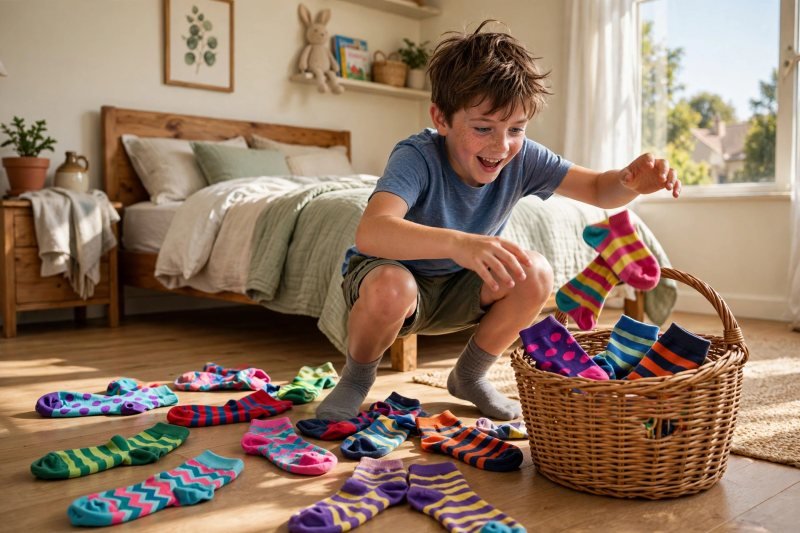
Sprint the skip-count scavenger hunt. Hide pairs of small objects — socks, crayons, blocks — around the room, then send your child hunting: each found pair drops into a basket while they count by 2s — 2, 4, 6, 8, 10 and on as the basket fills. Dump the basket at the end and count the total together, checking that the pair-count and the single-count agree; if they do not, recount slowly — the check is the math. Finish by asking for the 5s version tomorrow — five objects per hiding spot — and the same game becomes the next sequence.


Make it easier
Start with only the 10s (10, 20, 30… 100), then add 5s, then 2s. Cap each game at 20 and stretch the target over several days. You lead the first round of every game; your child copies, then takes over.
Make it harder
Count the 2s backward from 40 or the 5s backward from 100. Time the 10s-to-100 sprint and beat your own record. Try "5 groups of 4?" or "wheels on 6 bicycles?" — multiplication in disguise. Teach the game to a younger sibling using our counting to 20 activities as the warm-up — teaching is the fastest way to lock a sequence in.
Other ways to play it
- Playground edition: chalk the hundred chart on the sidewalk; use real stairs for the 10s.
- Sibling tournament: race the number-line car or duel the high-five 5s; longest unbroken sequence wins.
How it changes by age
- Ages 6: Focus on the 10s and the 2s up to 20. Pick any 4–5 games, 20 minutes max. Fumbling between 14 and 20 in the 2s is normal.
- Ages 7: Most 7-year-olds reach the full targets (2s to 40, 5s and 10s to 100). This is the sweet spot for the clock and money steps.
- Ages 8: Push for fluency and backward counting, plus the multiplication bridge. An 8-year-old who can skip count all three sequences backward is ready for multiplication tables.
- Younger siblings: our counting games for preschoolers are the right level for ages 3–4 — same playful counting, smaller numbers.
What they're learning
Number sense: skip counting builds the feeling that numbers have structure, not just names. The 2s teach even numbers and pairing; the 5s and 10s teach base-10 structure. Coin counting makes it money math, the clock makes it time telling, and grouping by 2s, 5s, and 10s is the concrete meaning of multiplication before tables appear.
Clearing up
Wipe the table if markers went past the chart onto a shared surface. Gather play coins into their bowls — count them by 5s and 10s as a closing game. Peel painter's tape promptly so it leaves no residue; knock chalk dust off shoes at the door.
Questions parents ask
What age should kids start skip counting by 2s, 5s, and 10s?
How do you teach skip counting by 2s without confusing kids?
Why is skip counting by 5s important for telling time?
Is skip counting the same as multiplication?
What comes after skip counting by 2s, 5s, and 10s?
How long does it take kids to learn skip counting?
You do not need all ten games in one sitting. Three to four per session, rotated over a week, locks sequences in. If your child resists one sequence, park it and lean on the one they enjoy. The 10s usually win first. Notice unprompted skip counting — stairs by 10s, crayons by 2s. That is the skill landing; make a big deal of it.

save it for later
Pin this for the next rainy afternoon
Keep it on a board so it is there when you need it, rather than when you happened to find it.
Save to Pinterest


