


Odd and Even Numbers Games
Odd and even numbers games turn math into a team sport: ten screen-free games where kids ages 6–8 draft numbers onto the Odd Team or the Even Team — sorting, tossing, racing, and hunting their way to confidence.
Turn odd and even into two teams and let kids draft every number. Pair toys two by two — full partners means Even Team, one left over means Odd Team — then play dash-and-sort, bucket toss, dice sums, and card races. The last-digit shortcut (0, 2, 4, 6, 8 = even; 1, 3, 5, 7, 9 = odd) makes every game fast and fun.

The short version
- Even = every object finds a partner; odd = one is left over.
- Even Team numbers end 0, 2, 4, 6, 8; Odd Team numbers end 1, 3, 5, 7, 9.
- Sorting games — dash-and-sort, card races, bucket toss — turn recognition into reflex.
- Dice sums teach addition through play: even + even = even, odd + odd = even, mixed = odd.
- Age
- Ages 6–8
- Prep
- 10 min
- Play time
- 45 min
- Mess
- None
- Difficulty
- Medium
- Where
- Indoor
Why kids love this
Why do kids love playing for teams instead of just sorting numbers? Because teams have pride. Every number becomes a player with a jersey, and your child is the coach deciding where each belongs. Sorting feels like draft day, not a worksheet.
What keeps these games exciting round after round? The teams are perfectly balanced — half the numbers play for Odd, half for Even — so every game stays close, and the Step 3 "uniform check" becomes their secret weapon.
What you'll need
- 2 laundry baskets (team goals), 2 t-shirts or blankets (team dugouts)
- 20 blank index cards + marker, 3 beanbags, 2 dice
- 10–15 small toys, kitchen timer, paper and crayon
Before you start
Write 1–20 on the cards, one per card. Set out the baskets and lay the dugout shirts down. Clear a runway across the living room. If counting to 100 still wobbles, warm up with counting to 100 activities first.
How to do it
-
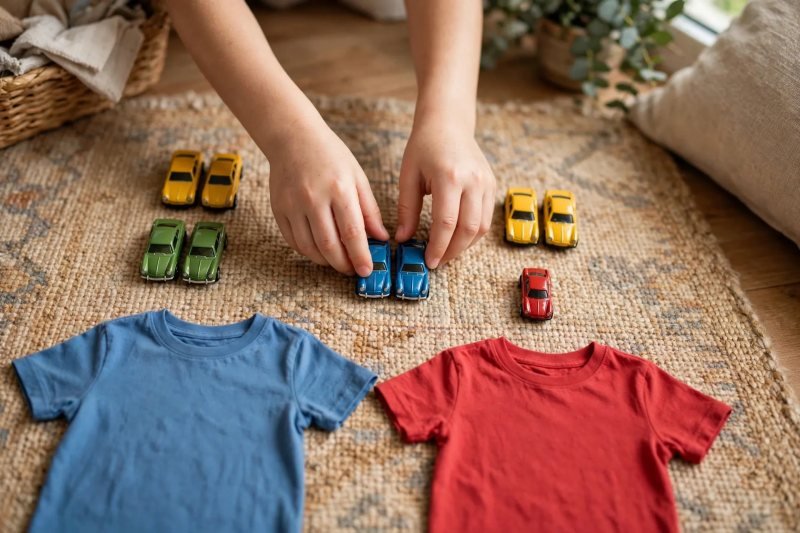
Team tryouts: learn the one rule. Pair toy cars two by two: every car partnered means even — Even Team. One left alone means odd — Odd Team. Try 1–12: evens 2, 4, 6, 8, 10, 12; odds 1, 3, 5, 7, 9, 11. Partners or one left over.
-
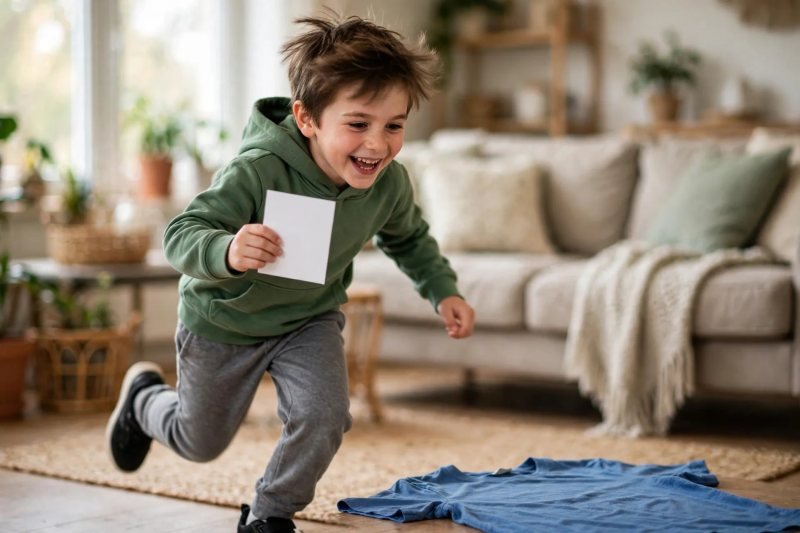
Jerseys up: dash-and-sort 1–20. Shirts at opposite ends of the runway. Flip a card, shout the team, dash it to the right dugout. Wrong draft? Replay the tryout test. Sorted right, each team holds ten.
-
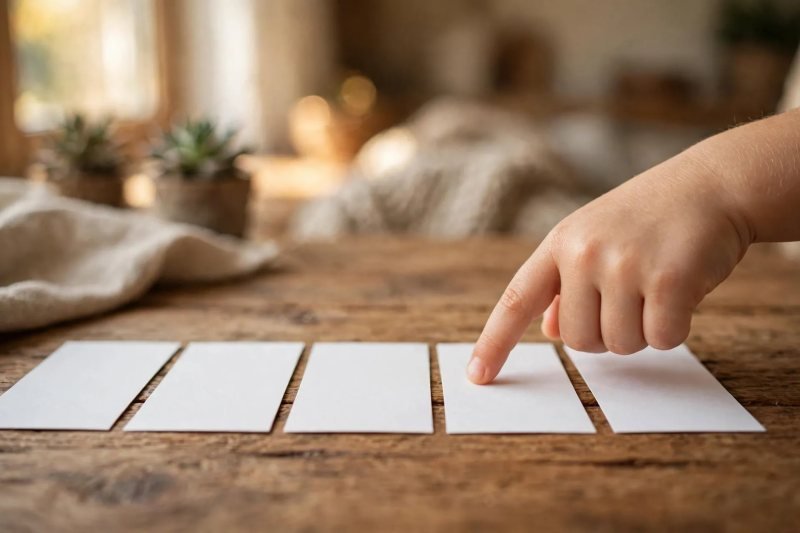
The uniform check: read the last digit. Line up the sorted cards: every Even jersey ends 0, 2, 4, 6, 8; every Odd jersey ends 1, 3, 5, 7, 9. The last digit is the team uniform — it never lies. Test giants: 34 (even), 57 (odd), 86 (even), 93 (odd). Odd and even is one kind of pattern — number patterns for kids shows more.
-
Bucket toss: name it, then throw it. Call a number — "46!" Your child shouts the team, then throws a beanbag at that team's basket. Right team plus hit: two points. Right team, miss: one. Wrong team: the other player steals the throw. First to 7 wins. Try 46 (even), 71 (odd), 38 (even), 95 (odd).

-
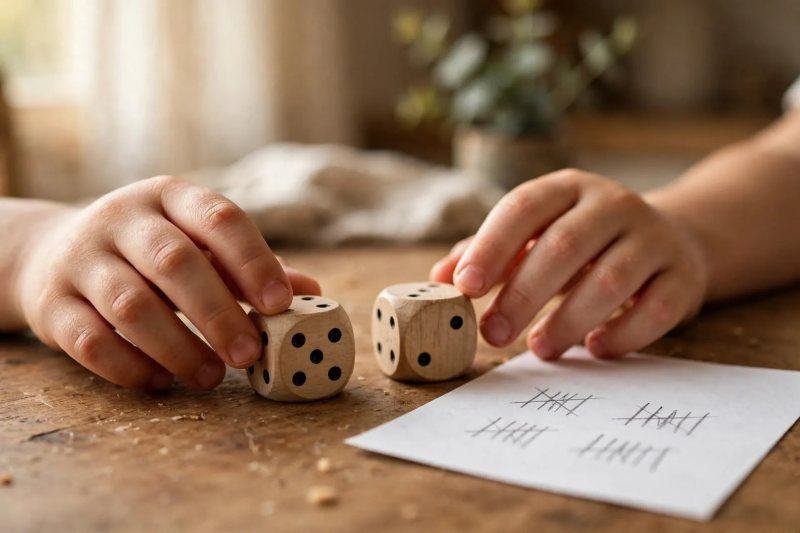
Dice sum showdown: which team wins the roll. Roll two dice and add — the sum's team wins the round. 3 + 4 = 7: Odd scores. 5 + 5 = 10: Even. Ten rounds, tally each team, guess before adding. Even + even = even, odd + odd = even, mixed = odd. For more adding practice with dice, try dice addition games — and addition with ten frames helps younger players add the dice.
-
Take your sides: the whole room is the field. Split the room with a blanket line: one side Odd, one Even. Call numbers 1–30; dash to the matching side — caught wrong does a victory dance. Twist: "14 and 27!" — touch the correct side for each.

-
Card sort race: beat your own record. Shuffle the 1–20 cards, start the timer. Sort all twenty into Odd and Even piles, then beat your own time — log records on the scoreboard. Sorting gets faster with practice: the uniform check turns sorting into reflex. Duel: each sorts half the deck.

-
House number hunt: numbers are everywhere. Numbers hide all over the house. Hunt the clock, calendar, microwave, book spines, and remote — for each find, shout its team and drop a toy car in that team's basket. Twenty minutes fills both. (Household objects only; no addresses or phone numbers aloud.)

-
Intruder alert: one player wears the wrong uniform. Hide one intruder in a team lineup; your child ejects them. Evens: 4, 8, 12, 15, 16 — intruder 15. Odds: 3, 7, 9, 10, 13 — intruder 10. Swap — your child builds, you detect.
-
The championship: crown the odd/even champion. Replay three favorites as championship rounds — try bucket toss, card race, take-your-sides. Three points per round win, one per draw. Highest total is Odd/Even Champion and picks next week's bonus game.



Make it easier
Play Steps 1–4 with 1–10 only until pairing feels automatic — counting games for preschoolers keeps small-number practice playful. Skip the uniform check at first — pairing real toys is enough. In bucket toss, re-check by pairing before throwing.
Make it harder
Extend every game to 1–50 or 1–100; the uniform check handles any size. Championship numbers: 209 (odd), 418 (even), 1,000 (even) — by last digit, in seconds.
Other ways to play it
- Sidewalk edition: chalk team zones on the driveway and play outside.
- Car-ride draft: call numbers from road signs; passengers draft them onto teams.
- Stuffed-animal league: each toy coaches five numbers; line the teams up for inspection.
How it changes by age
- Age 6: Steps 1–4 — tryouts, dash-and-sort, uniform check, bucket toss.
- Age 7: add Steps 5–7 — dice showdown, take-your-sides, card race.
- Age 8: all ten.
What they're learning
Instant odd/even recognition; the pairing test and last-digit rule; sorting and classifying (comparing numbers games); quick mental addition; focus under time pressure; graceful winning and losing.
Clearing up
Resort the cards 1–20 in order. Cars back in the box, baskets back to laundry duty, scoreboard on the fridge.
Questions parents ask
How do you teach odd and even numbers through games?
What is the easiest way to tell if a number is odd or even?
Is zero an odd or even number?
How many odd numbers are there between 1 and 20?
Short daily sessions usually work better than one long one. Let your child be the caller sometimes — explaining the rule helps it stick.

save it for later
Pin this for the next rainy afternoon
Keep it on a board so it is there when you need it, rather than when you happened to find it.
Save to Pinterest


