


Wind Activities for Preschoolers: Blowing, Painting, Feeling
Ten wind ideas for ages 3–4: blow ribbons and pinwheels, race pom-poms with straws, paint with your breath, chase bubbles — and discover the simple science: wind is moving air.
These wind activities for preschool give ages 3–4 ten hands-on ways to explore the breeze: blow ribbons and pinwheels, race pom-poms through straws, paint by blowing watery paint across paper, float feathers, chase bubbles, and spot what the wind moves. The science stays simple and true: wind is moving air — you can't see it, but you can feel it and see its effects.

The short version
- Wind is moving air: invisible, but felt on skin and seen in what it moves.
- Blowing games (straws, pom-poms, feathers) teach that breath is moving air too.
- Straw wind painting turns cause and effect into art kids keep.
- Observation games — the wind detective, bubble tracking — build real science habits.
- Works on a still day too: a child's breath and a cool hair dryer stand in for wind.
- Age
- Ages 3–4
- Prep
- 10 min
- Play time
- 45 min
- Mess
- Some
- Difficulty
- Easy
- Where
- Outdoor
Why kids love this
- Their own breath has power — paint moves, feathers float, pom-poms race.
- Ribbons, pinwheels, and bubbles give instant feedback for tiny effort.
- Running into the wind and spinning in it feels glorious at this age.
What you'll need
- - Ribbon strips, crepe paper strips, or fabric scraps (a few bright colors)
- - Wide craft straws — one per person
- - Craft pom-poms (medium size)
- - Washable tempera paint, thinned with water until drippy
- - Thick white paper, a baking tray, and an art smock or old shirt
- - 1 pinwheel (store-bought or folded paper)
- - Craft feathers (a small bag)
- - Bubble wand and bubble solution
- - A paper lunch bag plus string, for the bag kite
- - A tote bag for the "wind kit"; crayons and paper for the last step
Before you start
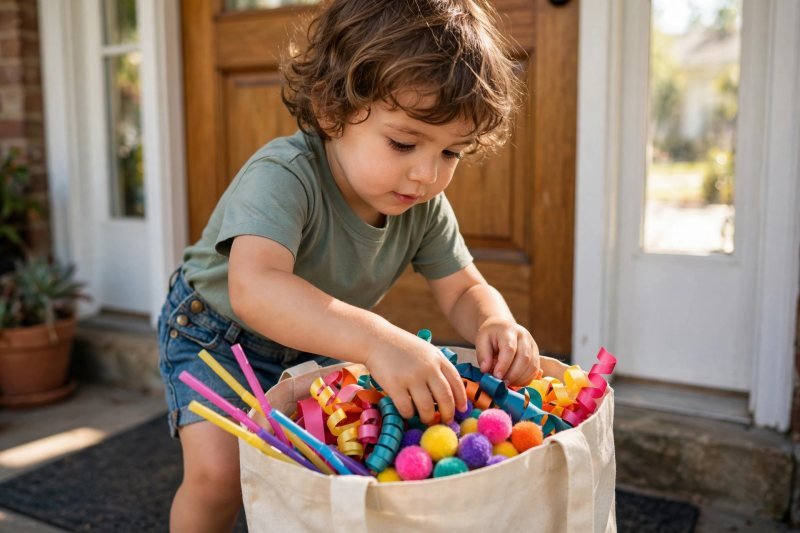
1. Let your child load the tote bag with the ribbons, straws, pom-poms, feathers, bubbles, pinwheel, and bag kite — ownership makes it feel like their expedition. 2. Thin the paint until it drips off a spoon — about one part water to two parts paint. 3. Set thick paper inside the baking tray; keep the art smock handy. 4. Pick a breezy day, not a storm. Flags flapping or trees swaying gently is perfect; whipping branches or dusty air means waiting for a calmer day.
How to do it
-
Pack the wind kit together. Let your child choose the ribbons and count the straws. "First we gather what we need."
-
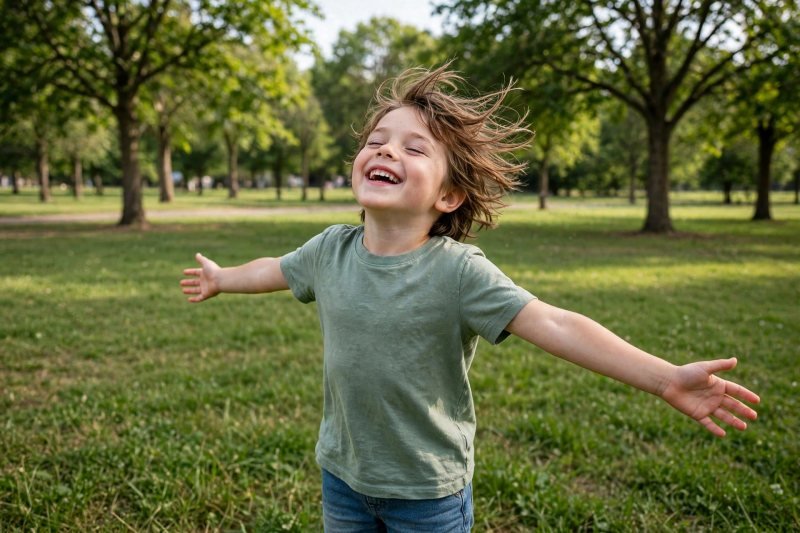
Step outside and catch the wind. Arms out, eyes closed, one deep breath. "Can you feel something touching your face?" That's the anchor: you can't see wind, but you can feel it. Wind is moving air.
-
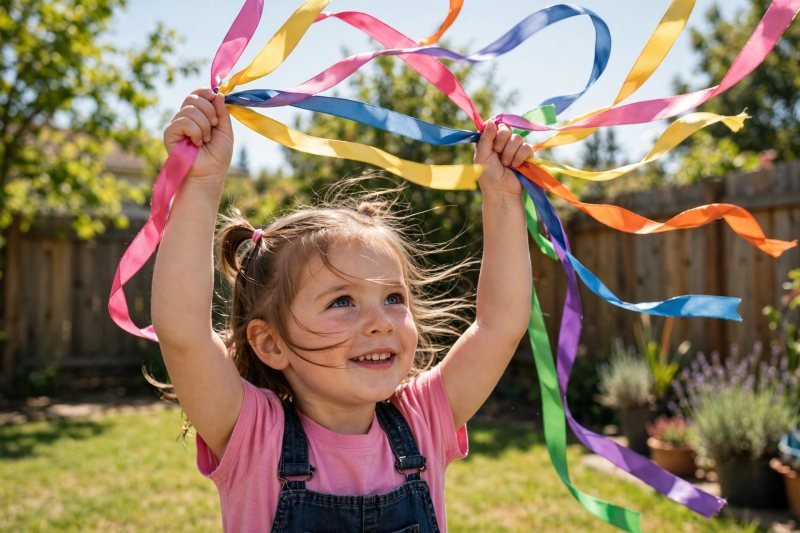
Hold your ribbons high. Stand still and watch them flutter, then walk, then run. "The ribbon moves when the air moves — so the ribbon shows us the wind we can't see."
-
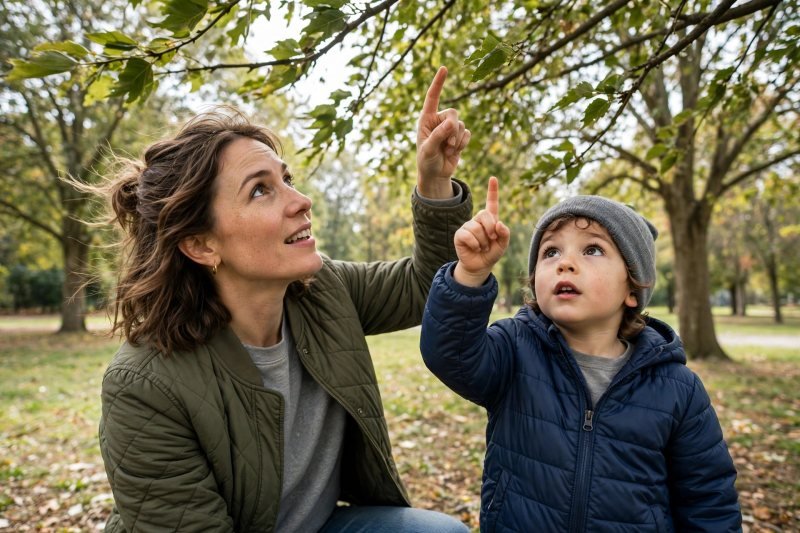
Be a wind detective. Find three things the wind is moving — a branch, a flag, their hair, a tumbling leaf. Seeing what the wind moves is how you spot invisible things.
-
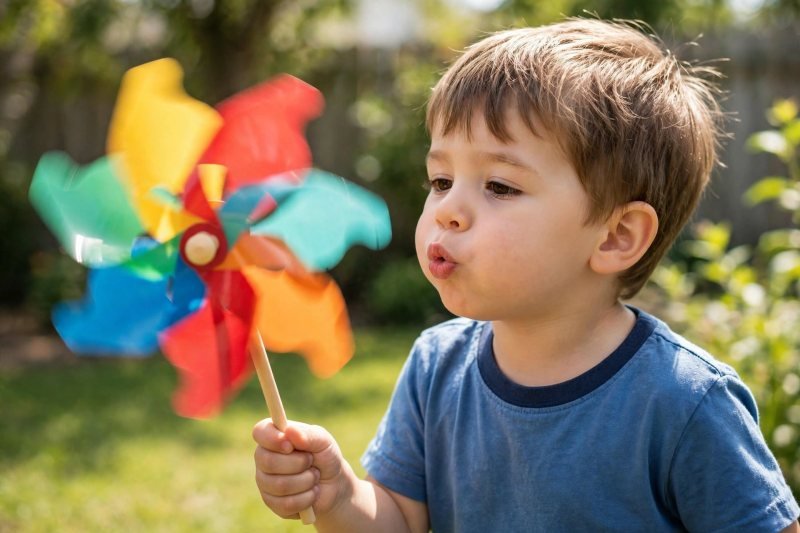
Blow the pinwheel, then let the wind do it. Your child blows — fast, slow, gentle puffs — and watches the speed change. Then holds it still for the breeze. "Your breath is moving air too!"
-
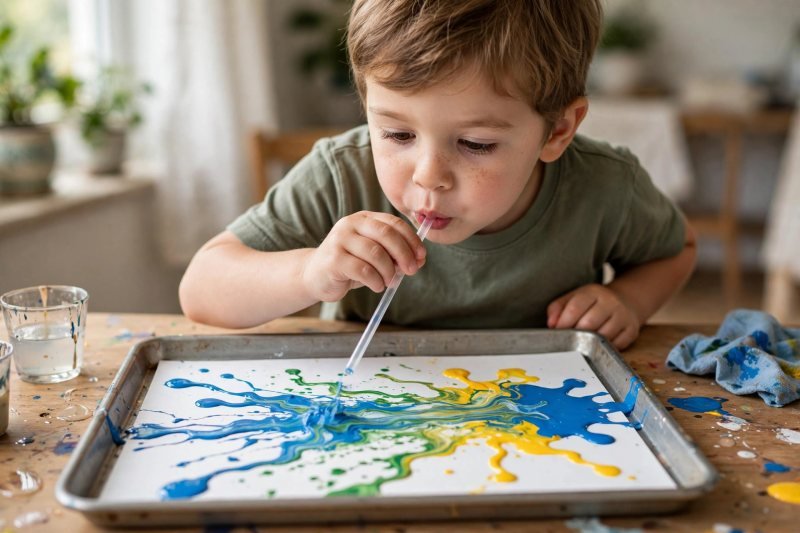
Paint with your breath. Drip two or three blobs of thinned paint on the paper in the tray. Your child holds a straw a couple of inches above it and blows — the paint spreads into rivers. Firm rule: blow out, never suck in. Demonstrate first.
-
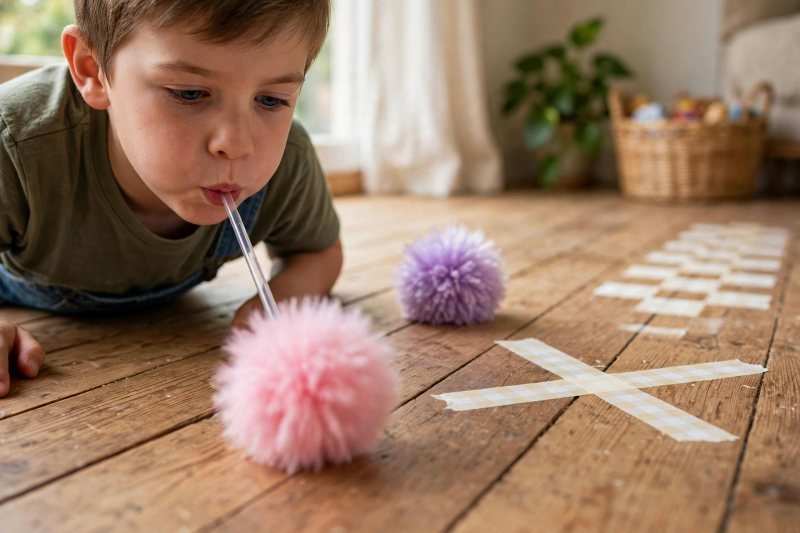
Race pom-poms with straws. Two straws, two pom-poms, a start and finish line. On "go," blow your pom-pom forward — no hands. Then switch straws, then team up on one pom-pom.
-
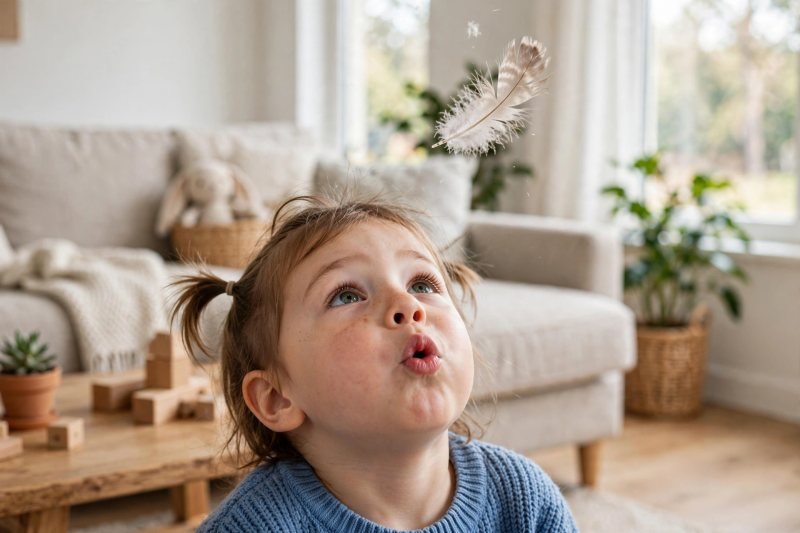
Float a feather. Drop a feather overhead and blow from underneath to keep it up. Gentle puffs beat one big blast. Count how many seconds it stays up.
-
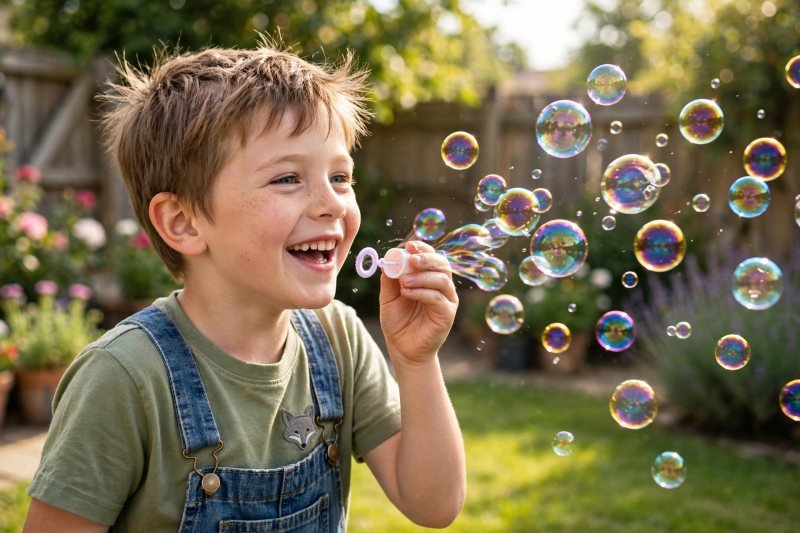
Chase the bubbles. Blow bubbles and let the wind catch them. Follow them, predicting which way they'll go: "Watch where the air takes them!"
-
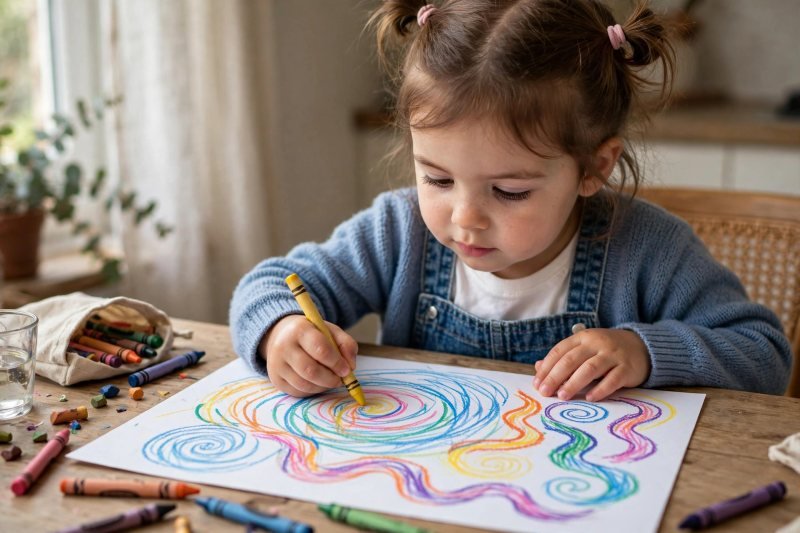
Draw your windy day. Crayons out: "Draw what the wind did today." While they draw, say it once more: wind is moving air; you can't see it, but you can feel it, and you can see everything it moves.


Make it easier
- For two-year-olds, skip the order — hand over ribbons and a pinwheel and let them run. They'll get the "invisible but felt" idea through play.
- Do the paint drips yourself in step 6; your child does only the blowing.
- Use bigger, lighter pom-poms — they move with the gentlest puff.
Make it harder
- Before each activity, predict: "Will the wind carry the bubble left or right?" Then watch and check — the same predict-and-observe habit practiced in these five senses activities for preschoolers.
- Hang ribbon strips of different lengths and guess which dances most in a light breeze, then a strong one.
- Try the pinwheel in different spots — in the open, behind a fence, under a tree — and compare where the wind hides and where it rushes.
Other ways to play it
- - Blowing games swap: race cotton balls or dried leaves instead of pom-poms. Lighter things need gentler breaths.
- - Wind painting: drip two colors side by side and blow them into each other to watch them mix (more mixing fun in these color mixing activities for preschoolers). Take the painting outside too — water painting on an outdoor wall keeps the art going with zero mess.
- - Bag kite: tape string to a paper lunch bag, tie streamers to the handles, and run — a real diamond kite is too fiddly for this age.
- - Detective sheet for ages 4–5: checklist — leaf, flag, branch, hair, clouds — tick off what the wind moves. Pair it with a weather station your child helps build and record windy days for a week.
How it changes by age
- Written for ages 3–4: old enough to follow blowing rules and compare fast and slow — young enough that a floating feather feels like a miracle.
- Age 2: ribbon play, pinwheel watching, and bubble chasing only. Skip the straw steps — blowing control and the no-sucking rule are beyond them.
- Age 5: add the ribbon-length experiment, the detective checklist, and written predictions. They can also build their own paper pinwheel with help.
What they're learning
Early science: wind is moving air — invisible but real, detected by its effects. Cause and effect: breath in, motion out. Observation: scanning the world for signs of something unseen. Breath control and fine motor strength through straws. Vocabulary: wind, breeze, gust, air, float, flutter, predict, direction.
Clearing up
The painting tray rinses off under the tap — wipe it before the paint dries for the easiest cleanup. Ribbons, straws, and pom-poms go back in the tote so the kit is ready for the next breezy day. Feathers can live in a zip bag and be reused for weeks.
Questions parents ask
How do you explain wind to a preschooler?
What are easy wind activities for a 3-year-old?
Is straw blowing safe for preschoolers?
How do you make wind painting with preschoolers?
Why can't you see wind?
On a still day, your child's own breath covers every activity — and teaches the same lesson (their breath IS moving air). A hair dryer on its coolest setting, aimed across the table from a safe distance, can stand in for wind indoors — always adult-operated, never pointed at a face. The whole kit fits in one tote, so it travels well. For rainy-day weather science indoors, try our rain cloud jar for toddlers. For more simple science, browse these easy science experiments for toddlers. Why is there wind? The short, honest answer for this age: wind is air moving from one place to another. The sun warms the air in some places more than others, and that air moves — that movement is wind. You can't see air, so you can't see wind, but you can always see what it pushes: leaves, flags, ribbons, bubbles, and the hair on your head. Good science words: wind, air, breeze, gust, float, flutter, predict.

save it for later
Pin this for the next rainy afternoon
Keep it on a board so it is there when you need it, rather than when you happened to find it.
Save to Pinterest


