


Painting With Water
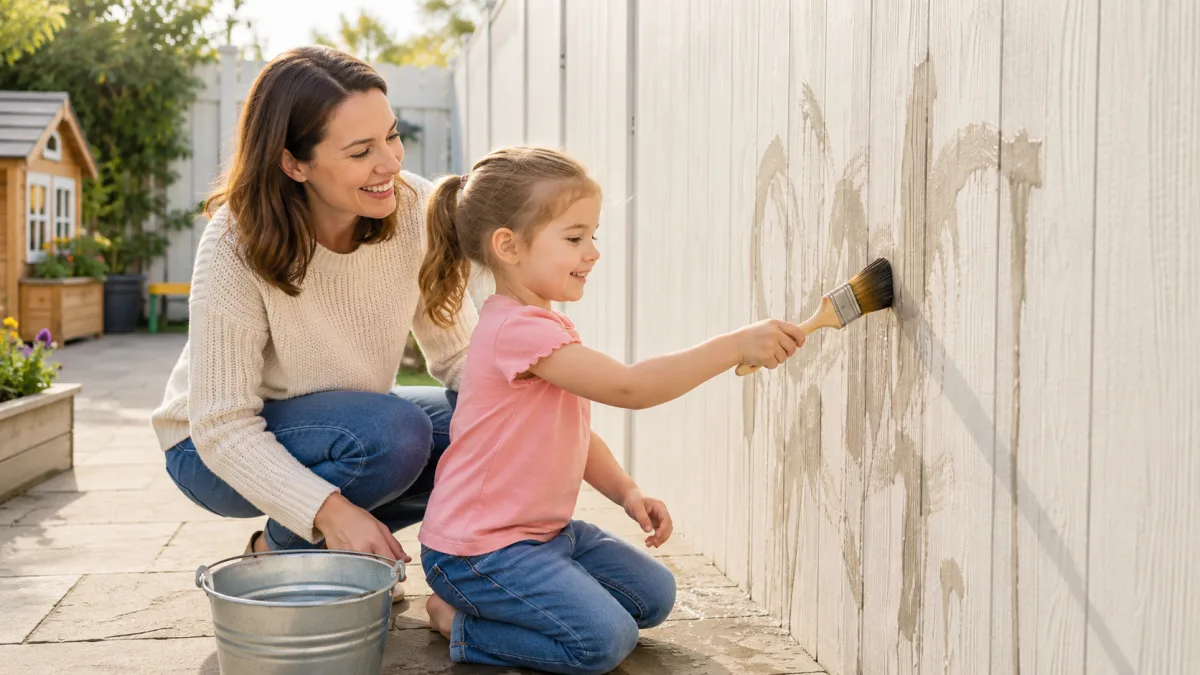
A bucket of water and a big brush. They paint the wall, the fence and the path, it dries, and they do it again. No mess at all.
Give a child a bucket of water and a decorating brush to paint outdoor walls, fences and paving. The water dries and vanishes, so it can be repeated endlessly. Suits ages 2 to 7, needs no preparation and no clearing up.
The short version
- A big brush matters. A thin one makes thin marks that vanish before they are seen.
- Dark surfaces show water best — paving, brick, fence panels.
- Zero clearing up, which makes it the one to reach for on a bad day.
- Age
- Ages 2–7
- Prep
- 1 min
- Play time
- 30 min
- Mess
- Low
- Difficulty
- Easy
- Where
- Outdoor
Why kids love this
It is painting with none of the rules. Nothing can be ruined, nothing needs saving, and the whole wall is available. The disappearing is the hook. A child will paint a shape, watch it fade, and immediately do it again — that loop keeps going far longer than a sheet of paper does.
What you'll need
- A bucket or large pot
- Water
- One big decorating brush per child (a 3 or 4 inch one from a hardware shop)
- Optional: a paint roller, a sponge, a spray bottle
Before you start
None. Fill the bucket and go outside. If it is cool, put them in something waterproof — a child painting a wall gets wet arms.
How to do it
-
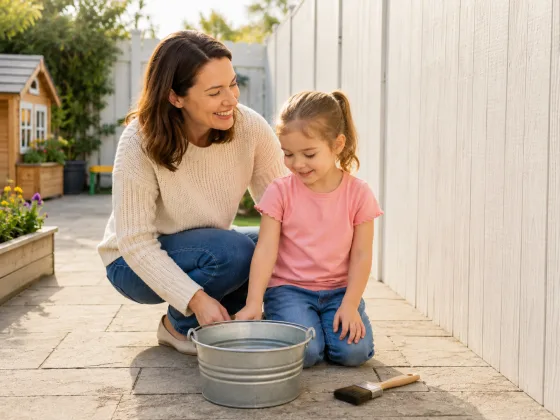
Half-fill the bucket with water and stand it somewhere it will not tip.
-
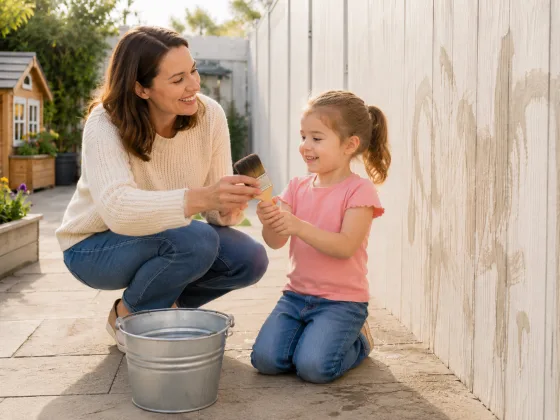
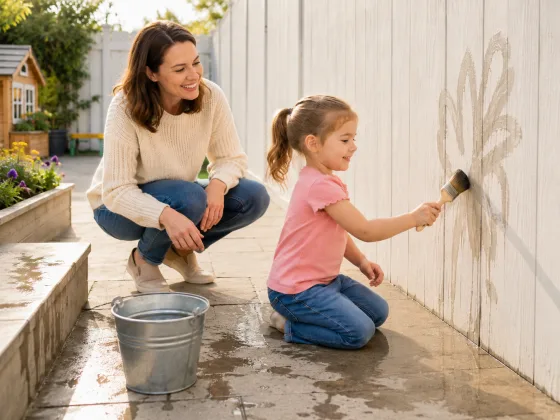
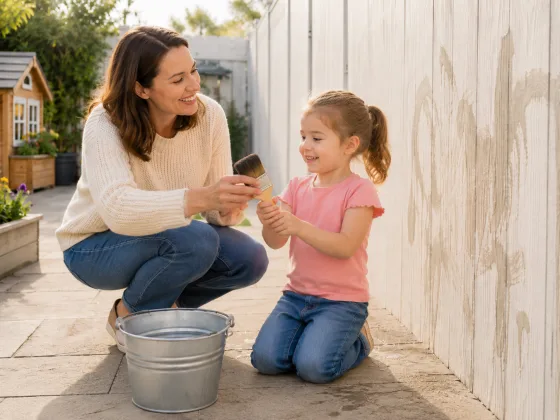
Hand over the brush.
-
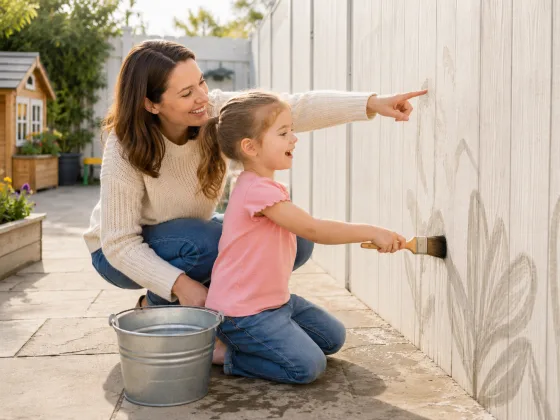
Show them one stroke on a dry wall so they see the colour change, then stop talking.
-
Let them find their own surfaces — walls, fences, paving, a shed door, a step.
-
When the first patch dries, point it out. That usually starts the second round.
-
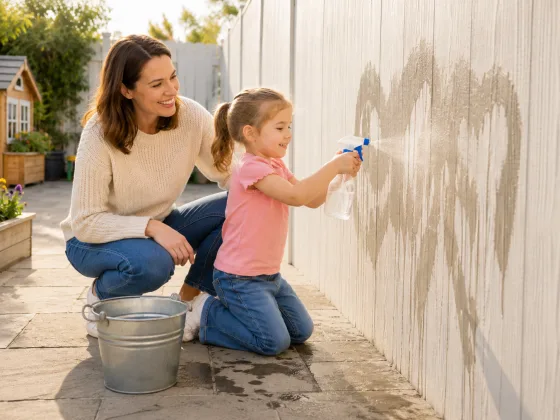
Add a roller or a spray bottle later if interest dips.
Make it easier
A smaller, lighter bucket. A full bucket is heavy for a two-year-old, and a heavy bucket gets tipped over.
Make it harder
Ask for something specific — their name, a shape, a picture that has to be finished before the first bit dries. The time limit is the challenge.
Other ways to play it
- Paint letters or numbers and see who can read them before they vanish.
- Draw around a chalk outline with water and watch the chalk lift.
- Race: two children, one wall each, who can cover theirs first.
- Use a spray bottle to make it a misting game.
- Paint on dark paving after rain, where the marks show best.
How it changes by age
- Two to three: mostly slapping water at a wall, which is the correct use.
- Four to five: shapes, letters and pictures start to appear.
- Six and up: give them a race against the drying, or a roller and a whole fence.
What they're learning
Big arm movements on a vertical surface build the shoulder and wrist strength that later makes handwriting easier — this is the reason painting at an easel is worth more than colouring at a table. Evaporation turns up naturally, without anybody having to teach it.
Clearing up
Tip the bucket on the garden. That is it — this is the tidiest activity on the site.