


Weather Chart for Preschoolers (Free Printable)
A weather chart for preschool routines: set up a one-page daily observation chart, spot sun, clouds, rain, wind, and how the day feels, then log a week of weather with your 3–4-year-old. Free printable included.
A weather chart for preschool is a daily observation log: your child looks at the sky each morning, decides which picture matches (sunny, cloudy, rainy, windy, snowy), and marks one box on a week-long grid. In days it becomes a five-minute habit building science vocabulary and observation skills.

The short version
- A weather chart for preschoolers is a one-page grid: days across, weather pictures down.
- Observe at the same daily moment — the routine is what makes it stick.
- Look, listen, and feel: sun, clouds, rain signs, wind, and warm/cool/cold.
- By week's end, count which weather "won" — their first real data set.
- The free printable PDF is attached at publish time; a hand-drawn grid works identically.
- Age
- Ages 3–4
- Prep
- 5 min
- Play time
- 5 min
- Mess
- Low
- Difficulty
- Easy
- Where
- Indoor
Why kids love this
Preschoolers love being the family's weather reporter: peering at the sky, getting to be right about something, and marking the day's box themselves — a tiny job they can genuinely do.
What you'll need
- One printed weather chart per week (the free printable — see note below) or a hand-drawn copy: a 5-row × 7-column grid (days across, weather pictures down)
- Crayons, dot stickers, or a stamp for marking the day's box
- A window with a view of the sky (a doorstep works too), plus tape or a magnet to hang the chart at child eye level
Before you start
1. Print or draw the chart. One page per week: five weather rows with simple pictures (sunny, cloudy, rainy, windy, snowy) and seven day columns. 2. Hang it low where your child can reach — fridge or hallway wall. 3. Set out crayons and stickers in a cup nearby; pick a daily moment (after breakfast works) so the habit sticks.
How to do it
-
Walk to the window together. Make it a ritual: "Time to check the sky!"

-
Ask the first question. "Is the sun out, or are there clouds?" Let them look — don't answer for them. Looking closely is the heart of the five senses activities for preschoolers habit: sight first, then sound and touch.

-
Count the clouds. "A few or a lot?" That teaches partly cloudy vs. overcast without the jargon.

-
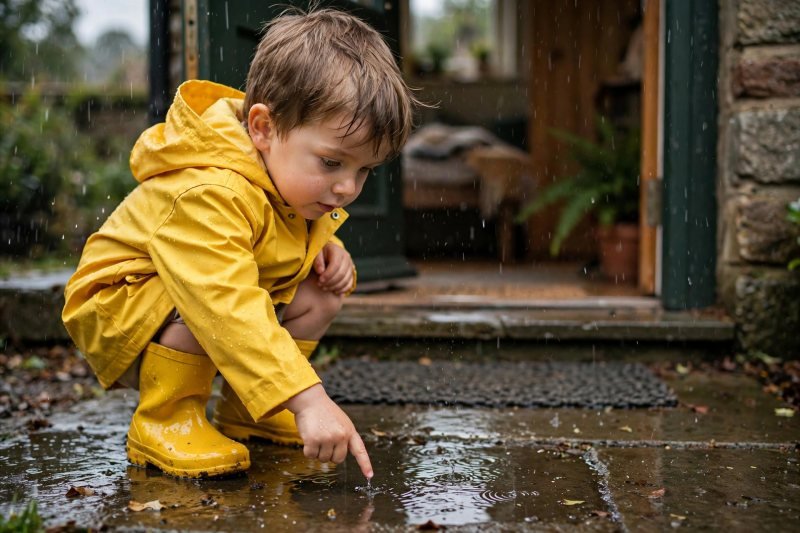
Check for rain. Wet ground, puddles, or drops on the glass all count — and on a rainy afternoon you can bring the weather inside with a rain cloud jar.
-
Feel the wind. Open the window a crack: "Can you feel it on your face? Are the trees moving?"

-
Ask how it feels. "Warm, cool, or cold on your skin?" That's temperature for three-year-olds.

-
Find the matching picture on the chart together and let them choose.

-
Mark today's box — color it, stick a dot, or draw their own sun.

-
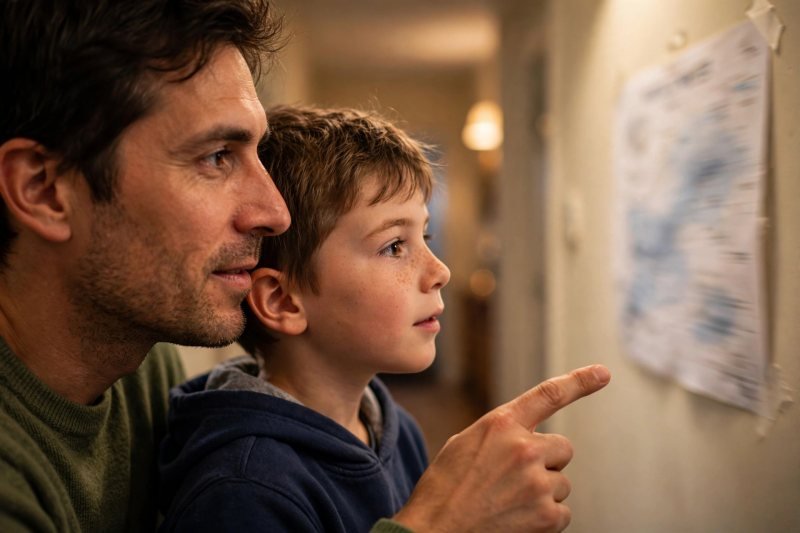
Read yesterday's box. "Yesterday was sunny. Today is cloudy. Same or different?" Naming the day each morning is also the gentle start of the days of the week routine.
-
Say the weather sentence. Model it once, then let them try: "Today is sunny and warm."



Print it out
Make it easier
Observe just two things: sun or no sun, warm or cold. You point at the chart rows and your child chooses; you mark together. Stickers only — no coloring, just sticking.
Make it harder
Add a second mark in the afternoon: "Same weather after nap?" Let them draw the weather picture in an empty box. Keep a tally at the bottom: "Sunny: 3, Cloudy: 2." Predict tomorrow: "Sunny all week — what do you think tomorrow will be?" When your child outgrows the chart, graduate to a weather station for kids with real gauges to read and record.
Other ways to play it
- Rainy-day journal: on rain days, check puddle depth outside with a stick.
- Season chart: run one week per season and compare the four pages.
- Feelings weather: add a row where your child picks the weather matching their mood.
How it changes by age
- Built for ages 3–4. At 3, expect single-word answers ("Sun!" "Cold!") while you model the sentences. At 4, expect real comparisons and first predictions ("Tomorrow will be rainy too"). For 2-year-olds, simplify to one question — "Sun or clouds?" — and do the marking yourself.
What they're learning
Early science vocabulary: sunny, cloudy, rainy, windy, warm, cool, cold — words tied to real daily experience, which is how they stick. Observation skills: looking closely, noticing change, using multiple senses — the same looking, listening, and feeling practiced in five senses activities for toddlers. Data recording: a chart is a table — filling it daily is the earliest data collection. Pattern recognition: spotting streaks and comparing weeks is the thinking math and science rest on. Routine and responsibility: a small daily job, done the same way each day, builds independence.
Clearing up
1. Recycle the page at week's end; tape up the new one Monday morning. 2. Return stickers and crayons to their cup. Snap a photo of the finished week first if you want a record.
Questions parents ask
What is a weather chart for preschool?
How do you teach weather to a 3-year-old?
What should be on a preschool weather chart?
How long should a weather chart activity take each day?
Can a weather chart help with preschool science learning?

save it for later
Pin this for the next rainy afternoon
Keep it on a board so it is there when you need it, rather than when you happened to find it.
Save to Pinterest


