


Five Senses Scavenger Hunt (Free Printable)
A five senses scavenger hunt turns your backyard into an adventure. Print the free hunt card, then help your 3–4-year-old find something green, hear a bird sound, smell a sweet flower, feel something smooth — and finish with a tasty snack stop.
A five senses scavenger hunt is a clue-based game where 3–4-year-olds find things by sight, hearing, smell, touch and taste — something green, a bird sound, something smooth. Print the free hunt card, mark each find with a sticker, finish with a snack stop. It builds observation and sensory vocabulary in about 30 minutes.

The short version
- Ten clues across the five senses on a free printable card — one sticker per find.
- No reading needed; read clues aloud and let your child lead.
- Builds observation, comparing, and sensory vocabulary.
- Backyard, park, or indoors with household swaps — never taste foraged items.
- Age
- Ages 3–4
- Prep
- 5 min
- Play time
- 30 min
- Mess
- Low
- Difficulty
- Easy
- Where
- Both
Why kids love this
Preschoolers are born collectors. Give a 3-year-old a mission and a card to mark off, and the most ordinary backyard becomes full of treasure. Ten clues, one sticker per find, a star at the end — your child leads, you follow. Noticing, comparing and describing sneak in along the way, and it ends with a snack. If your child loves naming what they notice, our five senses activities for preschoolers has more games that build the same skills.
What you'll need
- The free hunt card (download it below): one page, ten clue boxes with picture clues and sticker circles — two per sense — and a star badge at the bottom.
- Sticker dots or a crayon, a small paper bag or basket, and snack stop foods your child already eats: something sweet (blueberries, banana) and something crunchy (apple wedges, a plain cracker).
Before you start
Print the card — color is lovely, black-and-white works. Tape it to a clipboard or stiff cardboard for easy carrying. Pack the bag together: stickers, crayon, card. Set the covered snack plate aside for the final clue. At a park, walk the route once first to check it is safe.
How to do it
-
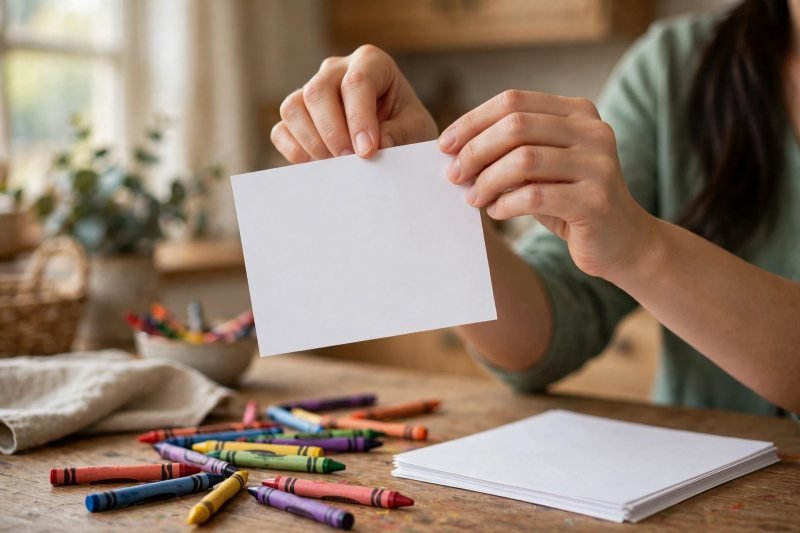
Print the hunt card. Print the free one-page hunt card — ten clue boxes with a picture clue and a sticker circle each, plus a star badge at the finish — then hold it up and walk your child through it box by box so they know what they are hunting for.
-
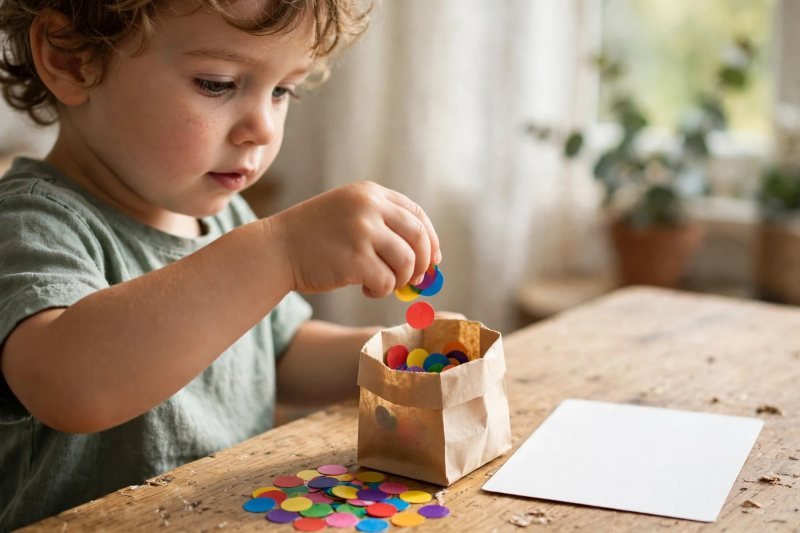
Pack the hunt kit together. Let your child drop the sticker dots, the crayon, and the card into the paper bag or basket, then say, "You are the hunt leader today"; set the covered snack plate aside for the final clue, and at a park, walk the route once first to check it is safe.
-
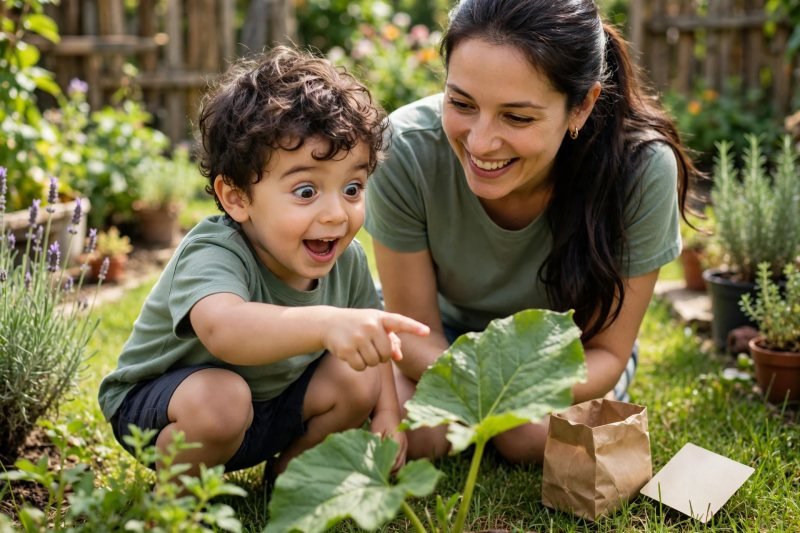
Find something green. Read the first clue aloud and let your child scan the yard — grass, a leaf, a garden hose, anything green counts — then stick a dot on the card and celebrate the find before moving on.
-
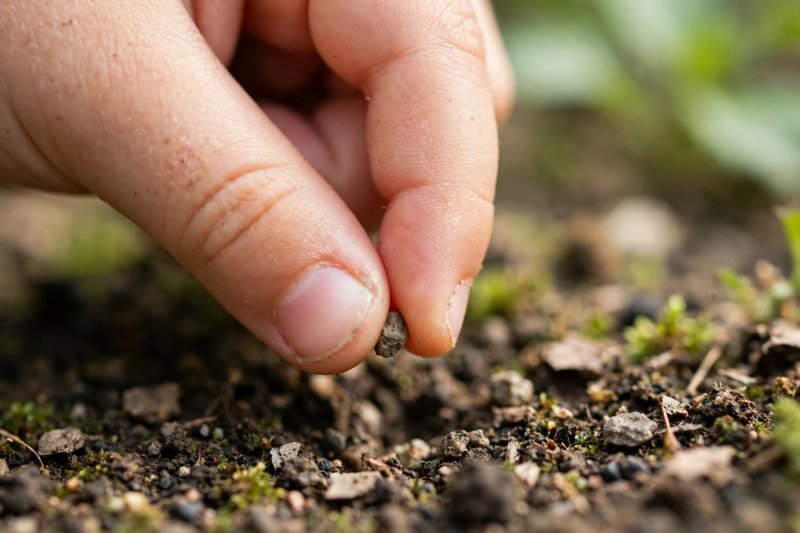
Find something tiny. Hunt for a pebble, an ant, or a clover leaf, and compare your finds out loud: "Which is tinier — your pebble or mine?"
-
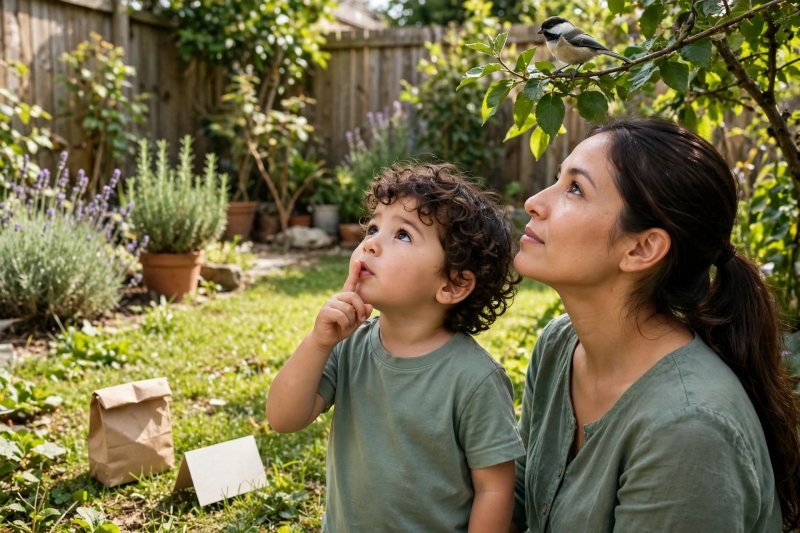
Listen for a bird sound. Stop, stand still, and listen for one full minute while your child points toward the call, then mark the card; if no birds are singing, wind in the trees or a barking dog counts.
-
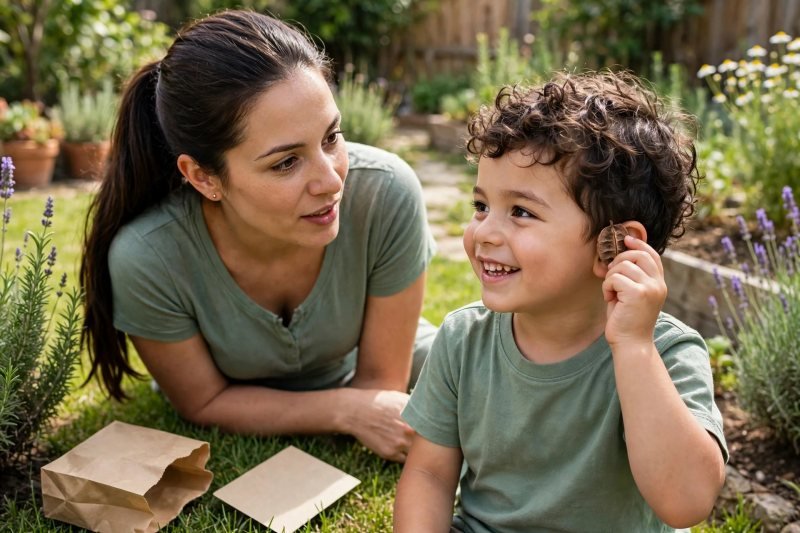
Make a noise to guess. Shake a dry seed pod, crunch fallen leaves underfoot, or snap a small twig, then let your child make the sound while you guess what it was.
-
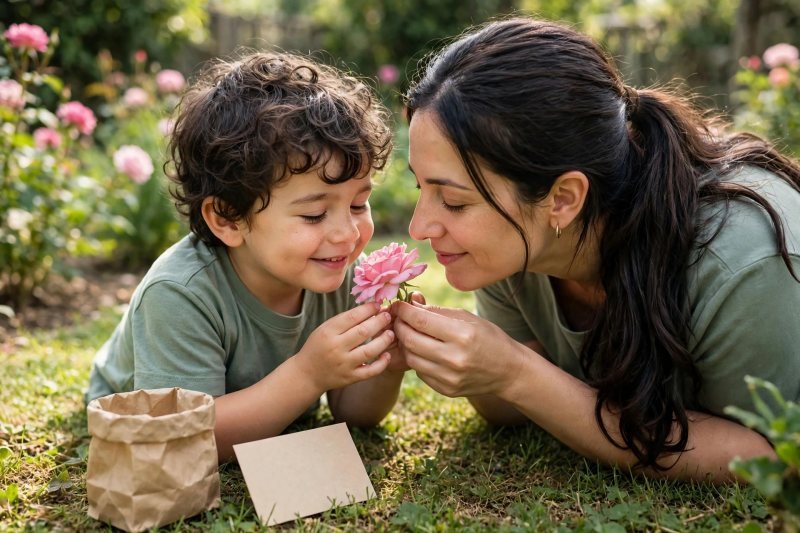
Smell something sweet. Lean in close to a flower, a crushed mint leaf, or a lemon slice and sniff slowly together, then ask, "Candy or soap?" and let your child decide.
-
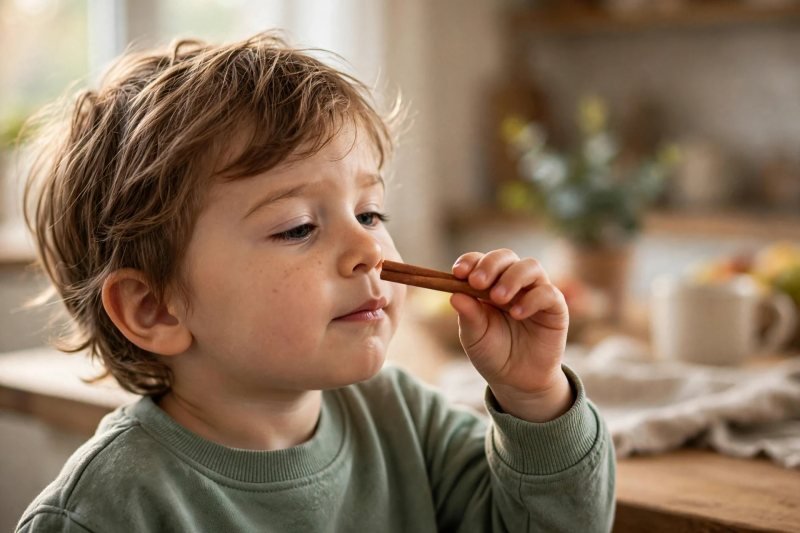
Smell something spicy. Hold up a cinnamon stick or a rosemary sprig and breathe it in — warm and cozy, or sharp and sneezy? — then stick the dot and move on to touch.
-
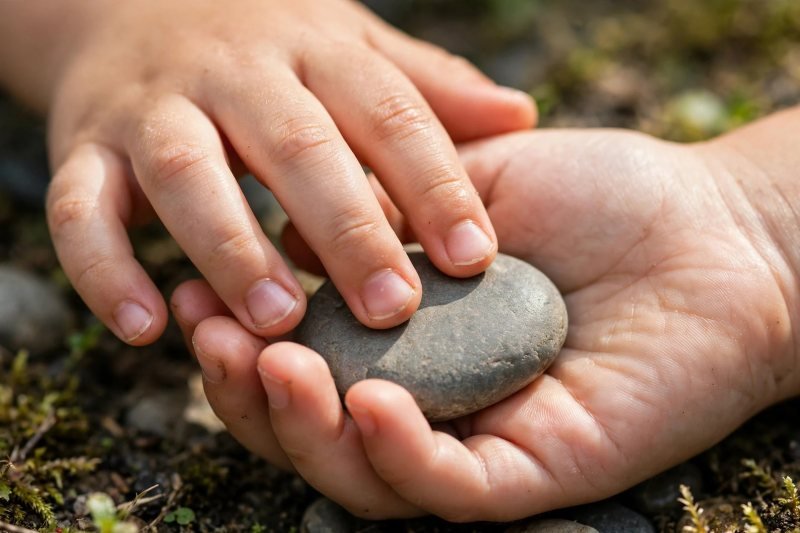
Feel something smooth. Run a finger slowly over a smooth pebble, a smooth leaf, or a garden stone, and notice how calm smooth things feel under your hand.
-
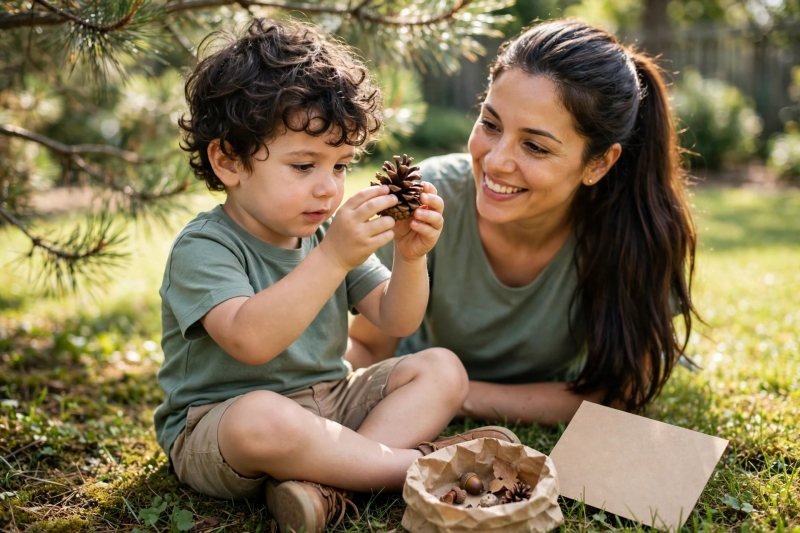
Feel something bumpy, then finish at the snack stop. Pick up a pinecone, rough bark, or a knobbly gourd and compare it with the smooth find — "Which would you rather sleep on?" — then head to the snack plate, taste one sweet thing and one crunchy thing, stick the last dots, and earn the star; hunt complete.


Print it out
Make it easier
Read every clue aloud. Do the first two finds together: spot it, stick the dot. Shorten the bird-sound minute if they fidget, and give warm hints. A finished card beats a hard card.
Make it harder
Try combo clues: "something green AND smooth." Ask them to describe before naming. Time the hunt to beat next weekend, or let them invent a bonus clue. Turn comparing into a game with our sorting games for preschoolers — sort the finds by color, size, or texture when you get home.
Other ways to play it
- Rainy-day indoor: green toys, bird sounds from a window, the spice rack, couch cushions — same card, same fun. For another indoor hunt, try a shape hunt around the house.
- Seasonal swap: spring blossoms, fall leaves, winter evergreens — the card works all year.
How it changes by age
- For 3-year-olds, narrate yourself ("That bark feels bumpy!") and expect everything to be touched and smelled twice — that is the learning. By 4, most "read" the picture clues themselves and compare in full sentences. Toddler tagging along? Hand them a crayon and blank card — or try some simple activities for toddlers at home while the big kid hunts.
What they're learning
Early science in disguise: observing, listening, comparing. Every clue grows sensory vocabulary — tiny, faint, sweet-smelling, knobbly — and ten clues in order is sequencing practice. Keep the collecting going with autumn leaf collection and sorting — the same compare-and-describe skills, with leaves to keep.
Clearing up
Recycle a worn-out bag; keep the basket. A laminated card wipes clean for next time. Toss wilting leaves. Keep the listening going after the hunt with a bird feeder craft for preschoolers — birds at the feeder give you new sounds to hunt for tomorrow.
Questions parents ask
What is a five senses scavenger hunt?
How do you make a scavenger hunt for a 3-year-old?
What are good scavenger hunt clues for preschoolers?
Can you do a five senses scavenger hunt indoors?
What does a senses scavenger hunt teach preschoolers?
Images 1–10 map to steps 1–10 in order (print, pack, green, tiny, bird sound, noisemaker, sweet smell, spicy smell, smooth, bumpy). Step 10 closes with the snack stop (the two taste clues: one sweet, one crunchy), so all ten card clues are covered within the 10-step limit. Instructions restructured 2026-11-26: exactly 10 paragraphs, each starting with a bold action-phrase title; no H3 sub-headings, no numbered markers, no bullets, no Q&A blocks. Printable PDF built 2026-11-26: five-senses-scavenger-hunt-printable.pdf — attached via the CMS Downloads repeater ("Print it out"). Internal links (6, all verified live 2026-11-26): five-senses-activities-preschoolers, activities-for-toddlers-at-home, sorting-games-for-preschoolers, shape-hunt-around-the-house, autumn-leaf-collection-sorting, bird-feeder-craft-preschoolers.

save it for later
Pin this for the next rainy afternoon
Keep it on a board so it is there when you need it, rather than when you happened to find it.
Save to Pinterest


