


Five Senses Activities for Preschoolers
Looking for five senses activities for preschool that actually teach your child something? These 10 steps pack 16 hands-on sensory play ideas for ages 3–4 — sight, hearing, smell, taste and touch games — use everyday items from your kitchen and take minutes to set up.
Five senses activities for preschool are play-based games that teach 3–4-year-olds to notice and use sight, hearing, smell, taste and touch. The best ones use household items: color scavenger hunts, sound shakers, smell jars, safe taste tests and mystery touch bags. Try two or three short activities per session, follow your child's lead, and narrate what they notice to build vocabulary and observation skills.

The short version
- The five senses are sight, hearing, smell, taste and touch — every activity in this list targets at least one of them.
- You need no special equipment: jars, cotton balls, paint, rice, fruit and fabric scraps cover almost everything.
- Keep sessions short — two or three activities is plenty for a 3–4-year-old's attention span.
- Narrate what your child notices ("that lemon is sour and yellow") to grow sensory vocabulary fast.
- Guessing games (smell jars, mystery bag, sound shakers) build the predicting and describing skills behind early science.
- Always check for food allergies first, skip blindfolds, and supervise taste activities and small parts closely.
- Age
- Ages 3–4
- Prep
- 5 min
- Play time
- 20 min
- Mess
- Some
- Difficulty
- Easy
- Where
- Both
Why kids love this
Children this age are natural detectives. Everything is new, everything deserves a sniff, a shake or a poke — and these activities finally give them permission. Your preschooler gets to be the expert, telling YOU what they see, hear and feel. Nothing here feels like a lesson, which is exactly why it works: while they are guessing smells or hunting colors, they are building observation skills, vocabulary and focus without noticing. Most of these take five minutes to start and end whenever your child is done, so there is no pressure to finish anything. For more play-based ideas in the same spirit, see our preschool learning activities at home collection.
What you'll need
- You will already own nearly all of this: sturdy zip-top bags, washable paint in a few colors, painter's tape, a small hand mirror, empty spice jars or small cups with lids, cotton balls, kitchen scents (vanilla extract, lemon, cinnamon, cocoa powder), dried rice and dried beans, a wooden spoon and a metal pot, paper cups, safe tasting foods (lemon wedges, honey, plain crackers, cucumber slices, banana), a cloth drawstring bag or pillowcase, fabric scraps with different textures, cornstarch, a shallow tray, crayons, paper, small bowls, spoons and a towel for cleanup.
Before you start
Pick two or three activities per session rather than all of them — too much choice overwhelms a preschooler. Do a quick allergy check on any foods or scents before you start. Set everything on a tray or towel so bits stay contained, and put small items in bowls so they cannot roll away. For guessing games, skip the blindfold and simply ask your child to close their eyes — it feels safer and you keep control.
How to do it
-
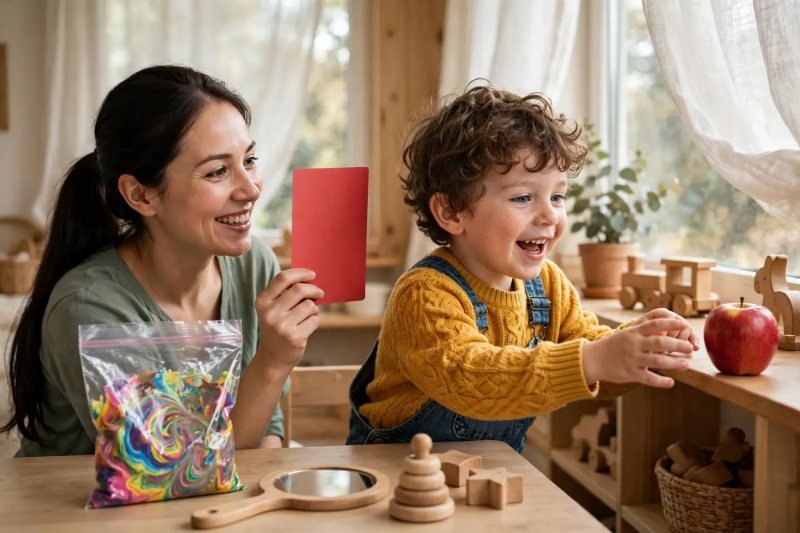
Color hunt, rainbow bag and mirror faces. Start with a color scavenger hunt: tape a paper color card (red, blue, yellow, green) to the wall and challenge your child to find three things in that color around the room or yard. They run, you cheer, they learn color names and careful looking. Then squeeze blobs of washable paint into a sturdy zip-top bag, press out the air and tape it shut — your child squishes and swirls the colors together through the plastic, no paint on hands, all the color mixing fun. Finish with a hand mirror, taking turns making happy, surprised, sleepy and silly faces; ask your child to name what they see and copy yours. Naming faces like this gives early practice in noticing how other people feel.
-
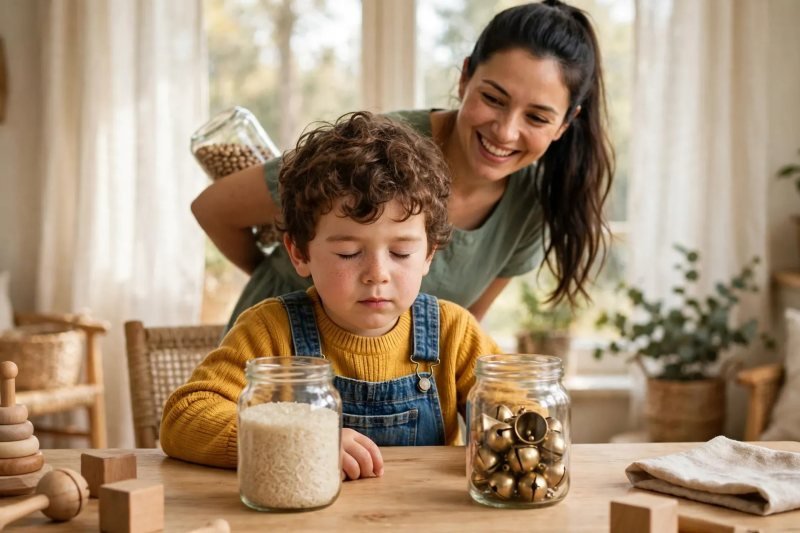
Sound shaker guessing. Fill small jars with different noisemakers — rice, dried beans, a few bells — and seal the lids tight. Shake one behind your back while your child closes their eyes, and let them guess what is inside. Say: "Close your eyes and listen — what do you hear inside?" Then open it together and check. Once your child can name two shakers, head outside for the listening walk next.
-
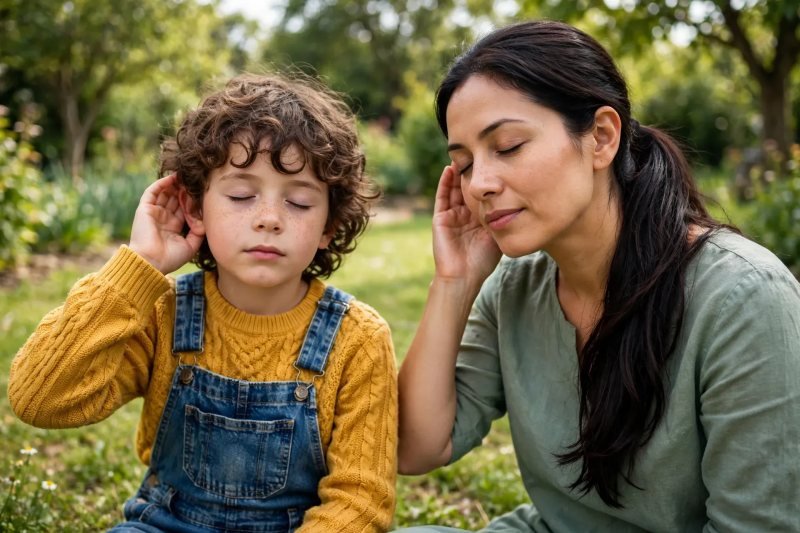
Listening walk. Sit together in the garden or park and play "who hears it first." Close your eyes for one minute and count the sounds: birds, cars, wind, a dog barking. Comparing notes afterward builds attention and memory. If nothing stands out at first, name one sound yourself — "I hear a bird — what do you hear?" — and let your child hunt for the next one; then head back inside to try the rhythm drums.
-
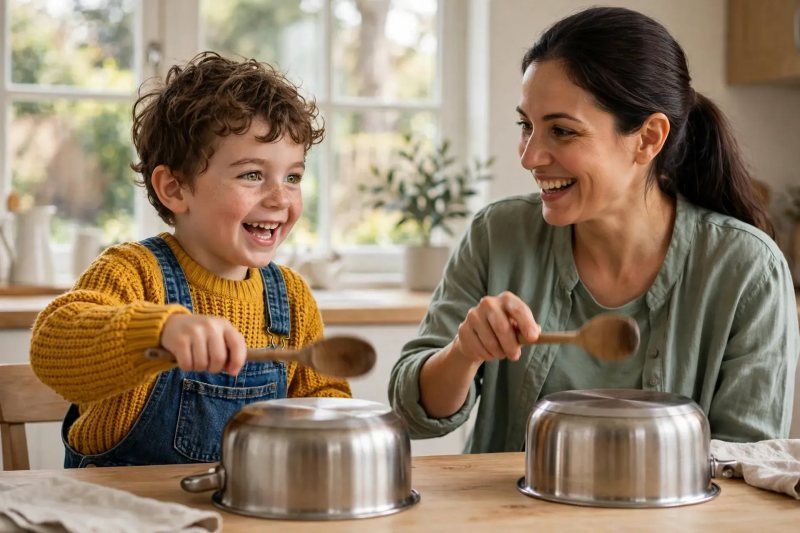
Copy-my-rhythm drums. Hand your child a wooden spoon and an upside-down pot. Tap a simple pattern — tap-tap-PAUSE-tap — and let them echo it back. Take turns leading. Rhythm play gives listening focus and early pattern practice a playful workout.
-
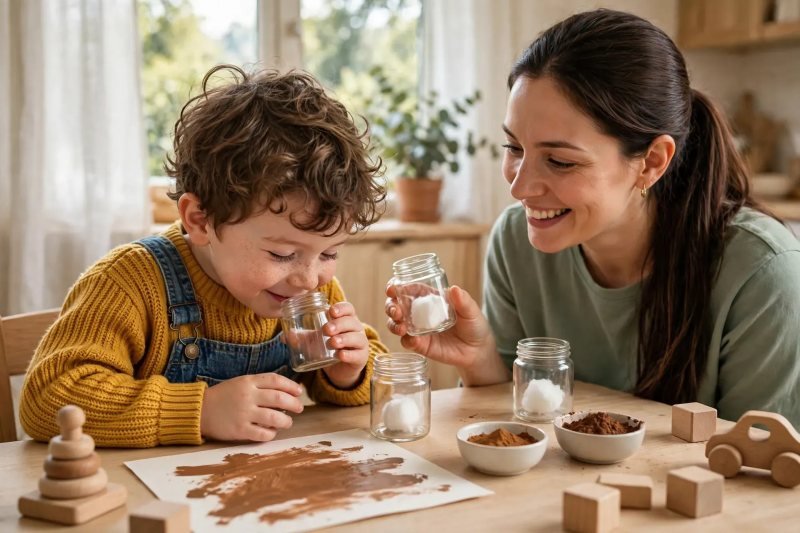
Smell jars and scratch-and-sniff painting. Put a few drops of vanilla, lemon juice or a pinch of cinnamon on separate cotton balls in small jars. With eyes closed, your child sniffs each one and guesses: sweet? fruity? spicy? Start with just two or three scents so success comes fast. Then mix a spoonful of cocoa or cinnamon with a little water to make "paint." Your child paints a picture, and once it dries, the artwork smells like the spice. Sniffing their own painting afterward is always a hit.
-
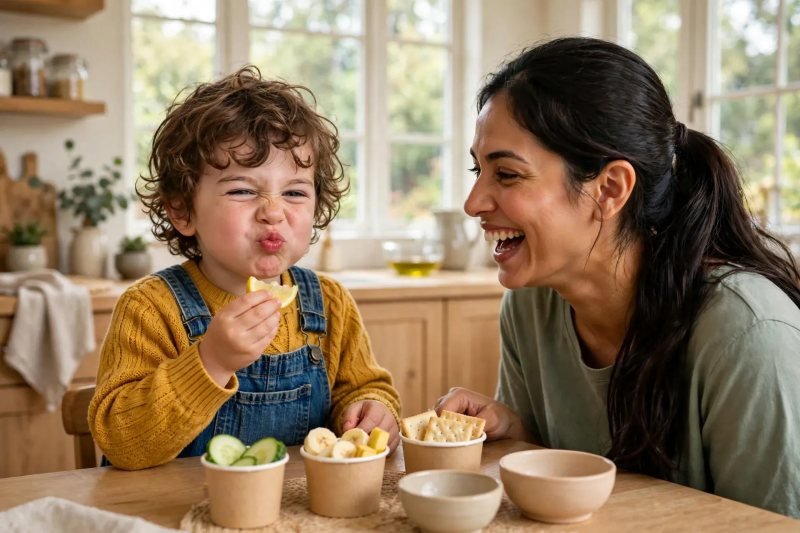
Safe taste test and sorting game. Set out tiny portions of familiar safe foods — a lemon wedge, a dab of honey, a plain cracker, a cucumber slice. Let your child taste each and describe it: sweet, sour, salty, crunchy. Watch the lemon face. Then ask which was their favorite and why. Afterward, give your child bowls labeled "sweet" and "sour" and let them sort new foods — banana, apple slice, plain yogurt — into the right bowl. Simple sorting builds early classifying skills.
-
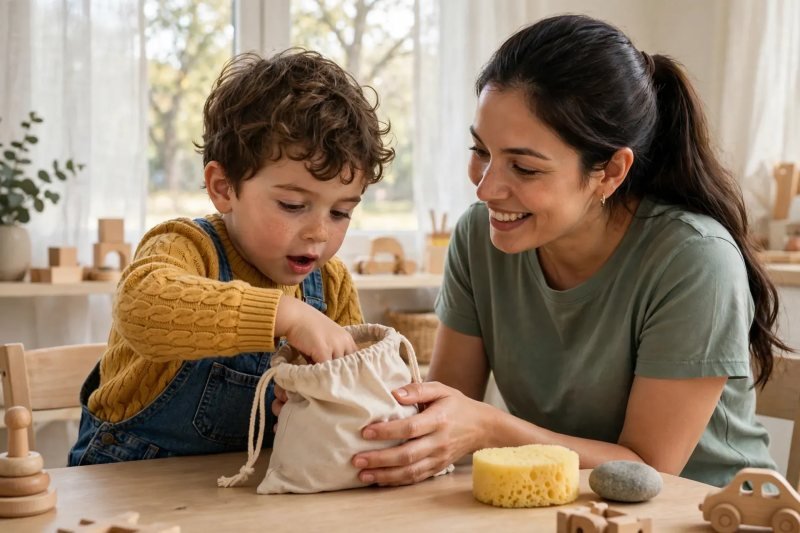
Mystery touch bag. Drop familiar objects into a cloth bag — a sponge, a pinecone, a spoon, a smooth stone. Your child reaches in without looking, feels one object and describes it (bumpy, cold, soft) before guessing what it is. Say: "Tell me how it feels before you tell me what it is." Describing comes first; naming comes with practice. When your child is ready, pour the cornstarch for the oobleck next.
-
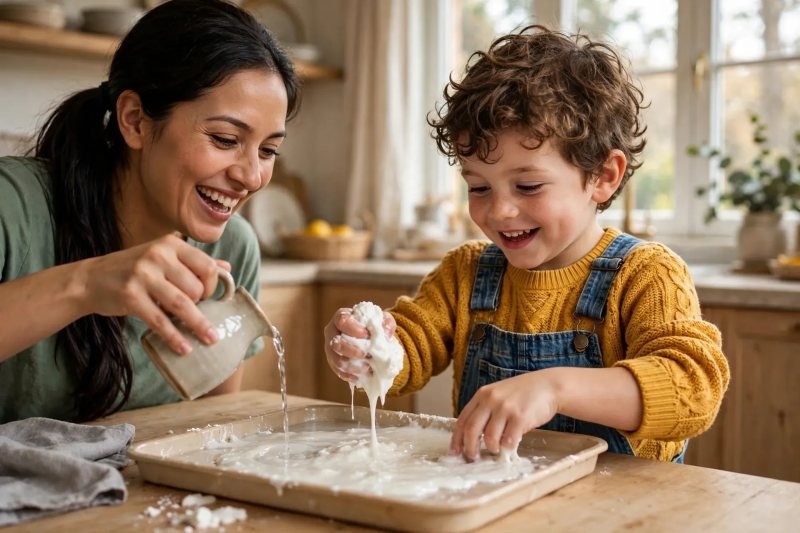
Oobleck play. Mix cornstarch with water until it feels like magic — squeeze it and it goes solid, open your hand and it melts. Let your child poke, grab and pour it in a tray. This one teaches that materials can surprise you, which is real science thinking.
-
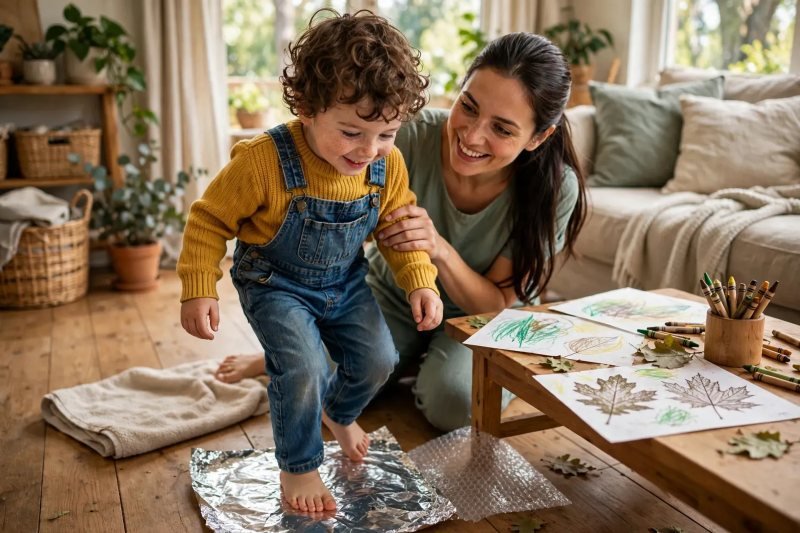
Barefoot texture walk and nature rubbings. Lay a path of safe textures on the floor: a towel, a piece of foil, bubble wrap, a carpet square. Your child walks it barefoot and tells you how each step feels. It is wonderful for body awareness and balance. Then take crayons and paper outside and make rubbings of tree bark, leaves and garden stones. Comparing the patterns back indoors sharpens noticing skills and gives you artwork worth keeping.
-
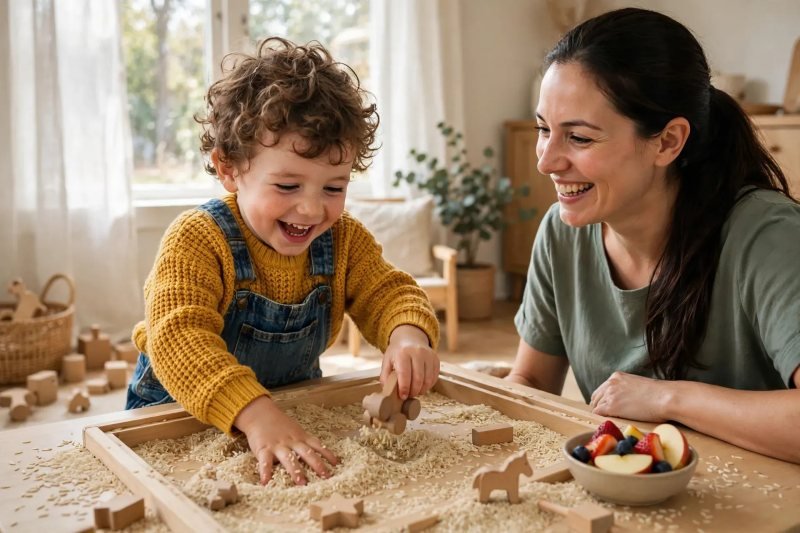
Sensory bin treasure dig and all-senses snack. Fill a shallow bin with dried rice and hide small toys inside. Your child digs with their hands or a spoon to find the treasures. Add a challenge: find all five red things, or only the smooth ones. Then finish with a snack your child explores like a scientist: look at the colors, listen to the crunch, smell it, taste it slowly, feel the texture. One piece of fruit becomes a full five-senses review — and a calm ending to a busy session.


Make it easier
Start with exploring, not guessing — let your child sniff the jars, shake the shakers and touch the bag contents with eyes open first. Guessing is the hard part; free play is the warm-up. Use bigger objects in the mystery bag, only two scents in the smell jars, and let your child watch you do each activity once before their turn. End the session at the first sign of frustration — a short happy session beats a long grumpy one.
Make it harder
Add a timer to the scavenger hunt, or ask for "something red AND round." Mix similar scents (lemon vs. orange) in the smell jars for a real challenge. Make rhythm patterns longer with silent pauses. In the sorting game, sort by two rules at once — sweet AND crunchy. Ask your 4-year-old to describe instead of name: "tell me what it feels like, not what it is." The sorting and pouring here also build small-hand control — see fine motor activities for preschoolers for more.
Other ways to play it
- Seasonal swap: hunt fall leaves by color, listen for spring rain on the listening walk, freeze water with berries for a winter touch-and-taste bin.
- Party version: set up three or four stations (smell jars, touch bag, shakers, taste test) and let a small group rotate with an adult at each.
- Bath-time senses: add scented bath-safe soap for smell, pour water at different heights for hearing, and compare warm and cool washcloths for touch.
- Rainy-day indoor: the listening walk becomes a listening sit by an open window; the texture walk moves to the hallway.
- Next science play: try the baking soda and vinegar volcano when your child wants a bigger fizz, or dancing raisins for another kitchen science watch.
- Picnic version: take the all-senses snack and the mirror faces to the park — new setting, same skills.
How it changes by age
- For 3-year-olds, keep sessions short (one or two activities), expect lots of touching and tasting everything, and do most of the narrating yourself: "That feels bumpy, doesn't it?" By 4, most children love the guessing games, can compare two scents or textures, and start using describing words on their own — encourage full sentences: "The lemon is sour and yellow." If a younger sibling joins in, give them their own safe version (a sealed shaker to hold, a soft cloth to feel) so the preschooler keeps the "big kid" activities.
What they're learning
These games build the foundation of early science: observing carefully, comparing, predicting ("what do you think is in the jar?") and describing findings. Sensory vocabulary grows fast — bumpy, smooth, sour, loud, faint — and that describing language helps children talk about what they notice and learn. Listening walks and slow tasting give children practice in pausing and paying attention. Best of all, many families find sensory play a lovely reset after high-energy play. The color play here pairs naturally with color mixing activities for preschoolers.
Clearing up
Rinse the jars and bowls, toss the paint bag and used cotton balls, and compost or bin food scraps. For more ideas filed the same way, browse the sensory activities collection and the science learning hub. Shake the rice from the sensory bin back into its container (a sheet underneath makes this ten times easier). Wipe trays and tables, hang the texture-walk fabrics to dry if damp, and store the sealed shakers and smell jars for next time — they keep well for weeks.
Questions parents ask
What are five senses activities for preschoolers?
Why are sensory activities important for preschoolers?
How can I teach my child about the five senses at home?
What are some easy touch activities for 3-year-olds?
How long should a senses activity take with a preschooler?

save it for later
Pin this for the next rainy afternoon
Keep it on a board so it is there when you need it, rather than when you happened to find it.
Save to Pinterest


