


Recognising Coins (UK): 1p, 2p, 5p, 10p, 20p and 50p
Real British coins are brilliant teachers — copper, silver, round and seven-sided. A hands-on activity for ages 5–6 building recognising coins skills with the 1p to 50p.
To teach recognising coins, start with real UK coins and the colour split: copper 1p and 2p, silver 5p to 50p. Then teach size order (5p smallest, 50p biggest) and the two seven-sided coins — 20p and 50p. Sorting, tracing and a touch-bag game make the six coin types stick for ages 5–6.

The short version
- Colour first: copper (1p, 2p) versus silver (5p–50p).
- 5p is the smallest coin; 50p the biggest.
- 20p and 50p have seven sides — countable, traceable.
- Bigger isn't always worth more (10p beats 2p).
- Touch-bag games build recognition without looking.
- Supervise: choking hazard under 3.
- Counting the piles in ones, twos and tens is the same skill as counting to 20 activities.
- Age
- Ages 5–6
- Prep
- 10 min
- Play time
- 38 min
- Mess
- None
- Difficulty
- Easy
- Where
- Indoor
Why kids love this
Five-year-olds love feeling grown up, and real money says grown-up. This coin treasure hunt has copper coins, silver coins and two seven-sided oddities — and because the coins are real, children take it seriously.
What you'll need
- Real UK coins: 1p, 2p, 5p, 10p, 20p, 50p (4–6 of each, wiped clean)
- 6 small bowls or cups, one per coin type
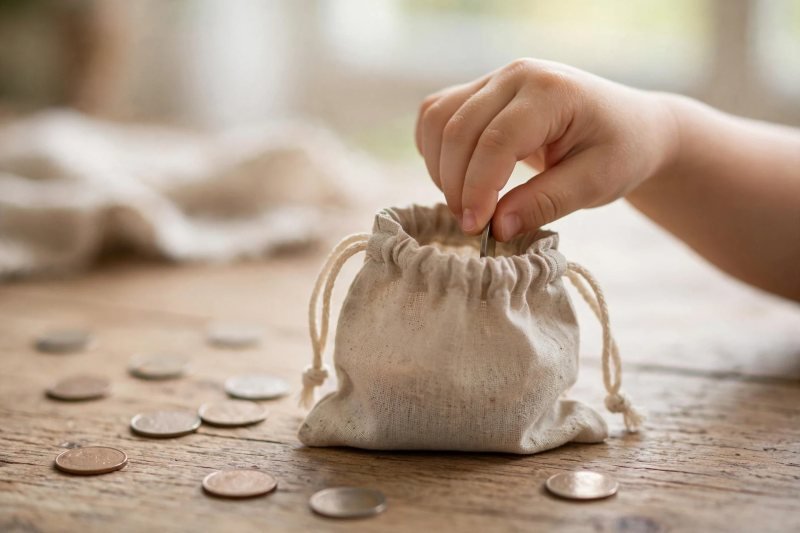
- A small fabric bag for the touch game
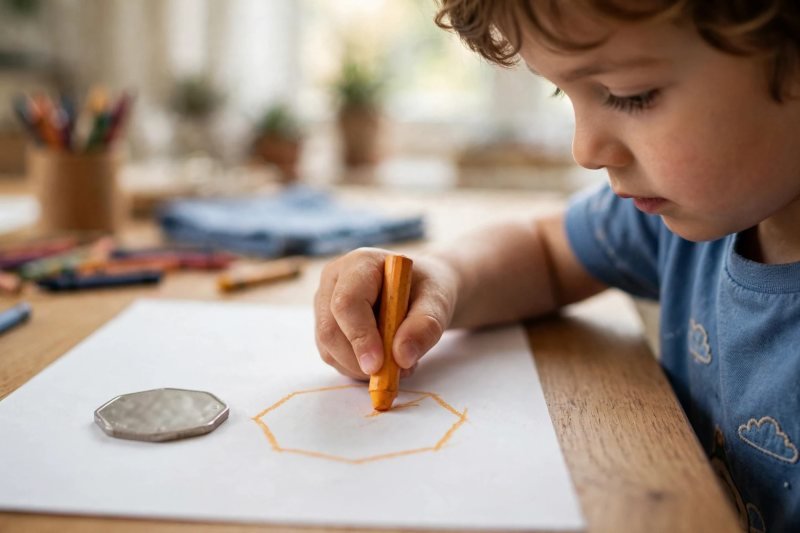
- Paper and crayons for tracing the seven-sided coins
- Blank index cards and tape for labels
Before you start
1. Pull 4–6 of each coin from the change jar; wipe clean. 2. Set six small bowls in a row on a low table. 3. Pop a few mixed coins into the fabric bag. 4. Ready paper and crayons for tracing.
How to do it
-
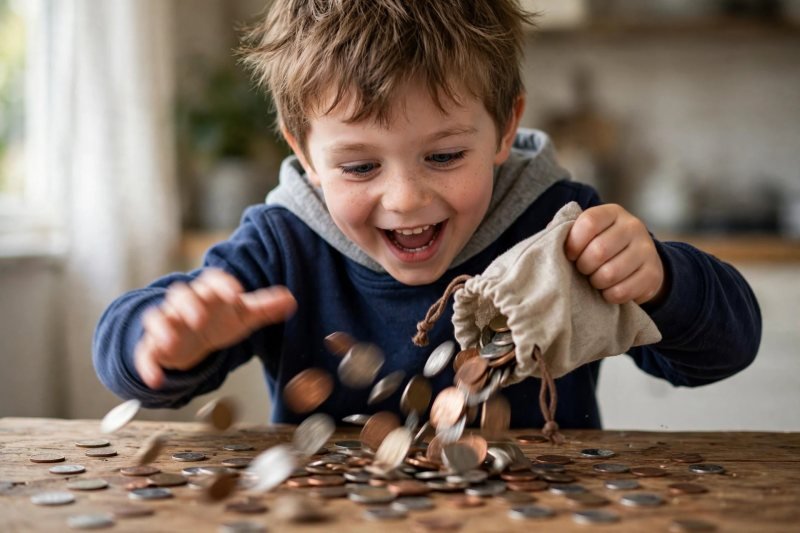
Tip out the treasure — Hand your child the bag of mixed coins to tip onto the table. No sorting yet — just look, pick up and clink. Ask what they notice: colours, sizes, shapes.
-
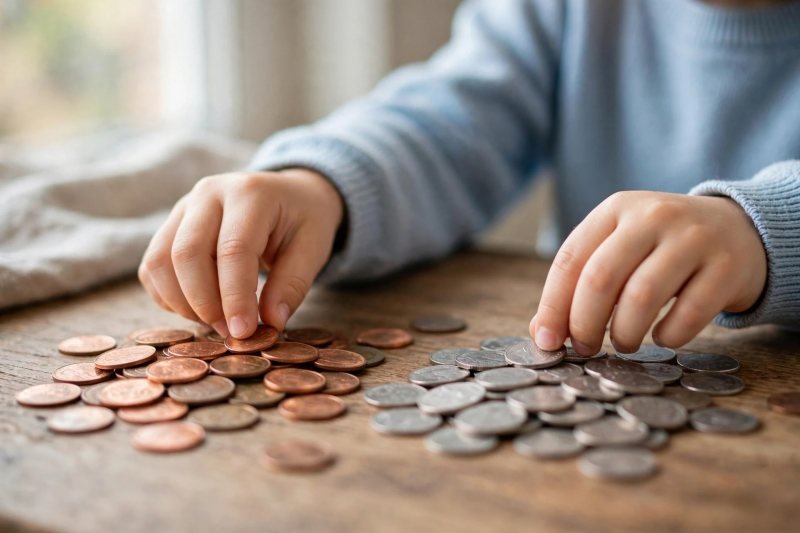
Sort copper from silver — Ask your child to make two piles: copper-coloured and silver-coloured. The 1p and 2p go copper; 5p, 10p, 20p and 50p go silver. Colour is the easiest first split.
-
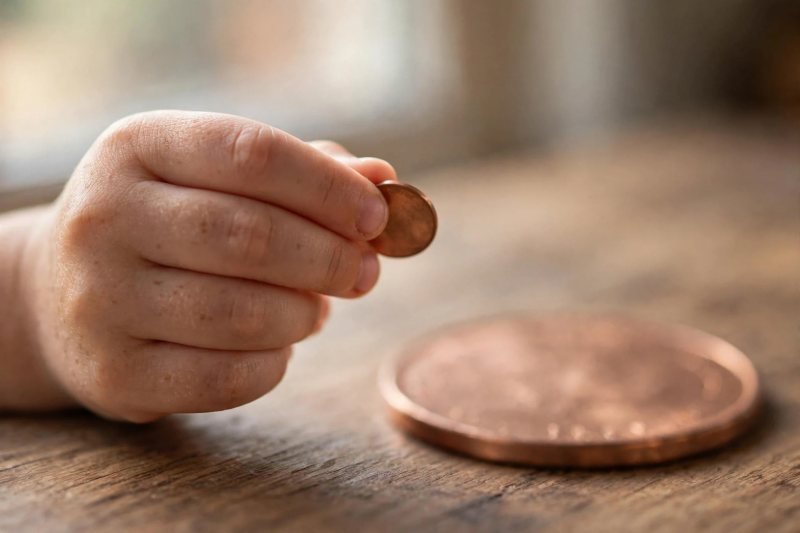
Meet the copper coins — Copper pile: 1p and 2p, and the 2p is clearly bigger. "One penny, small; two pence, bigger and worth two pennies." Stack two 1ps beside one 2p — same worth.
-
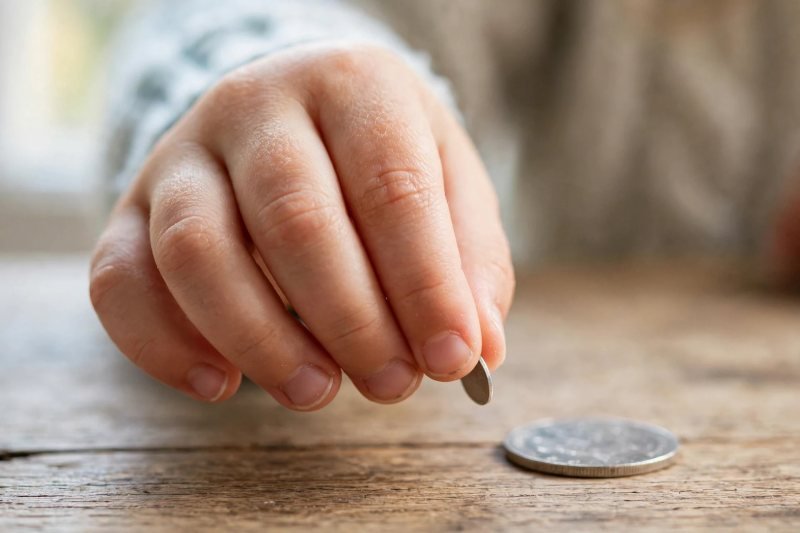
Meet the little silver coins — Silver pile: 5p and 10p. The 5p is the smallest coin of the set; the 10p is a good bit bigger. Count it out: five 1ps equal one 5p, two 5ps equal one 10p.
-
Find the seven-sided coins — The 20p and 50p aren't round — each has seven sides. Let your child count the sides, one to seven, then trace one on paper and count the drawing's corners.
-
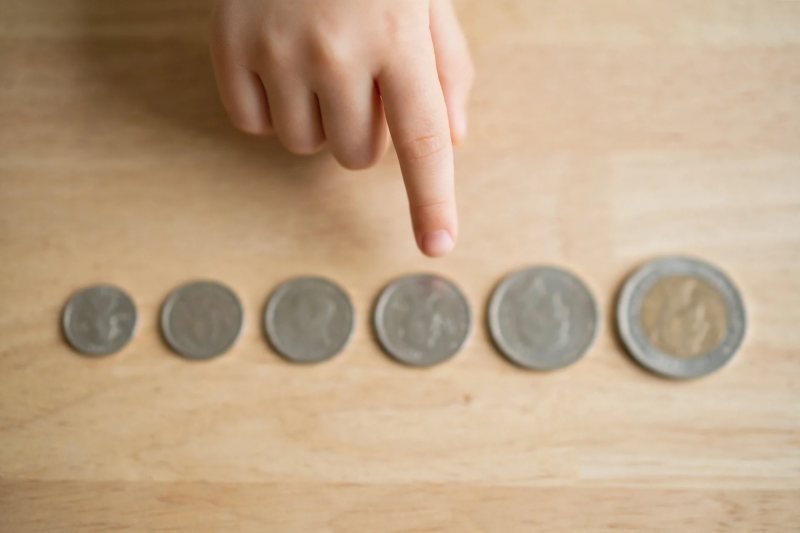
Line them up smallest to biggest — Order all six coin types by size: 5p, 1p, 20p, 10p, 2p, then 50p. The 50p is the giant of the set; the tiny 5p hides at the other end.
-
Discover that size isn't value — Big copper 2p or smaller silver 10p — which is worth more? Most five-year-olds pick the bigger coin. Show them: five 2ps equal one 10p. Bigger isn't always worth more.

-
Play the touch-bag game — Drop a few coins in the fabric bag — no peeking. Your child feels one and names it: "Seven sides — 20p or 50p? The big one — 50p!"
-
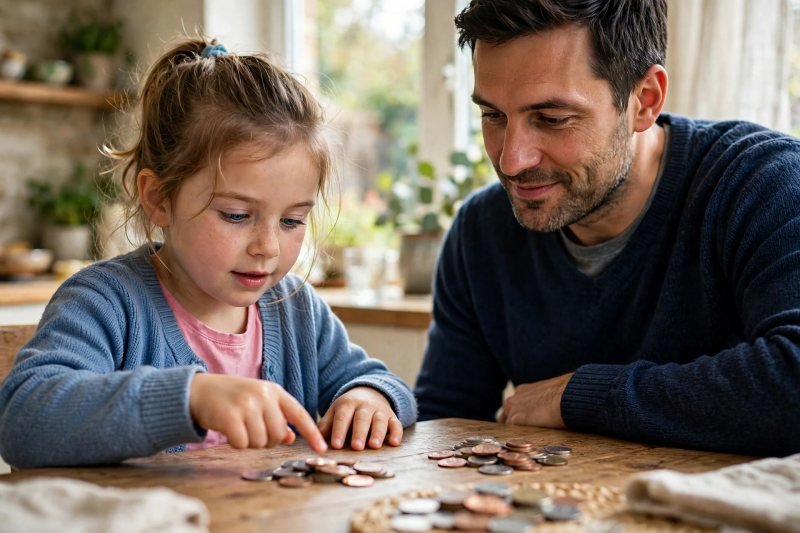
Count up the piles — Count the copper pile: 1ps in ones, 2ps in twos — two, four, six, eight, ten. Count silver 10ps in tens — ten, twenty. Real counting on real coins.
-
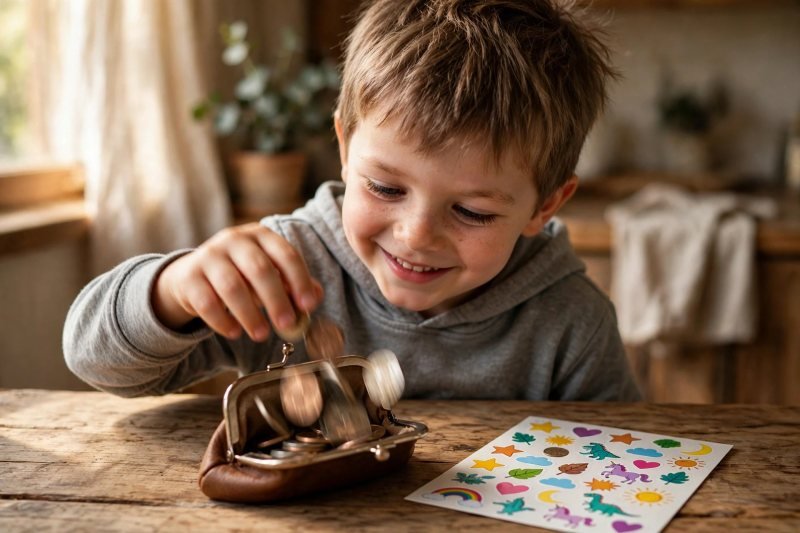
Pay for the prize — A sticker "for sale" at 15p. Your child pays exactly: a 10p and a 5p — fifteen pence! Then: three 5ps. Close the till and cheer.


Make it easier
Start with just the copper coins (1p, 2p) — two types, one colour — the same first split as in sorting by colour. Keep one of each coin on a labelled card as a reference. Play the touch bag with two coin types at a time.
Make it harder
Add the £1 coin: twelve sides, gold-coloured — spot the odd one out. Build 25p from mixed coins (20p + 5p). Which coins make 30p: 20p + 10p? Three 10ps?
Other ways to play it
- Coin rubbings: rub a crayon over paper on a coin; guess from the rubbing.
- Sorting race: two players, one mixed pile — fastest correct sort wins.
- Worth-more pairs: pick two coins, guess which is worth more, check by counting.
- Play shop next: ready for paying and change? Run a pretend shop — money games for kids take recognition into real paying and change.
How it changes by age
- Built for ages 5–6 (Year 1 in England), when most children sort by two attributes and count to 30. Four-year-olds can manage the colour sort and a two-coin touch-bag game. Nearer seven? Add £1 and £2 coins, totals to £1.
What they're learning
Recognising coins: 1p–50p by colour, size and shape. Coin values 1p–50p: handled, not memorised. The heptagon: seven sides, counted and traced. Counting in twos and tens on real coins — skip-counting by 2s, 5s and 10s builds the same skill. Value versus size: bigger isn't always worth more — comparing numbers games practise the same value-versus-size judgement.
Clearing up
Clean coins work best — wipe grimy ones first. Short of a type? Any six coins still teach the copper-silver split. Real coins beat play money: weight and feel are half the lesson.
Questions parents ask
How do I teach my child to recognise UK coins?
Which UK coins are seven-sided?
What is the smallest UK coin?
Is a bigger coin always worth more?
At what age should children learn to recognise coins?
How can my child practise recognising coins at home?
Keep to 30 minutes — sorting tires small hands. Replay the touch-bag game across the week; repetition builds recognition. If your child invents their own sorting rules, follow their lead.

save it for later
Pin this for the next rainy afternoon
Keep it on a board so it is there when you need it, rather than when you happened to find it.
Save to Pinterest


