


Money Games for Kids: Play Shops, Coins and Counting
A handful of real coins and a play shop is all it takes. These money games for kids teach coin recognition, skip counting, and making change through hands-on play for ages 5–6.
The best money games for kids combine real coins with pretend play. Ages 5–6: sort coins; count pennies by ones, nickels by fives; run a play shop where your child pays exact amounts and makes change. Real coins beat play money — kids learn the actual values (1¢, 5¢, 10¢, 25¢).

The short version
- Real coins beat play money for engagement.
- Sorting coins is the easiest starter game.
- Skip counting by fives and tens is the money skill.
- A play shop bundles paying and making change.
- Change is hardest — start with a nickel's worth.
- Supervise: coins are a choking hazard under 3.
- Age
- Ages 5–6
- Prep
- 10 min
- Play time
- 30 min
- Mess
- None
- Difficulty
- Easy
- Where
- Indoor
Why kids love this
Real coins make a five-year-old feel grown up. Money games for kids work because coins are small, shiny, and real — the stuff of grown-up life. Your child is shopkeeper: ringing up purchases, setting rules, counting change into their own hand.
What you'll need
- Real US coins: pennies, nickels, dimes, quarters (10–15 of each)
- 4 small bowls; blank index cards and tape for price tags
- Toys, books, stuffed animals to sell; poster board and crayons for a coin chart
- A box for the till; a purse or envelope per player
Before you start
1. Pull clean pennies, nickels, dimes, quarters — ten of each per player. 2. Line up four bowls and dump the coins in a pile beside them. 3. Set up the shop counter — a low table or couch arm — and line up the toys. 4. Ready poster board, crayons, and folded paper slips for price tags.
How to do it
-
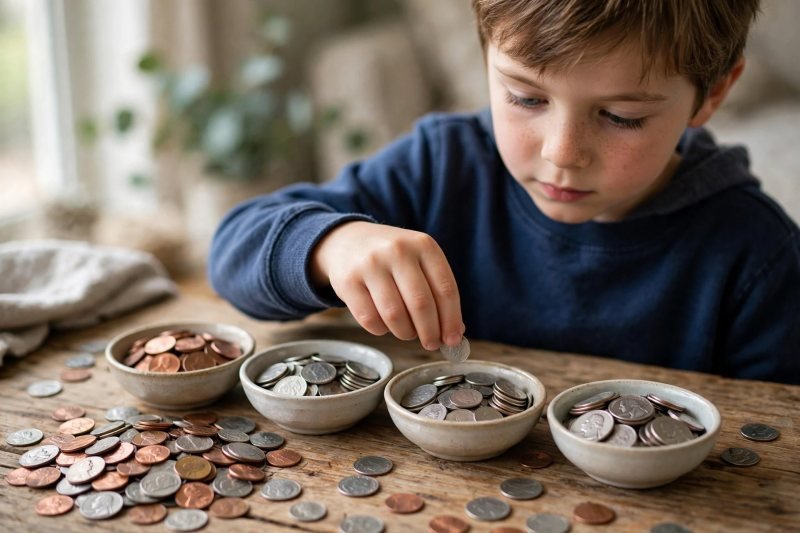
Sort the coins. Dump the coins out; your child sorts them into four bowls — pennies, nickels, dimes, quarters. Name each: "A dime — smallest coin, worth ten cents."
-
Make a coin chart. Your child traces one coin of each type; you label each: penny 1¢, nickel 5¢, dime 10¢, quarter 25¢. Checking the chart is strategy, not cheating.

-
Count pennies by ones. Line up ten pennies; count aloud together, pointing at each: one, two… ten. Then your child counts a handful alone. This ones-counting is the same first step as our counting activities for toddlers.

-
Skip-count nickels and dimes. Line up six nickels; count by fives — five, ten, fifteen… thirty — clapping on each coin. Then dimes by tens: ten, twenty, thirty.

-
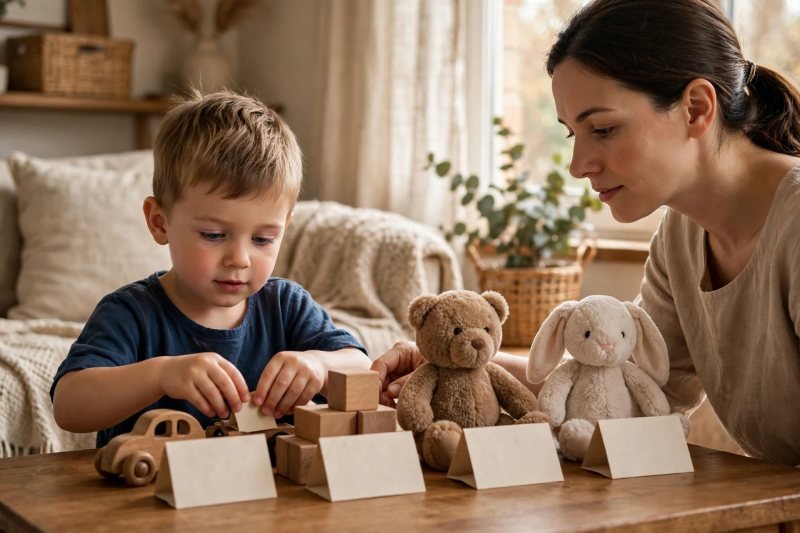
Set up the play shop. Set the toys on the counter; your child chooses prices they can count, like 5¢ or 10¢. Write each on a folded tag.
-
Open the shop. Hand your child the till; you're the customer with a purse of mixed coins — two quarters, three dimes, five pennies. They state prices and count each payment in: "A quarter, twenty-five cents!"

-
Pay in exact coins. Buy a 5¢ item and count out a nickel. Then a 10¢ book — pay with a dime, then two nickels: five, ten. Same price, different coins. Adding coins to reach a price is the same combining skill as our addition games for kindergarten.

-
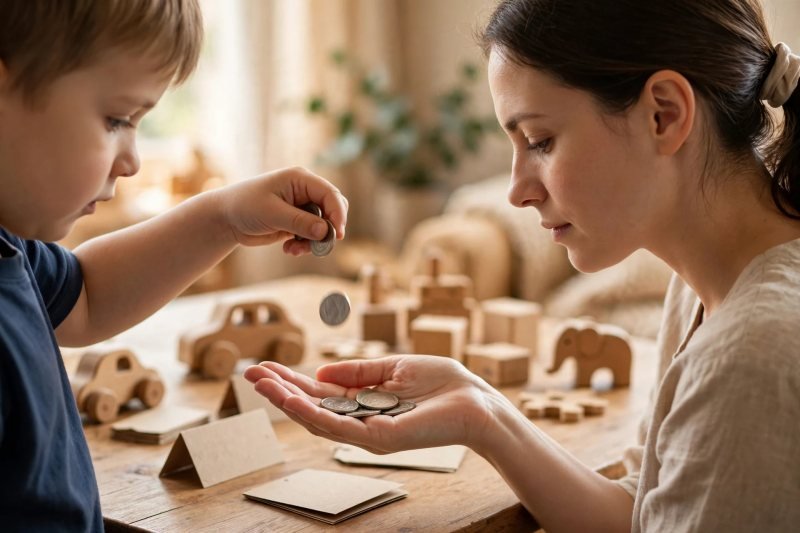
Make change. Buy a 15¢ item; pay with a quarter: "Twenty-five cents for fifteen — what comes back?" Count up: fifteen… twenty… twenty-five. Ten cents change! Counting up to make change uses the same pairs as our number bonds to 10 activities.
-
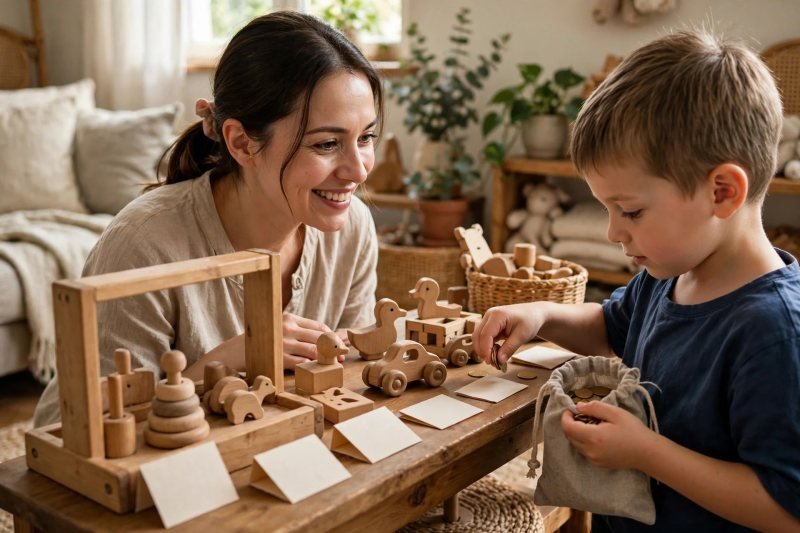
Swap roles. Swap: your child shops with a fresh purse while you're shopkeeper. Do they count nickels by fives, check the chart? The strategies surface on their own.
-
Count the till. Close the shop; sort the till into piles and count the total — by ones, then skip-counting. Set a pretend goal: "Sixty cents! Forty more buys the big dinosaur."



Make it easier
Pennies only first — everything costs 1–10 cents. Keep the coin chart visible; checking is a skill, not cheating. Let your child be the customer first if shopkeeper feels like too much.
Make it harder
Price items above 25¢ — like 37¢ (quarter, dime, two pennies) — and work toward a full dollar with our counting money to one dollar games. Introduce the dollar: trade 100¢ for a real dollar bill. Have them give change in their head: 30¢ paid on 20¢? The same take-away thinking powers our subtraction activities for kindergarten games.
Other ways to play it
- Coin grab race: scatter the coins, call "Dimes!" — fastest grabber wins.
- Mystery price: the customer picks blind; the shopkeeper reads the price.
- Real errand: let them hand the cashier coins at a real store.
- Piggy bank sort: empty a real piggy bank, sort by type, count the total.
How it changes by age
- Built for ages 5–6, when most children count to 30 and grasp that coins differ in value. Four-year-olds can sort and play shop with pennies only; skip counting clicks around kindergarten. Nearer seven? Raise prices.
What they're learning
Coin recognition: coins apart by size, color, feel. Coin values: 1¢, 5¢, 10¢, 25¢ — learned by handling real coins. Skip counting: by fives and tens. Addition and change: combining coins; the count-up method. Social skills: greeting customers, stating prices.
Clearing up
Real coins beat play money — kids take the game more seriously. Cardboard circles with written values work too. Cap prices at what your coin supply covers.
Questions parents ask
What is the easiest money game for kids?
How do I teach my child to count coins?
When should kids learn about money?
What are the values of US coins?
How can kids practice making change?
Is a play shop a good money game for kids?
Keep sessions to 30 minutes — money math is concentrated thinking. Follow up at a real store: let your child pay for a small item. If they invent their own rules, go with it.

save it for later
Pin this for the next rainy afternoon
Keep it on a board so it is there when you need it, rather than when you happened to find it.
Save to Pinterest


