


Counting to 20 Activities for Preschoolers: Hands-On Ideas That Work
Ten hands-on counting to 20 activities for preschoolers ages 4–5 that finally crack the tricky teen numbers (13–19). Real objects, movement and play — no worksheets, no flashcards, no pressure.
The best counting to 20 activities for preschoolers are hands-on: stack and count 20 blocks, walk a tape line saying one number per step, fill an egg carton then count on to 20, or clip 20 clothespins to a line. Focus on the teen numbers 13–19 — say them slowly ("THIR-teen") and let your child touch each object. Ten playful minutes a few times a week is enough.

The short version
- - Touch one object per number — one-to-one correspondence is the skill.
- - Slow down for 13–19; exaggerate "THIR-teen, FOUR-teen."
- - Count on from 10 or 12 so the teens read as "ten plus more."
- - Ten playful minutes a few times a week beats one long session.
- - Never correct mid-count — replay the tricky teens as a game.
- Age
- Ages 4–5
- Prep
- 10 min
- Play time
- 20 min
- Mess
- Low
- Difficulty
- Easy
- Where
- Both
Why kids love this
These counting to 20 activities feel like play, not lessons. Towers crash, snacks get eaten, water splashes — and numbers 13 through 20 sneak in while kids have fun. Your child is the one in charge of the count: they touch, they place, they count. You keep the rhythm.
What you'll need
- - 20+ small countable objects (pom-poms, dried beans, buttons or blocks)
- - Painter's tape or chalk
- - One empty egg carton, plus a muffin tin or small bowls
- - 20 crackers, cereal pieces or fruit pieces
- - 20 wooden clothespins and a length of yarn
- - A large soft die with dots
- - A bucket or basket, a plastic pitcher and cups for water play
Before you start
1. Gather about 25 small objects — extras mean you never run out mid-count. 2. Clear a floor or table space big enough to line up 20 objects in a row. 3. For outdoor activities, check the ground is clear and dry enough for hopping. 4. Save the water activity for last or do it in the bathtub — it's the splashy one.
How to do it
-
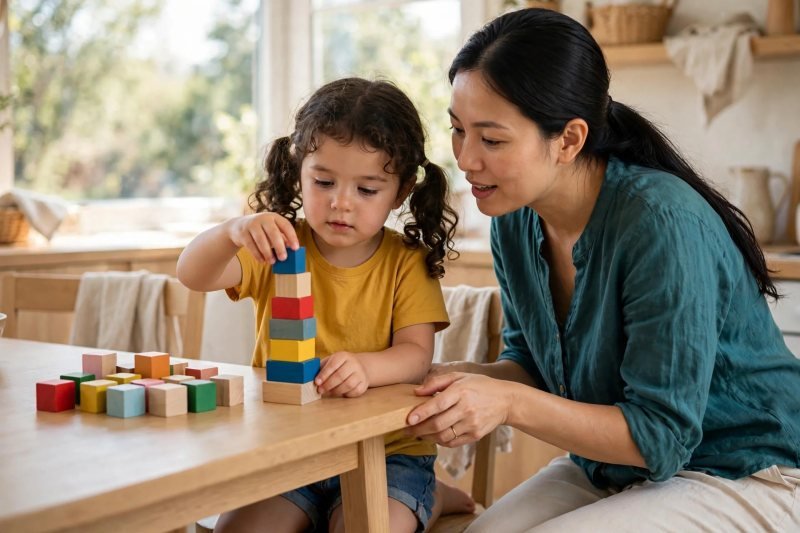
**Step 1 — Build a teen tower.** Do these games one at a time, a few times a week — your child probably rattles off 1–10 already; the real work is the teen stretch from 13 to 19, so slow the teens down and attach each one to something they can touch. Stack blocks one at a time, counting each as it lands. Keep going past 10, slowing down at 11 — exaggerate the teen names: "THIR-teen, FOUR-teen." Towers rarely survive to 20 on the first try, and that's fine: the crash is the reward that makes kids want to count again. Rebuild and count on from where you left off.
-
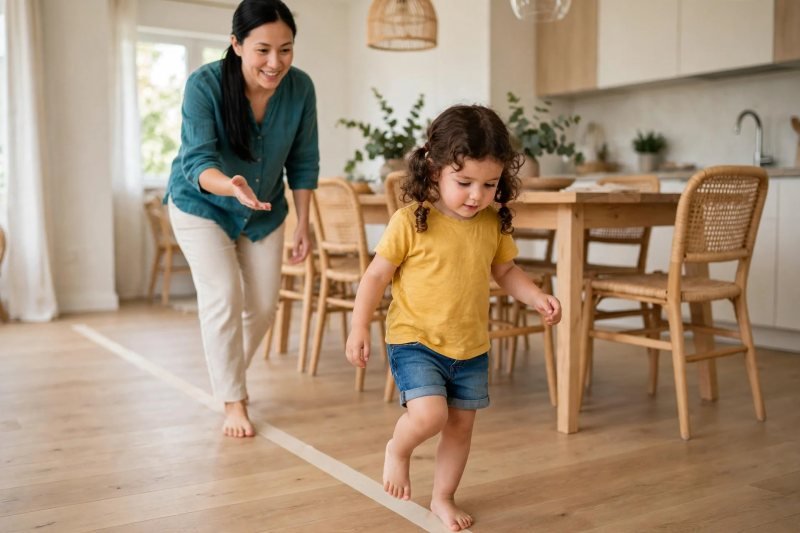
**Step 2 — Walk the tape line.** Lay a long strip of painter's tape on the floor. Your child steps along it, one number per step, all the way to 20. One foot, one number — the stepping spaces the words out and stops the classic preschool rush through the teens. For extra teen practice, start the walk at 11.
-
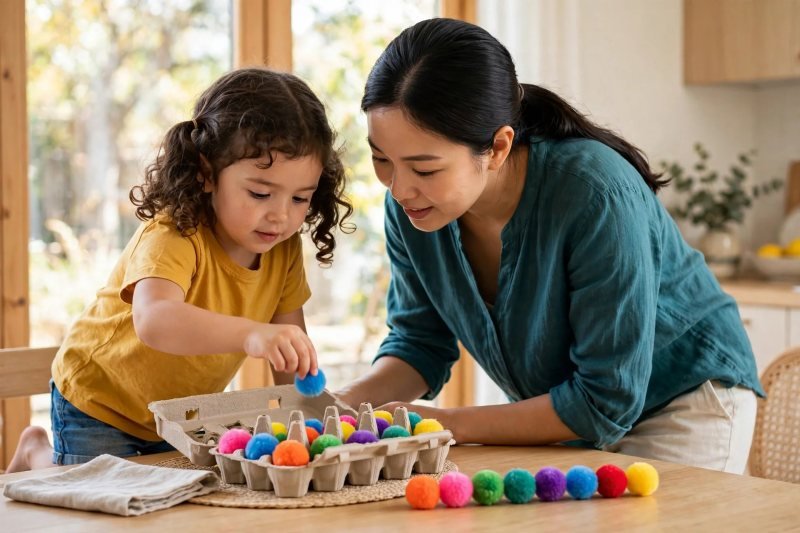
**Step 3 — Count on with an egg carton.** Fill an egg carton with pom-poms, counting 1–12 together. Line up 8 more beside it: "We've got 12… count ON: thirteen, fourteen…" to 20. This teaches that 13–20 are just "ten plus some more" — exactly how the numbers work.
-
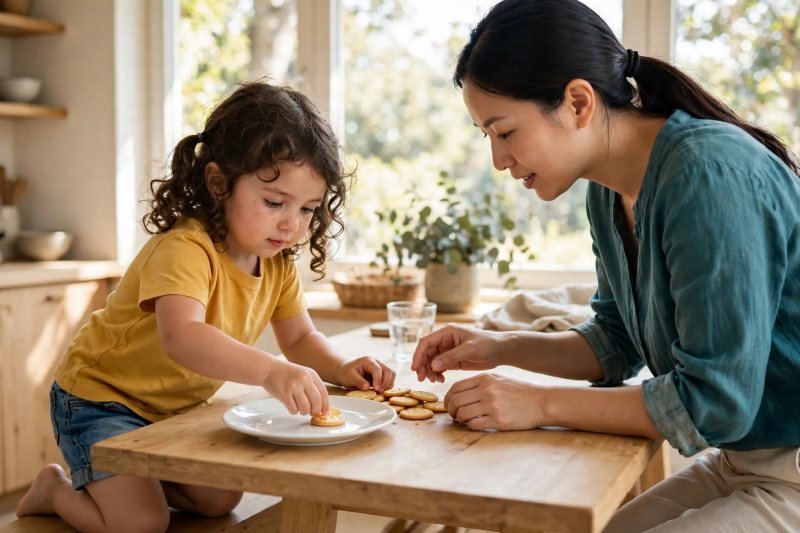
**Step 4 — Count your snack.** Count 20 crackers onto a plate, touching each one: 1 to 20, no skipping. Then eat them — counting that ends in a snack is counting kids beg to repeat. Pause at the teens and let your child say them alone; if they stumble, count those three together again.
-
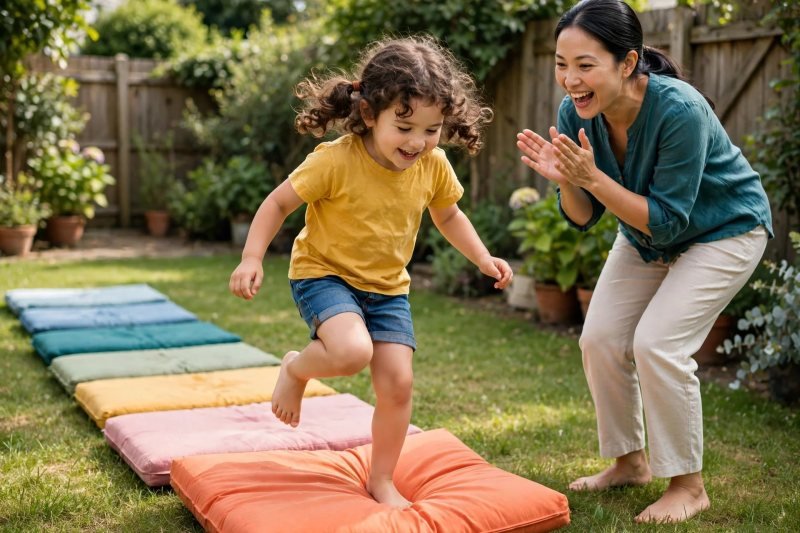
**Step 5 — Hop to twenty.** Outside, draw chalk circles or lay down cushions as landing pads. Your child hops pad to pad, one number per landing, to 20. Each landing gives its number a thump of emphasis — perfect for the slippery middle teens. Tired legs? Big stomps for 13–19 only, then hop the rest.
-
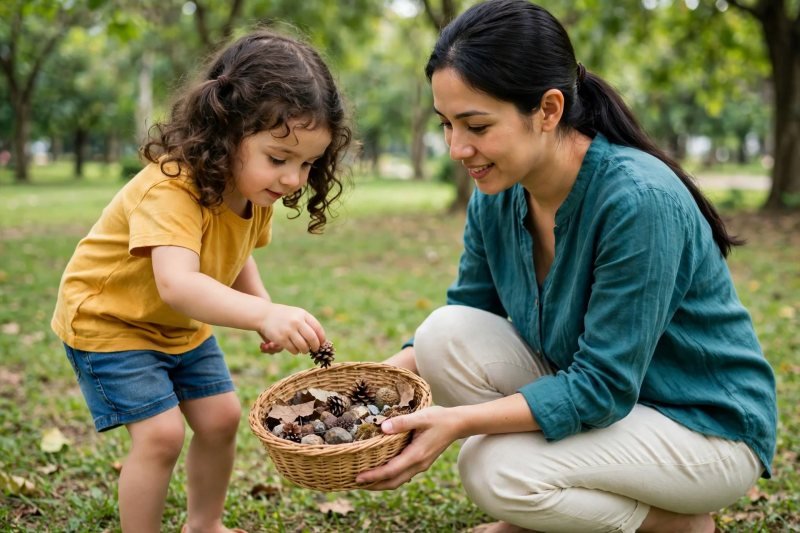
**Step 6 — Nature collection count.** Take a bucket on a walk and collect 20 treasures: pinecones, leaves, pebbles, sticks. Count each one as it drops in. At 10, announce "ten!" and keep going — hearing the count continue into the teens is what makes 13–19 click.
-
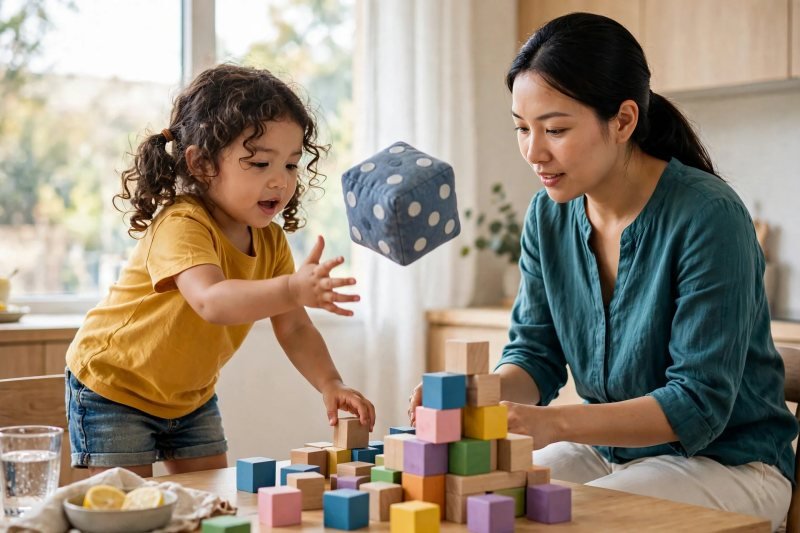
**Step 7 — Roll and build to 20.** Roll a dot die and add that many blocks to a pile, counting each one. Keep a running total out loud: "We had 7… plus 4 more… 8, 9, 10, 11!" First to exactly 20 wins. This practices counting on — the skill hiding inside the teen numbers.
-
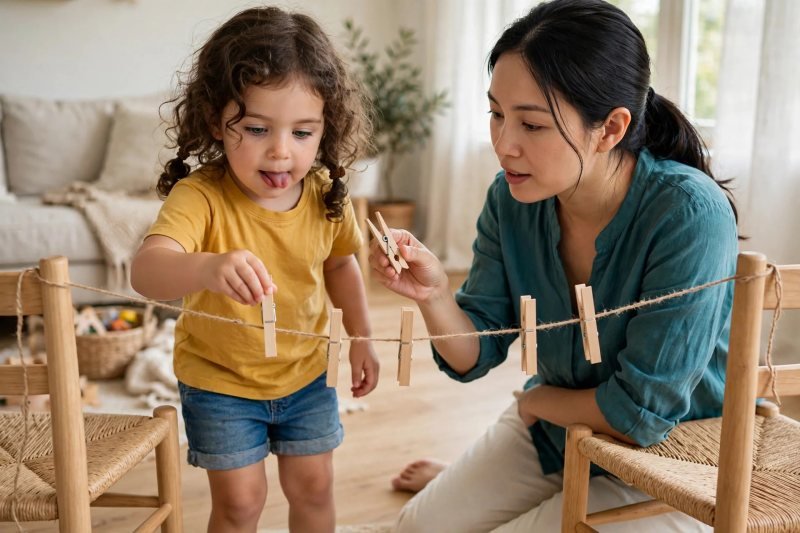
**Step 8 — Clip the line.** String yarn across a room or between two chairs. Your child clips 20 clothespins along it, counting each clip. Clothespins fight back a little, which slows the count — and slow counting is accurate counting. Ideal for the child who blurs 13, 14, 15 into one breath.
-
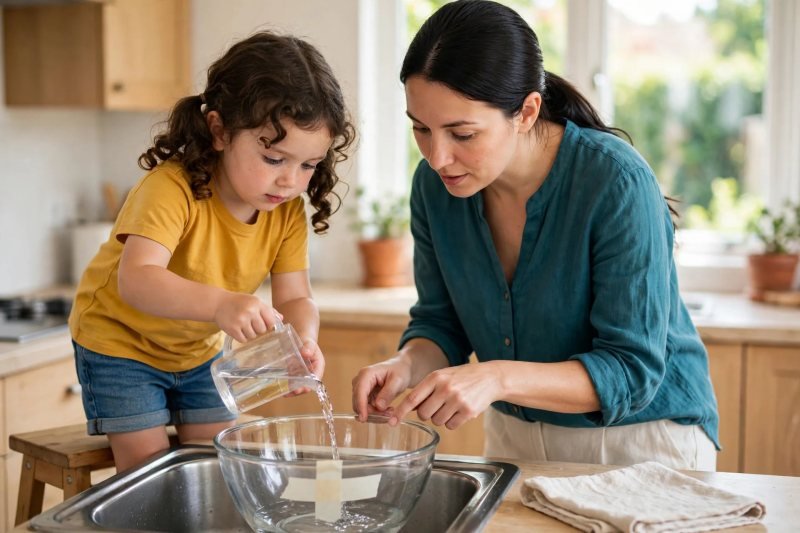
**Step 9 — Pour and count.** At the sink or tub, pour cupfuls of water from a pitcher into a big bowl, counting each pour to 20. Pouring is slow by nature, so the teens get full airtime. Mark the waterline at 10 and 20 pours with tape.
-
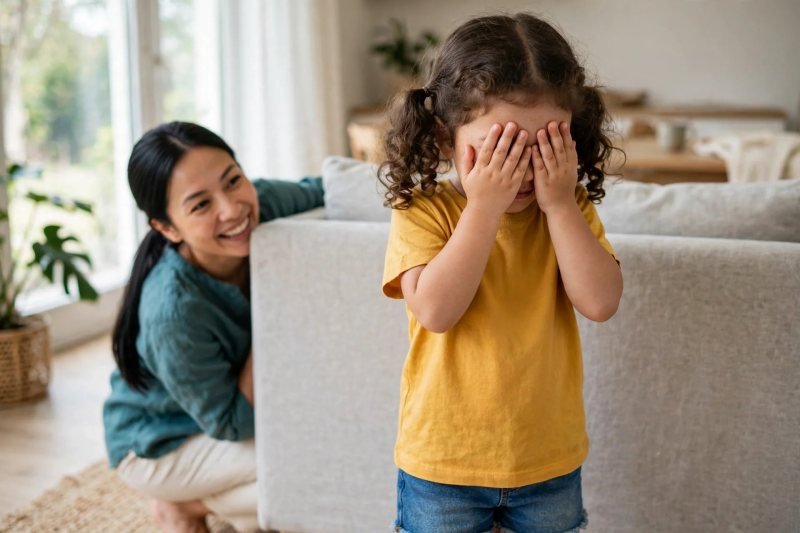
**Step 10 — Hide and count to twenty.** You hide; your child counts to 20 — slowly, out loud — before seeking. The long count is the whole point: twenty seconds of steady teen-number practice disguised as the best game ever. Then swap roles. Terrible hiding spots are traditional.


Make it easier
- Count to 10 first and stop — add the teens over several days. - Count together in chorus; your voice carries the tricky teens. - Use bigger objects (blocks, balls) that are easy to touch one at a time.
Make it harder
- Start at 11 and go to 20 without the 1–10 warm-up. - Count backwards from 20 to 1. - Ask "what comes after 16?" or "what's two more than 14?" during play.
Other ways to play it
- - **Teen-only round:** do any activity counting just 11–20.
- - **Partner count:** you say the tens, your child says the teens.
- - **Record it:** your child draws 20 circles and crosses each off as you count.
How it changes by age
- Built for ages 4–5, when most children rote-count to 10 and are ready to attach meaning to 11–20. Younger siblings (3+) can join as echo-helpers. If your 5-year-old already counts to 20 smoothly, use the "make it harder" options or move on to our [addition games for kindergarten](https://brightplaydays.com/activities/addition-games-for-kindergarten/). Still on 1–10? Start with our [counting activities for toddlers](https://brightplaydays.com/activities/counting-activities-for-toddlers/).
What they're learning
- Rote counting to 20, with accurate teen numbers 13–19 - One-to-one correspondence (one touch, one number) - Counting on from a known number — the foundation of addition - Cardinality: the last number said tells how many there are - Fine motor control (clipping, pouring, placing)
Clearing up
Wipe the table, pour out the water bowl, and have your child return the 20 objects to their jar — counting them back in, of course. Tape peels up easily; chalk washes off with water.
Questions parents ask
At what age should a child count to 20?
Why does my preschooler skip 13, 14, 15?
How can I teach teen numbers to a 4-year-old?
What are good counting to 20 activities without worksheets?
How long does it take a preschooler to learn to count to 20?
Should my preschooler also write numbers to 20?
Ten minutes, a few times a week, beats one long session. Slip counting into routines you already have — stairs, snacks, tidying. If your child resists, drop it for a week. Number sense grows on play, not pressure.
