


Read Write Inc Sounds for Parents: Set 1 Speed Sounds at Home (UK)
A UK parent guide to the Read Write Inc Set 1 sounds: the official sound order, pure-sound technique and Fred Talk blending, with a simple one-week plan to practise at home.
Read Write Inc Set 1 sounds are the first sounds taught in Ruth Miskin's UK phonics programme: m, a, s, d, t, i, n, p, g, o, c, k, u, b, f, e, l, h, sh, r, j, v, y, w, th, z, ch, qu, x, ng, nk. Parents can support learning at home with pure sounds (mmm, not "muh"), the "my turn, your turn" copying pattern, Fred Talk oral blending games, and short daily review sessions.

The short version
- Set 1 follows a special order — not alphabetical — so children blend real words within days.
- Pure sounds matter most: say "mmm" and "fff", never "muh" or "fuh".
- "My turn, your turn" modelling is how each new sound is introduced.
- Fred the Frog "speaks in sounds" (c-a-t) and children blend them into words (cat).
- Six "special friends" (sh, th, ch, qu, ng, nk) are two letters making one sound.
- Green words can be sounded out; red words must be learned by sight.
- Ten to fifteen minutes a day, little and often, is the ideal home rhythm.
- Age
- Ages 4–5
- Prep
- 10 min
- Play time
- 15 min
- Mess
- None
- Difficulty
- Easy
- Where
- Indoor
Why kids love this
Read Write Inc starts with one friendly frog. Fred the Frog can only talk in sounds — he says "m-a-t" and your child gets to be the clever one who says "mat!". Children adore being Fred's helper, and because the first sounds are taught in tiny groups, your child can blend real words within days. That first "I read a word!" moment is pure magic for a four-year-old — and it happens at the kitchen table, in their pyjamas, with mum or dad as the teacher.
What you'll need
- Blank card or cut-up card strips for homemade sound cards
- A marker pen — one letter or pair per card
- A toy frog (or a frog picture on a stick) to be "Fred"
- A shallow tray of salt, sand or rice for finger writing
- Magnetic letters or letter tiles (a basic set is plenty)
Before you start
1. Make one card for each Set 1 sound — m, a, s, d, t, i, n, p, g, o, c, k, u, b, f, e, l, h, sh, r, j, v, y, w, th, z, ch, qu, x, ng, nk — and keep them in this order in a small pile. 2. Practise the pure sounds yourself first: mmm (not "muh"), fff, lll, nnn. Stretch each sound with no "uh" on the end. 3. Pick a calm, regular slot — after breakfast or before dinner works well for most Reception-age children.
How to do it
-
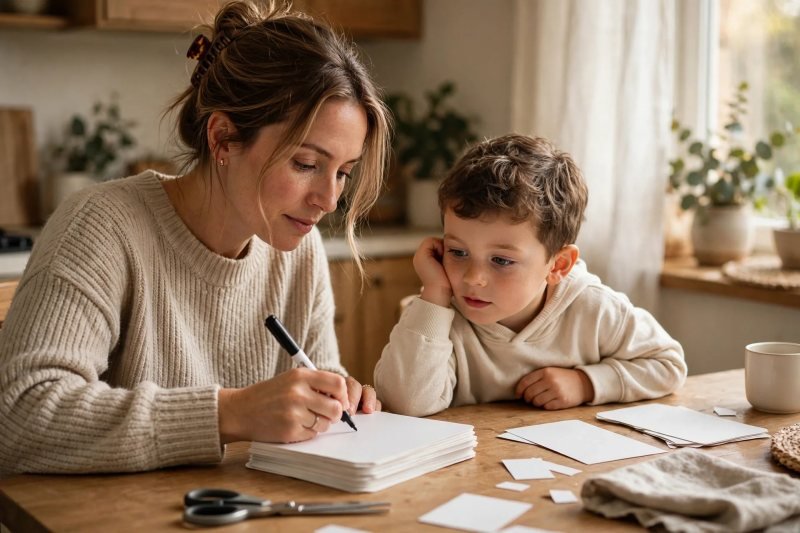
Learn the official Set 1 order yourself. Read Write Inc (Ruth Miskin's phonics programme, widely used in UK primary schools) teaches sounds in a careful order, not alphabetically. Set 1 holds the single-letter sounds plus six "special friends" — two letters making one sound. Verified against the official order used by Read Write Inc schools: m, a, s, d, t, then i, n, p, g, o, then c, k, u, b, then f, e, l, h, sh, then r, j, v, y, w, and finally th, z, ch, qu, x, ng, nk. They are called "speed sounds" because the goal is for your child to say each one instantly.
-
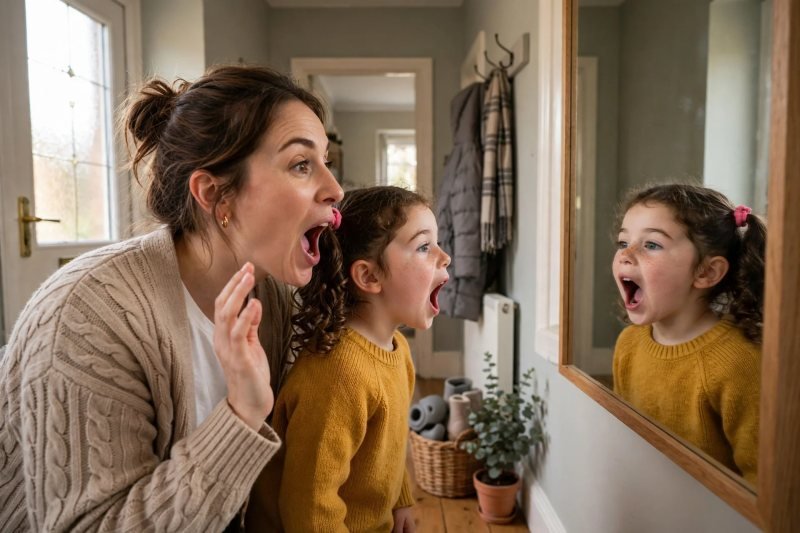
Say the pure sounds correctly. This is the single most important job for parents. Practise in front of a mirror: say each sound with no extra vowel — mmm, sss, fff, not "muh, suh, fuh". For sounds you cannot stretch, like d, g and b, keep them short and crisp: "d", not "duh". If you catch yourself adding the "uh", slow down and try again. Schools call this technique "pure sounds", and it is what makes blending actually work.
-
Use my turn, your turn. Teach each new sound with the pattern schools use: you say it first, then your child copies. Hold up the card for "m" and say "my turn: mmm", then point to your child and say "your turn". They echo "mmm". Repeat three or four times, nice and relaxed — this is not a test, copying is the point. Praise every attempt warmly. Three new sounds per session is plenty.

-
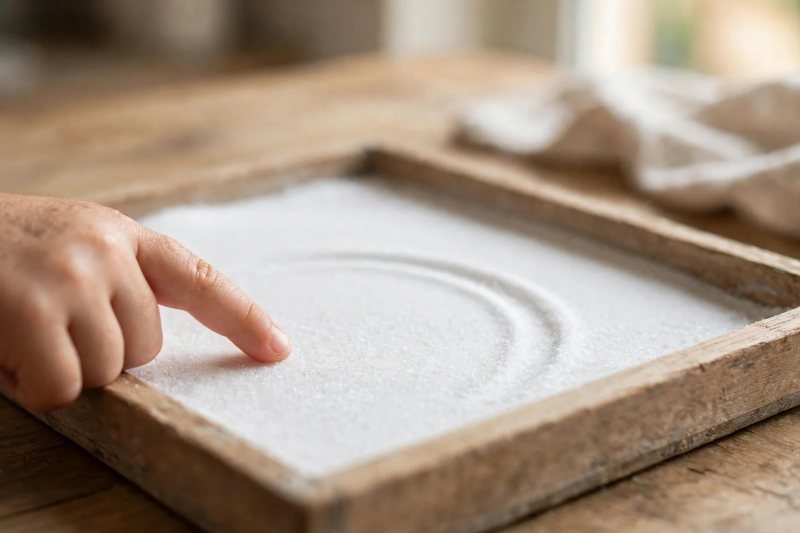
Practise letter formation in a salt tray. Fill a shallow tray with salt or sand and let your child trace the letter with their finger while saying the pure sound aloud — saying and writing together is what fixes the memory. Keep it short: five minutes of tray writing is a triumph at this age. Say the sound together as they write so the letter and its sound get glued together.
-
Play Fred Talk with Fred the Frog. Meet Fred the Frog — your toy frog, who can only speak in sounds. Fred says "m-a-t" (pausing between sounds) and your child blends them into "mat!". Start with words built from the sounds your child knows: sat, mat, sad, mad, at. Make it a silly game: Fred gets stuck on the sounds and needs your child's help. This is "Fred Talk" — the bridge between knowing sounds and reading words.

-
Blend the first words together. As soon as your child knows the first group (m, a, s, d, t), they can start blending real words: sat, mat, sad, mad, at, as, am, it, is. Use magnetic letters to build a word, say the sounds slowly left to right — "s-a-t" — and let your child say the whole word. This is "sound blending", and it is reading. Let them do the blending while you simply point at each letter.

-
Review little and often without boredom. Speed sounds need daily repetition to become automatic. Open every session with a one-minute review game: shuffle the cards your child knows and flash them one at a time — they say the sound as fast as they can. Time them and try to beat yesterday's score. Mix it up: stick cards on the wall for a sound hunt, or let your child be the teacher (getting one wrong on purpose makes them laugh and correct you).

-
Introduce the special friends. Late in Set 1 come the special friends: sh, th, ch, qu, ng and nk — two letters that team up to make one sound. Teach them exactly like single sounds: hold up "sh", say "my turn: shhh", your child echoes. Emphasise that the two letters are friends holding hands — read as one sound, never s-h. Children usually love these; "qu" with its "kw" sound and the tickly "th" feel like the sounds grew up.

-
Learn red words by sight. Some words cannot be sounded out — words like "the", "said" and "you" are called "red words" because the letters do not behave. Learn these by sight: talk about which part is tricky, write it on a card, and pop it on the fridge. Do not tackle red words in week one — park them until your child is blending green words (words that can be sounded out) confidently.

-
Celebrate the week and keep momentum. On Day 7, play a celebration game: lay out all the cards your child has learned and let them read every one at top speed, then blend a handful of green words with magnetic letters. Tell them how far they have come — "you knew zero sounds on Monday and now you can read words!". Keep to one group of sounds per few days rather than racing ahead, and match your pace to school.



Make it easier
Start with just three sounds (m, a, s) and only add more when those are instant. Keep sessions to five minutes if concentration is wobbly — little and often beats one long session. Play Fred Talk purely as a listening game during a car journey or walk, with no cards at all. Warm up the ear first with rhyming word games — rhyming is the skill that comes just before blending.
Make it harder
Ask your child to spot known sounds in storybooks: "Can you find an 's' on this page?" Challenge them to blend slightly longer words once the first groups are secure, with your help. Let them write whole green words in the salt tray, sounding each letter as they go. Once Fred Talk clicks, try more blending sounds activities to stretch the skill further.
Other ways to play it
- Sound snap: make two sets of cards and play snap — say the sound each time you win the pile.
- Water painting: paint big letters on the pavement with water and a brush; they fade, ready for more.
- Toy sorting: put out toys and sort them by their first sound — "mmm, monkey goes here!"
How it changes by age
- This guide is aimed at ages 4–5, matching Reception year in England and Wales and P1 in Scotland, when most UK schools begin the Read Write Inc programme. A keen three-year-old can join in with Fred Talk as a listening game, and a five- or six-year-old who missed sounds during Reception can work through the same steps at a quicker pace.
What they're learning
All 31 Read Write Inc Set 1 speed sounds, in the official teaching order Pure sound pronunciation — the foundation of successful blending; our guide to teaching letter sounds covers the same technique without a programme Oral blending through Fred Talk ("c-a-t" → "cat") Letter formation linked to each sound The difference between green words (sound out) and red words (learn by sight)
Clearing up
Wipe the tray clean between uses and store cards in order in a small box or envelope. Put the frog back in its "sleeping spot" — a lovely cue that phonics time is over.
Questions parents ask
What are the Read Write Inc Set 1 sounds in order?
How many sounds are in Read Write Inc Set 1?
What is a pure sound in phonics?
What is Fred Talk in Read Write Inc?
What is the difference between green words and red words?
Should parents teach letter names or sounds first in Read Write Inc?
This is a home-support guide, not the school programme itself. Read Write Inc is a complete taught programme delivered by trained staff; what you do at home reinforces it. If your child is struggling with a particular sound, tell their teacher — schools regroup children by the sounds they know, and catching up early is easy. One caution: always use letter sounds at this stage, never letter names ("emm, aye, ess") — names come later and mixing them in now makes blending much harder. Not sure your child is ready for sounds yet? Our reading readiness signs checklist covers the earlier milestones. Families comparing programmes can see the Jolly Phonics sounds in order — a different sequence teaching the same early sounds. When Set 1 is secure, our guide to teaching your child to read covers the next stage.

save it for later
Pin this for the next rainy afternoon
Keep it on a board so it is there when you need it, rather than when you happened to find it.
Save to Pinterest


