


Fry First 100 Sight Words: Free List by Frequency
The full Fry sight words list, first 100 in frequency order, grouped in four sets of 25 — plus the games and 5-minute routine that make all 100 stick for ages 4–5.
The Fry first 100 sight words are the 100 most frequent words in written English, ranked by frequency from the (1) to part (100). For ages 4–5, teach them in four sets of 25: introduce 3–5 words at a time with a see-say-spell-trace routine, play one quick game per set (like Beat Your Time or Mailbox Words), review nightly in 5 minutes, and master each set before opening the next. The full list appears in frequency order in this article.

The short version
- The Fry first 100 sight words are the 100 most frequent words in English, in frequency order — the, of, and, a, to…
- They appear in roughly half of all typical written text, so mastering them unlocks huge amounts of real reading.
- Teach in four sets of 25, mastering one set before starting the next — never all 100 at once.
- Introduce 3–5 new words per session with a see-it, say-it, spell-it, trace-it routine.
- Keep sessions to 5–10 minutes and always end on a win.
- Sort cards nightly into "know it" and "learning" piles; review only the "learning" pile.
- Four games cover the four sets: Beat Your Time, Word Ladder Climb, Pocket Word Walk, Mailbox Words.
- A weekly all-100 review for a month or two locks the words in long-term.
- Age
- Ages 4–5
- Prep
- 15 min
- Play time
- 10 min
- Mess
- None
- Difficulty
- Easy
- Where
- Indoor
Why kids love this
Most word lists feel endless. The Fry list doesn't, because it's built like a game with levels: four sets of 25, each one a clear win your child can see. And the payoff is instant — the Fry first 100 sight words show up in roughly half of the text in books, newspapers, and websites, so a child who masters set 1 can suddenly spot familiar words on nearly every page you read together. That rush of "I know that word!" is the real engine here. You feed it with four fast games, a five-minute nightly routine, and tiny celebrations at 25, 50, 75, and 100.
What you'll need
- 100 index cards or sturdy paper slips, cut to playing-card size
- One thick dark marker (black or dark blue, nothing fancy)
- 4 envelopes, sandwich bags, or labeled rubber bands — one per set of 25
- A shallow tray of table salt or fine sand (for the tracing routine)
- A kitchen timer or phone timer
- A toy mailbox or shoebox with a slot, plus a few toy houses or labeled spots (for the Mailbox Words game)
- A paper ladder drawing or 25 painter's-tape rungs on a low wall (for the ladder game)
Before you start
1. Write the 100 cards in frequency order. One word per card, lowercase, same marker, same size. Number the back of each card lightly in pencil (1–100) so you can always restore the order. 2. Divide into the four Fry 25s. Cards 1–25 go in set 1, 26–50 in set 2, 51–75 in set 3, 76–100 in set 4. Keep the sets separate from day one — the whole method depends on it. 3. Put sets 2–4 away, out of sight. Out of sight, out of mind. Your child only ever sees the set they're working on, plus the finished ones. 4. Pick a fixed practice time. Five minutes, same time each day — after breakfast works well for fours. Set the timer where your child can see it.
How to do it
-
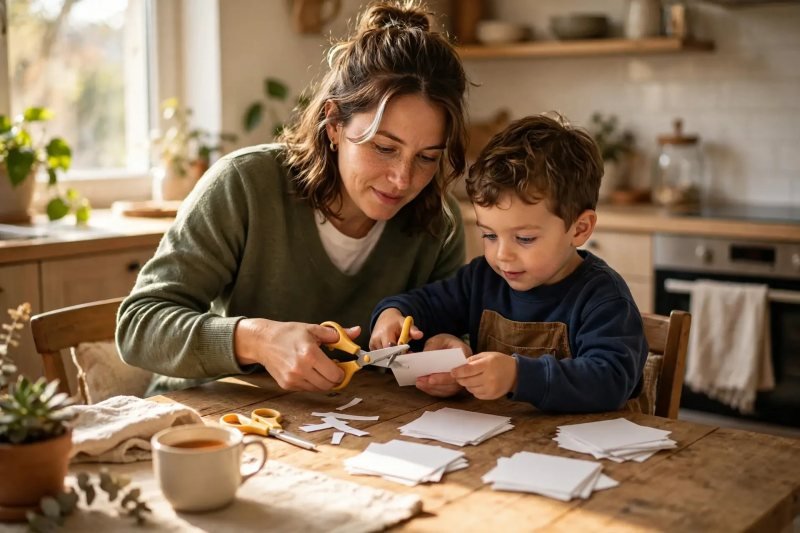
Build the 100-card deck in frequency order. The Fry first 100 sight words are the 100 most frequent words in written English, ranked by how often they appear, from the "Fry Instant Word List" created by reading researcher Edward B. Fry — the first 100 account for roughly half of all the text in typical books, newspapers, and websites, which is why teachers love them. Sit down together and make the cards before any learning starts — kids value what they help build. Write each word once, big and lowercase, in the exact order of the set list at the end of this step. Don't shuffle them. The frequency order is the teaching plan: the most useful words come first, so every new set unlocks more reading than the last. Pencil the rank number on the back of each card (1 for the, 100 for part). Sort into the four sets of 25 — the Fry 25s — because 25 is a finish line a four-year-old can actually believe in. Rubber-band each set, and show your child only set 1: "These are the 25 most-used words in the whole English language. You're going to learn all 25." Set 1, words 1–25, runs: the, of, and, a, to, in, is, you, that, it, he, was, for, on, are, as, with, his, they, I, at, be, this, have, from.
-
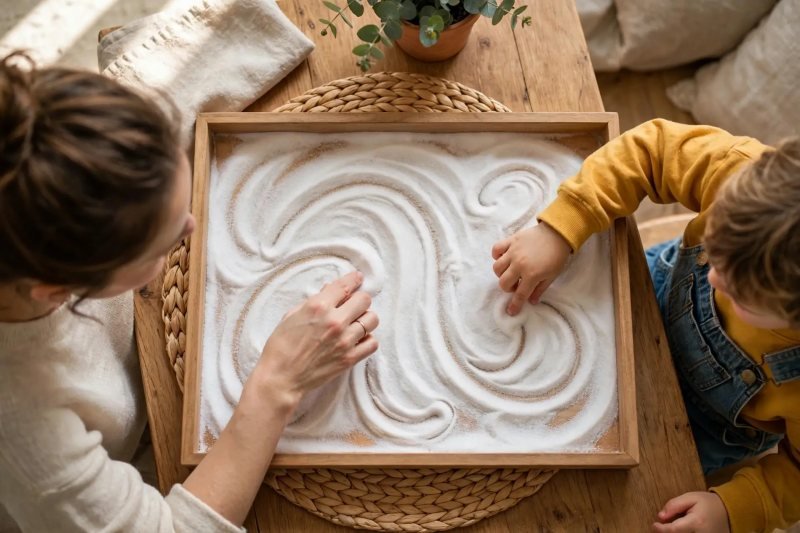
Teach set 1 three to five words at a time. Start with the first 3–5 cards of set 1 (the, of, and, a, to). For each word, run the same 30-second routine: see it (hold up the card), say it (both of you say it), spell it (say the letter names together), trace it (your child traces the word in the salt tray or in the air with a big finger). Then flip through the words you've introduced, mixing old and new. Add 2–3 new words each session, never more than 5. When your child reads a word instantly — no sounding out, no hesitation — move it to the "know it" pile. Sessions end when the timer rings, even mid-card: quitting while it's fun is the whole trick. Set 2, words 26–50, runs: or, one, had, by, words, but, not, what, all, were, we, when, your, can, said, there, use, an, each, which, she, do, how, their, if.
-
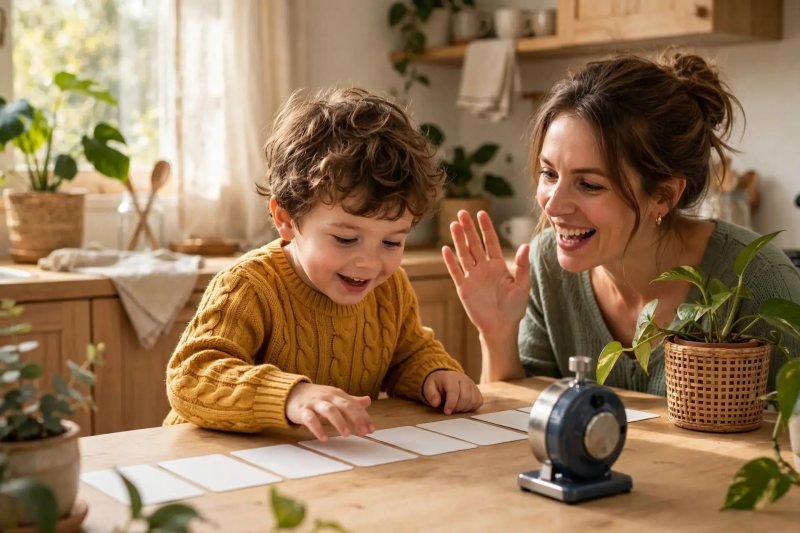
Play Beat Your Time with the current set. Lay the current set's cards face up in a row. Start the timer and have your child read straight down the row — no racing you, just racing yesterday's time. Time it, cheer, and write the time on a scrap of paper. Do it again tomorrow. Four-year-olds love watching their own number shrink, and the repetition is massive practice disguised as a race. Stop while the times are still improving or the giggles are still going — whichever comes first.
-
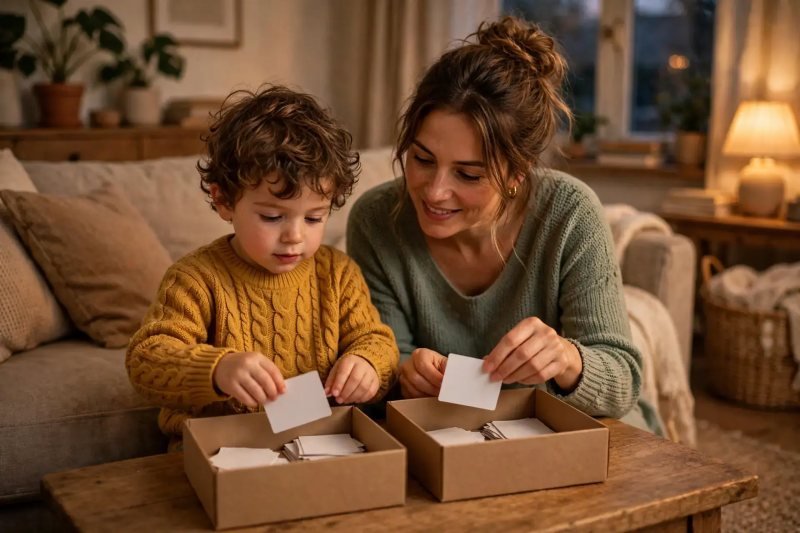
Run the 5-minute nightly review loop. Every evening, same routine: fan through the current set's cards. Sort each into two piles — "know it" (instant, confident read) and "learning" (any hesitation). Tomorrow, review only the "learning" pile plus the last few cards added, then give the "know it" pile a fast celebratory run. Words graduate from "learning" to "know it"; nothing graduates back. This sorting ritual takes two minutes and it teaches your child something powerful: their pile of known words grows every single week. Set 3, words 51–75, runs: will, up, other, about, out, many, then, them, these, so, some, her, would, make, like, him, into, time, has, look, two, more, write, go, see.
-
Finish set 1, then open set 2 — and play Word Ladder Climb. Master set 1 completely (every card lands in "know it" on two different days) before set 2 comes out of hiding. When you introduce set 2, keep reviewing set 1's trickiest few in the nightly loop. For set 2, add the Word Ladder Climb: draw a ladder with 25 rungs on paper (or tape 25 rungs on a low wall) and slide a small toy or sticker up one rung for every set-2 word your child reads. The toy climbs as the words are learned — by rung 25, the set is done. The visual of the ladder half-climbed is pure motivation. Set 4, words 76–100, runs: number, no, way, could, people, my, than, first, water, been, called, who, am, its, now, find, long, down, day, did, get, come, made, may, part.

-
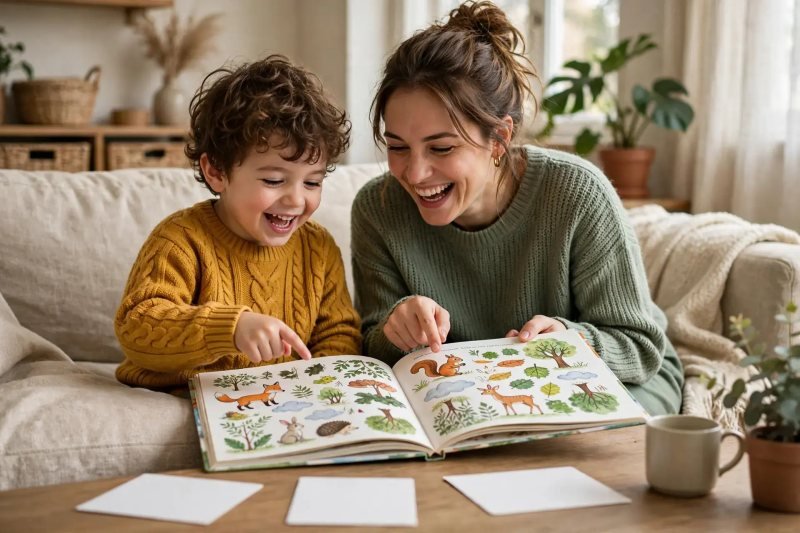
Celebrate 50 — read the words inside a real book. At the halfway point, stop for a party. Pull a favorite picture book and read it together, with your child pointing at every word they recognize. With 50 Fry words under their belt, they'll be pointing constantly. Let them read the words they know and you read the rest. This is the moment the list stops being "practice" and becomes reading — don't rush past it. Take a photo, put a sticker on the calendar, mark the halfway point loudly.
-
Take set 3 on the road with the Pocket Word Walk. By set 3, short practice can happen anywhere. Slip 5–6 current cards in your pocket (or your child's) and head out for a walk. Every block or so, pull out a card: your child reads it to "unlock" the next stretch of the walk. Read it wrong? The word goes back in the pocket for later, no drama. Grandma's house, the park, the grocery line — five stolen minutes of practice count exactly the same as five minutes at the table, and kids who wiggle find the walking version easier.

-
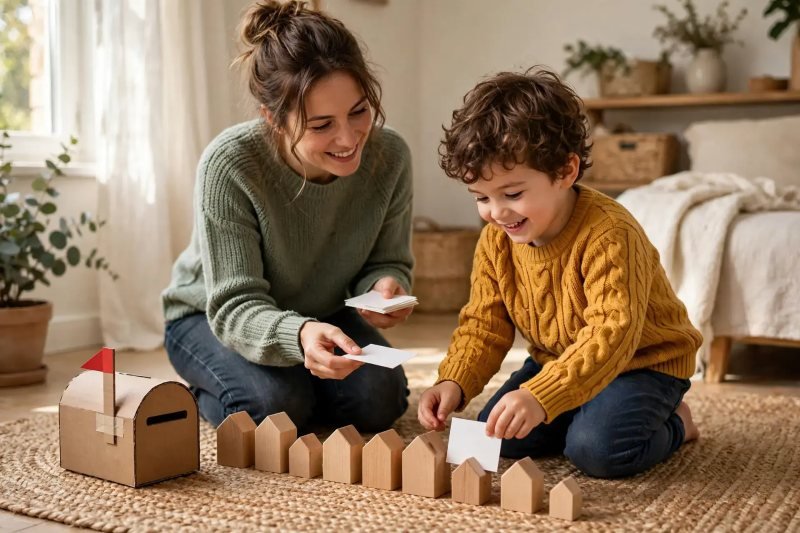
Deliver set 4 with Mailbox Words. Set 4 deserves a fresh game. Set up a toy mailbox (or shoebox with a slot) and three or four "addresses" — toy houses, labeled corners of the room, or cushions. You're the mail carrier: hand your child a card, and they must read it aloud before delivering it to the address you call out. Read it right, the letter gets delivered. A wrong read means the letter "gets returned" to the mailbox for another try later. The pretend-play layer makes this one the favorite — kids will beg to play post office long after the session should end, and every delivery is another read.
-
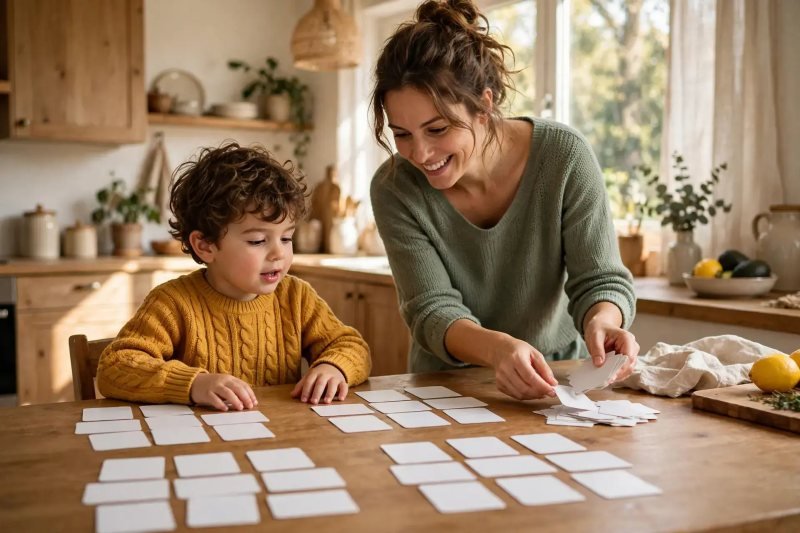
Lock all four sets in with the weekly review. Once all 100 are learned, the job isn't quite done — it's about keeping them. Once a week (Sunday works well), spread all 100 cards face up in their four sets. Your child reads them in order while you cook dinner or fold laundry. Pull any wobbly ones into a small "refresh" set and play Beat Your Time with just those for two minutes a day until they're smooth again. Most kids need this weekly sweep for a month or two, then the words are simply theirs. Expect a few set-1 words to have gone rusty by set 4 — that's normal memory behavior, not failure.
-
Read books packed with the Fry 100, then look ahead. Now the fun part: point your child at books where their new words do the heavy lifting. Any early reader or simple picture book is a Fry-word minefield — they'll be spotting the, and, you, that, with on every page. Read together, let them read every word they know, and you carry the rest. When all 100 read instantly and show up in books, the Fry list has a second hundred waiting — but there's no hurry. A four-year-old who truly owns the first 100 has the single most useful reading tool there is.



Make it easier
Cut to 10 cards, not 25. If set 1 feels huge, treat the first 10 words (the through it) as the set. Finish those, celebrate, then add the next 10. Drop the timer for a while. If timed games create pressure, run the same games untimed for a week or two. The routine matters more than the stopwatch. Let your child deal the cards. Kids who resist "being taught" will happily play if they're in charge of flipping, sorting, and delivering. Go back a set without shame. If set 2 wobbles, re-run the set-1 nightly loop for a week. Frequency order means set 1 words are the most important anyway.
Make it harder
Speed rounds: once a set is known, race Beat Your Time with all 25 cards at once instead of a few. Write the words: copy the current set's words with a chunky pencil — writing cements what reading started. Silly sentences: pick three mastered words and build the silliest sentence possible using all three. Read it in a monster voice. Spot them in the wild: during bedtime stories, your child taps the page every time they see a current-set word. Keep a running score.
Other ways to play it
- Outdoor edition: tape the current set's cards along a fence and read them on a walk-by; Word Ladder Climb becomes chalk rungs on the driveway.
- Car edition: keep the current set in the glove box — red-light reading at every stop.
- Sibling edition: an older brother or sister runs Mailbox Words as the postmaster. They practice too, whether they know it or not.
- Stuffed-animal edition: line up plush toys as the "students" and let your child teach them the cards — teaching is the deepest practice there is.
How it changes by age
- Young fours: start with the first 10–15 words only (the through as), three new words a week, five-minute sessions. Games stay untimed.
- Older fours (nearly five): the full four-set plan fits well — up to five new words a session, ten-minute sessions, timed games included.
- Reading-ready signs: knows most letter names, shows interest in print, sits through a whole picture book. If those aren't there yet, keep reading aloud daily and start the list later — a story-soaked child learns these words faster when they're ready.
- Not there yet? Skip the list entirely for now. Daily read-alouds and letter play build more skill than cards ever will.
What they're learning
High-frequency word recognition: these 100 words appear in roughly half of everyday written English, so learning them unlocks a huge share of real reading. Reading fluency: instant word recognition frees a child's brain to focus on meaning instead of decoding. Sequencing and goal-setting: four clear sets teach the satisfying pattern of start, work, finish, celebrate. Self-monitoring: the "know it" vs "learning" sort trains children to notice what they actually know. Letter-sound grounding: the spell-it-and-trace-it routine connects each word's letters to its shape and name.
Clearing up
The Fry list is not a phonics replacement. Many of these words follow normal letter patterns, but the list works best alongside sounding-out practice, not instead of it. Don't teach all 100 at once. The four sets exist so a child masters the most useful words first. Skipping to set 4 "for a challenge" backfires. Forgetting between sets is normal. Words learned in set 1 often wobble by set 3 — that's why the weekly review exists. Re-learning is faster than learning. Speed is not the goal; instant recognition is. A fast timer is a game, not a test. If timing creates tears, drop it and keep the words. Not every four-year-old is ready. The Fry first 100 is a first-grade benchmark, so a four-year-old working through it is ahead of the curve, not behind it. Follow your child's lead.
Questions parents ask
What is the Fry sight words list?
What are the first 25 Fry sight words in order?
How should I teach the Fry first 100 to a 4-year-old?
How long does it take to learn all 100 Fry words?
What comes after the Fry first 100?
Fry words or Dolch words — which should I start with?
The Fry first 100 is presented here in its standard published frequency order, grouped in the classic four sets of 25. Small variants of this list circulate online (for example, "word" vs "words" at position 30) — the version here follows the most widely published order. If your child already knows some of these words from another list (like Dolch), don't start over: test them on set 1, skip what they read instantly, and pick up where the hesitation starts.
Keep going: our sight word games bank has more games once these four are played out; first 10 sight words for preschool is the gentler on-ramp if set 1 feels big; sight words for pre-k and sight words for kindergarten carry the list into school; and the preschool sight words list and kindergarten sight words list are the wider lists to compare against.

save it for later
Pin this for the next rainy afternoon
Keep it on a board so it is there when you need it, rather than when you happened to find it.
Save to Pinterest


