


Rhyming Words for Preschoolers: 60 Simple Pairs With Pictures to Practice
60 rhyming words for preschoolers in 10 word families — bat–sat, cake–bake, sheep–sleep — plus rhyme-detective sorting and odd-one-out games for ages 3–4.
Rhyming words for preschoolers are best learned in word families — groups like bat–sat–mat that share an ending sound. This guide gives 60 pairs across 10 families (-at, -og, -un, -ake, -ight, -ig, -ot, -an, -eep, -ack), plus four detective games: finish the rhyme, rhyme sorting, odd one out, and silly swaps. Start with one family and add more as the patterns click.

The short version
- 60 rhyming pairs for ages 3–4, organized into 10 word families by shared ending sound.
- Start with one family (-at is ideal); add a new one when the old pairs feel easy.
- Finish the rhyme ("I say bat, you say…?") is the gentlest step up from echoing.
- Sorting and odd-one-out games ask preschoolers to judge sounds — harder, and more powerful, than chanting.
- Silly swaps prove a child hears the sound pattern separately from a word's meaning.
- Short sessions: two families and one game is plenty. Stop while it's still fun.
- Age
- Ages 3–4
- Prep
- 5 min
- Play time
- 20 min
- Mess
- None
- Difficulty
- Easy
- Where
- Both
Why kids love this
Rhyming words for preschoolers work best in word families — groups sharing an ending sound, like bat–sat–mat. At three and four, children are ready for more than chanting: sorting rhymes, catching the odd one out, finishing your sentences. Here are 60 pairs in ten families, plus four rhyme-detective games.
Preschoolers love being right, and rhymes hand them wins on a loop: once bat and sat "match," every new pair feels like cracking a case. Sorting keeps little hands busy, silly sentences invite ridiculousness, and finishing your rhyme lets them beat you to the answer.
What you'll need
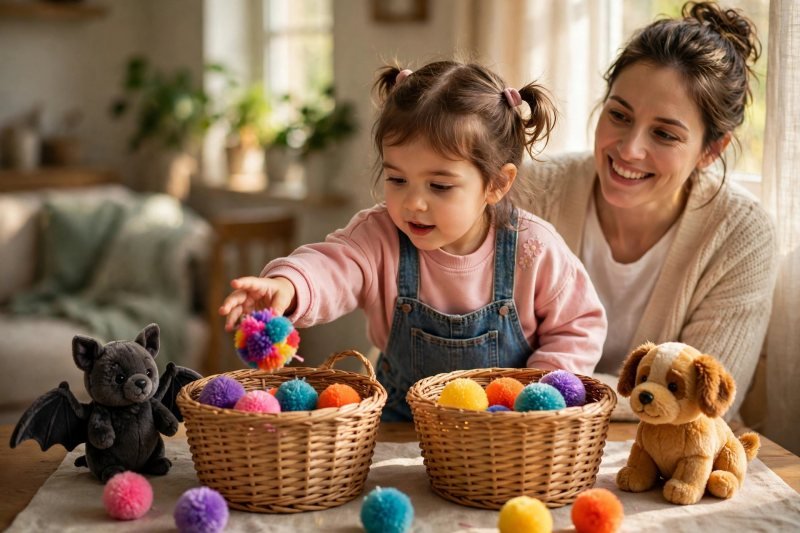
- 2 baskets, bowls, or boxes for the sorting game
- A toy magnifying glass (optional, for the detective theme)
- 6–8 small objects or picture cards matching your first pairs
Before you start
1. Pick one family — -at is the classic opener (bat, sat, mat, pat, rat, flat). 2. Set two baskets side by side. 3. Lay out 4–6 objects or cards matching your pairs (optional). 4. Skim the four games below so the session flows.
How to do it
-
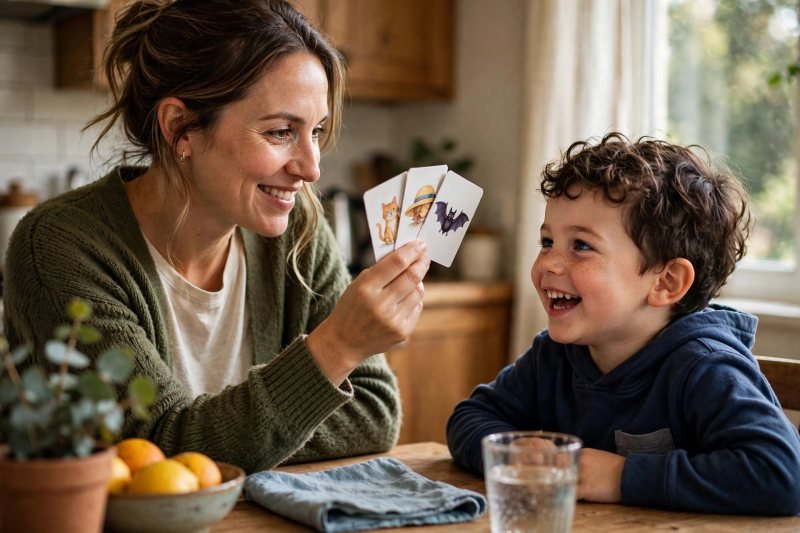
Start with the -at family. Say the six pairs slowly, stretching each ending: "bat… sat. rat… pat. mat… flat. chat… splat. hat… that. scat… brat." Echo them together.
-
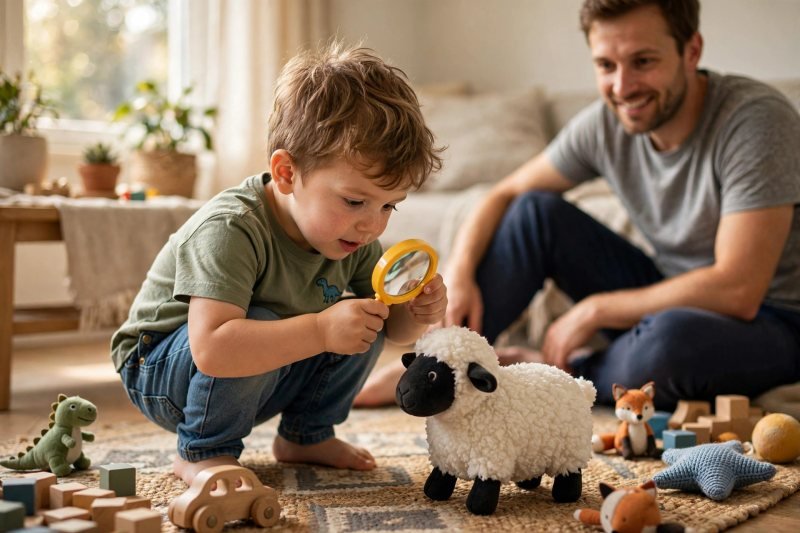
Make your child a rhyme detective. Hand over a magnifying glass — real or imaginary: "Detectives listen for words that match at the end. Bat and sat — match!"

-
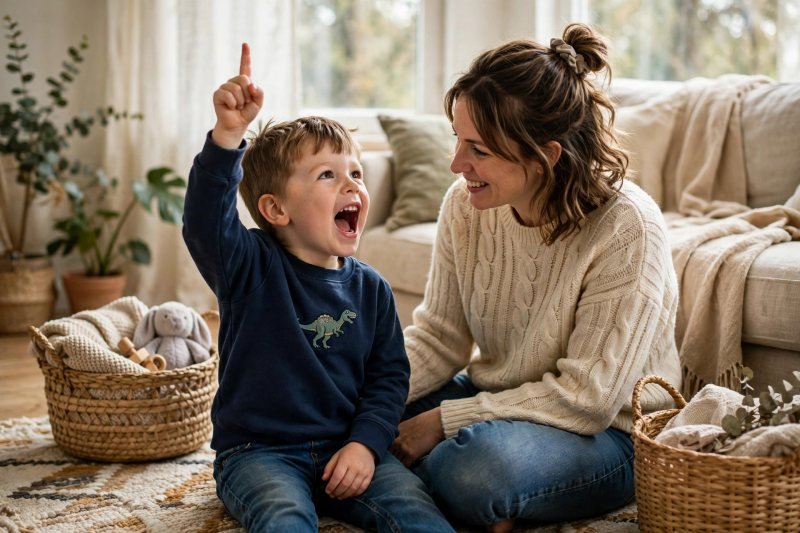
Play finish the rhyme. Say the first word and pause: "I say bat, you say…?" Wait five full seconds, then celebrate the "sat."
-
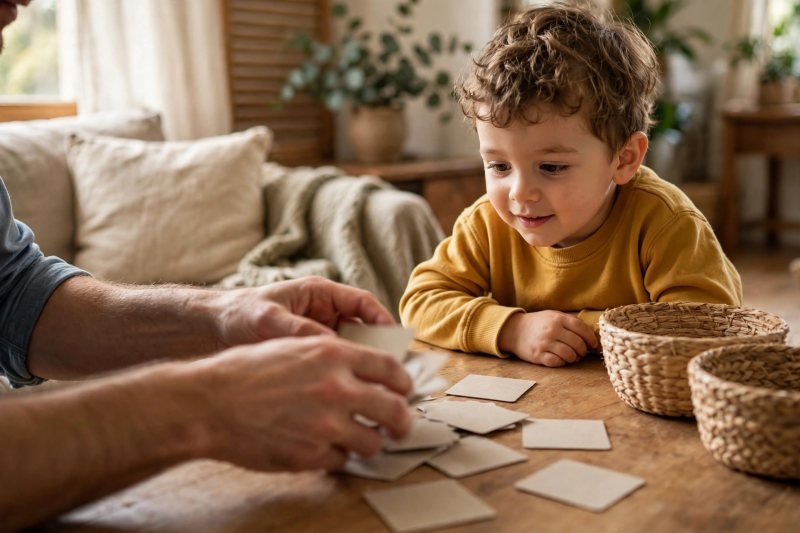
Add a second family and mix them up. Add -og (log–hog, fog–jog, bog–cog, clog–smog, frog–bog, dog–log), calling pairs from both families.
-
Sort the rhymes into baskets. A toy bat marks one basket, a toy dog the other. Say "fog!" — your child drops a pom-pom in the matching basket.
-
Play odd one out. Say three words, two that rhyme and one that doesn't: "bat, sat… DOG!" Your detective catches the impostor.

-
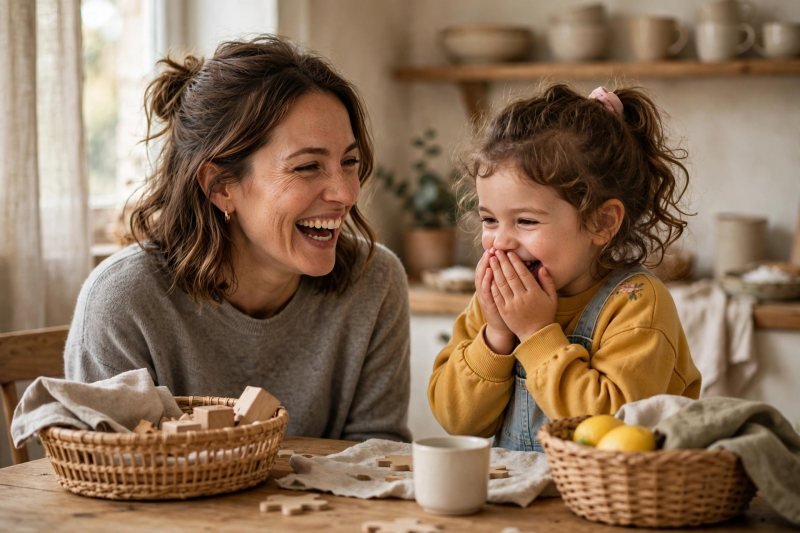
Play silly rhyme swaps. Put a pair in a sentence, then swap in a new rhyme to break it: "The rat sat on the mat" becomes "The rat sat on the… BRAT?!"
-
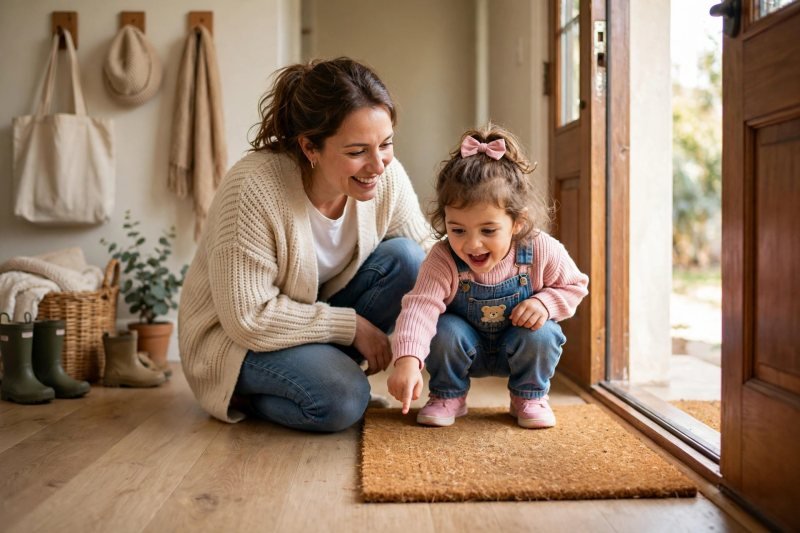
Go on a rhyme hunt. Walk the house finding real things that match your families: the mat by the door (mat–flat!), the family dog (dog–log!).
-
Try a mystery family. Reveal a single pair from a new family — "sheep–sleep" — and ask: "What else rhymes with sheep?" Let them guess (beep! jeep! keep!).
-
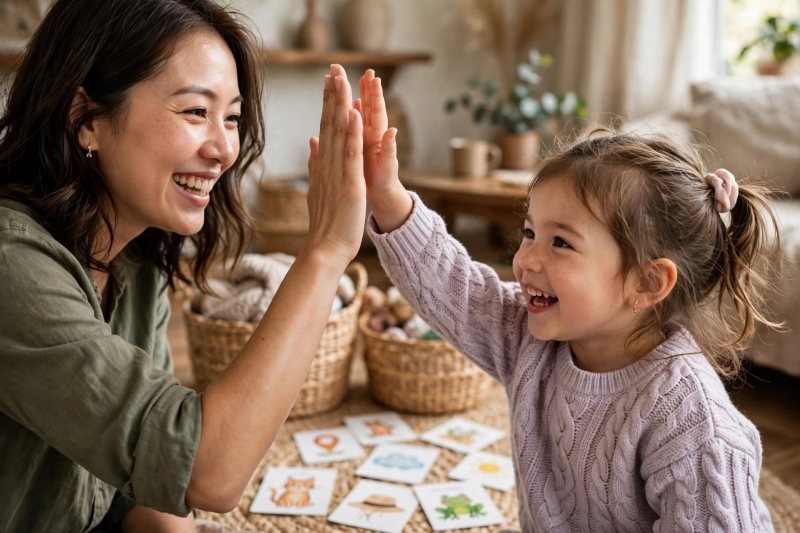
Close with a detective's report. "Which family was your favorite? Say all six pairs!" End while it's fun.


Make it easier
Play voice-only — no baskets, no cards, just talking. Stay in one family for a week; six deeply learned pairs beat sixty rushed ones. If the pause feels too long, feed the first sound: "bat… sss…" The sung versions of these pairs live in our nursery rhymes for toddlers collection for younger siblings.
Make it harder
Sort three families instead of two. Let your preschooler lead — they call the words, you sort, and you "make mistakes" for them to catch. Invite invented pairs: "What else rhymes with cake?" Nonsense counts — "zake" proves they own the pattern. Try near-miss impostors: "bat, sat, pat" is easy; "bat, sat, BAD" is a real workout.
Other ways to play it
- Sidewalk chalk families: draw a circle per family on the driveway; your child hops into the right one per word.
- Detective kit: a magnifying glass, notepad, and folded "case file" make it official.
- Car game: finish the rhyme needs only voices — perfect for traffic.
- Rhyme relay: at the park, you say a word and your child calls back its partner before the next swing push.
- Two families and one game is a full session.
- Follow their lead — five days of -ake is mastery, not stuckness.
- Rhyming lives in every language — play along in yours too.
- When sounding out begins, the CVC words list shows the first words children decode once these ending sounds click.
How it changes by age
- Younger threes (36–42 months): Steps 1–3, one family at a time. Echoing with pauses for fill-ins is exactly right.
- Older threes to fours (42–54 months): add sorting and odd one out. Most fours can run the silly swaps themselves.
What they're learning
Phonemic awareness: hearing bat–sat–mat share an ending underpins sounding out words — try phonics activities for preschoolers next. Working memory: sorting and odd one out ask children to hold and compare sounds in mind. Vocabulary: sixty pairs sneak in flan, smog, and knight. Word families for kindergarten extend the same family pattern with more endings — see Word families for kindergarten. Flexible thinking: silly swaps show a word's sound and meaning can be played with separately.
Clearing up
Baskets back on the shelf, toys back in the box. Nothing to wipe, nothing to wash.
Questions parents ask
What are good rhyming words for preschoolers?
How is rhyming practice different for preschoolers than toddlers?
How do you play odd one out with rhyming words?
What is a word family?
What if my preschooler can't hear rhymes yet?
Short, concrete words grouped by shared endings — word families that teach patterns, not just single pairs. Master one family before adding the next.
The -at family: bat – sat; rat – pat; mat – flat; chat – splat; hat – that; scat – brat.
The -og family: log – hog; fog – jog; bog – cog; clog – smog; frog – bog; dog – log.
The -un family: bun – spun; pun – stun; gun – run; nun – sun; begun – shun; spun – stun.
The -ake family: cake – bake; lake – rake; make – take; shake – flake; snake – wake; rake – flake.
The -ight family: bright – flight; fight – might; right – tight; night – fright; sight – light; knight – right.
The -ig family: big – dig; fig – jig; pig – rig; gig – twig; wig – pig; jig – dig.
The -ot family: hot – dot; not – plot; tot – robot; spot – knot; cot – got; rot – lot.
The -an family: man – van; ran – plan; tan – fan; bran – flan; clan – scan; ban – van.
The -eep family: sheep – sleep; beep – jeep; keep – peep; deep – creep; weep – leap; sleep – beep.
The -ack family: back – sack; black – snack; track – crack; pack – smack; quack – jack; stack – tack.
How is this different from rhyming with toddlers? Toddlers chant and echo — "cat–hat!" on repeat — because at two, hearing the shared sound is the whole job. Preschoolers go further: holding patterns in mind, judging sounds, playing with meaning. Still mostly echoing? Stay with Steps 1–3; our rhyming words for toddlers is a gentler on-ramp, and how to teach rhyming to preschoolers covers the full method.

save it for later
Pin this for the next rainy afternoon
Keep it on a board so it is there when you need it, rather than when you happened to find it.
Save to Pinterest


