


Rhyming Words Worksheet Pack: 10 Printables for Ages 4–5
A rhyming words worksheet pack with ten no-prep printables for ages 4–5: match-a-rhyme, odd one out, color-by-rhyme, bingo, and cut-and-sort.
A rhyming words worksheet works best one short sheet at a time: sit with your 4- or 5-year-old, name every picture aloud together with a little extra punch on the ending sounds, then let them match, circle, color, or cut the rhyming pairs. Ten to fifteen minutes per sheet is plenty. This pack's ten sheets run from simple match-the-rhyme lines through odd-one-out, color-by-rhyme, bingo, and cut-and-sort mats, so the listening skill grows with the stack.

The short version
- Ten printable sheets training one skill: hearing which words rhyme.
- Every sheet is picture-based — no reading required.
- Work in order, one sheet per sitting, 10–15 minutes each.
- Always name the pictures aloud first: rhyming is a listening skill.
- Sheets 4 and 10 need scissors and glue; the rest need only crayons and dot markers.
- Age
- Ages 4–5
- Prep
- 5 min
- Play time
- 15 min
- Mess
- None
- Difficulty
- Easy
- Where
- Indoor
Why kids love this
Rhyming feels like a secret code to a four-year-old, and these sheets let them crack it with a crayon in hand. Nothing here is a sit-still page: kids draw swooping lines between rhyming pictures, hunt for the one picture that does not belong, stamp dot markers, and cut picture cards into piles like a tiny shopkeeper. Every sheet is picture-based, so no reading is required — the skill being tested is listening. Sheet 6 is bingo, Sheets 4 and 10 use real scissors and glue, and Sheet 5 asks them to draw, so the pack never settles into one motion for long.
What you'll need
- The 10 printable PDFs described below (typeset and attached to this article at publish time)
- A printer and plain paper (print Sheets 4 and 10 on card stock — they get cut up and handled a lot)
- Crayons or washable markers
- Safety scissors and a glue stick (Sheets 4 and 10)
- Dot markers or round stickers (Sheet 7)
- Small counters for bingo — dried beans, large buttons, or coins (Sheet 6)
Before you start
1. Print each sheet single-sided so coloring never bleeds through to the next page. 2. For Sheets 4 and 10, print on card stock and keep the scissors and glue stick handy. 3. Set out crayons, dot markers, and the bingo counters in small cups — one tidy row of supplies keeps the table inviting. 4. Plan on one sheet per sitting. The pack works in order, so keep the stack clipped or in a folder with Sheet 1 on top.
How to do it
-
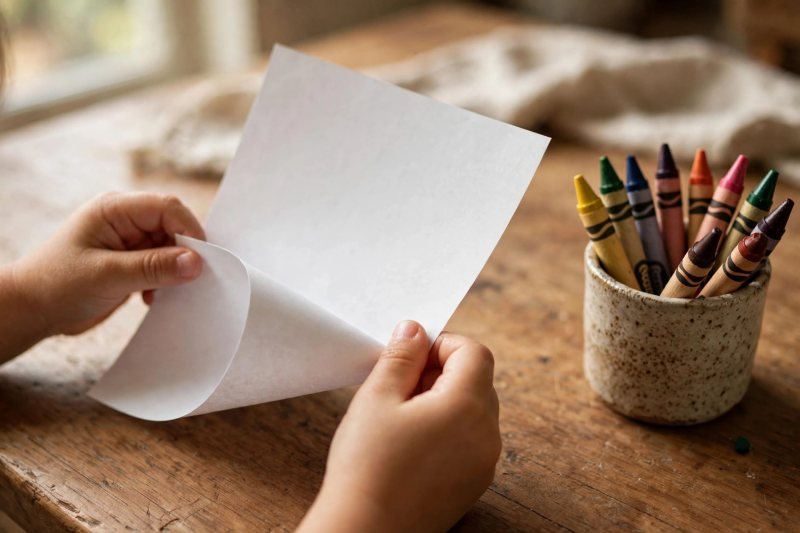
Set up your rhyme table. Work through the pack in order, one sheet per sitting; before your child marks anything, name every picture on the page together out loud — slowly, with a little extra punch on the ending sound: "caaat… haaat." Rhyming is heard, not read, so your voice does the real teaching. Lay Sheet 1 face-down with a small cup of crayons beside it and let your child flip it over like a big reveal. State the mission in one sentence: "We are going to find the words that sound the same at the end." Ten to fifteen minutes per sheet is plenty — stop while it is still fun.
-
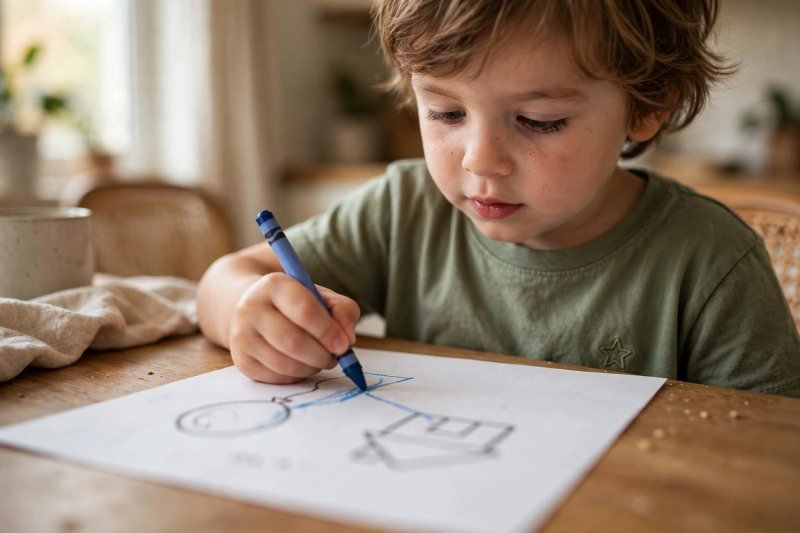
Sheet 1 — Match-a-Rhyme. Two columns of pictures. Name each picture together, then your child draws a line from each picture on the left to its rhyming partner on the right. Start with easy pairs (cat/hat, dog/frog), saying each pair aloud as the line gets drawn.
-
Sheet 2 — Circle the Odd One Out. Each row shows four pictures: three rhyme, one is the sneaky intruder. Your child names all four, then circles the one that does not belong — "three of these are rhyme friends; find the one crashing the party."

-
Sheet 3 — Color-by-Rhyme. Pictures that rhyme share the same color, and your child chooses which color belongs to which rhyme family. A purple cat and purple hat are a perfect answer as long as the rhymes match.

-
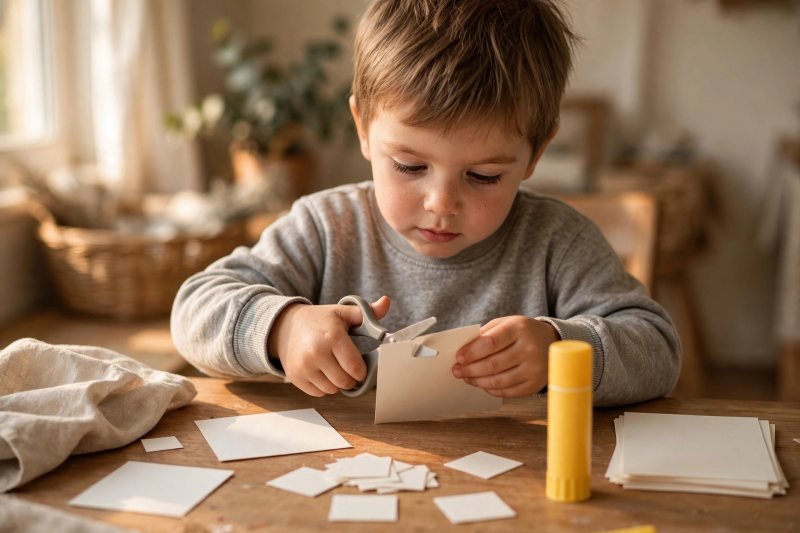
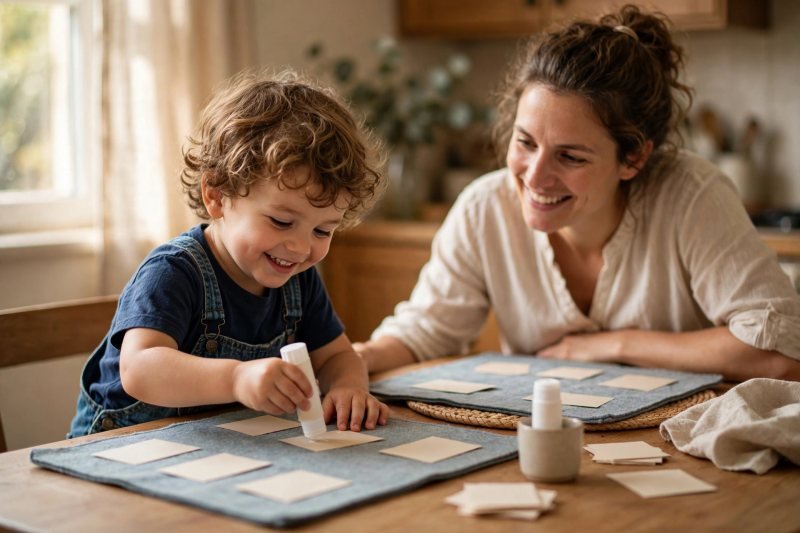
Sheet 4 — Cut-and-Sort Rhyme Pairs. Cut the picture cards along the thick lines (cut the first one together), then glue each card under its rhyming anchor. Keep the loose pile small — three or four cards at a time.
-
Sheet 5 — Draw-the-Rhyme Boxes. Each box shows one picture with an empty box beside it. Your child draws the rhyming partner: next to the bee, a tree; next to the cake, a snake. Wobbly drawings are perfect — the rhyme is the point, not the art.

-
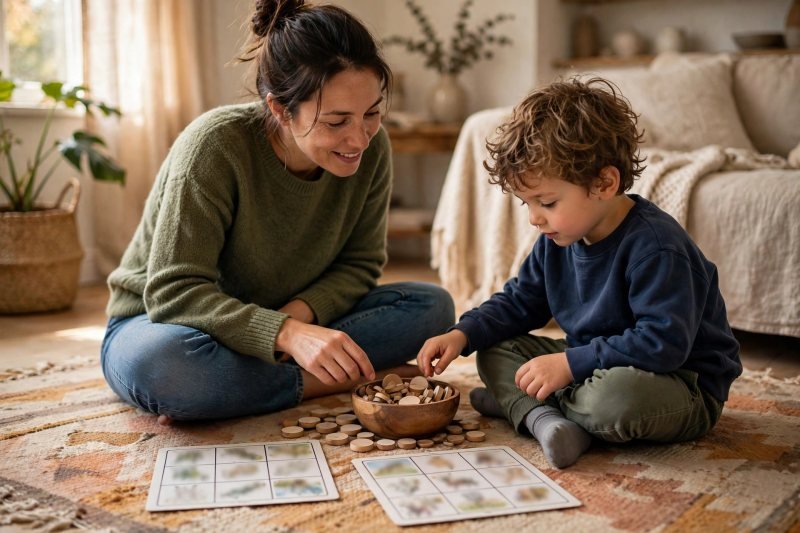
Sheet 6 — Rhyme Bingo. Slide a bingo card to each player (yes, you play too) and put a cup of counters between you. Call words slowly — "baaat" — and players cover the picture that rhymes with it. First full row wins; two games back-to-back is the sweet spot.
-
Sheet 7 — Dot-the-Rhyme. A big star picture sits at the top. Your child stamps a dot marker on every picture below that rhymes with it, skipping the ones that do not.

-
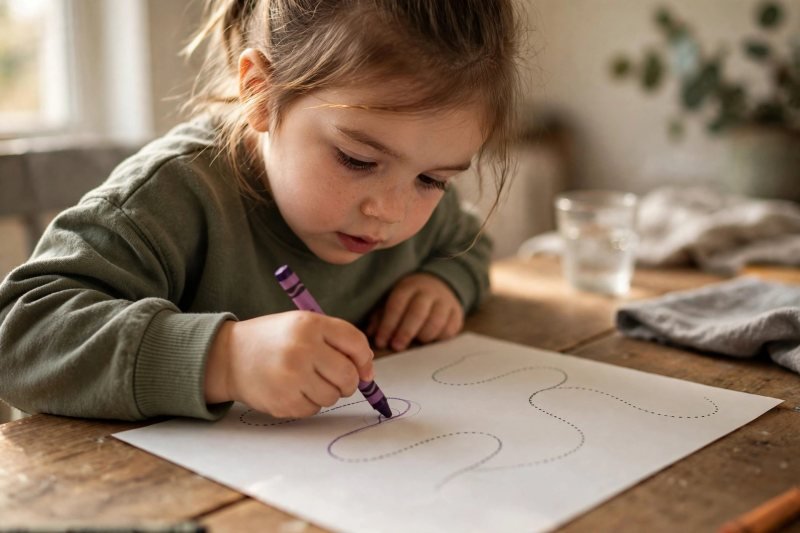
Sheet 8 — Trace-and-Match. Dotted winding paths connect pictures to their rhyming partners. Your child traces each path with a crayon, then says the pair out loud — fine-motor practice and rhyme practice in one.
-
Sheets 9 and 10 — the victory lap. Sheet 9, Which One Rhymes?, shows one big picture with three choices underneath: circle the one that rhymes. Then Sheet 10, the Sort-It Mats: glue the cut picture cards onto the cat mat or the dog mat depending on which they rhyme with. Stack the finished pack in their folder — ten sheets is a real accomplishment.


Print it out
Make it easier
You do all the naming; your child only points, stamps, or circles. Fold the page in half and reveal just two pairs at a time. Let them answer with a sticker instead of a drawn circle — placing is easier than circling.
Make it harder
Your child must say the rhyme pair out loud before marking: "cat… hat. Yes, those rhyme." Ask "what else rhymes with…" after each sheet, and accept invented rhymes. Let your child be the bingo caller on Sheet 6 while you play the card.
Other ways to play it
- Slide the sheets into plastic sheet protectors and hand over dry-erase markers — the whole pack becomes reusable.
- Laminate the Sheet 6 bingo cards and play a round while waiting for food at a restaurant.
- Do the naming parts in your home language. Rhyme hearing transfers across languages, so a bilingual run doubles the value.
How it changes by age
- Ages 3–4: Sheets 1–3 only, with you naming every picture and your child pointing or stamping. Tracing and cutting can wait.
- Ages 4–5: the full pack in order, one or two sheets per sitting. Most children fly through Sheets 1–3 and slow down (in a good way) at the cutting and drawing sheets.
- Age 6 and up: a five-minute warm-up before writing or spelling practice — the listening workout still helps.
What they're learning
Phonemic awareness: hearing and matching ending sounds — the core skill this pack trains. Vocabulary: every sheet names pictures out loud, slipping in new words through play. Fine-motor control: tracing winding paths, cutting along lines, coloring inside shapes, placing stickers. Following multi-step directions: cut, then sort, then glue — in that order. Print awareness: left-to-right work, rows and columns, and the idea that marks on a page carry meaning.
Clearing up
Keep one sheet per sitting as the rule, two at the most. This is a ten-day pack, not a ten-minute workbook. Store finished sheets in a folder in order. Flipping back through old pages is excellent review — and children love watching the stack grow.
Questions parents ask
How do I use a rhyming words worksheet with a 4-year-old?
What if my child cannot hear the rhymes yet?
How many worksheets should a 4-year-old do in one sitting?
Do rhyming worksheets really help with reading?
What is the difference between this pack and your rhyming activities?
If your child cannot hear rhymes yet, warm up with our rhyming games for preschoolers first — listening games come before marking games, always. Prefer hands-on play to pencils? Our rhyming activities for preschoolers build the same skill with objects, movement, and zero worksheets. For the reasoning behind this sheet order, see how to teach rhyming to preschoolers.
When the pack is done, keep the rhyme habit going with rhyming books for preschoolers at bedtime, rhyming words for toddlers for younger siblings, and words that rhyme with cat for quick wordplay on the go.

save it for later
Pin this for the next rainy afternoon
Keep it on a board so it is there when you need it, rather than when you happened to find it.
Save to Pinterest


