


Blending Sounds: How 4-Year-Olds Learn to Read Their First Words
Blending sounds activities for 4-year-olds: a 10-step play session with robot talk, stretchy sounds, finger blending, and first CVC word reading. From robot talk to first words: a gentle 10-step progression that turns separate sounds into real reading.
Blending sounds means pushing individual speech sounds together to read a word — turning /c/ /a/ /t/ into "cat." This 10-step play session builds the skill in order: robot-talk guessing games with no letters, stretchy continuous blending, touch-and-say finger blending on printed word cards, then reading first CVC words. It's built for ages 4-5 and takes about 25-35 minutes using only household items.

The short version
- - Blending = pushing separate sounds together to read a word; it's the skill that turns sounding out into reading.
- - Teach it in order: oral blending games (no letters) -> stretchy continuous blending -> finger blending on printed words -> first CVC words.
- - Stretchy sounds (s, m, f, l) are the easiest to blend; start there before short punchy sounds.
- - The touch-and-say finger sweep keeps sounds in left-to-right order and stops backwards blending.
- - Keep sessions to 25-35 minutes and stop while it's fun — short playful practice beats long drills.
- Age
- Ages 4–5
- Prep
- 5 min
- Mess
- None
- Difficulty
- Easy
- Where
- Indoor
Why kids love this
No four-year-old wants a reading lesson, but every four-year-old wants to be a robot, a snake, and a detective in one afternoon. These blending sounds activities are disguised as exactly that: guessing silly robot words, stretching sounds like a snake, hopping across the floor, pulling surprises from a mystery bag. The reading sneaks in underneath.
What you'll need
- - 12 blank index cards and a thick marker (parent writes the word cards during prep)
- - 3 paper plates or colored floor spots
- - A drawstring bag with 4-5 small familiar objects: plush cat, toy sun, cup, hat, ball
- - One short picture book for the celebration read
Before you start
1. Write 8-10 three-letter words on the cards in big lowercase letters, one per card: *cat, hat, mat, sun, cup, dog, pig, bus, hen, box*. Keep them face-down until Step 5. 2. Lay the three floor spots in a row on a clear patch of rug; drop the small objects into the bag. 3. Practice your own sounds first — slow and clean, no extra "uh": /c/ (not "cuh"), /a/, /t/. Try the stretchy ones: sss, mmm, fff. Your child will copy exactly what you model. 4. Keep it play, not a test. Twenty-five focused minutes beats an hour of tired drilling.
How to do it
-
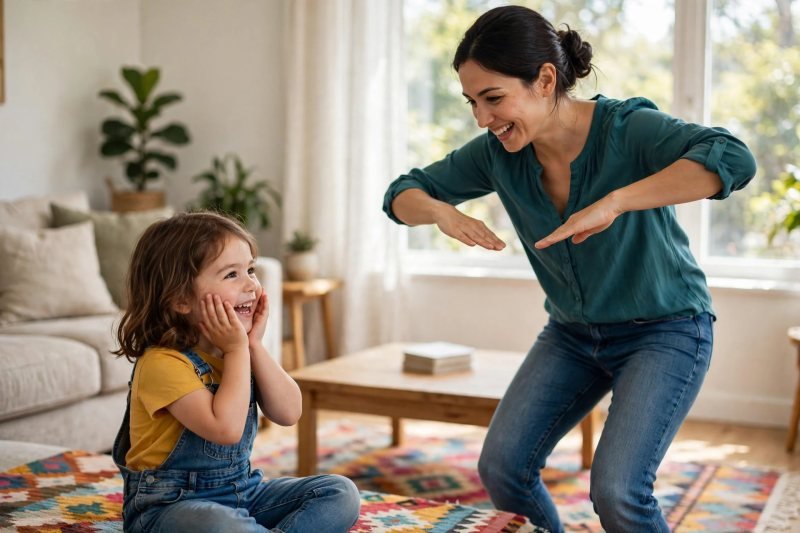
1. Talk like a robot: stiffen your arms and say "/c/ ... /a/ ... /t/" with big pauses, then blend it smoothly: "cat!" Do two or three yourself while your child listens and giggles.
-
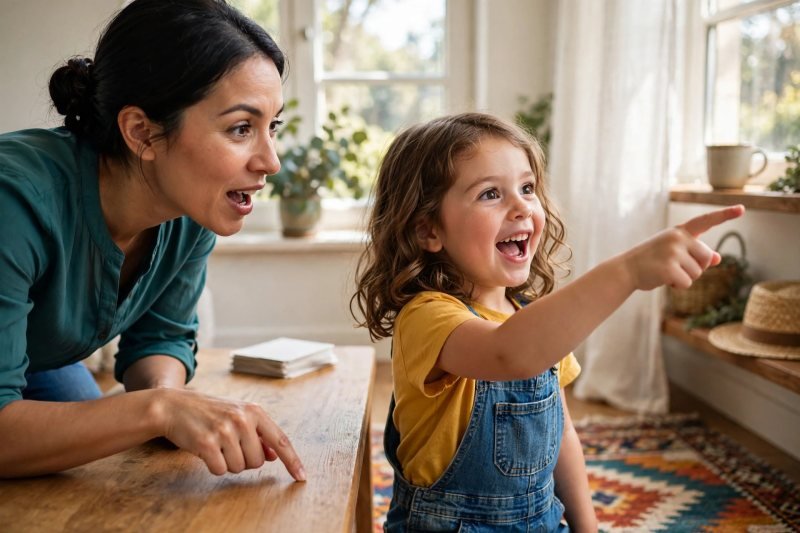
2. The robot-talk guessing game: say a word in slow, separate sounds — "/p/ ... /i/ ... /g/" — and let your child shout the word. Use things in the room (cup, hat, bus) so every guess wins. No letters yet — ears only.
-
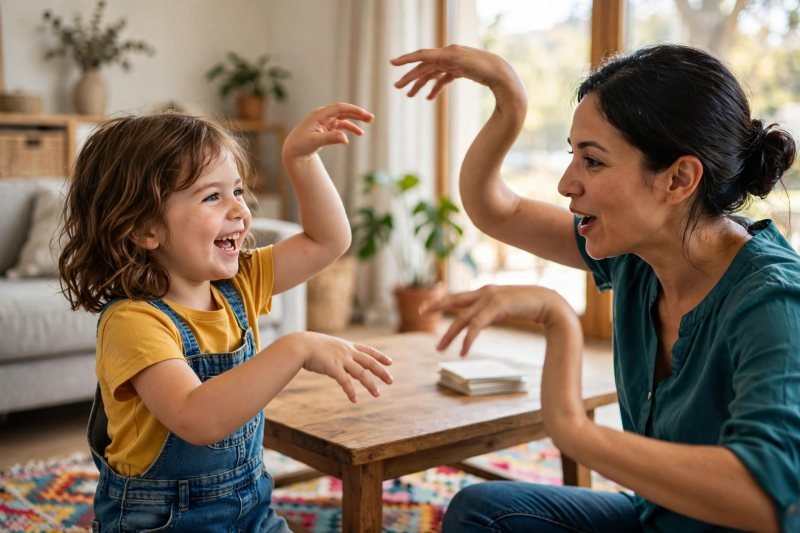
3. Stretch-the-snake blending: slither your arm while stretching "ssss" into "aaaa" into "t" — "sssaat" — then snap it into "sat!" Try *sun* and *mat* together.
-
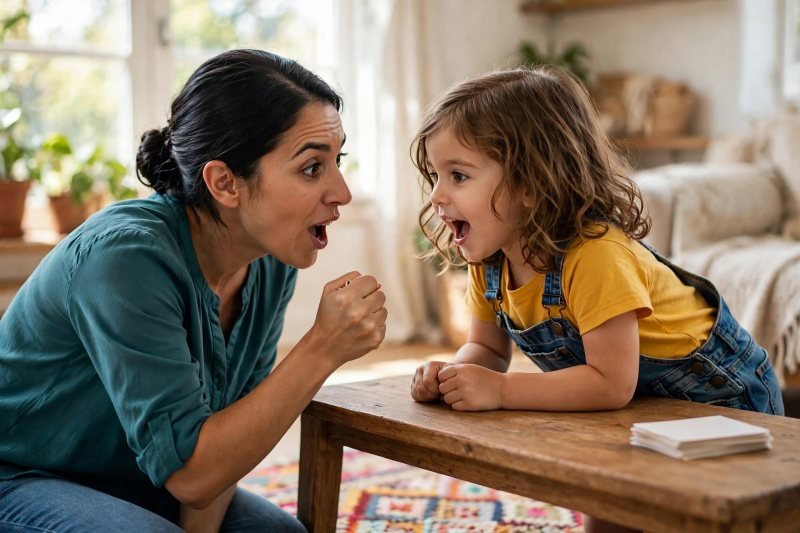
4. The stretch-guess mystery: stretch a mystery word slowly — "mmm-aaa-nnn" — while your child blends it (*man!*). Hide a small object in your fist, stretch its name, and let them guess before the reveal.
-
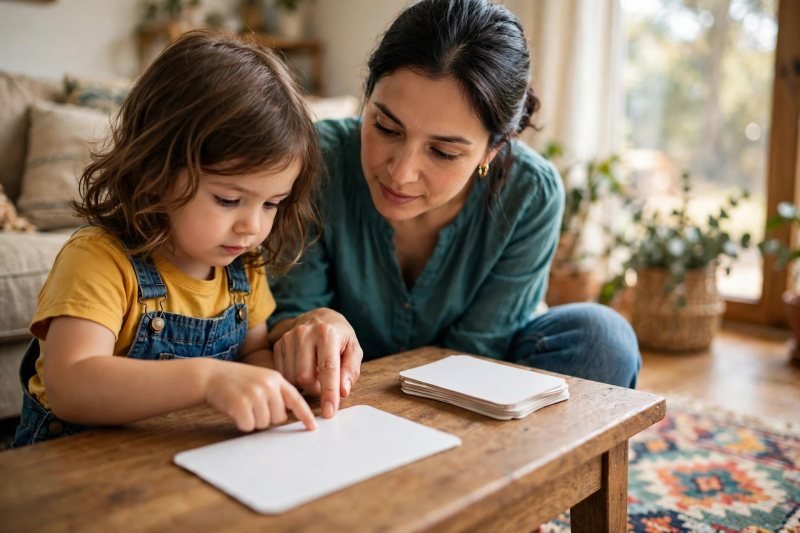
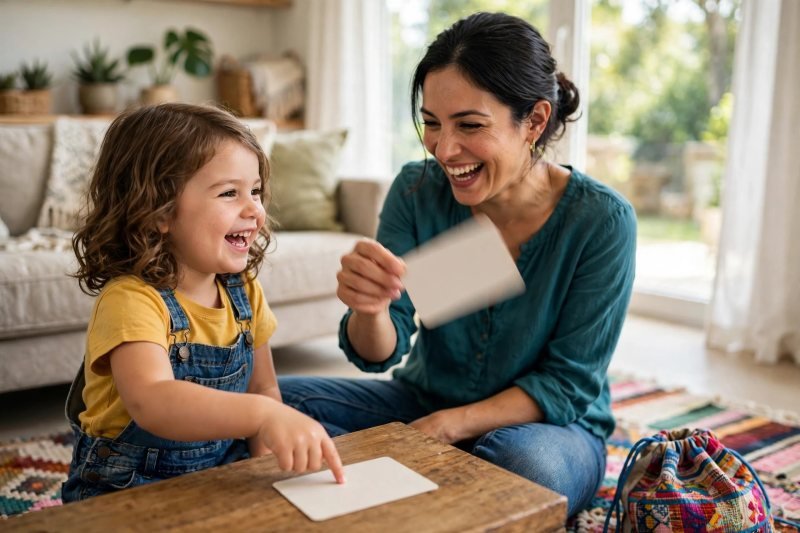
5. Touch-and-say finger blending: flip over one card — *cat*. Touch each letter left to right, saying its sound, then sweep under the whole word and say it fast. Guide their finger: tap, tap, tap, sweep — "cat!" Two or three cards is plenty.
-
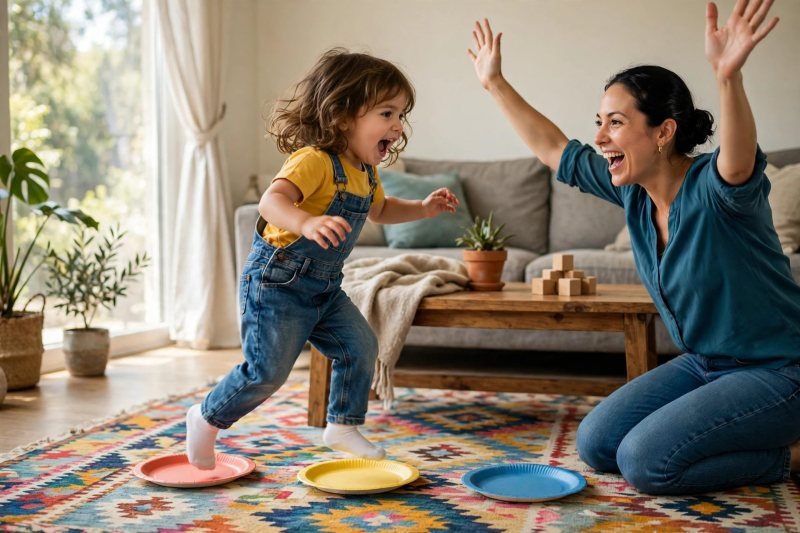
6. Blend-and-hop: say one sound per hop: /d/ ... /o/ ... /g/. Then hop the whole row in one slide while blending fast: "dog!" Take turns — big movements make blending stick.
-
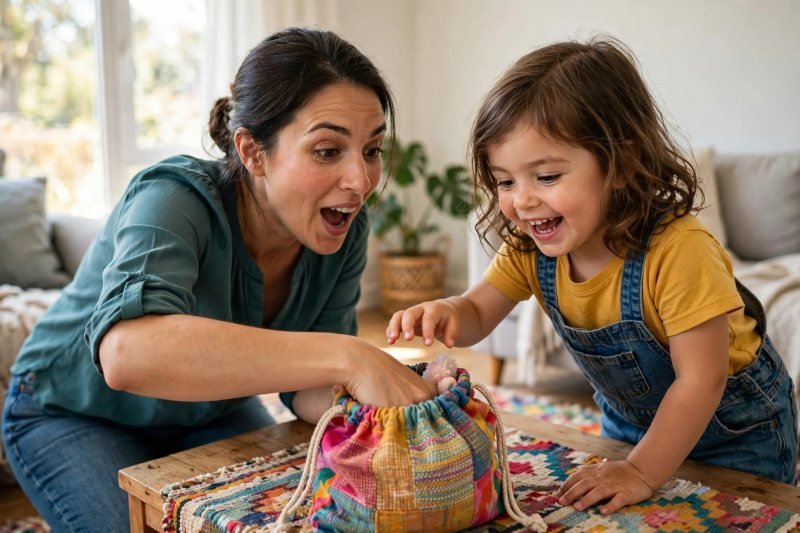
7. Mystery bag blending: pull an object from the bag unseen, stretch its name ("haaat"), and let your child blend it and claim the prize. Then swap roles. Four or five objects keeps it snappy.
-
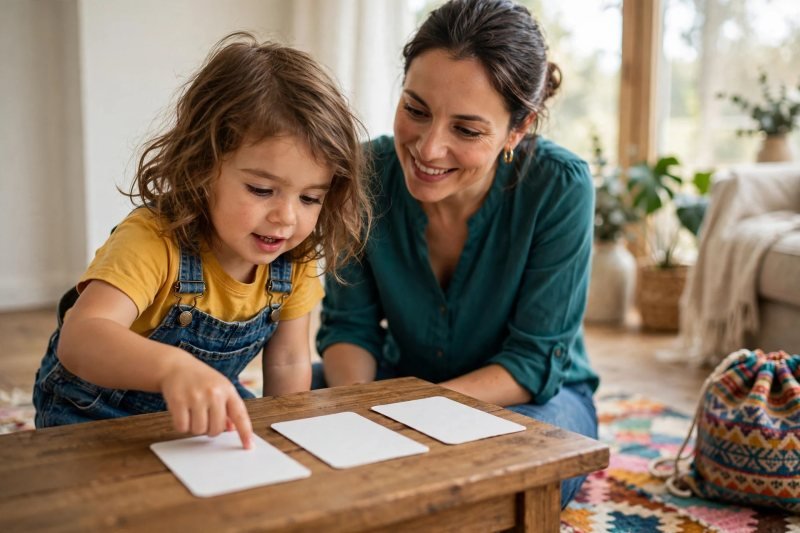
8. Read your first word cards: line up three cards face-up: *sun*, *cup*, *hat*. Using the touch-and-say finger move, your child reads each one — every sound gets touched. This is real reading, out loud.
-
9. The sound-swap game: keep *cat* on the table. "What if the first sound becomes /h/?" Touch-and-say together: *hat!* Try /m/ (*mat*) and /s/ (*sat*).
-
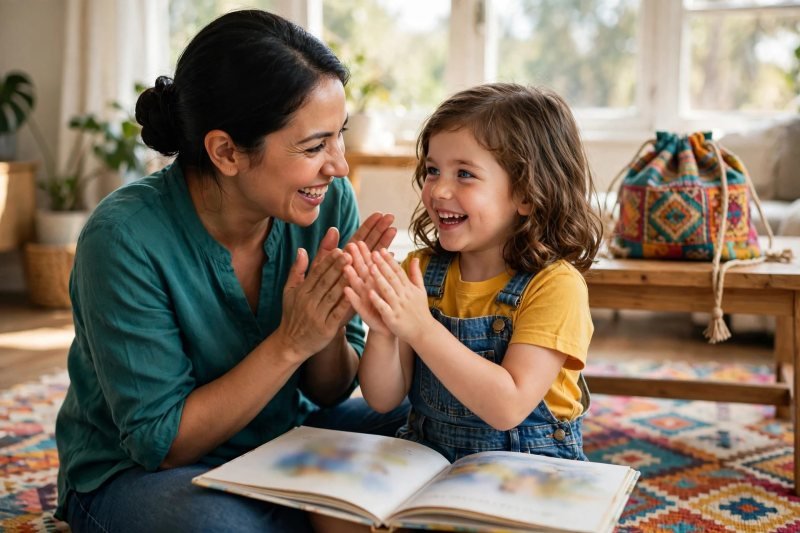
10. Read it in a book together: read the picture book as usual, but pause at one short sentence — "The cat sat." — and let your child blend *cat* right there in the story. Applaud like crazy and end on this high note.
-
## What is blending, exactly?
-
Blending is pushing individual speech sounds together to read a word. When a child hears /c/ /a/ /t/ as three separate sounds and smooths them into "cat," that's blending — the skill that turns sounding out into actual reading.
-
## When is a child ready to start blending sounds?
-
Look for three signs: your child can hear separate sounds in spoken words, knows a handful of letter sounds, and is curious about words on signs and in books. Blending is a developmental step, not a race — most children are ready between 4 and 5.
-
## What if my child says the sounds but can't blend them?
-
This is the most common stuck point and it's completely normal. Stretch the sounds yourself — "cccaaat" — while your child just listens, then let them join in. Drop the printed cards and play oral games for a few days. Blending almost always clicks suddenly after enough stretchy practice.
-
## Why does my child guess words from the first letter?
-
They're using the one clue they trust. Teach them to check every sound: "Let's touch every sound before we guess." Praise the checking, not just the answer. The guessing habit fades once full blending feels just as fast.
-
## What should I do if my child blends the sounds backwards?
-
Slow down and let the finger lead: tap each letter left to right, then sweep under the whole word. The hop game in Step 6 helps too — spots laid left to right make the direction physical.


Make it easier
- Spend the whole session on Steps 1-4; the printed cards can wait for another day. - Start with two-sound words (*up, on, in, at*) — fewer sounds, easier wins. - Let your child only listen for a while; blending clicks suddenly, and pressure delays it.
Make it harder
- Move to four-sound words (*frog, clap, plant, drum*). - Let your child do the stretching while you guess. - Hide word cards around the room for a read-and-find treasure hunt.
Other ways to play it
- - **Car robot:** the robot-talk guessing game works on car rides — zero materials, endless rounds.
- - **Blending ball toss:** toss a soft ball back and forth, one sound per toss, blend the word on the catch.
- - **Goodnight blend:** whisper-stretch two words as the lights go down for a calm two-minute review.
How it changes by age
- - At 4-5, most children are in the blending window: they know a handful of letter sounds and notice words around them. If your child is younger than 4 or can't yet hear separate sounds in words, stay with Steps 1-4 for a few weeks — oral blending alone builds the whole foundation.
What they're learning
- **Blending** — pushing separate sounds together to read a word: the core move behind all sounding out. - **Oral blending first** — hearing /c/ /a/ /t/ and finding "cat" with no letters involved. - **Continuous blending** — stretching sounds into each other (sssaat) so the word never breaks apart. - **Finger blending on print** — tracking left to right, one sound per letter, then sweeping into the whole word. - **First CVC words** — *cat*, *sun*, *dog*: the first words children truly read. Once blending clicks, our [CVC words list](/activities/cvc-words-list/) gives you 100+ words to practise on, and our [phonics activities for preschoolers](/activities/phonics-activities-for-preschoolers/) add more sound play.
Clearing up
Ten playful minutes a day builds blending far faster than one long weekly session.


