


Preschool Fall Outfits: Autumn Layers for School Days
Preschool fall outfits made simple: ten layering formulas for ages 3–4 — base layers, sweaters, dresses with tights, denim jackets, vests, and rain-ready looks — built for chilly mornings, warm classrooms, and playground afternoons.
Preschool fall outfits work best as layering formulas: a long-sleeve base that stays on all day, a sweater, vest, flannel, or denim jacket over it, and leggings, joggers, or soft pants below. Build nine formulas — classic sweater day, dress with tights, rain-ready, playground comfort, polished, and a double-layer for cold mornings — and lay out five Sunday stacks.

The short version
- The base layer is the system: a soft long-sleeve top stays on when classroom layers peel off.
- Nine formulas cover every fall day: classic, dress, denim, flannel, vest, rain, comfort, polished, double-layer.
- Every outfit carries one self-dressing job — a zipper, big buttons, or a sweater pull — sized to ages 3–4.
- Sunday stacks end morning battles: if it's in the basket, it goes together.
- The spare-outfit bag at school is non-negotiable in puddle season.
- Age
- Ages 3–4
- Prep
- 20 min
- Play time
- 5 min
- Mess
- Low
- Difficulty
- Easy
- Where
- Both
Why kids love this
Preschoolers love fall outfits they can work themselves: a sweater they can pull off when the classroom warms up, a vest that makes them feel like an explorer, boots that stomp through leaf piles. When the layers are theirs to manage, getting dressed stops being a wrestling match and becomes the first independent win of the day.
What you'll need
- 5–7 soft base tops (long-sleeve tees and thin thermal-style shirts) in mixable colors
- 4–5 bottoms (leggings, soft jeans, and one pair of joggers) with elastic waists
- 2–3 sweaters or sweatshirts (one zip-front for self-dressing practice)
- 1 denim jacket and 1 puffer or fleece vest
- 2 dresses plus footed or thick tights for dress days
- Closed-toe shoes for school days plus rain boots for wet mornings
- A light rain jacket with a hood
- Hats and thin gloves for the coldest mornings
- A small labeled spare-outfit bag that lives at school
Before you start
1. On Sunday, check the week's forecast and lay out five outfit stacks using the formulas below — one stack per school day, in a basket or cubbies your child can reach. 2. Put the spare-outfit bag (full change: top, bottom, underwear, socks) in the school cubby or backpack; fall puddles find preschoolers daily. 3. Do a shoe check: closed-toe shoes that your child can pull on with a heel loop or wide opening; practice once at home, not at the classroom door. 4. Set the morning rule together: "We pick from the basket." Choice inside a boundary is the whole system.
How to do it
-
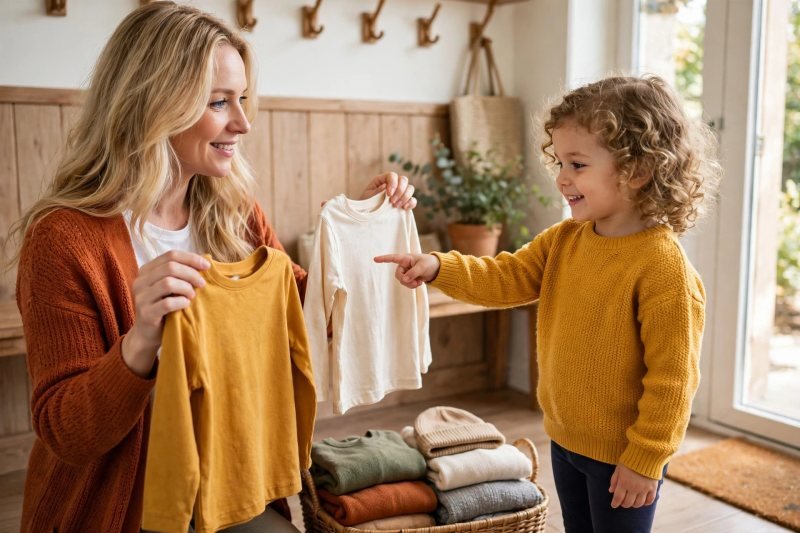
Start with the base-layer formula that runs every outfit. Every preschool fall outfit in this guide begins the same way: a soft long-sleeve tee or thin thermal-style top against the skin, because fall mornings are chilly and classrooms are warm, and the base layer is what stays on all day. Lay the base tops out and say the teaching line: "First layer hugs. It stays on at school." Let your child choose the color — mustard, rust, cream, and dusty blue all mix with everything below — while you hold the boundary that it must be long-sleeved on cool mornings. A base that fits close (not tight) layers cleanly under sweaters without bunching at the arms, which is a common preschooler complaint. Base chosen: the first full formula builds straight on top of it.
-
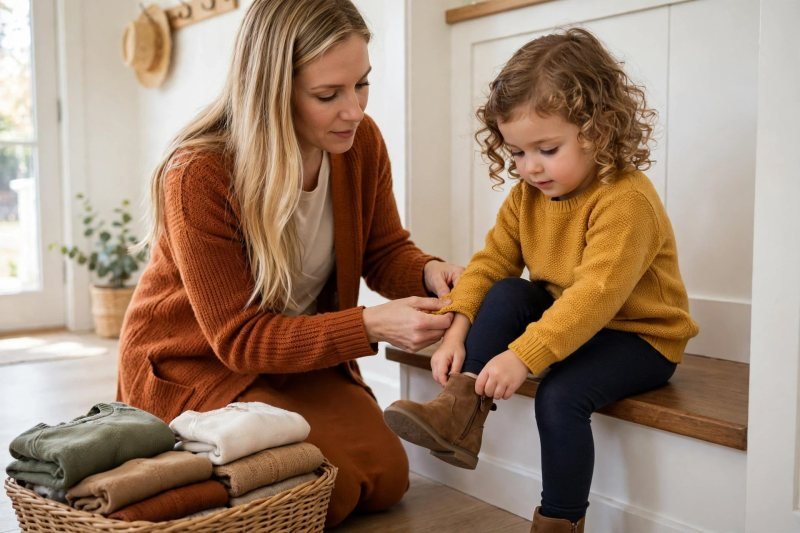
Build formula one: sweater, leggings, and boots for the classic school day. Over the base layer goes a pullover sweater or sweatshirt; under it, fleece-lined or thick cotton leggings; on the feet, ankle boots or sturdy sneakers. Say it as a chant while you dress: "Hug layer, cozy layer, stompers." Your child does one job — pulling the sweater down over their head after you set the neck opening — because sweater-over-head is a genuine 3- and 4-year-old skill milestone. This formula handles the standard fall day: cold bus stop, warm classroom (sweater off, base stays), chilly pickup. It is also the formula to photograph for grandparents. Classic day covered: formula two puts a dress in rotation without the cold-legs problem.
-
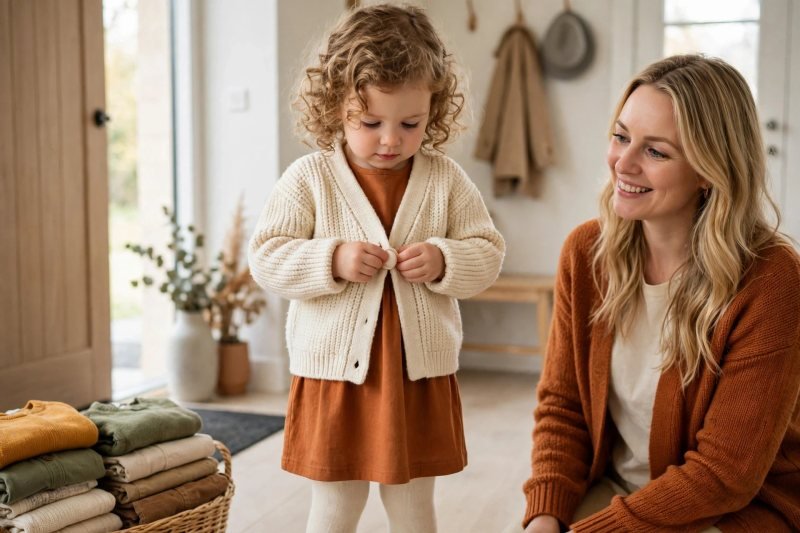
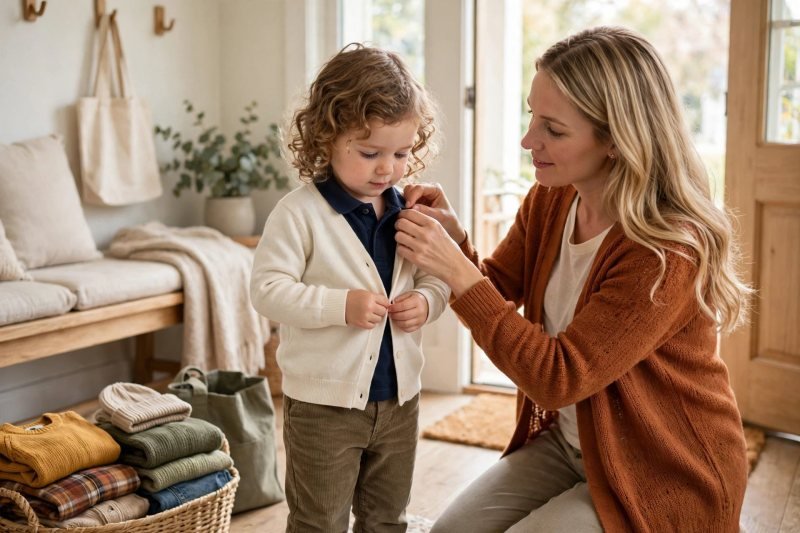
Build formula two: dress, thick tights, and a cardigan for dress days. A fall dress works for preschool when the legs are solved: thick or footed tights under a knee-length dress, a cardigan over the top, and closed-toe shoes that stay on at recess. Choose dresses with no back zippers and no sashes — playground-safe and bathroom-manageable. For pictured dress-day combinations, see fall outfits for toddler girls. Your child practices the cardigan buttons (big buttons only) while you narrate: "Button from the bottom, one at a time." If your child insists on a favorite summer dress, this formula is the compromise that keeps it in rotation: tights plus cardigan makes it fall-legal. Dress day done: formula three adds the layer preschoolers can fully operate themselves.
-
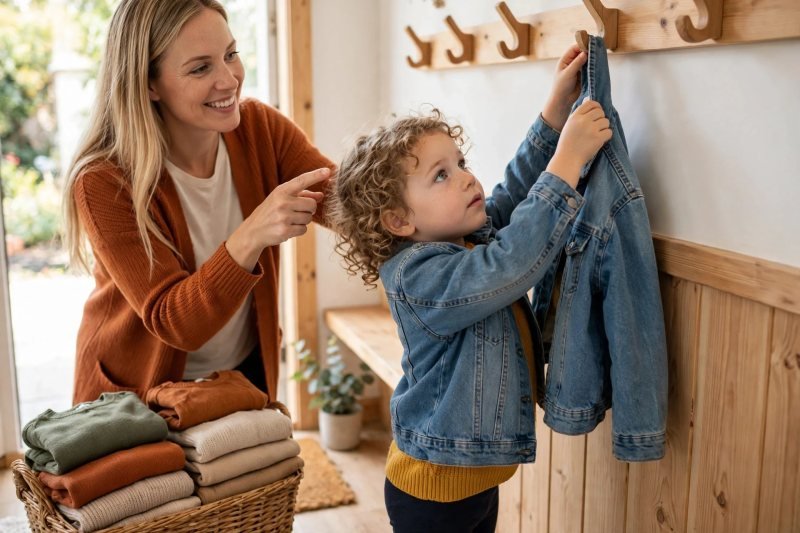
Build formula three: denim jacket over everything for mild fall days. A soft denim jacket (broken-in or stretch denim, never stiff) turns any base-plus-bottom into a finished outfit and gives your child a layer they can remove and hang up entirely alone — which is exactly what teachers need at cubby time. Pair it with joggers or leggings and sneakers. Say the self-dressing script: "Jacket on, jacket off, jacket on the hook." Practice the hook hang twice at home; the classroom cubby hook is at child height for a reason. This is the mild-day formula, for the stretch of fall when a sweater is too much by noon. Mild days handled: formula four brings the flannel shirt, worn two ways.
-
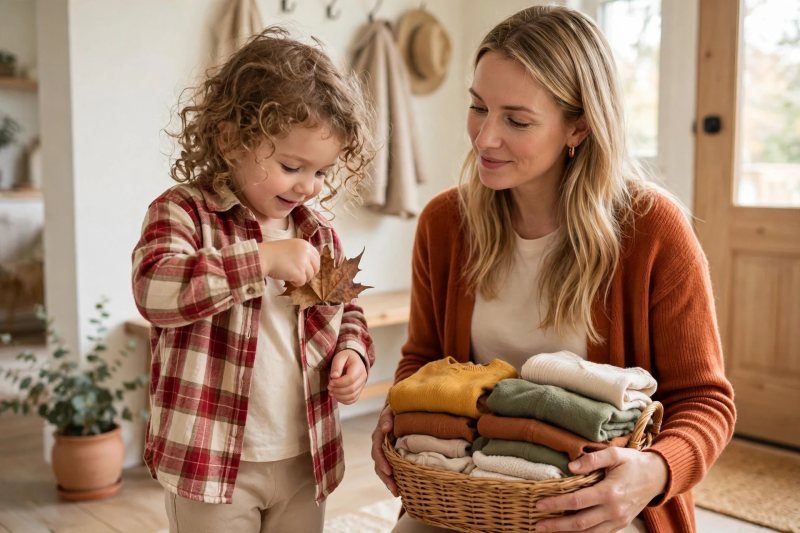
Build formula four: flannel shirt open over a tee, or buttoned as the top. A soft flannel shirt is fall's hardest-working piece: worn open over a base tee it is a light layer with pockets (leaf and acorn storage, which matters at this age) — and the leaves that come home become fall leaf crafts for preschoolers by the weekend; buttoned up with the base underneath, it handles a colder morning. Pair with soft jeans or corduroy pants with an elastic waist. Your child's job is the snap or big front buttons — flannels with snaps are the training-wheels version and worth seeking out. Roll the sleeves once on warm afternoons. Say: "Open is a jacket, closed is a sweater — same shirt, two jobs." Two-in-one covered: formula five introduces the vest, the layer that keeps the core warm and the arms free.
-
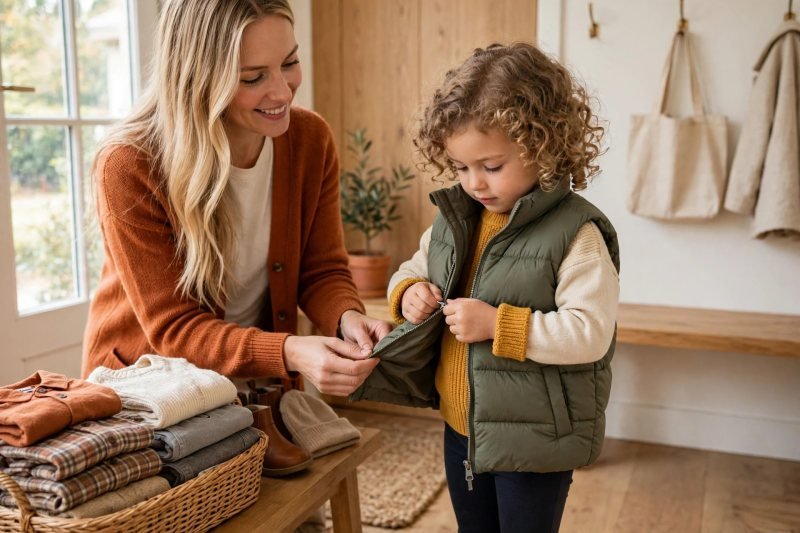
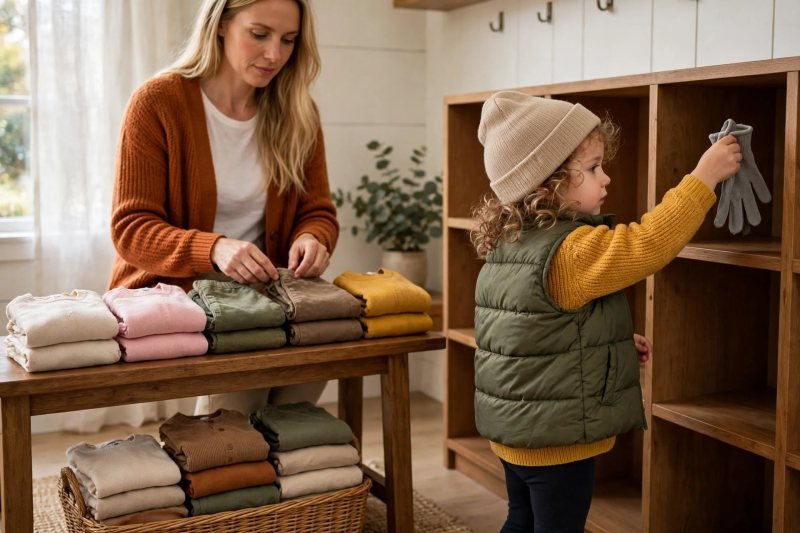
Build formula five: puffer vest over a long-sleeve tee for playground-heavy days. The vest formula is the recess champion: a light puffer or fleece vest over a long-sleeve base keeps the chest warm while arms swing, climb, and pump on the swings without restriction. Pair with leggings or joggers and sneakers. The zipper is the teaching moment — vests are where zipper skills click, because the child can see the whole zipper while wearing it. Script it: "Pin down, zip up, to your chin." If the morning is truly cold, the vest layers over a thin sweater too — the same stack logic the kids winter layering guide details for the coldest months — and the first double-layer your child will meet again in the preschool winter outfits guide when fall hands off to winter. Active days solved: formula six is built for the weather fall is famous for.
-
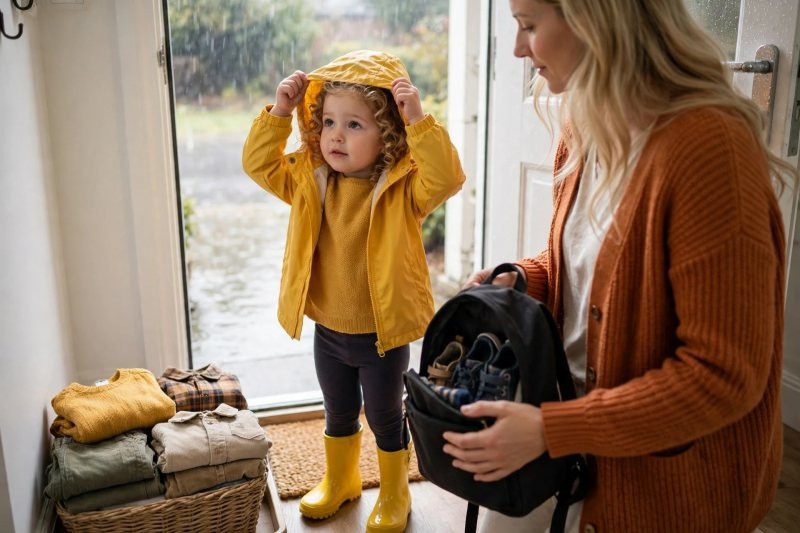
Build formula six: rain-ready layers for wet fall mornings. Rain days need their own formula so they stop causing morning panic: base layer, thin sweater, hooded rain jacket on top; leggings or quick-dry pants (never jeans, which stay cold and wet); rain boots. Send the closed-toe shoes in the backpack for indoor wear. Your child practices the hood and the jacket zipper, and you practice the sentence that saves the day: "Puddles are for the way home, boots are for both ways." Pack the spare-outfit bag check into rain days — a wet sock emergency is the most common preschool clothing crisis of the season. Pictured rain-day sets in rainy-day outfits for girls and rainy-day outfits for boys show the same layers. Rain handled: formula seven is the playground-athlete look for the warmest fall afternoons.
-
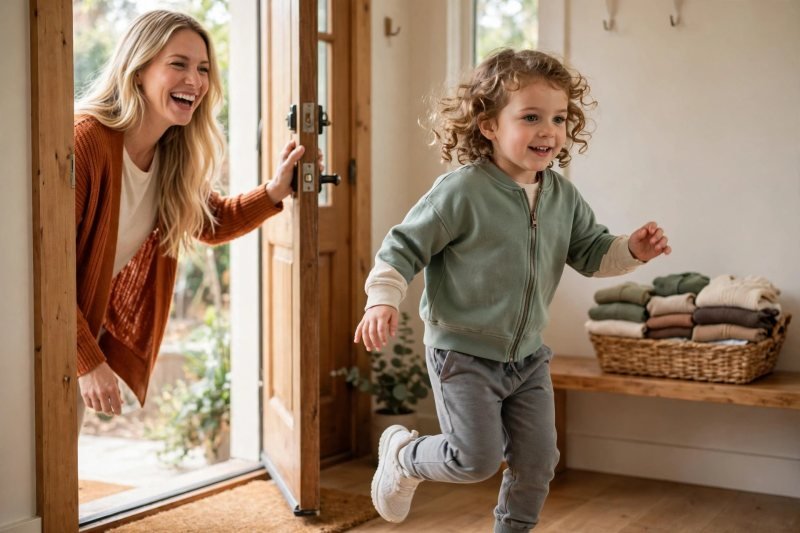
Build formula seven: sweatshirt and joggers for the all-play comfort day. Some days are pure movement — field trips, gym days, park afternoons — and the outfit should say so: a sweatshirt (zip-front if your child is working on independence) over the base, joggers with an elastic waist and cuffed ankles, and the fastest sneakers your child owns. No buttons, no snaps, nothing that slows a bathroom trip. Say the day out loud at breakfast: "Today is a running day — running clothes." Naming the formula teaches your child to match clothes to plans, a life skill smuggled into a sweatshirt. Comfort day set: formula eight polishes the same pieces for picture day and family events.
-
Build formula eight: the polished look — collared top, cardigan, and tidy bottoms. Picture day does not require a shopping trip: a collared polo or a dress shirt-style top under a clean cardigan, with corduroys or dark soft pants and the least-scuffed shoes, reads polished in photos and still survives recess. Keep the base-layer rule (collared tops are often thin) and skip anything with a tie, belt, or scratchy tag. Your child's job is standing for the two-minute "photo check" — smooth the cardigan, check the collar — a tiny routine that makes the morning feel ceremonial instead of stressful. Polished day done: formula nine solves the coldest mornings of late fall.
-
Build formula nine: the double-layer for the first truly cold mornings. When the forecast drops, stack the system: thermal-style base, flannel or sweater over it, vest or denim jacket on top, thick leggings or lined pants below, plus a hat and thin gloves. Stack without the marshmallow effect — dress kids for winter without bulk shows how the same layers stay lean when winter proper arrives. This is the bridge formula between fall and the full layering in the toddler winter outfits for ages 2–3 guide — the same stack logic for colder days. Teach the peel order at home: "Outside layer off first, hug layer stays." If the double-layer leaves your child too warm indoors, drop the vest first and keep the base — overheating in a warm classroom is the more common problem on mild cold mornings. Your child practices hanging the hat and gloves in one cubby spot so they come home again. Coldest days covered — now close the loop and turn nine formulas into a system your child can run: end the week where you began, at the Sunday basket, and build the capsule deliberately so every base top works with every bottom, sweaters sit in two neutrals plus one fun color, and the jacket and vest each pair with all of it. Lay five stacks with your child, letting them make one swap per stack ("deal-maker's choice") so Monday's outfit already carries their fingerprints, and say the capsule rule: "If it's in the basket, it goes together." The payoff arrives by week two: your preschooler walks to the basket, picks a stack, and dresses a layer at a time while you make coffee. Fall dressing, handled.


Make it easier
- One-formula weeks: run formula one (sweater, leggings, boots) five days straight with different colors — nobody at preschool is tracking repeats, and consistency builds the dressing habit fastest.
- Pre-set the neck and zipper: lay sweaters face-down so the neck opening is obvious, and start zippers at home for the first month.
- Velcro and snaps everywhere: swap button cardigans for snap versions until button skills catch up.
Make it harder
- Choice expansion: offer two complete stacks each morning ("sweater day or vest day?") — a bigger decision that still cannot go wrong.
- Weather reading: your child checks a simple picture weather chart and names the formula that matches — early forecast literacy.
- Full self-dressing challenge: timer-free "beat yesterday" dressing races where the only opponent is yesterday's time, celebrated either way.
Other ways to play it
- Warm-climate fall: drop the base to short sleeves, keep the vest and denim jacket as the only layers, and treat the rain formula as the cold-day formula.
- Uniform schools: the formulas become weekend and after-school stacks unchanged; the base-layer and spare-bag rules still apply on school days.
- Sibling hand-me-downs: fall is the season to size-check the capsule — sweaters should cover wrists when arms reach up, or they become the younger sibling's stack.
How it changes by age
- Ages 2–3: use formulas one, five, and seven only, with snaps and zippers replaced by pullovers; dress alongside your toddler and expect to finish every fastening — the layer logic (hug layer stays) still applies.
- Ages 3–4: the guide as written — nine formulas, one self-dressing job per outfit, Sunday stacks with a deal-maker's swap.
- Ages 5–6: add buttons and a belt-free waistband challenge, let your child build the Sunday stacks solo from the capsule rules, and introduce a thermometer or weather app check as their job.
- All ages: comfort and bathroom independence outrank cuteness at school — any outfit a child cannot manage alone in the bathroom is a weekend outfit, whatever the season.
What they're learning
Self-dressing skills: zippers on vests, big buttons on cardigans, and sweater-over-head pulls are fine motor milestones practiced twice a day. Sequencing: "hug layer, cozy layer, stompers" is a first-next-last routine — the same logic as early math patterns. Decision-making inside boundaries: choosing colors and stacks from a capsule builds autonomy without morning chaos. Weather awareness: matching formulas to forecasts teaches cause and effect with their own comfort as the feedback.
Clearing up
Fall outfits clear up on a weekly rhythm: Sunday laundry returns everything to the capsule, outgrown pieces move to the hand-me-down bin the moment they fail the wrist-reach test, and the rain boots live by the door on a tray so mud stays in one zip code. Keep one "mud set" (oldest leggings and sweatshirt) for leaf-pile and puddle days so the good stacks survive the season.
Questions parents ask
How many layers does a preschooler need for fall?
What should a preschooler wear on a rainy fall day?
How do I stop fall outfit battles in the morning?
Can preschoolers wear dresses in fall?
What shoes are best for preschool in fall?

save it for later
Pin this for the next rainy afternoon
Keep it on a board so it is there when you need it, rather than when you happened to find it.
Save to Pinterest