


How to Dress Kids for Winter Without the Bulk
The trick to dress kids for winter without the bulk is thin layers that trap heat in stages: a fitted base layer, a slim fleece mid layer, and a streamlined waterproof shell. Warmth without the waddle — and safer in the car seat.
To dress kids for winter without the bulk, use three thin layers: a fitted wicking base layer against the skin, a slim fleece mid layer to trap warmth, and a streamlined waterproof shell to block wind and wet. Add a hat, neck warmer, mittens, one pair of warm socks, and boots. Check warmth at the neck and chest, and never buckle a puffy coat under car-seat straps.

The short version
- Three thin layers beat one puffy coat: fitted base, slim fleece mid, streamlined waterproof shell.
- Base layers should be merino or synthetic — cotton holds sweat and chills skin.
- Judge warmth at the neck and chest, not hands and feet; remove a layer if your child is sweating.
- Close the gaps: hat over ears, neck warmer, mitten cuffs over sleeves, one pair of smooth warm socks.
- Movement test before leaving: if they can bend, reach, squat, and climb, the dressing is right.
- Car seats: harness snug on layers, coat or blanket OVER the straps — never a puffy coat underneath.
- Age
- Ages 4–5
- Prep
- 5 min
- Play time
- 10 min
- Mess
- None
- Difficulty
- Easy
- Where
- Both
Why kids love this
Kids love this system because they can actually move in it. Arms bend, knees squat, zippers are reachable, and playground climbing does not feel like wrestling a duvet. Thin layers also mean no roasting in the car or classroom and no itchy, sweaty overheating — just comfortable warmth they forget they are wearing. On bitter days, indoor snow and ice play gives all that newfound mobility somewhere warm to go.
What you'll need
- A fitted base layer set (top and bottoms) in merino wool or a synthetic wicking fabric
- A slim zip-up fleece or thin insulated mid layer
- A streamlined waterproof, windproof shell jacket (and shell pants for snow play)
- A warm hat that covers the ears, plus a neck warmer
- Mittens (warmer than gloves) plus a spare pair
- Warm socks (wool or wool-blend) and waterproof boots
- A thin blanket for the car, to go over the harness
Before you start
1. Lay the three layers out in order — base, fleece, shell — so dressing is a calm sequence, not a search. 2. Check the day's actual temperature and wind, and whether the morning includes the car, the classroom, or long outdoor play. 3. Put spare mittens in the school bag now; mittens are the item winter eats. 4. Remind yourself of the two checks that close the routine: neck-chest warmth, and harness-snug-with-no-puffy-coat.
How to do it
-
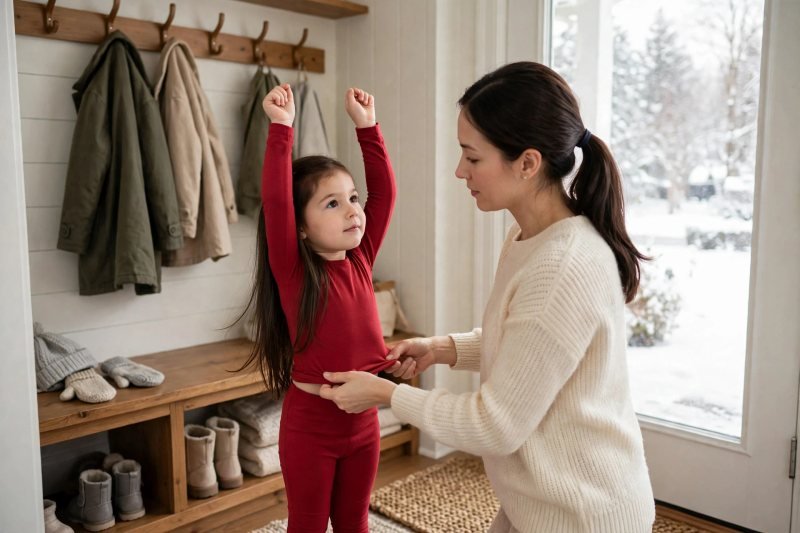
Start with a fitted base layer. Pull on the base-layer top and bottoms so they sit snug against the skin — close-fitting, not tight — and say: "First layer hugs, like a second skin." The base layer is the engine of the whole system: it traps a layer of warmed air against the body and moves sweat away so skin stays dry, because damp skin gets cold fast. Cotton is the wrong choice here — it holds sweat and chills; merino or synthetic wicking fabrics are what make thin dressing genuinely warm, and this fitted start hands into checking the fit before adding anything over it.
-
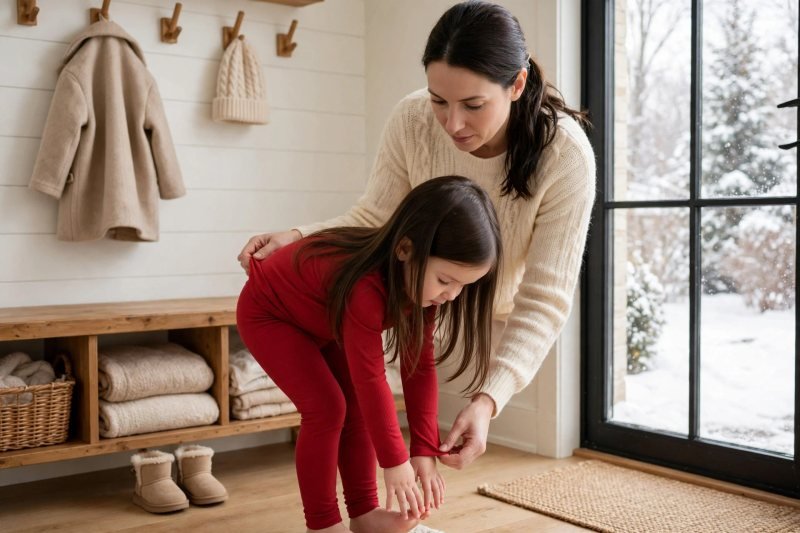
Check the base fit before layering over it. Smooth the top down, check sleeves reach the wrists and the hem covers the lower back when your child bends, and say: "Bend and reach — nothing rides up, nothing bunches." Gaps at the wrist, ankle, or waist are where cold air sneaks in, and bunched fabric under the next layers creates the very bulk you are avoiding; thirty seconds of smoothing now is what lets two thin layers outperform one fat coat, which the mid layer proves the moment it goes on.
-
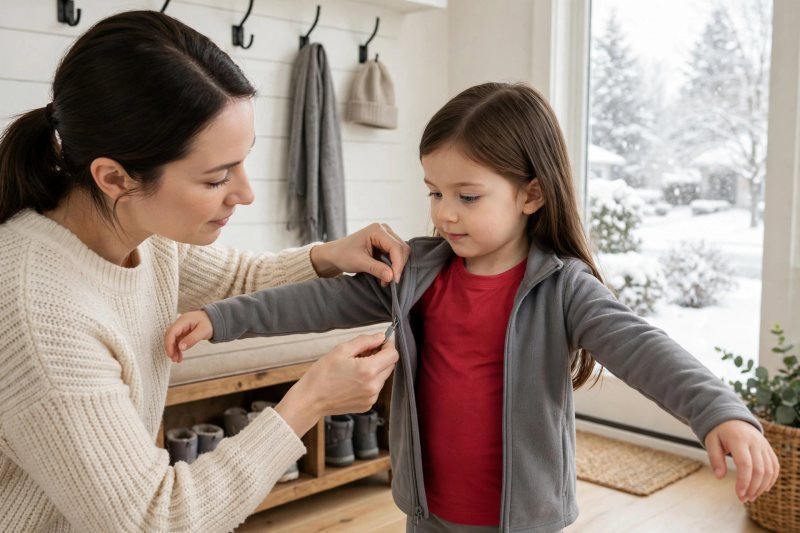
Add a slim fleece mid layer. Zip a slim fleece (or a thin, close-fitting insulated layer) over the base and say: "Second layer — this is the blanket that holds the warmth in." The mid layer's job is insulation: its fibers trap the air the base layer warmed. Slim is the key word — a fitted fleece insulates as well as a puffy one for everyday cold, without the marshmallow silhouette, and it slides under a shell without bunching at the shoulders or elbows; with the insulation on, only the weather shield remains.
-
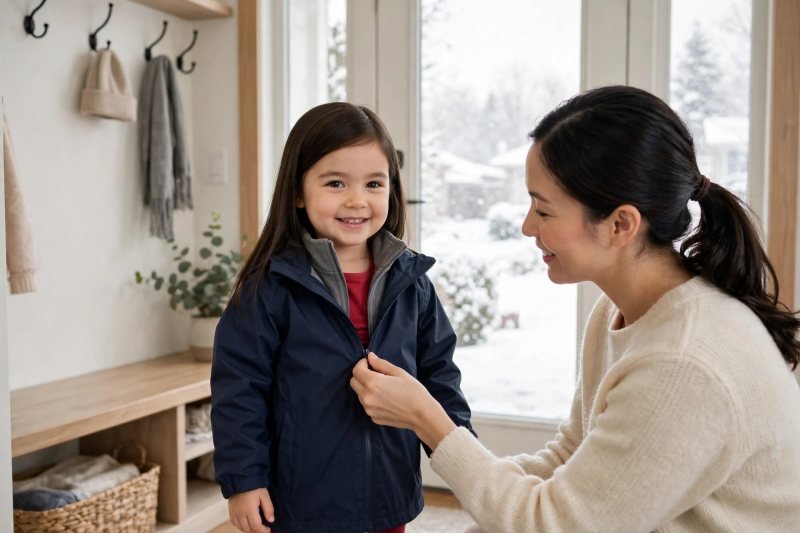
Top it with a streamlined shell. Put on the waterproof, windproof shell jacket — and shell pants for snow play or wet days — and zip it to the top, saying: "Third layer — this one stops the wind and rain getting in." The shell does no warming of its own; it protects the warm air the first two layers built. A close-fitting shell also keeps playground practicality: no dangling bulk to catch on climbing frames, no huge hood blocking side vision at crossings — a trim silhouette like the ones in these preschool winter outfits ideas keeps the whole system neat from head to toe.
-
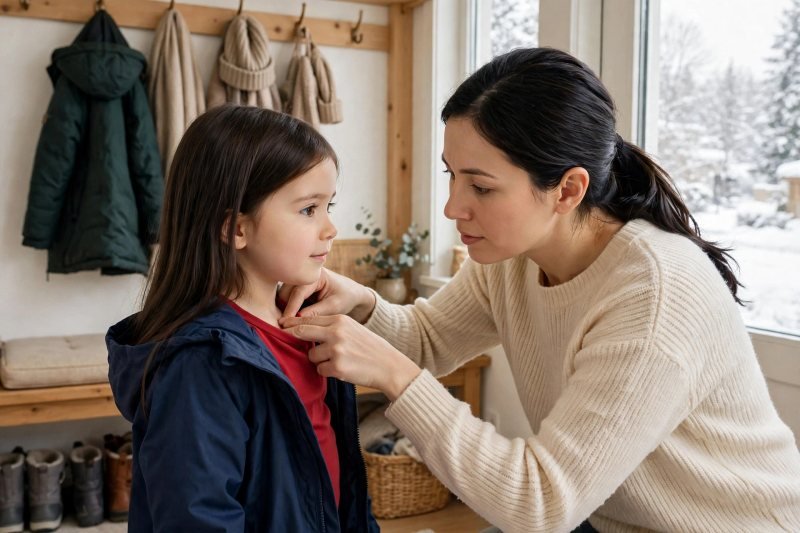
Run the warmth check: neck and chest. Slip two fingers inside the collar and feel the back of the neck and upper chest, and say: "Warm here means warm everywhere — let's check the engine room." Warm and dry at the neck and chest means the layering is right; sweaty means a layer comes off before they overheat; cool means add or adjust. Hands and feet are unreliable guides — they run cool even on warm-enough kids — so always judge by the core, and recheck after the first ten minutes of outdoor play, when the true answer shows itself.
-
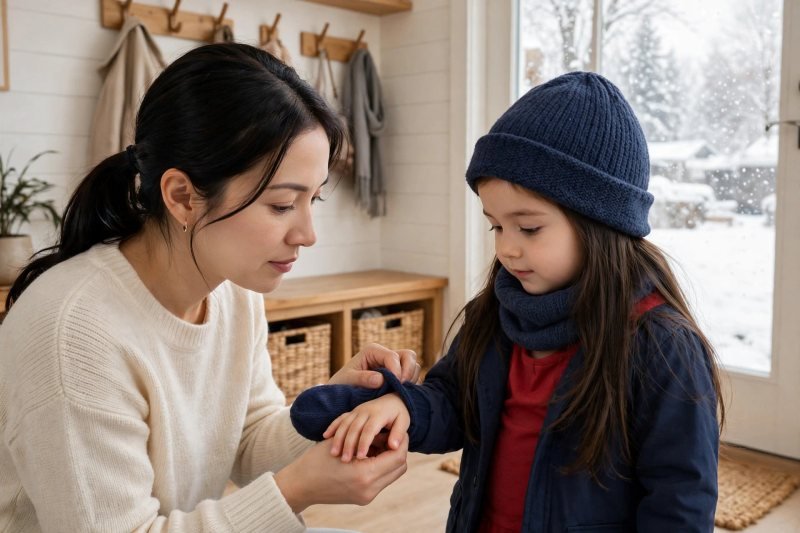
Finish the edges: hat, neck warmer, mittens. Add the ear-covering hat, pull the neck warmer up over the chin, and put mittens on over the base-layer cuffs so no wrist gap opens, saying: "Now we close all the doors the cold uses." A surprising amount of comfort is won or lost at the gaps — wrists, neck, ankles — where layers meet; mittens beat gloves for warmth because fingers share heat, and tucking mitten cuffs over sleeves keeps snow out during the falls and snowball work that make up half of winter play.
-
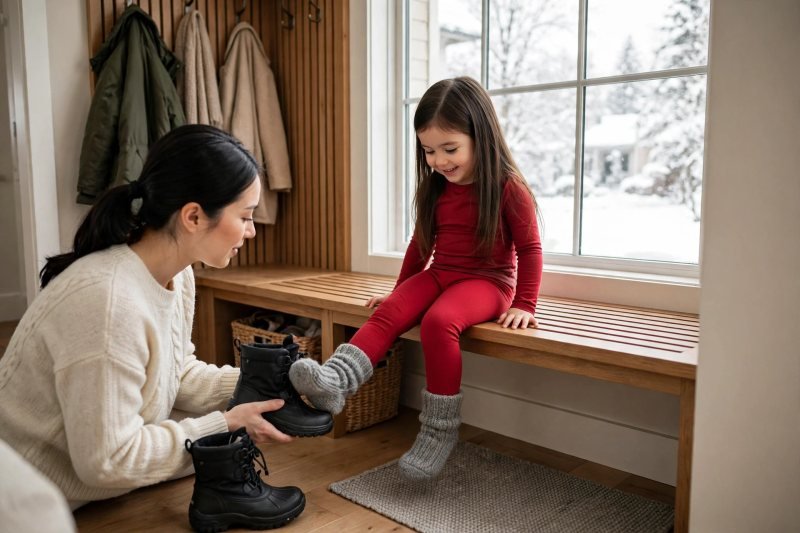
Sock and boot the feet properly. Pull on warm wool or wool-blend socks — one pair only, pulled smooth — then waterproof boots with room to wiggle toes, and say: "One pair of socks, toes wiggling — that's the warm way." Two sock pairs bunch, restrict circulation, and make feet colder, not warmer; wiggle room matters because air around the toes insulates. Boots should be snug at the ankle so they stay on in deep snow, with soles that grip — practicality your child will test within minutes of leaving the house.
-
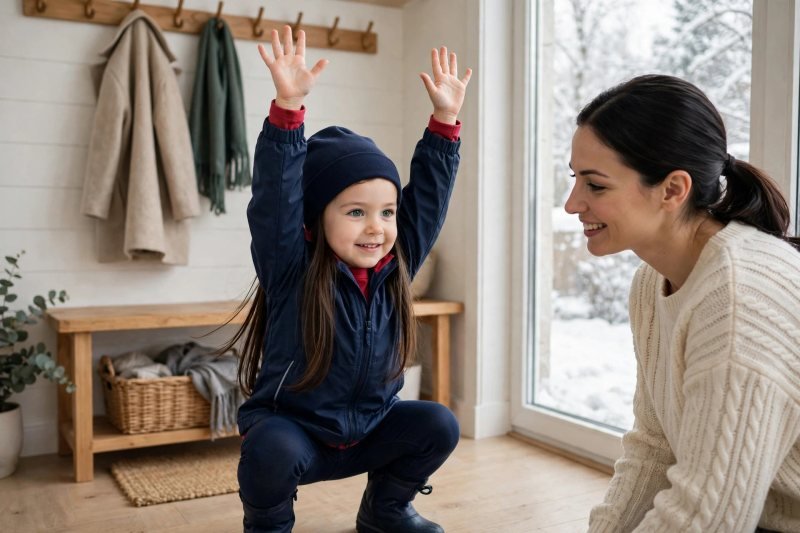
Do the movement test before anyone leaves. Ask for the full range — arms overhead; touch toes; squat; march up the steps; pretend-climb — and say: "Show me you can do everything. If you can move, you're dressed right." This is why the family chose layers over bulk in the first place: puffy coats restrict movement so much that kids play less, fall more awkwardly, and overheat the moment they do run around. If anything pulls, rides up, or resists, adjust now — a smaller mid layer, a smoother base — because a child who forgets their clothes entirely is perfectly dressed.
-
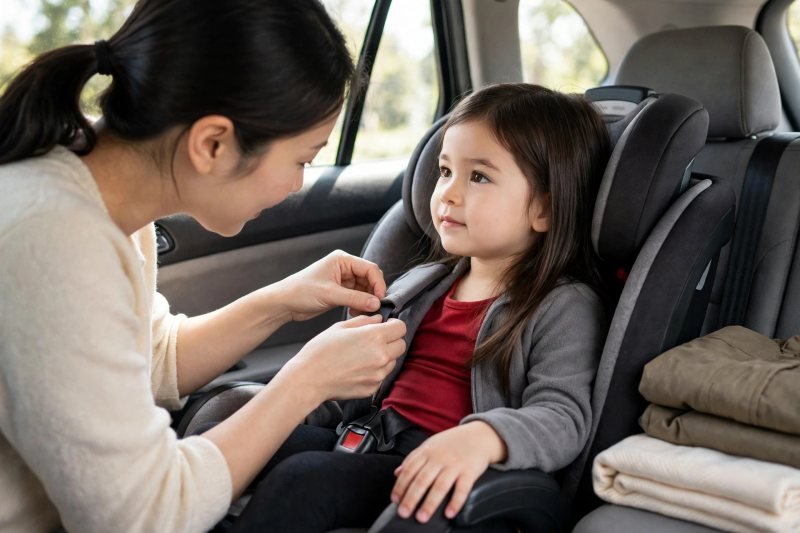
Buckle the car seat the safe way — no puffy coats under straps. In the car, your child wears their indoor layers or the slim fleece, never a thick coat under the harness: buckle the harness snug against the layered clothing, then lay the coat or the thin blanket over the top of the straps for warmth, saying: "Straps snug on you first — blanket over the top keeps you cozy." Puffy coats compress in a crash and leave the harness dangerously loose — a widely shared car-seat safety warning — so do the pinch test: if you can pinch a fold of harness webbing at the shoulder, it is too loose. Our winter send-offs follow the same rule the toddler winter outfits families use: warm layers on, coat over the straps, never under them.
-
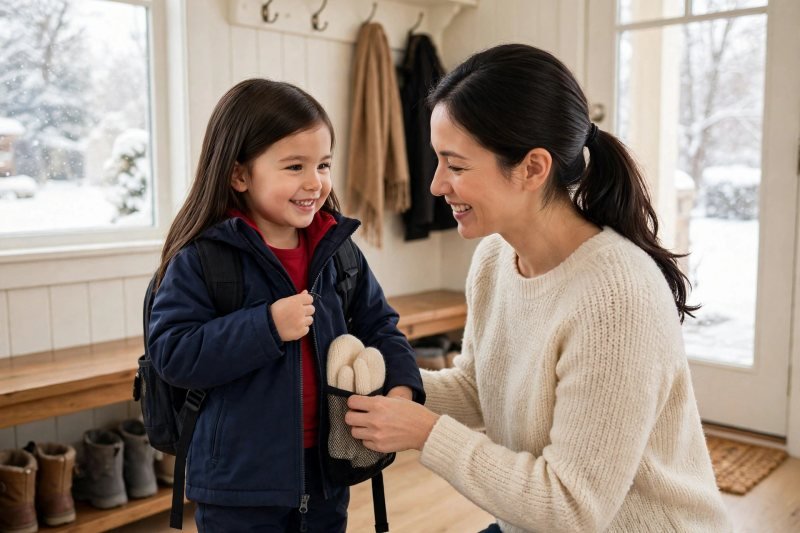
Send them out with a backup plan. Finish by checking the school bag holds spare mittens, confirm your child can zip their own shell, and say: "You're warm, you can move, and you've got spare mittens — go play." School and playground reality is where thin layers shine hardest: teachers can help a child peel one layer in a warm classroom far more easily than manage a giant coat, lost mittens are already covered, and a child who can re-zip, re-tuck, and keep playing independently has a system that works all winter, not just at the front door.


Make it easier
Dress in the same order every day — base, fleece, shell, edges — until your child runs the sequence themselves. Keep the full kit in one entryway bin; hunting for a neck warmer at 8 a.m. is how layers get skipped. Choose a shell with a two-way or big-pull zipper a mittened child can manage.
Make it harder
Teach your child the neck-and-chest warmth check so they can judge "too hot, too cold, just right" themselves. Let them pack their own school bag the night before: spare mittens, hat check, shell ready. Practice the car-seat routine until they can tell you the rule: straps snug, coat over the top, never underneath.
Other ways to play it
- Mild winter days (near freezing, little wind): base layer plus shell alone is often enough; keep the fleece in the bag for the playground.
- Deep cold and snow play: add shell pants, swap the fleece for a thin insulated mid layer, and shorten outdoor sessions with warm-up breaks indoors.
- Wet, slushy days: the shell earns its keep — waterproof boots and shell pants matter more than extra insulation; pack spare socks as well as spare mittens.
How it changes by age
- Ages 4–5: children this age can pull on the base layer, zip the fleece, and do the movement test as a game; parents still run warmth checks and own the car-seat rule completely. The system scales down for younger toddlers (one fewer judgment call, same three-layer logic) and up for older kids (they can manage their own mid-layer choices by temperature). For play ideas matched to this age, see activities for four-year-olds.
- A single puffy coat traps warmth poorly once a child starts moving — it restricts bending and reaching, so kids play less and clumsily; it overheats them indoors and in the car, and sweat then chills them outside; and under a car-seat harness it is an outright safety hazard. Three thin, fitted layers beat it on warmth, movement, comfort, and safety simultaneously.
What they're learning
Sequencing and independence: a fixed dressing order they can run — and eventually own — every winter morning. Body awareness: the neck-and-chest check teaches them to read their own temperature and speak up. Cause and effect: gaps let cold in, sweat makes you colder, wiggle room keeps toes warm — real physics, learned by dressing. Safety habits: the car-seat rule, learned young and repeated daily, sticks for every winter that follows.
Clearing up
Winter dressing creates almost no mess — the tidy is a system: shell and boots on the entryway mat to dry, hat and mittens into the kit bin, spare mittens restocked in the school bag, base layers into the laundry rotation, and the fleece hung where tomorrow's sequence starts. Two minutes of reset at the door keeps the ten-minute morning routine intact all season. More cold-weather ideas live on the winter hub.
Questions parents ask
How do you dress kids for winter without bulky coats?
How many layers does a child need in winter?
Why are puffy coats dangerous in car seats?
How can you tell if a child is warm enough in winter?
What is the best base layer for kids in winter?

save it for later
Pin this for the next rainy afternoon
Keep it on a board so it is there when you need it, rather than when you happened to find it.
Save to Pinterest

