


Count the Pumpkin Seeds
Wash and dry the seeds from your pumpkin, then turn them into a counting game that lasts all week.
Wash, dry and use pumpkin seeds as counters for sorting, counting and simple sums. Free if you have carved a pumpkin. Suits ages 3 to 7.
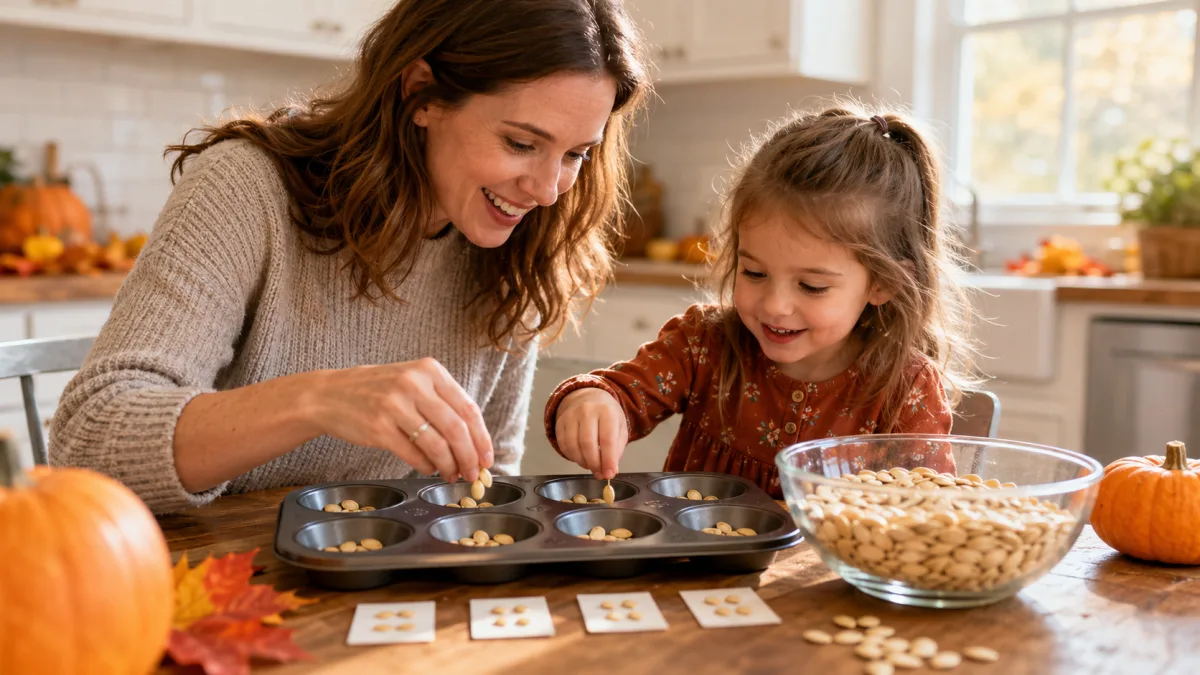
The short version
- Dry them overnight, properly, or they go mouldy.
- Guess before counting. That is the best part.
- Count into groups of ten — it is easier and it teaches something.
- Age
- Ages 3–7
- Prep
- 10 min
- Play time
- 25 min
- Mess
- Low
- Difficulty
- Easy
- Where
- Indoor
Why kids love this
They found them themselves, which makes them far more interesting than any counter bought in a shop. There is also a genuinely surprising number of them, and guessing how many before you count is the best part.
What you'll need
- Seeds from one pumpkin
- A colander and a tea towel
- Muffin tin, egg box or small cups
- A marker and paper for number labels
- Optional: a permanent pen to write numbers on the seeds themselves
Before you start
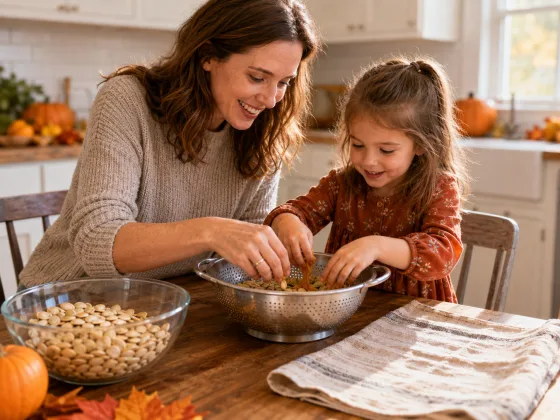
Wash the seeds in a colander, rubbing the stringy bits off, then spread them on a tea towel and leave overnight. They must be properly dry or they go mouldy in a tub. Write numbers 1 to 10 on paper labels, or in the bottom of a muffin tin.
How to do it
-
Wash the seeds and leave them out to dry overnight.
-
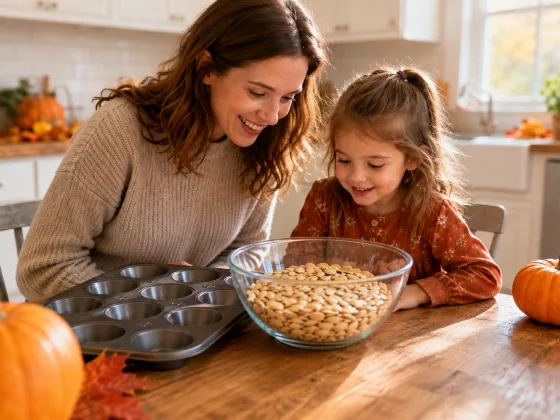
Tip the dry seeds into a bowl.
-
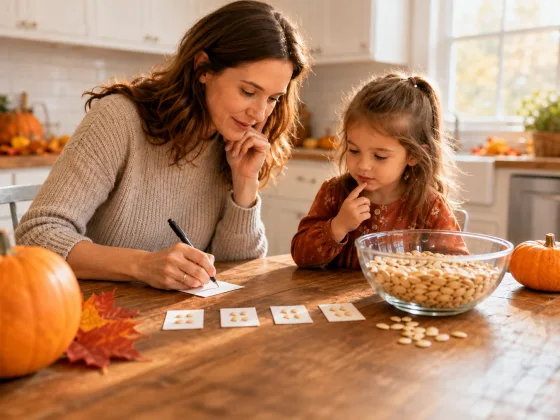
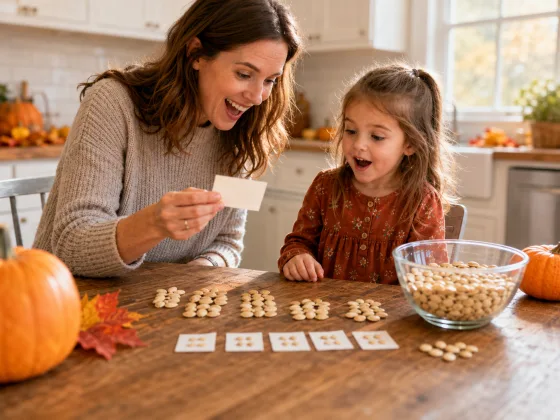
Guess how many there are. Write the guess down.
-
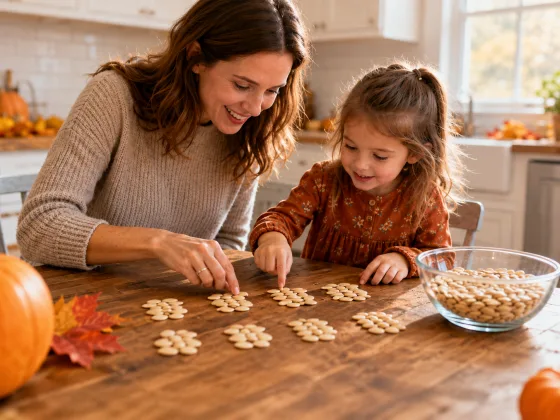
Count them into groups of ten to find out. This takes a while and that is fine.
-
Compare the guess with the answer.
-
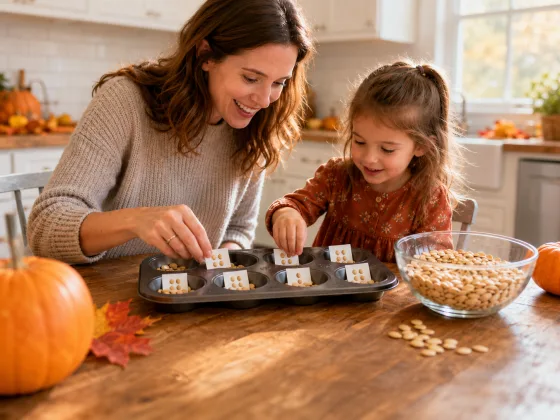
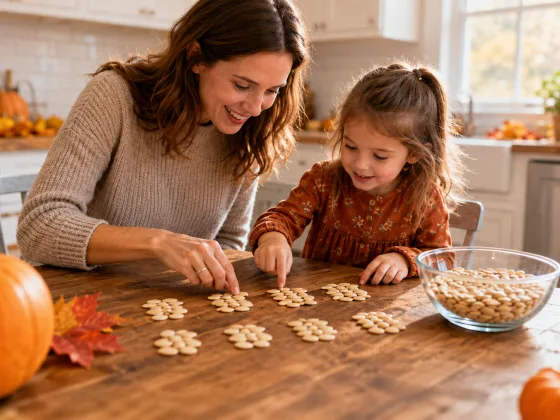
Put the number labels in the cups or muffin tin.
-
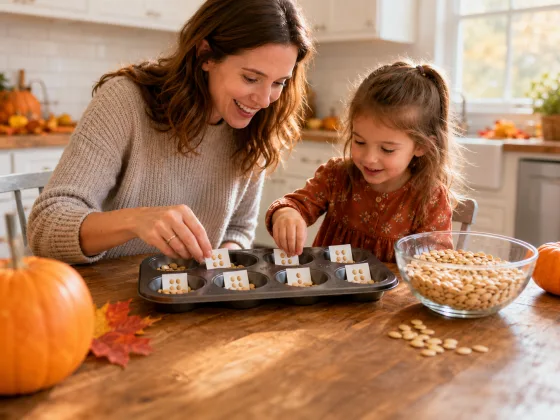
Ask them to put the right number of seeds in each cup.
-
Check them together by counting out loud.
Make it easier
Numbers 1 to 5 only, and count into cups together rather than alone.
Make it harder
Numbers to 20, or use them for simple sums, or ask them to split a pile equally between three cups.
Other ways to play it
- Write numbers on the seeds themselves and lay them in order.
- Use them as counters for simple adding — three seeds and two more.
- Glue them onto paper to make a picture.
- Sort them into big and small.
- Roast the leftovers with a little oil and salt for a snack.
How it changes by age
- Three: numbers 1 to 3, counting with you touching each seed.
- Four to five: 1 to 10, counting alone, checking together.
- Six and up: estimating, grouping in tens, and simple sums.
What they're learning
Touching each seed as it is counted is the part that matters — it is what joins reciting numbers to counting real things. Estimating first, then counting, is a genuinely useful habit and children are usually wildly wrong at first, which is half the fun.
Clearing up
Dry seeds keep for months in a jar and can be used again all winter. Compost them at the end.