


Toddler Winter Outfits: 20 Warm Looks for Ages 2-3
How to dress a toddler for a cold winter day: three warm layers, boots, hat and mittens — plus 20 toddler winter outfits for ages 2–3 built from what's already in the drawer.
Dress your toddler in three layers for winter: a soft base layer (thermal or cotton top and leggings), a cozy middle layer (fleece or knit sweater), and a warm outer layer (coat or snowsuit) — plus warm socks, insulated boots, a hat covering the ears, and mittens. Add one more layer than you would wear yourself, then check they can still squat, reach, and wiggle.

The short version
- Three thin layers (base, middle, outer) keep toddlers warmer than one bulky coat — warmth comes from trapped air between layers.
- Dress your toddler in one more layer than an adult would wear, then run the wiggle test: squat, reach, march.
- Mittens beat gloves for ages 2–3: little fingers stay warmer together and mittens stay on better.
- Always cover ears fully; a balaclava-style hat with chin ties survives hat-tossers.
- Strip layers indoors and never buckle a car seat over a puffy coat — buckle snug, then lay the coat over like a blanket.
- Age
- Ages 2–3
Why kids love this
Two- and three-year-olds are fiercely independent, and a toddler winter outfits routine gives them jobs they can actually do — pulling on socks, pushing arms through sleeves, working a zipper with help. A predictable routine settles even the wiggliest toddler, because they know what comes next.
What you'll need
- Thermal or cotton long-sleeve tops and leggings (base layers)
- Fleece or knit sweaters, sweatshirts, knit dresses (middle layers)
- A warm winter coat or snowsuit (one-piece or two-piece)
- Snow pants or waterproof pants for wet days
- Warm socks and insulated boots
- A knit hat covering the ears (balaclava-style stays on best)
- Mittens — toddlers keep mittens on far better than gloves
Before you start
1. Check the weather and wind — biting wind means one more mid layer; calm 40°F days need less. 2. Lay the day's layers out in dressing order on the bed: base, middle, outer — with boots, hat and mittens waiting at the door. 3. Warm the room you're dressing in; a chilly room makes toddlers resist stripping down.
How to do it
-
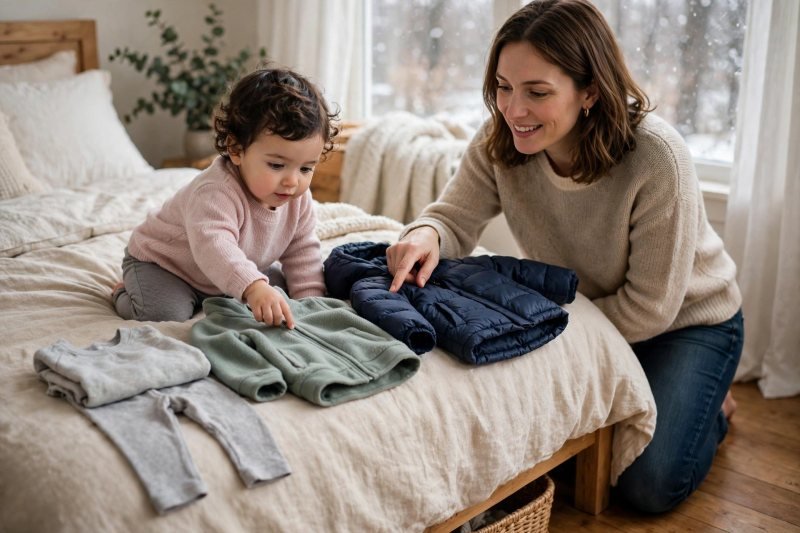
**Lay the layers out like a runway.** Lay the whole toddler winter outfit on the bed left to right — base, middle, outer — like a runway your child can walk their eyes down. Say, "First soft, then cozy, then zip!" and let them touch and name each piece. The preview kills the surprise — that's what keeps squirmers calm. Rotate combinations: a thermal top and leggings under corduroy overalls with a puffer coat; a turtleneck with a knit dress, fleece tights and a wool coat; a tee with a flannel shirt, fleece vest and waterproof shell. The order never changes — which is why toddlers learn it fast.
-
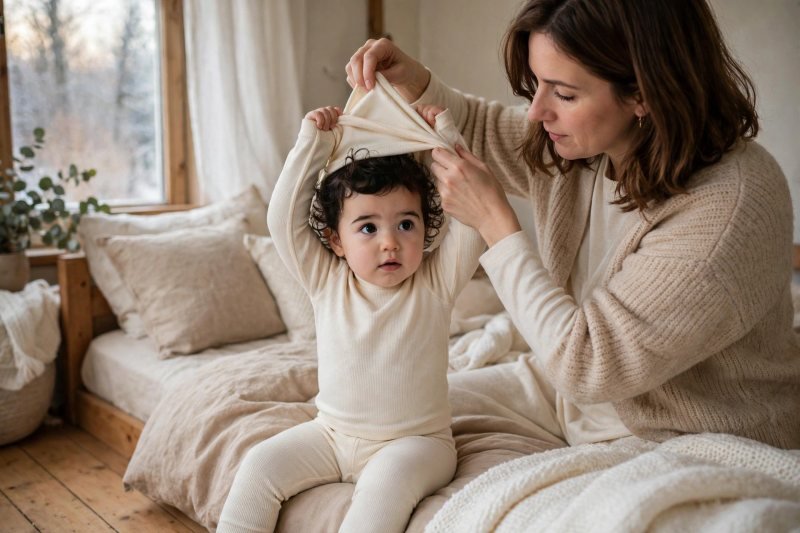
**Start with the base layer — soft against the skin.** Slide on a snug thermal or cotton long-sleeve top with leggings or footless tights. Say, "Snuggle shirt on! Arms through the tunnels — one, two!" and count each arm as it pops through, like the games in [counting activities for toddlers](https://brightplaydays.com/activities/counting-activities-for-toddlers/). Let them push their own arms through — wobbly attempts build the control zippers need. Tuck the top in at the waist. Announce, "Soft layer done!"
-
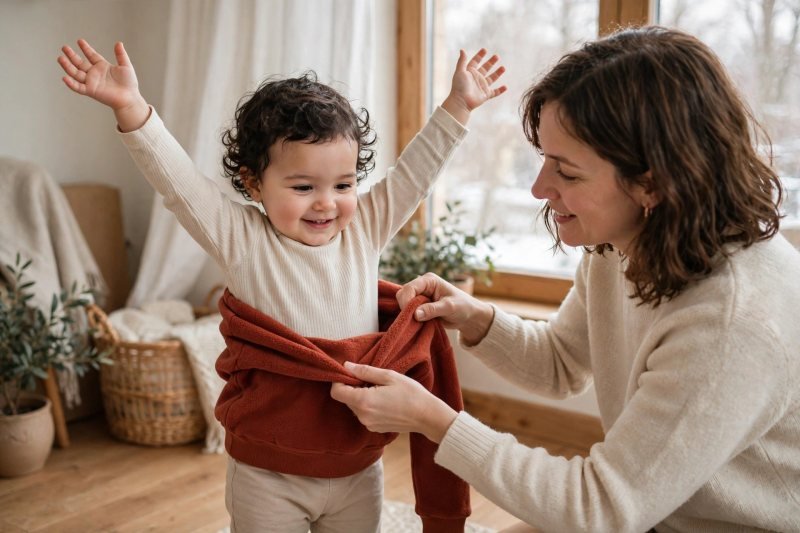
**Add the cozy middle — the insulation layer.** This layer traps warm air: a fleece pullover, a chunky sweater, or a knit dress over the base. Say, "Cozy layer! Arms up like a starfish!" and guide their arms through, then let them pull the sweater down — a big independence win at two. Name what you see ("Your cozy red sweater!") to build clothing words in context, like the games in [toddler learning activities at home](https://brightplaydays.com/activities/toddler-learning-activities-at-home/). Sleeve stuck? Narrate, don't yank: "Back it up and try the tunnel again."
-
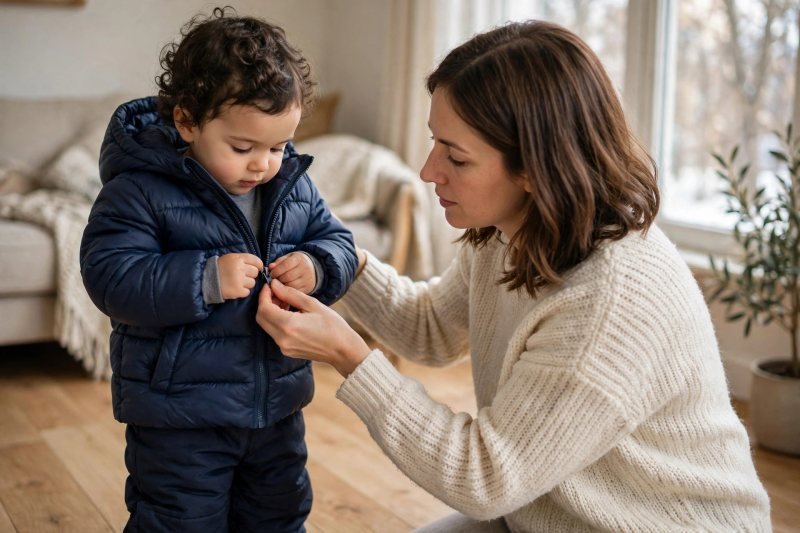
**Zip the outer layer — coat or snowsuit.** Hold the coat open like a doorway: "Coat door is open! One arm in… now the other — you did it!" Snow pants first for two-piece sets, then the coat; a one-piece snowsuit is simplest on the coldest days. Guide the zipper with your hand over theirs: "Zip goes up, up, up!" Let them try the last inch alone — real [fine-motor work for preschoolers](https://brightplaydays.com/activities/fine-motor-activities-for-preschoolers/). Check the coat covers the waistband when arms rise. Announce, "Zip layer done!" and point at the door lineup.
-
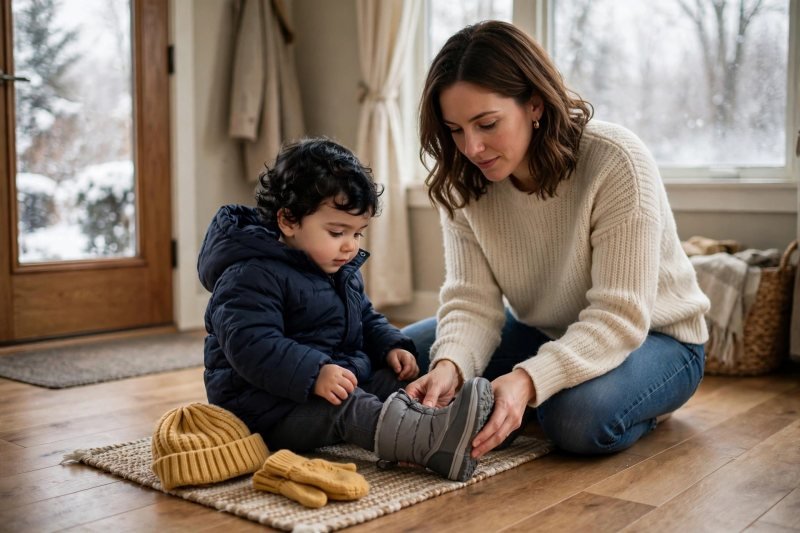
**Gear up the extras — boots, hat, mittens.** At the door, sit them down: warm (not tight) socks first — "Wiggle those toes, can they dance?" — then insulated boots, pulled up and fastened. A slipping heel needs a thicker sock, not a bigger boot. Pull the hat over the ears: "Ears tucked in, cozy head!" Hat-tossers do best with a balaclava-style hat tied under the chin. Mittens go on last: "Mittens are finger-houses — all the fingers live together!" Tuck cuffs under coat sleeves. Final check together: "Boots? Hat? Mittens?" Their answers make them a partner, not a passenger.
-
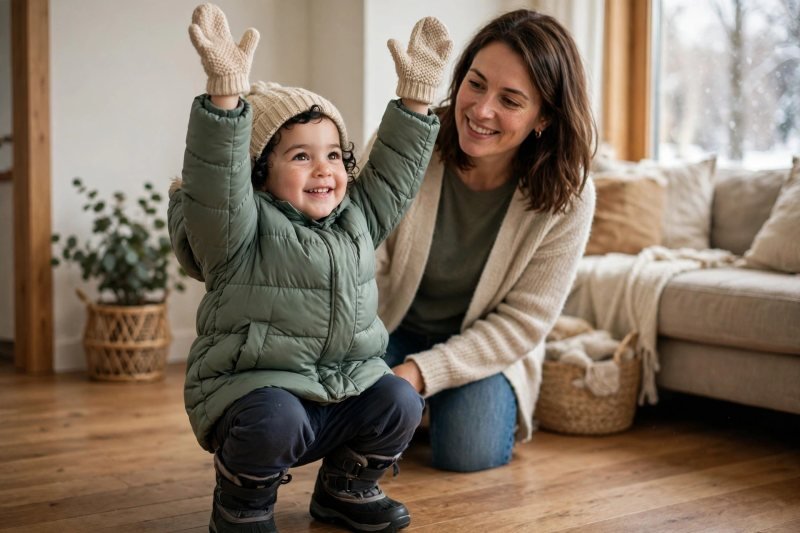
**Do the wiggle test — can they move?** Before the door opens: "Freeze! Now wiggle everything — fingers, toes, knees!" Have them squat to grab an imaginary snowball, reach both arms to the sky, and march three steps. Three layers should feel cozy, never stiff — if they topple like a bowling pin, one layer is too bulky. The rule pediatricians repeat most: dress a toddler in one more layer than an adult would wear. Pass the test, and the door opens.
-
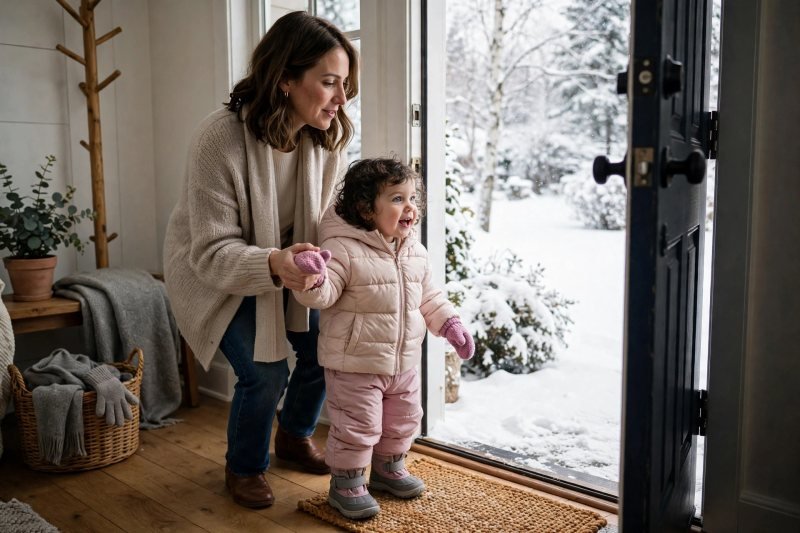
**Head out the door — the going-out routine.** Same order every time, a ritual not a scramble: "Boots on, hat on, mittens on, door open!" Let the cold air be part of the fun: "Brrr! Our layers are doing their job!" The first two minutes outside are the real temperature check — rosy cheeks are normal, but a quiet, shivery child rubbing their face needs one more mid layer. Bring extra socks for long outings and keep the threshold moment brisk. Now go crunch some snow.
-
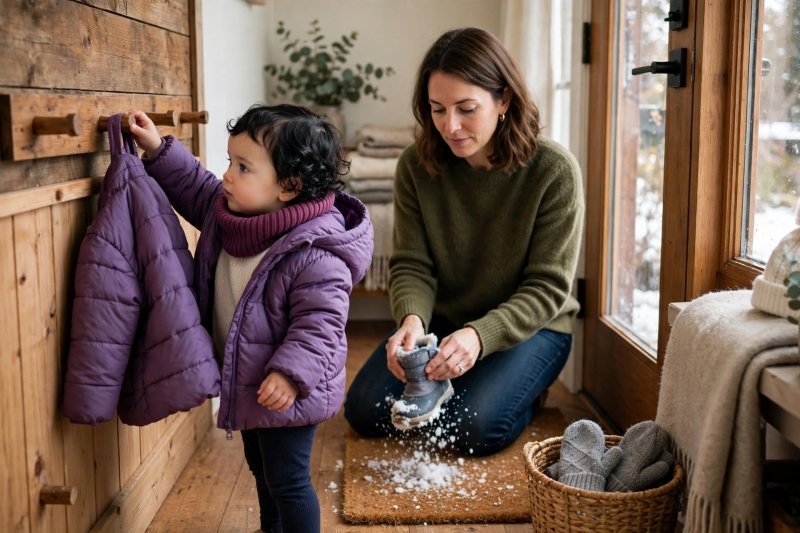
**Come home — the cozy undressing routine.** Stomp boots on the mat — "Stomp, stomp, shake the snow off!" — then sit and pull boots off, socks off, and hang the coat on a low hook they can reach. Say, "Unzip practice!" and let them work the zipper down while you steady the coat — going down is easier, so success comes fast. Mittens go in the coat pockets or a basket by the door — always the same spot, so tomorrow starts organized. Hang wet layers where air circulates and swap into dry socks right away. Finish warm: "Winter day, done!"


Make it easier
Use a one-piece snowsuit — sit, legs in, arms in, one zip, done. Pre-assemble the outfit the night before so mornings are just the runway. Keep a spare base layer in the daycare bag for wet mornings. Offer a choice between two hats or two sweaters — a choice stops power struggles.
Make it harder
Teach independence in tiny steps: this week they pull the sweater down alone; next week they try the zipper's first inch. Add weather words — "windy," "frosty," "drizzle" — and let them pick the extra layer the weather needs. Run the routine on a stuffed animal first, then let them "teach" the bear the runway order.
Other ways to play it
- **Snow-play day:** swap the coat for a full snowsuit and add waterproof mittens; pack extra dry socks.
- **Mild winter day (around 45°F):** drop the heavy mid layer — base, light fleece and a medium coat is plenty.
- **Windy day:** add a thin extra mid layer and a snug hood; wind steals warmth fast.
- **More warm-look ideas:** a bodysuit with jeans and a chunky sweater; a striped tee with thermal pants and a quilted jacket; a knit sweater dress with fleece tights and a down coat; a hoodie with cargo pants; a knit sweater set; a turtleneck under a pinafore with a toggle coat; fleece pajama pants as a mid layer under a rain shell; a velvet dress with opaque tights; corduroy pants with a cable-knit sweater; a knit dress with an oversized sweater and parka; denim overalls with a thermal top and quilted vest; a jogger set with a fleece; a turtleneck with a wool coat and boots; a two-piece snowsuit with a balaclava and mittens; a merino base with snow bibs; a flannel dress with thermal tights; and knit leggings with an oversized sweater. Twenty warm looks, counting the three runway starters in step 1.
How it changes by age
- **Age 2:** expect wiggles and strong opinions. Let them hold a piece, choose between two options, and do what they can. Build in five extra minutes. Most twos can't manage zippers alone; your hand over theirs is the teaching, not a shortcut.
- **Age 3:** threes can often pull on their own boots, get arms through sleeves, and start zippers with a steadying hand. Hand them the checklist — "Boots? Hat? Mittens?" If a three-year-old resists every layer, the issue is almost always rushing or a too-warm room, not the clothes.
What they're learning
**Sequencing:** the runway order (base, middle, outer, extras) teaches steps that must happen in order. **Body awareness:** naming arms, ears, toes and fingers while dressing builds the body map. **Independence:** each mastered piece — a zipper, a boot, a checklist — is self-care they own. **Vocabulary:** clothing, weather and action words, practiced in context daily. **Cause and effect:** layers on, warm outside; one missing, cold hands. **Fine motor control:** sleeves, zippers and boots strengthen the hand skills writing needs later.
Clearing up
Many parents think more bulk equals more warmth, so toddlers end up in one giant stiff coat they can't move in. Warmth comes from trapped air between thin layers, not thickness — three light layers that pass the wiggle test beat one bulky coat every time. Another mix-up: toddlers need gloves "like grown-ups." They don't — mittens keep little fingers warmer because the fingers share heat, and they're easier to keep on. And a hat covering the ears counts for more than any expensive coat, because little ears chill fast in wind.
Questions parents ask
What should a toddler wear in winter?
How many layers should a 2-year-old wear in winter?
Should toddlers wear mittens or gloves in winter?
How do I keep my toddler's hat on in winter?
When should my toddler wear a snowsuit instead of a coat?
How do I dress my toddler for daycare in winter?

save it for later
Pin this for the next rainy afternoon
Keep it on a board so it is there when you need it, rather than when you happened to find it.
Save to Pinterest
