


Leave-In Conditioner for Kids: When and How to Use It
Leave-in conditioner for kids is a light, no-rinse moisturizer that makes detangling gentler and keeps hair soft between washes. Here's when it helps, how much to use, and the gentle step-by-step.
Leave-in conditioner for kids is a light moisturizer you apply to damp, freshly washed hair and don't rinse out. It softens hair and reduces combing friction, so detangling hurts less. Use a small amount — a few spritzes or a pea-sized dab — worked through the ends first, then comb gently from ends to roots. Refresh between washes with plain water before adding more.

The short version
- Leave-in conditioner is a no-rinse moisturizer: it softens hair and makes combing gentler; it does not repair damage or change hair texture.
- Apply to damp (not dripping, not dry) hair right after washing, in small amounts — over-applying makes hair limp or coated.
- Work it in ends-first with fingers, keep it off the scalp, then detangle with a wide-tooth comb from ends upward.
- Choose by criteria: made for children, short readable ingredient list, fragrance-free for sensitive kids, spray for fine hair, cream for thick or curly hair.
- Refresh between washes with a water spritz first; add more product only if hair still feels dry.
- Patch-test new products for 24 hours, and stop anything that stings or irritates.
- Age
- Ages 3–4
- Prep
- 2 min
- Play time
- 5 min
- Mess
- Low
- Where
- Indoor
Why kids love this
Kids don't care about conditioner chemistry — they care that the comb stops hurting. A good leave-in routine means fewer tangles, fewer "ow" moments, and hair that stays soft and touchable for days. Toddlers and preschoolers also love having their own spray bottle job: one spritz for them (mostly air), the real ones from you.
What you'll need
- A kids' leave-in conditioner — spray or light cream, chosen by the criteria below
- A wide-tooth comb
- A spray bottle of plain water (for refresh days)
- A soft towel or old t-shirt for blotting hair
- A few hair ties or clips for sectioning thick hair
- A detangling brush (optional, for hair that responds better to brushes)
Before you start
1. Choose your product by criteria, not claims: made for children; a short, readable ingredient list; fragrance-free or lightly fragranced if your child is sensitive; a light spray for fine or wavy hair, a slightly richer cream for thick, curly, or coily hair. 2. Patch-test a new product on a small patch of skin (inner forearm) and wait 24 hours before the first full use, as with any new leave-on product. 3. Set up at the sink or right at the tub's edge: product, comb, towel, and clips within reach — wet toddlers do not wait while you hunt for supplies. 4. Plan the routine for wash days: leave-in goes on damp, freshly washed hair, so have everything ready before the bath ends.
How to do it
-
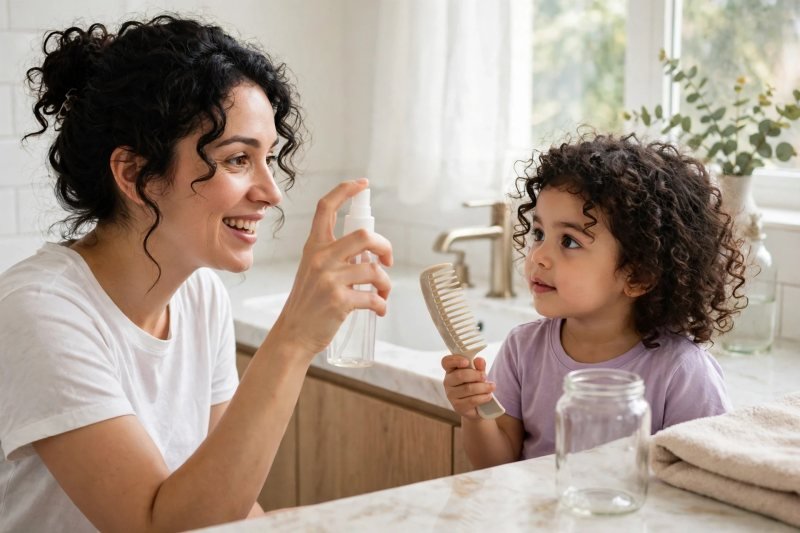
Start with what leave-in conditioner actually does. Sit your child at the sink with the bottle and comb and say: "This is hair lotion that stays in — it helps the comb slide so nothing pulls." That one sentence is the whole concept: a leave-in is a light moisturizer you don't rinse out, designed to soften hair, reduce friction while combing, and help hair hold moisture between washes. It is not medicine, it doesn't change hair texture permanently, and it can't repair damaged hair — it simply makes daily handling gentler, which is what actually prevents breakage over time. If your child's hair tangles easily, feels dry by day two, or fights the comb, a leave-in earns its place; fine, easily weighed-down hair may only need it on the ends. Bottle understood — the timing comes next, and timing is half the result.
-
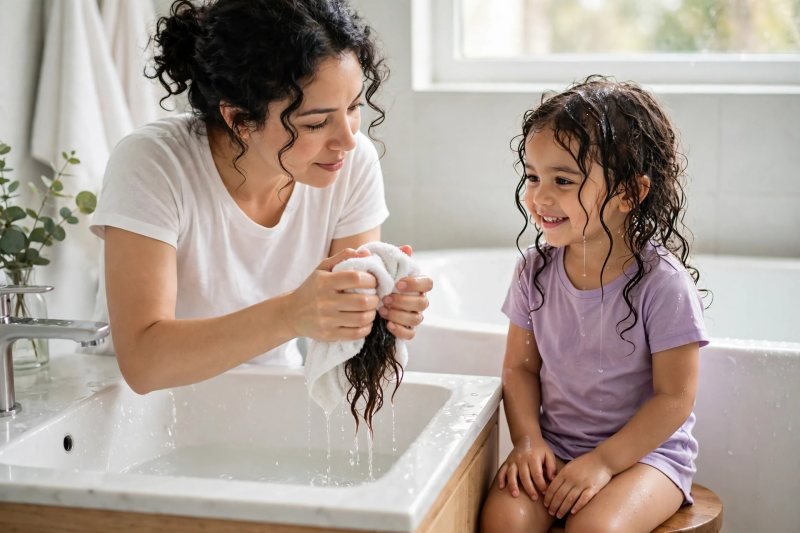
Apply it right after washing, on damp hair. Leave-in works best on hair that is damp, not dripping and not dry: after the wash, blot gently with a soft towel until the hair feels like a wrung-out sponge. Say: "First we squeeze the extra water out — the lotion needs damp hair to spread." On dripping hair the product dilutes and slides off; on fully dry hair it can sit on top and feel sticky instead of soaking in. This is why the routine belongs to bath time rather than the morning rush. If you're refreshing on a non-wash day, you'll recreate the dampness with the water spray bottle later — same principle. Hair blotted and damp: now the amount, where most parents go wrong.
-
Use a small amount — less than you think. For a spray, four to six spritzes over the whole head is plenty for a preschooler; for a cream, a pea-to-grape-sized amount warmed between your palms. Say: "A little bit does the whole job — too much makes hair feel yucky." Over-applying is the number-one reason parents conclude leave-in "doesn't work": excess leaves fine hair limp and any hair feeling coated by the next day. You can always add one more spritz to a stubborn section; you can't easily take product back out. Start small, spread well, assess. Amount in hand, the application order matters — ends first, always.

-
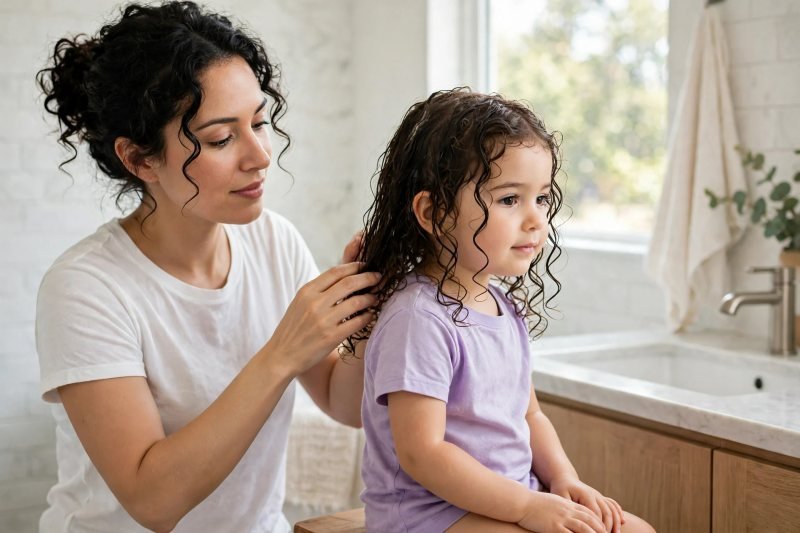
Work it through with your fingers, ends first. Rake the product through with your fingers, starting at the ends and mid-lengths where hair is oldest, driest, and tangliest, and mostly avoid the scalp and roots, which get oily on their own and don't need the help. Say: "The ends are the thirsty part — they get the first drink." Finger-raking also lets you feel the tangles before the comb ever arrives, so you can gently tease apart the worst knots with your fingers, the most tear-free detangling tool you own. For thick or very curly hair, divide into two or four sections with clips and do this section by section — it feels slower and is actually much faster. Hair coated and finger-smoothed: comb time.
-
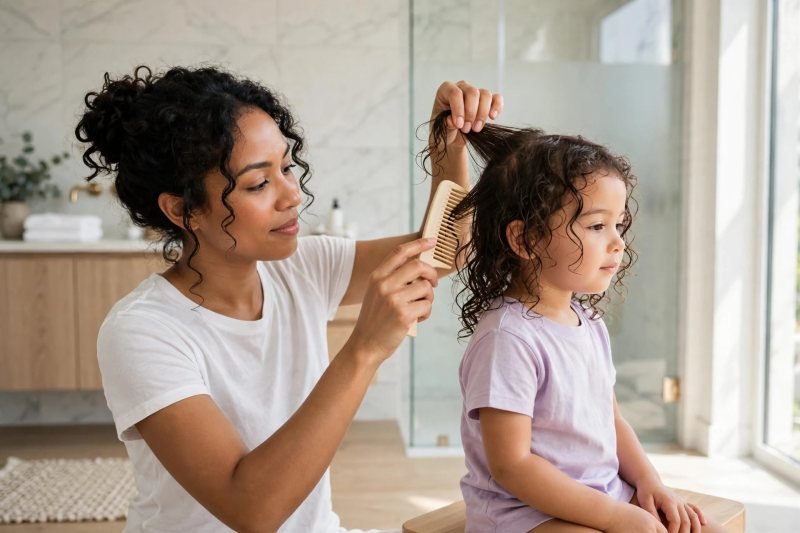
Detangle with a wide-tooth comb, ends to roots. Pick up the wide-tooth comb and start at the very ends: short, gentle strokes on the last inch, then move up an inch at a time, holding the section of hair above the comb with your other hand so nothing tugs the scalp. Say: "We start at the bottom and climb up — tiny bites, no pulling." Working top-down drives knots tighter and hurts; ends-first dissolves them gradually. Never force a knot — add one spritz of leave-in or water, tease with fingers, then comb again. A three-year-old who "helps" by holding the comb between sections stays happily involved. When the comb glides root to tip, you're done detangling — and styling becomes the easy part.
-
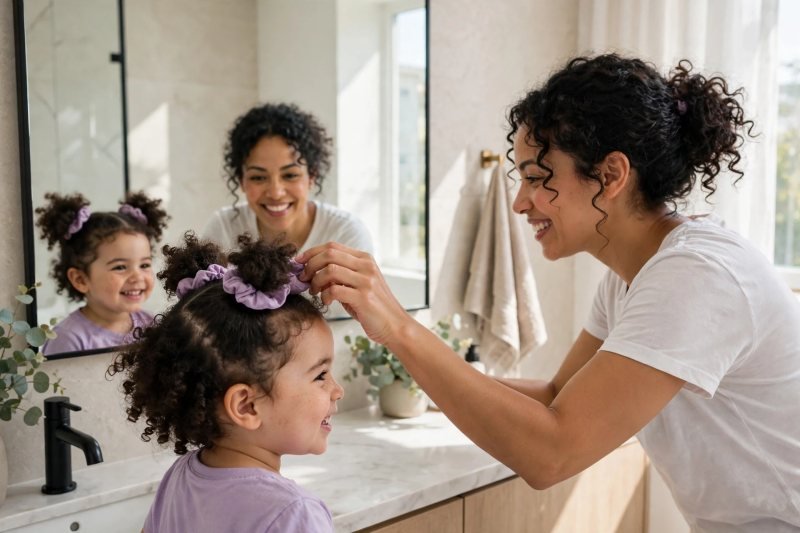
Style as usual while the hair is happy. With tangles gone and moisture in, style however your family does mornings: loose, in puffs, in braids, under a hat. Say: "See how soft? The lotion stays in and keeps helping while you play." Styles put in on well-moisturized hair simply behave better — braids look smoother, curls clump instead of frizzing, and tomorrow's undoing is gentler. If you use a protective style for several days, the leave-in underneath is doing quiet work the whole time. Avoid adding more product on top unless hair feels dry again — layering day after day is how buildup starts. Styled and soft: the last skill is stretching this result across the days between washes.
-
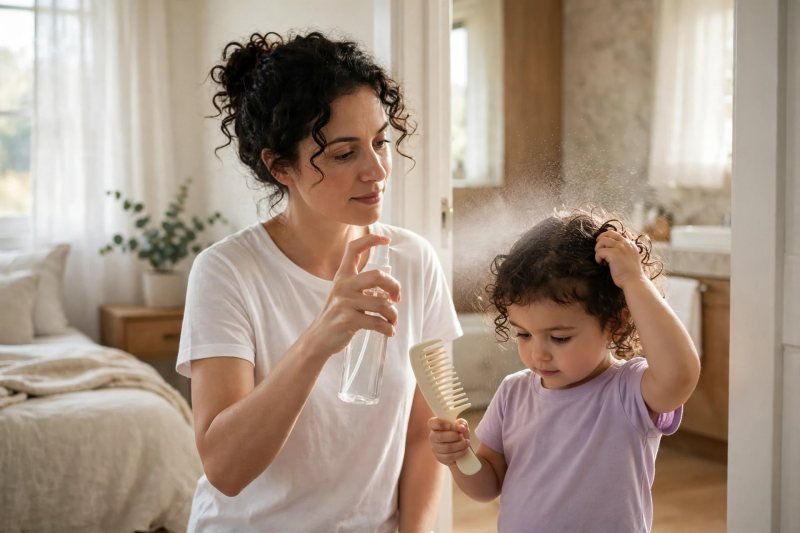
Refresh between washes with water first. On day two or three, hair often doesn't need more product — it needs the existing product reactivated, and plain water does that. Spritz sections lightly with the water bottle until just damp, smooth with your palms, and finger-style or gently re-comb only where needed. Say: "Water wakes the lotion back up." Only if hair still feels dry or rough after the water test should you add a small amount of leave-in — one or two spritzes, ends only. This water-first habit prevents the coated, dull feeling that makes kids dislike hair routines. Refreshed hair behaves almost like wash-day hair at a fraction of the effort, which brings you to the final habit: paying attention.
-
Watch how the hair responds, and adjust. Over two or three wash cycles, you become the expert on your child's hair. Say to yourself: if it feels limp or greasy by day two, use less or apply only to the ends; if it's still tangly at comb time, use a little more, or choose a slightly richer cream at the next bottle. If the scalp looks irritated or your child scratches more than usual, stop the product and go back to basics — leave-on products can bother sensitive skin, and a pediatrician is the right call for anything persistent. Keep the winning amount and timing written on a note in the bathroom if it helps; consistency is what turns a product into a routine. That's the whole skill: damp hair, small amount, ends first, gentle comb, water refreshes.



Make it easier
Use a spray formula: no palms to warm, no measuring — spritz and comb. Do the whole routine in the tub during the bath's last minutes, while your child is already wet and seated. For a first attempt, apply to just the back section (the tangliest) and see how much easier that one part combs. If your child's hair tangles easily, a detangling spray for kids can make the comb-out even gentler.
Make it harder
Teach your preschooler to do the water-refresh step themselves on non-wash days — spray control is excellent hand exercise. Add sectioning like a stylist: four clipped sections, product and comb per section, for very thick or long hair. Upgrade the tool: a hair brush for toddlers matched to your child's hair type makes the ends-first comb-out smoother. Pair this routine with a calm first salon visit when home haircuts end — the preparation thinking in this toddler first haircut guide keeps new hair experiences tear-free.
Other ways to play it
- Fine or straight hair: spray only, ends only, and possibly only every other wash — fine hair shows excess product fastest.
- Thick, curly, or coily hair: a cream leave-in, applied in clipped sections, with a slightly more generous amount; follow with your usual braid or twist style.
- Swim-season version: wet hair with clean water and smooth in a little leave-in before swimming; rinse and reapply lightly after — wet, conditioned hair absorbs less pool water.
How it changes by age
- Ages 2–3: you do everything; keep it under five minutes and playful. A spray is easiest at this age, and the comb-out goes fastest right in the tub. Water-only refreshes between washes are usually enough.
- Ages 3–4: the guide as written. Preschoolers can hold the comb, count spritzes with you, and start learning "ends first" as a phrase they repeat. Expect to re-check their "helping" sprays for over-application.
- Ages 5–8: kids can learn the full refresh routine independently and start combing their own ends with supervision. The same routine-independence mindset as a simple kids skincare routine — small daily jobs, done gently, in the right order.
- When to get help: persistent scalp redness, flaking that doesn't settle, sores, or hair loss patches are not conditioner problems — see your pediatrician, who can refer on if needed. Never use a product that stings your child "to push through it."
What they're learning
Routine and sequencing: wash, blot, apply, comb, style — a five-beat self-care sequence they can recite and eventually own. Gentleness and body care: caring for hair without pain builds the idea that bodies are handled kindly, including their own. Cause and effect: too much feels greasy, too little stays tangly — early experimentation with observable results. Patience and cooperation: sitting for a gentle comb-out practices the stillness that haircuts, dentist visits, and school mornings all need.
Clearing up
Rinse the comb in warm soapy water and let it air-dry; combs collect product film quickly. Wipe any spray mist off the sink and floor before someone walks through in socks. Store the leave-in upright with the cap on, in the same caddy as the wash-day supplies, so the whole routine stays grab-and-go. Pair this routine with the right shampoo for kids and toddlers so wash day starts soft. A spray bottle of water keeps for about a week — refill it fresh each wash day rather than topping up indefinitely.
Questions parents ask
What is leave-in conditioner for kids?
How often should you use leave-in conditioner on kids' hair?
Can toddlers use leave-in conditioner every day?
What is the difference between leave-in and regular conditioner?
How do I choose a leave-in conditioner for my child's hair?

save it for later
Pin this for the next rainy afternoon
Keep it on a board so it is there when you need it, rather than when you happened to find it.
Save to Pinterest


