


Weave a Spider Web
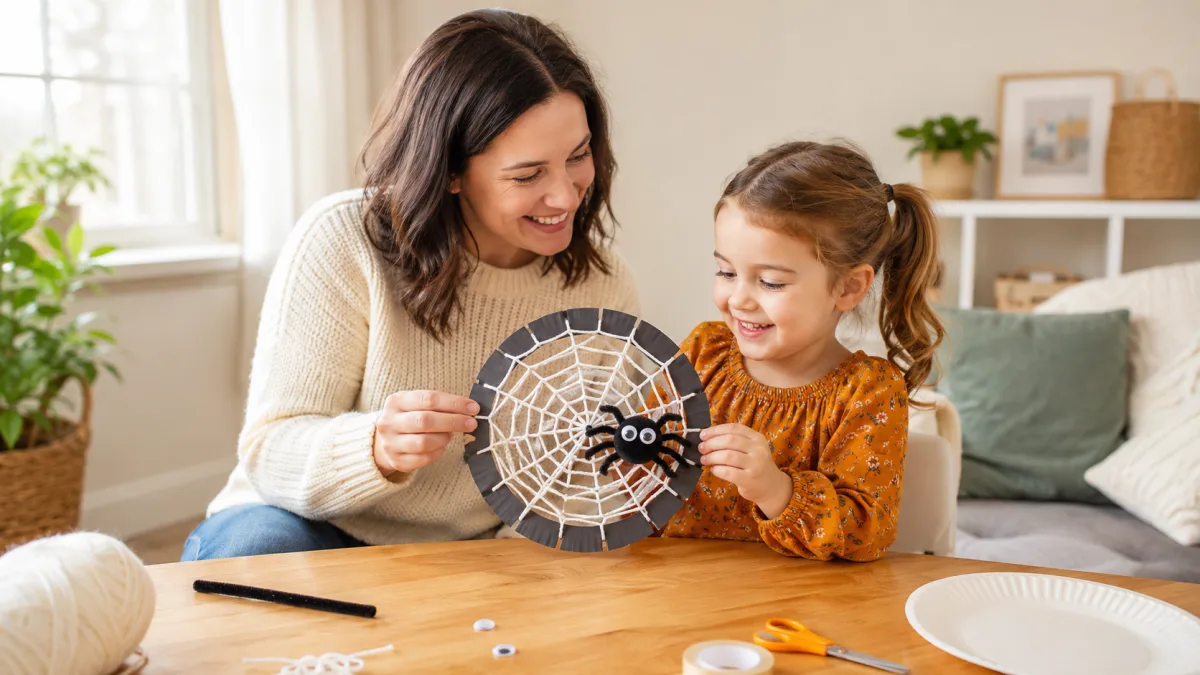
Snip notches round a paper plate, wind wool across it, and you have a web. Good threading practice hiding inside a Halloween craft.
Cut notches around a paper plate and wind wool across it to make a spider web. Needs a plate, wool and scissors. Suits ages 3 to 7 and takes about 20 minutes.
The short version
- Cut the notches yourself, a finger-width apart.
- Arm's-span lengths of wool — longer just tangles.
- Crossing the middle is what makes it look like a web.
- Age
- Ages 3–7
- Prep
- 5 min
- Play time
- 20 min
- Mess
- Low
- Difficulty
- Easy
- Where
- Indoor
Why kids love this
The web appears as they go. Every time the wool crosses the middle it looks more like a real one, and that keeps them winding long after you expected them to stop. Adding a spider at the end is the bit everyone waits for.
What you'll need
- A paper plate
- White or black wool
- Scissors
- A black pipe cleaner, or paper, for the spider
- Googly eyes, or a felt tip
- Sticky tape
Before you start
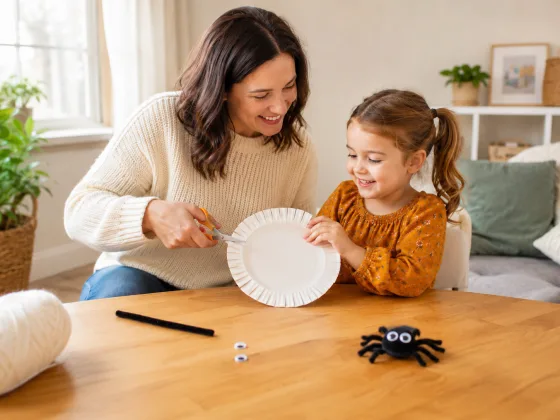
Cut about twelve notches around the edge of the plate, roughly a finger-width apart. An adult job — cutting into a rim is fiddly. Cut a length of wool about an arm's span. Longer tangles.
How to do it
-
Cut notches all around the edge of the plate.
-
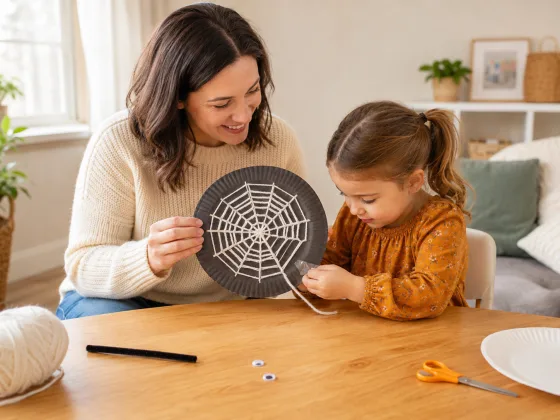
Tape one end of the wool to the back of the plate.

-
Bring the wool up through a notch and pull it across to a notch on the other side.
-
Slot it in and pull it across again to a different notch.
-
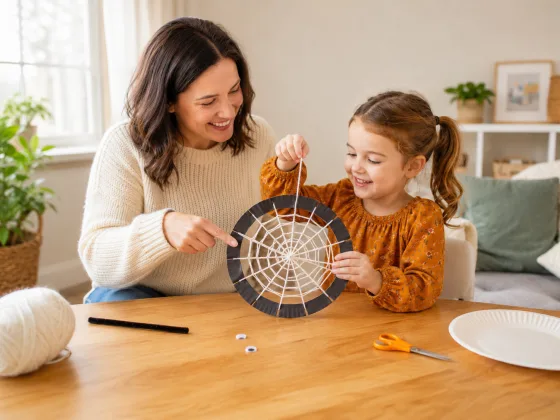
Keep going. Cross the middle as often as you can.
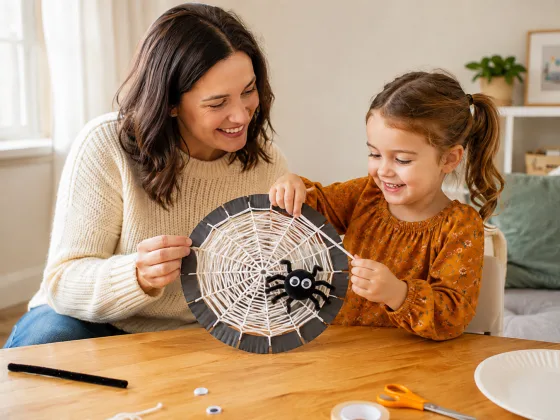
-
When the wool runs out, tape the end to the back.
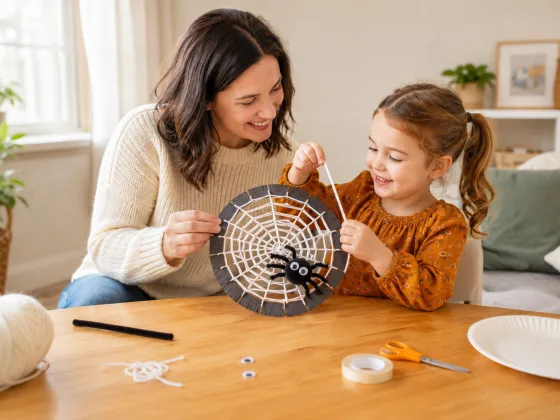
-
Make a spider: fold a pipe cleaner into eight legs, or cut a small circle of paper.
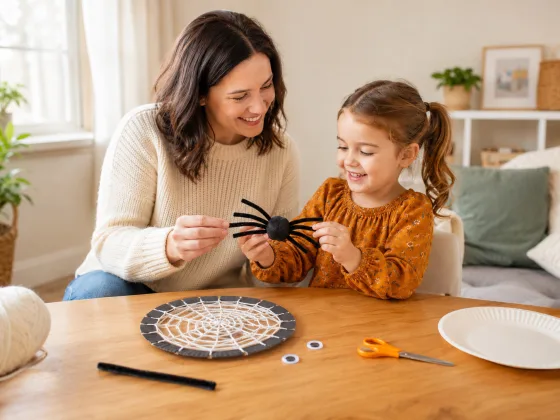
-
Stick the spider on the web. Give it eyes.
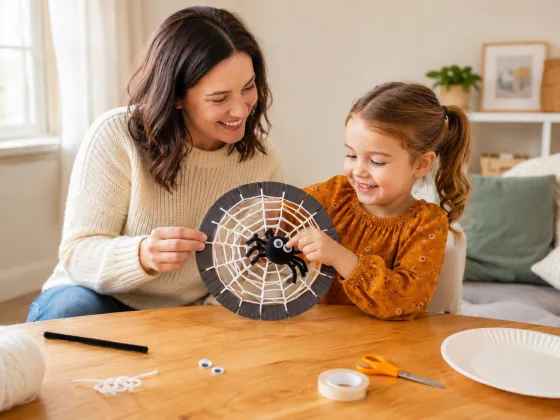
Make it easier
Fewer notches, further apart, and a shorter piece of wool. Six notches is plenty for a three-year-old.
Make it harder
Ask them to make a pattern — always skip two notches — which produces a much neater web and is genuinely tricky.
Other ways to play it
- Use glow-in-the-dark wool.
- Make several and hang them in a window.
- Use a paper plate with the middle cut out for a see-through web.
- Add a second colour of wool halfway through.
- Make a giant one across a doorframe with masking tape and string.
How it changes by age
- Three: six notches, thick wool, help holding the plate.
- Four to five: twelve notches, winding alone.
- Six and up: patterned winding, and cutting their own notches with supervision.
What they're learning
Winding wool and slotting it into a notch is two-handed work that builds real grip strength. The patterned version is early sequencing — skip two, cross over, skip two again.
Clearing up
Wool offcuts in the bin, plate on a window. It keeps well and comes out again next year.