


Preschool Winter Outfits: Cozy Looks for Ages 3–5
Cold mornings run smoother with a plan. These cozy preschool winter outfits for ages 3–5 pair real warmth with growing independence — parent-approved choices, easy layers, and a coat trick kids love.
Dress preschoolers in three layers for winter: a soft base layer, a warm middle layer like fleece, and a waterproof outer layer — following the pediatrician-backed guideline of one more layer than an adult would wear. Add warm socks, waterproof boots, a hat covering the ears, and mittens. Choose easy closures so your child can practice dressing independently.

The short version
- Three layers — base, warm middle, waterproof outer — plus one more than you'd wear
- Two parent-approved choices picked the night before; the child chooses in the morning
- The coat-flip trick lets most four-year-olds put on their own coat
- Mittens beat gloves for warmth and ease at this age
- Run the wiggle test before heading out — comfort now prevents meltdowns later
- Label everything; keep spare mittens and socks at school
- Age
- Ages 3–5
Why kids love this
At this age "I do it myself!" beats almost everything, and these preschool winter outfits turn getting dressed from a power struggle into something kids own. They pick the outfit, flip the coat, and pass the wiggle test — chosen layers feel like playground armor, not a forced costume.
What you'll need
- Two complete parent-approved outfits, ready the night before
- Long-sleeve base layers and warm pants (leggings, joggers, jeans)
- A fleece or sweater with an easy zipper
- A warm winter coat with a front zipper
- Warm socks — wool blend beats cotton on cold days
- Waterproof winter boots with growing room
- Knit hat covering the ears + mittens (warmer, easier than gloves)
- Snow pants for snow days (optional); a low bench by the door
Before you start
1. Each evening, lay two forecast-ready outfits side by side on the bed. 2. Line up coat, boots, hat, mittens by the front door. 3. Check tomorrow's temperature together: "38 degrees — two-warm-layers morning." Thirty seconds of weather awareness.
How to do it
-
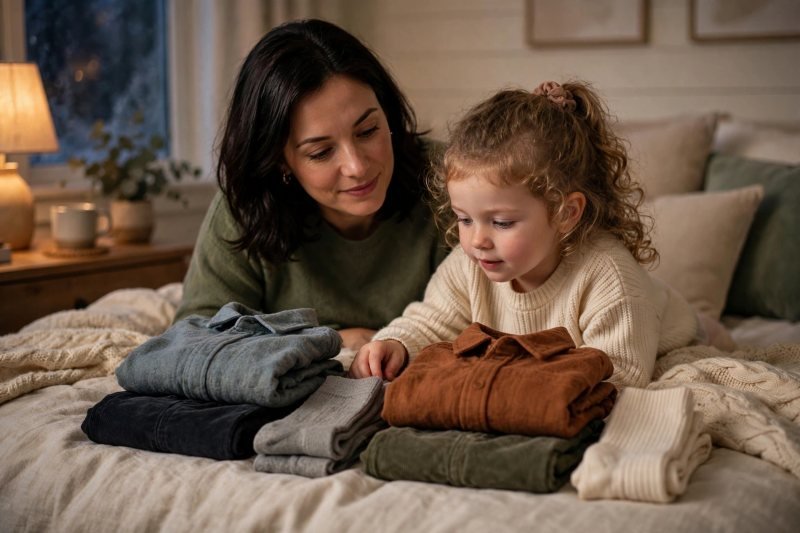
**Lay out two outfits the night before.** After dinner, choose two complete outfits that both suit tomorrow's weather and lay them side by side on the bed. Say: "I'm the planner tonight, you're the chooser in the morning — two cozy options, you pick the winner." Let your child smooth a sleeve or line up the socks; that tiny job makes the morning choice feel like theirs. Two ready outfits means the day starts with a win.
-
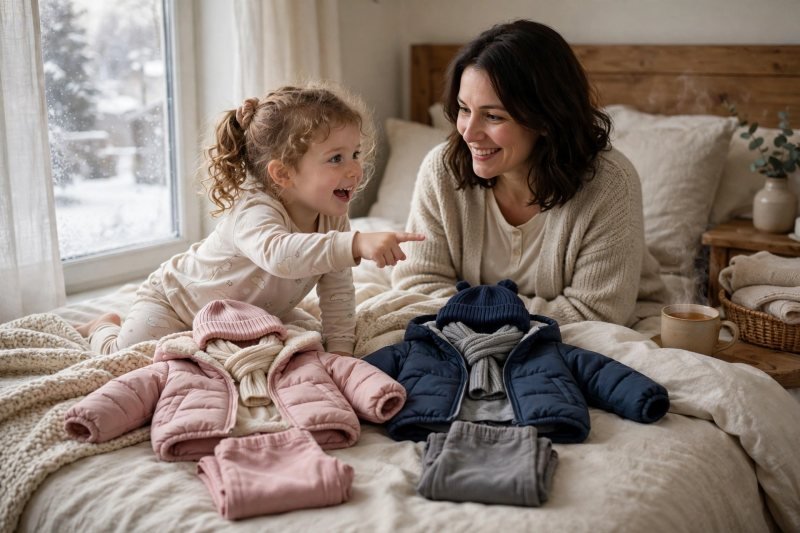
**Let your preschooler make the morning pick.** Walk your pajamaed child to the bed: "Outfit A or outfit B — which is today's winner?" Say it with a flourish — the choosing is the point. Celebrate the pick — "Great choice, that fleece is extra warm today!" If they stall, add a tiny race: "Point to your pick before I count to five!" The other outfit goes back drama-free, and your child starts dressing already feeling in charge.
-
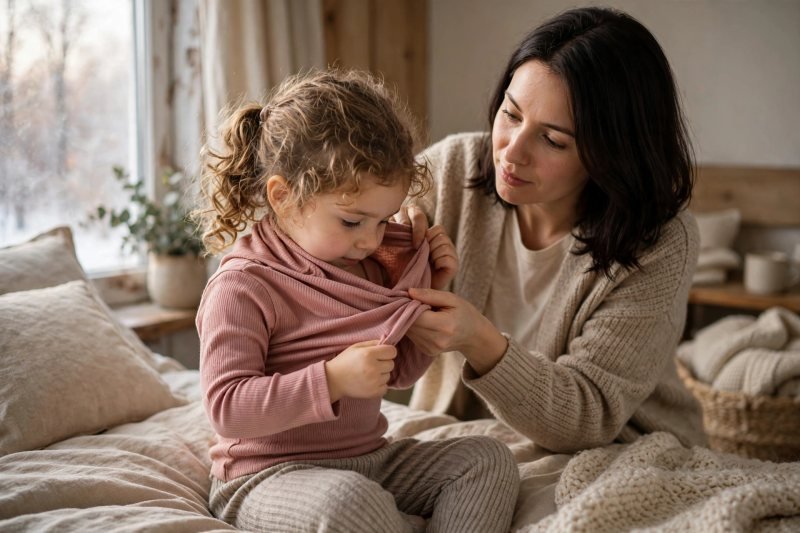
**Start with the base layer.** Base layer first: long-sleeve shirt, pants, warm socks. Say: "Base layer first — like pajamas, but warmer." Teach the over-the-head move: scrunch the shirt, find the head hole, pop through — "nose through the hole, arms find the tunnels." Let them wrestle a sleeve solo before you help; preschoolers learn the sequence by doing it badly first. Then: "Cozy layer done — now the warm layer."
-
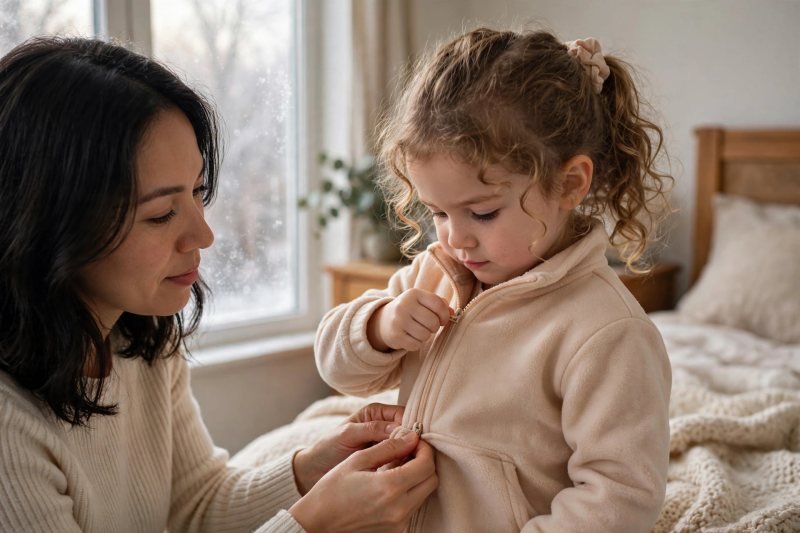
**Add the warm middle layer and practice the zipper.** Next the fleece or sweater — the layer that traps heat. Say: "Warm layer time — zip it like a rocket taking off!" Hold the zipper base steady while they pull the tab; real fine-motor practice, worth doing slowly. With snaps, let them try one while you finish the rest — effort beats perfection. On snow days add snow pants now, before the coat, while little legs bend easily. Zip done means the coat trick is next.
-
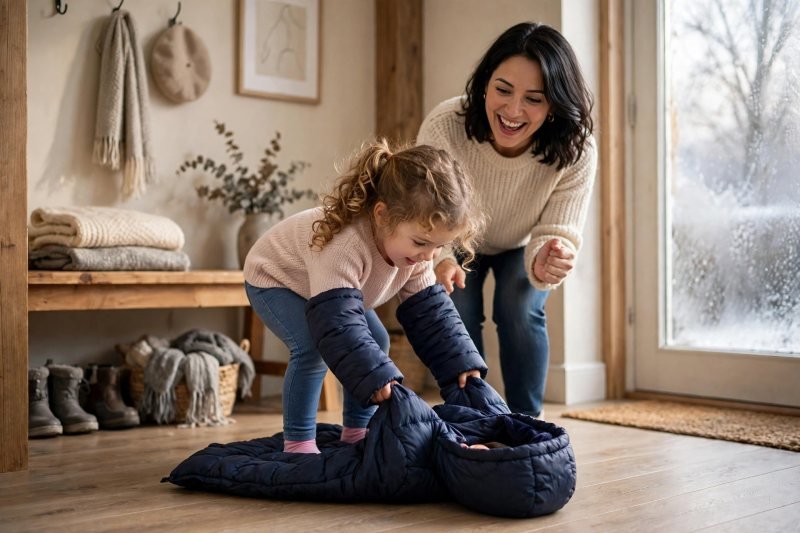
**Do the coat-flip trick.** The step kids brag about. Lay the coat upside down on the floor — inside up, hood by their toes. Say: "Magic coat trick! Hands in the sleeves, and on three — FLIP it over your head!" They bend, slide both hands in, and flip — arms land in the sleeves, coat lands right-side up. Cheer like a magic show; to a four-year-old it is one. Then they zip, or you start it and they finish — last winter's impossible coat is now a solo job.
-
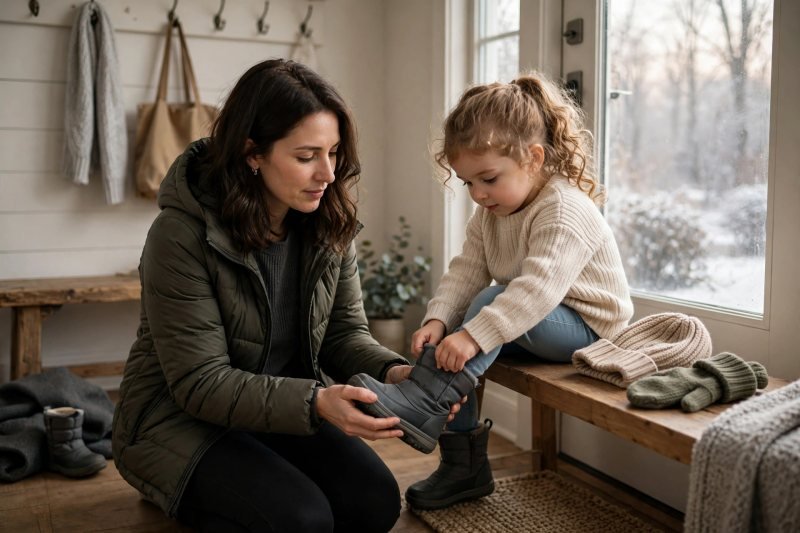
**Boots, hat, and mittens check.** Sit on the bench together — boots are a sitting-down job. Say: "Boot check! Slide them on, stand up, wiggle — can your toes dance?" Check fit yourself: thumb's width of growing room, snug heel, no pinched toes. Hat next, over the ears — "ears are the first thing cold tries to steal" — mittens last, since nothing gets done in mitten hands. If they resist the hat, let them carry it and put it on "when the wind says hello" — that compromise lasts about ninety seconds outside.
-
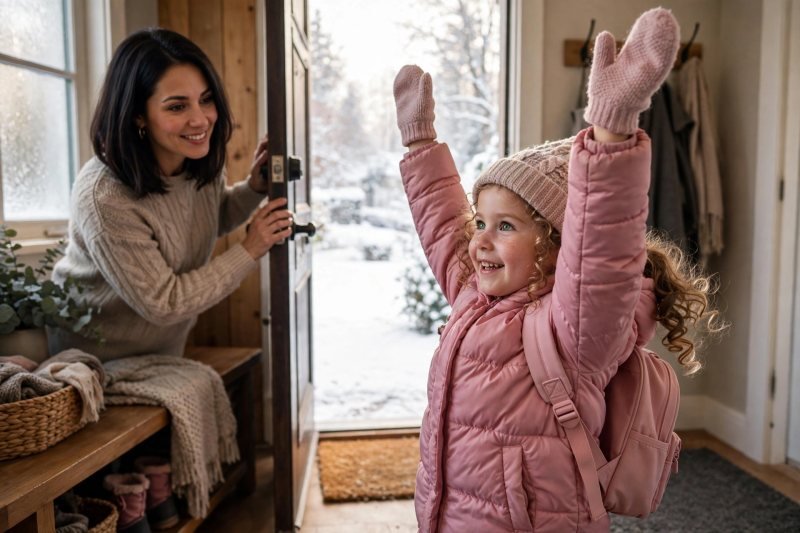
**Pass the wiggle test and head out.** Fully dressed: arms up, big squat, touch toes, spin once. Say: "Wiggle test! Move like a snowman — arms up, bend down, all around!" Fix pinches or itches now — a scratchy seam ruins mornings. Final check: zippers up, hat over ears, mittens on, backpack ready. Then out the door naming the win: "Warm, cozy, and you dressed yourself — high five!" Ten minutes once it's habit, ending at the door, never in a standoff.


Make it easier
Offer two shirts, not two outfits; handle zippers and snaps while they "help" holding fabric; rehearse the coat-flip as a weekend floor game; dress in the warm bedroom. Small simplifications keep it joyful — and zipper practice is one of the best [fine-motor activities for preschoolers](https://brightplaydays.com/activities/fine-motor-activities-for-preschoolers/) with zero setup.
Make it harder
Confident fives can plan the week's outfits Sunday night — two options per day, checked against the forecast — and pack their own spare mittens. Time the routine and let them beat yesterday's record: the "dress yourself" race makes zippers fly.
Other ways to play it
- Rainy-day: raincoat and rain pants, same boots.
- Playground: add snow pants and a neck warmer; skip the nice sweater.
- Car-ride: lighter layers only, since cars heat fast.
- Mismatch Monday: monthly, let them wear any wild combo around the house — joy is a valid outfit criterion.
How it changes by age
- At 3, you handle zippers and snaps while they practice choosing and the flip. At 4, most manage the full sequence with you steadying zippers. At 5, many dress fully solo — you handle setup and the final check. Self-dressing is a classic [kindergarten readiness checklist](https://brightplaydays.com/activities/kindergarten-readiness-checklist/) skill; follow the child, not the birthday.
What they're learning
Real independence: sequencing a multi-step task, deciding within safe boundaries, building fine-motor strength on zippers and snaps — plus weather awareness, linking the evening's temperature to the morning's clothes. Pair it with more [preschool learning activities at home](https://brightplaydays.com/activities/preschool-learning-activities-at-home/) and ordinary mornings become a quiet curriculum.
Clearing up
Kids don't need bundling until they can't move: pediatric guidance says about one more layer than an adult. Overheating makes them cranky and sweaty, which chills them faster. Cotton holds sweat; wool-blend or synthetic stays drier. Cold air doesn't cause colds — viruses do — but warm, dry kids play outside far longer.
Questions parents ask
What should a preschooler wear in winter?
How many layers does a 3 to 5-year-old need in winter?
How can I teach my preschooler to put on their own coat?
What is the one-more-layer rule for kids in winter?
My preschooler refuses to wear a hat — what should I do?
Label everything — every preschool lost-and-found is a mitten graveyard. Keep spare mittens and socks in their cubby; wet happens. Let them match socks for stealth sorting practice. If mornings stay chaotic, shift the routine fifteen minutes earlier — rushing turns dressing back into a battle.

save it for later
Pin this for the next rainy afternoon
Keep it on a board so it is there when you need it, rather than when you happened to find it.
Save to Pinterest