


Sense of Smell Activities: Mystery Scent Jars
Looking for sense of smell activities your 5–6-year-old will ask to play again? Mystery scent jars turn vanilla, lemon, cinnamon, cocoa, coffee beans and orange peel into a guessing game — with real nose science at the end.
Mystery scent jars are a smell-guessing game for ages 5–6: dab vanilla, lemon, cinnamon, cocoa, coffee beans or orange peel onto cotton balls in covered jars and let your child sniff and guess. It builds observation, describing words and smell memory — plus the story of how noses message the brain.

The short version
- Six jars, six cotton balls, six kitchen scents — no special equipment.
- Kitchen scents only; never undiluted essential oils.
- The adult holds each jar a few inches from the child's nose.
- Two gentle sniffs, then a guess — describing counts before naming.
- The reveal teaches: sniff again with eyes open to link smell and name.
- Age
- Ages 5–6
- Prep
- 10 min
- Play time
- 25 min
- Mess
- Low
- Difficulty
- Easy
- Where
- Indoor
Why kids love this
The covered jars are the hook: your child can smell something but can't see it, and the "what IS that?" itch does the motivating. Every wrong guess earns the reveal — when they see the cinnamon they've been smelling. Most five-year-olds nail lemon and vanilla first try and head into round two like detectives.
What you'll need
- Six small glass jars with lids (jam jars or spice jars; plastic tubs work too)
- Six cotton balls
- Six small cloth napkins, tea towels or fabric squares to cover the jars
- Vanilla extract (adult handles this one)
- Half a lemon
- Ground cinnamon
- Cocoa powder
- A few whole coffee beans
- Strips of orange or tangerine peel
Before you start
Check for food allergies first — ask the child's parent if you're not the parent — especially for cocoa, cinnamon and citrus. Wash the jars and dry them fully; leftover jam smell cheats the game. Cut the lemon and peel the orange yourself, and keep lids loose the whole time.
How to do it
-
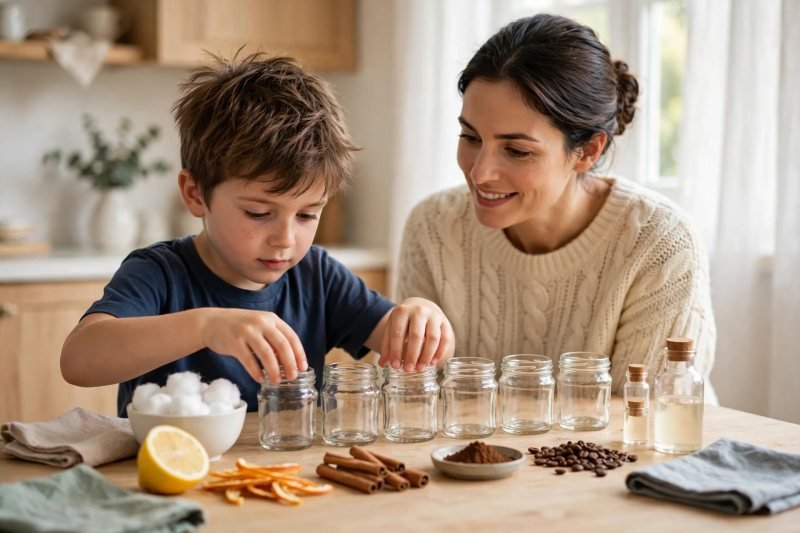
Line up the jars. Line up six clean, dry jars and set the cotton balls beside them.
-
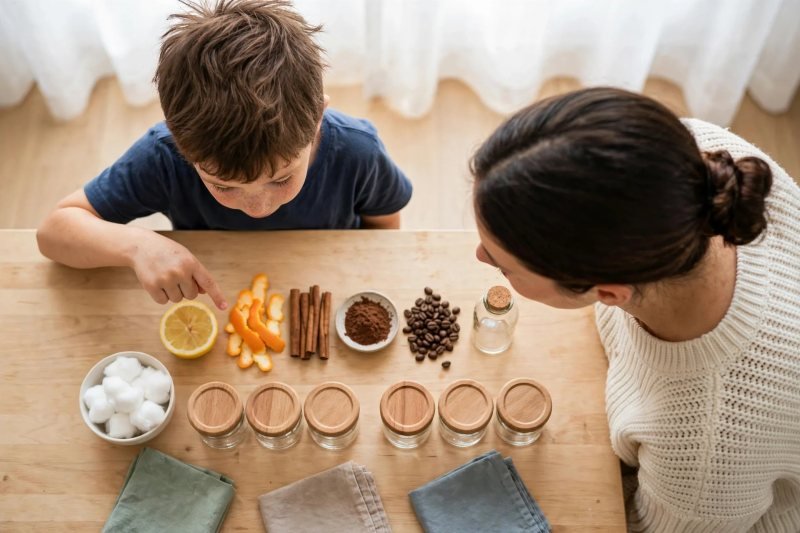
Choose the six scents together. Pick vanilla, lemon, cinnamon, cocoa, coffee beans, and orange peel together, so the guessing is fair.
-
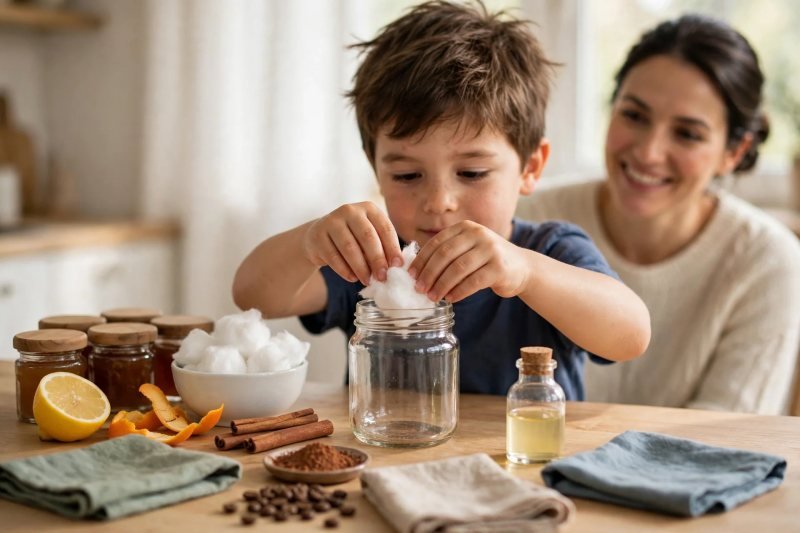
Drop in the cotton balls. Drop one cotton ball into each jar.
-
Add one scent per jar. Add vanilla drops, a squeeze of lemon, a sprinkle of cinnamon, and a sprinkle of cocoa; coffee beans and orange peel go straight in.

-
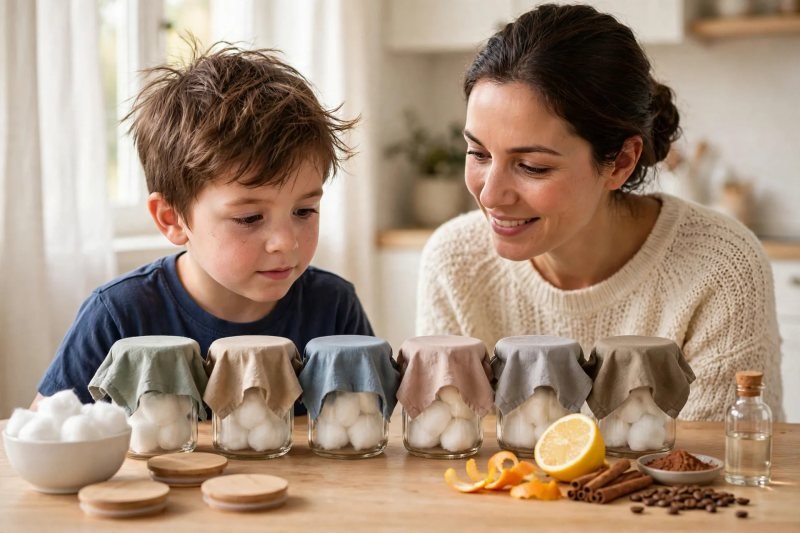
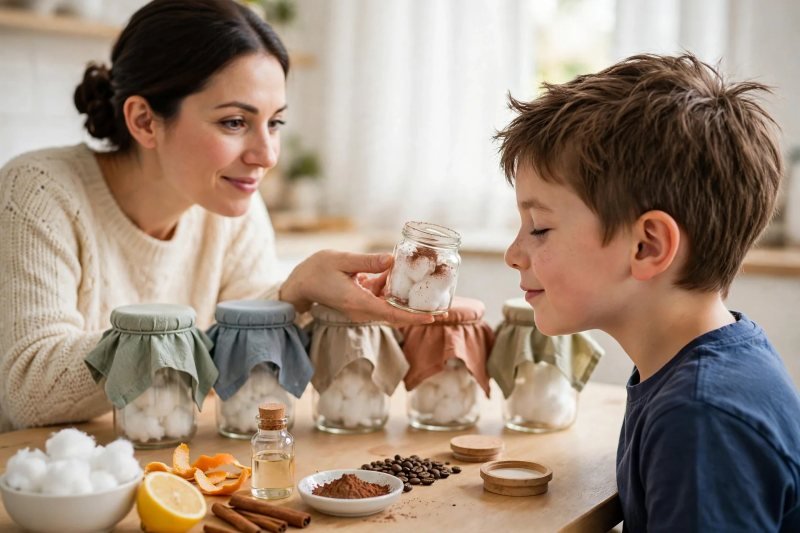
Cover and shuffle. Cover each jar with a cloth and shuffle them.
-
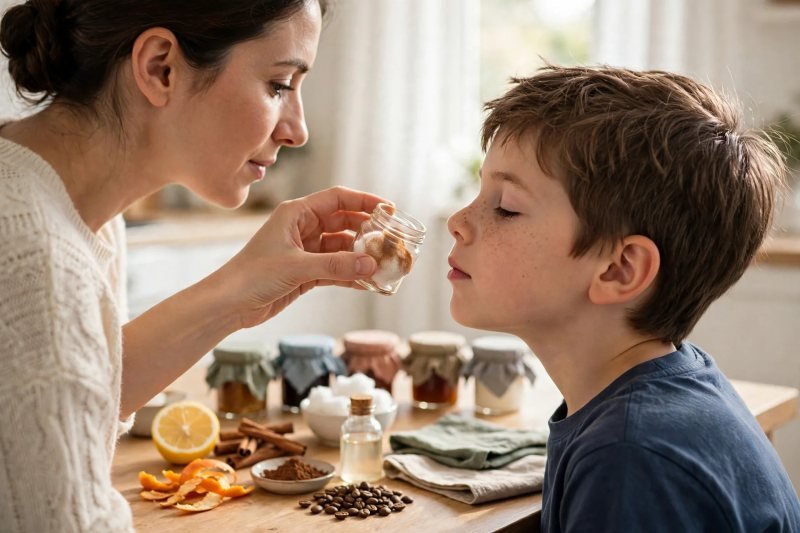
Sniff with eyes closed. Your child closes their eyes — no blindfold. Hold one uncovered jar a few inches from their nose for two gentle sniffs; it never touches their face.
-
Shout the guess. They shout their guess. Wrong guesses are welcome.

-
Reveal together. Lift the cloth, peek at the cotton ball, and sniff again with eyes open so smell and name connect.

-
Play round two. Re-cover, shuffle to a new order, guess again. Scores almost always improve — the nose is learning.
-
Tell the science story. Invisible scent bits float off the cinnamon, drift up the nose, get caught by smell sensors, and the sensors message the brain — which checks its memory and says "cinnamon!" Smell and taste team up, which is why food tastes dull with a blocked nose — try our taste test for preschoolers next.


Make it easier
Start with three jars — lemon, vanilla and cinnamon are easiest. Play round one with eyes open, and accept describing before naming.
Make it harder
Try trickier pairs — orange peel versus lemon, cocoa versus cinnamon — and keep score. Or your child builds the jars and you guess.
Other ways to play it
- Garden herbs round. Crush mint, basil or rosemary leaves gently in the jars.
- Smell and draw. After each sniff, your child draws what the smell reminds them of.
- More kitchen science. The baking soda vinegar volcano is the next big 'wow' — and our easy science experiments for toddlers have more ideas for younger siblings.
How it changes by age
- Five and six: the sweet spot. Accept describing before naming — "sweet and warm" is a win before "cinnamon" arrives. Six-year-olds are ready for trickier pairs and a score chart.
- Younger siblings (3–4): skip guessing — let them sniff two or three open jars freely, with you holding every jar. Start with our five senses activities for preschoolers for versions built for their age.
- Seven and up: let them invent scents within the kitchen-only rule. Garlic rounds are gross and hilarious.
What they're learning
Real science thinking in disguise: observe (two sniffs), predict (the guess), check (the reveal). Your child builds sensory vocabulary — sweet, sharp, warm, fresh, spicy, faint — and trains smell memory. For younger children, our five senses activities for toddlers build the same noticing skills, and the dancing raisins experiment is another kitchen science favorite.
Clearing up
Toss the cotton balls and wipe the table. Wash and dry the jars for next time; cloth covers and lids keep for weeks.
Questions parents ask
What are good sense of smell activities for kids?
How do you make mystery scent jars?
What scents are safe for kids to smell in guessing games?
Why should kids describe a smell before naming it?
How does the sense of smell actually work?

save it for later
Pin this for the next rainy afternoon
Keep it on a board so it is there when you need it, rather than when you happened to find it.
Save to Pinterest

