


Taste Test for Preschoolers: Sweet, Salty, Sour
A taste test activity for preschoolers teaching sweet, salty and sour: tiny samples of familiar foods, sniff-and-taste steps, and a sorting game.
In a taste test activity for preschoolers, kids aged 3–4 look at, smell, and take tiny tastes of familiar foods — banana, salt water, lemon — then name the tastes (sweet, salty, sour) and sort samples into groups. It builds vocabulary and observation in 20 minutes. Check allergies first; keep every taste tiny.

The short version
- Teaches sweet, salty and sour through look, smell, tiny taste and sort steps.
- Best at ages 3–4; 20–30 minutes; common kitchen foods in tiny amounts.
- Same order every time: look, smell, taste, name it, sort it.
- Allergy warning first: only foods the family already eats.
- Tiny tastes only, spit cups always allowed — the sense of taste, not snacking.
- Sorting builds early classification and science vocabulary.
- Age
- Ages 3–4
- Prep
- 10 min
- Mess
- Low
- Difficulty
- Easy
- Where
- Indoor
Why kids love this
Preschoolers are told "just eat it" all day — here they are the official taste tester. One brave sniff, one brave nibble, a verdict. The sour faces are the highlight: a tiny lick of lemon makes the most dramatic face your child has ever pulled. Banana and apple belong together, the lemon belongs somewhere else — a puzzle that never feels like a lesson.
What you'll need
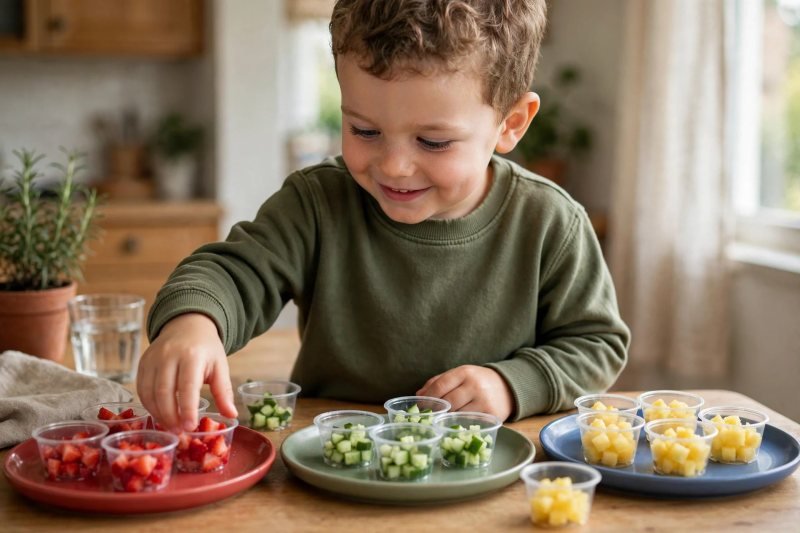
- 3–4 small cups or ramekins, one per sample
- A pinch of table salt stirred into a tablespoon of water (salty)
- 2 banana slices (sweet); apple slices as backup
- 1 small lemon wedge, for one lick (sour)
- 1–2 cucumber slices (mild, for comparison)
- A spare "spit cup" for spit-outs, no questions asked
- A damp towel and a rinse cup
- Three different-colored plates as sorting zones
- Allergy safety: use only foods your family already eats. This list avoids peanuts, tree nuts, dairy, egg, wheat and soy — never use an unfamiliar food.
Before you start
Confirm safety first. Ask about allergies and confirm every sample is something the child already eats. When in doubt, leave it out. Set out samples. Mix the salt water; slice the banana and cucumber; cut one small lemon wedge. Tiny portions. Arrange and wash up. Line up cups and plates; set the spit cup, water cup and towel within reach. Wash both pairs of hands.
How to do it
-
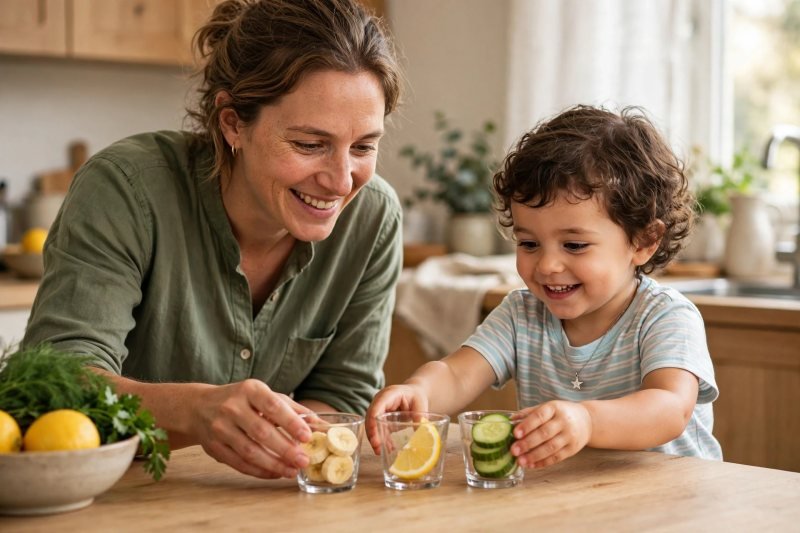
Set up together. Line up the cups; appoint your child the official taste tester.
-
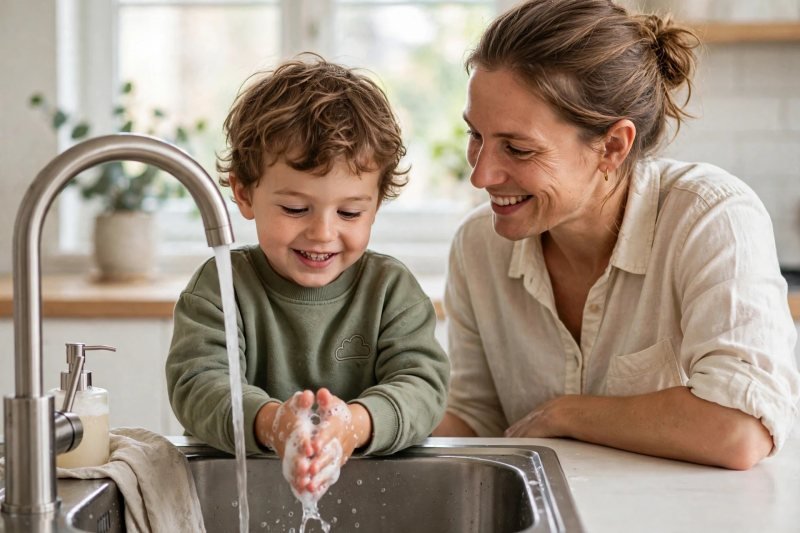
Wash hands together. Warm water, soap, dry — scientists wash up first.
-
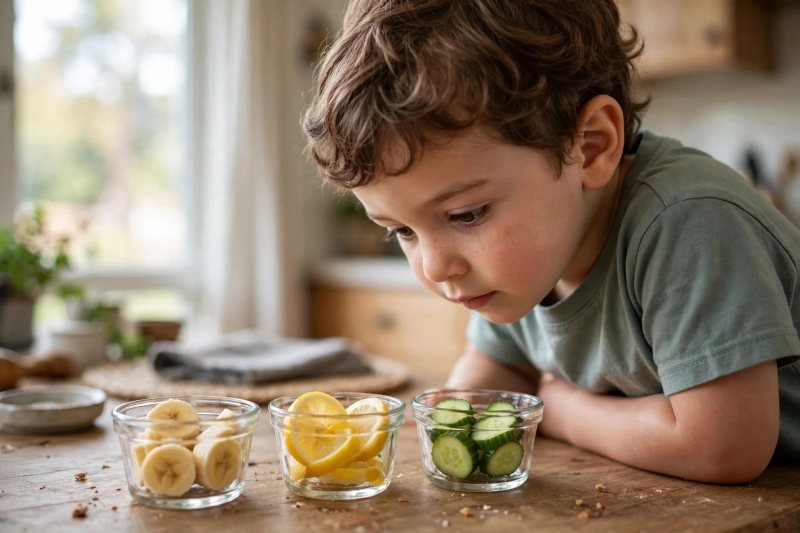
Look first. Hold up each cup: "What color? Shiny or soft?"
-
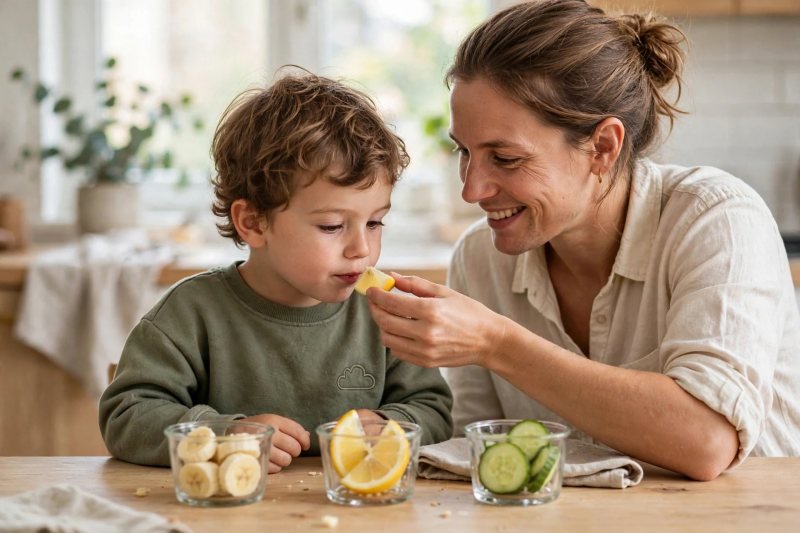
Smell together. Hold a cup under their nose: "The lemon smells sharp. The banana smells sweet."
-
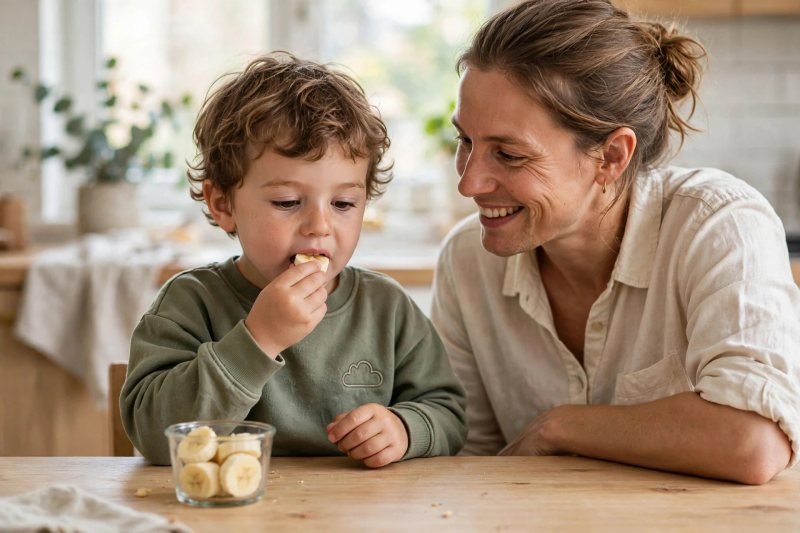
Taste sweet. One tiny nibble of banana. "Sweet like what?" Help them land on sweet — soft and sugary.
-
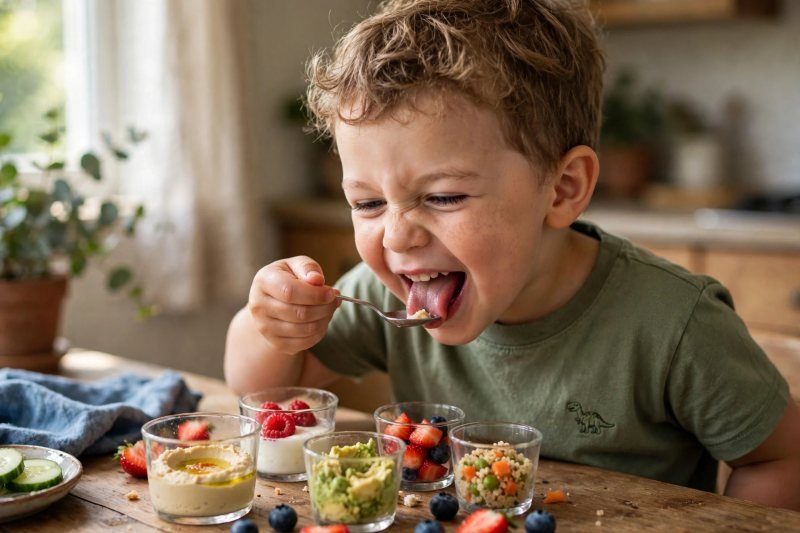
Taste salty. Sip water, then one small lick of salt water. "That's salty — like chips." Expect a funny face.
-
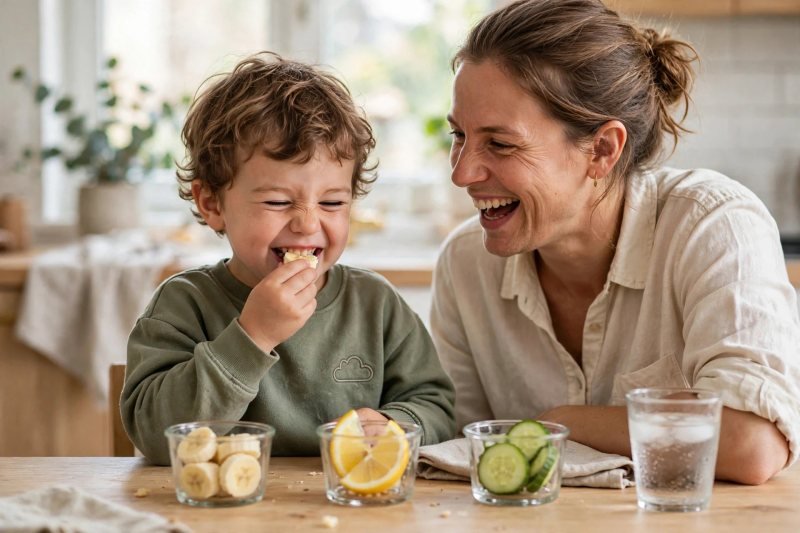
Taste sour. One tiny lick of lemon. "Squinchy mouth! That's sour." Let them laugh.
-
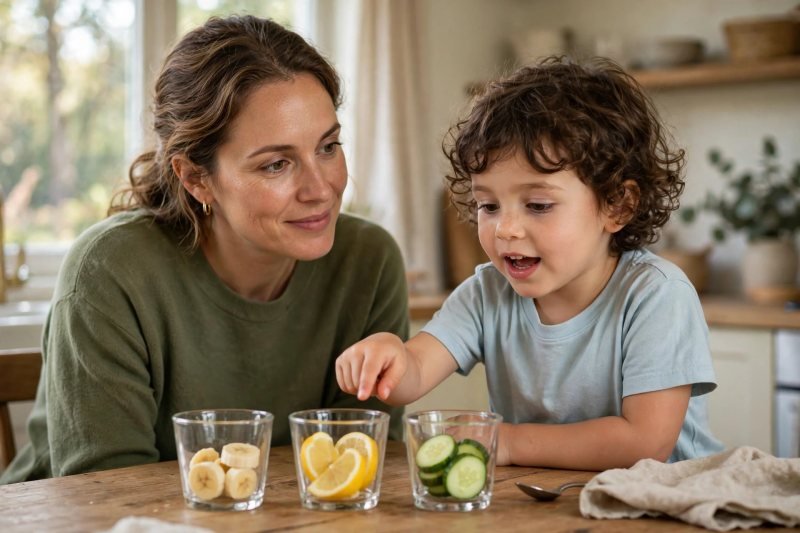
Name each taste. Point to the cups; your child says sweet, salty, sour.
-
Sort into groups. Slide the plates forward: "Put all the sweet ones together."
-
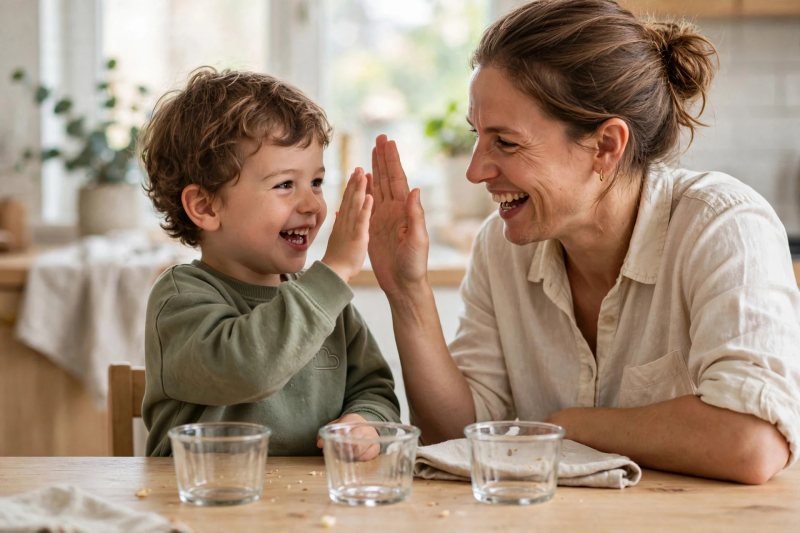
Celebrate. "Team sweet! Team sour!" Ask which was their favorite. End with water, the towel and a high five.


Make it easier
Use two tastes only — sweet and sour — and save salty for another day. You do the sorting while your child hands you each cup.
Make it harder
Blindfold: cover their eyes and let them guess each sample by taste alone. Mystery cup: hide an orange wedge under a cup, taste it, name the taste, place it in its group. Compare: "Sweeter than the banana?" — early math language in disguise. The mystery-cup round is early math too — our counting activities for toddlers build on the same sorting brain.
Other ways to play it
- Grown-up tastes: add bitter (dark chocolate the family already eats) and savory (a lick of plain tomato). Bitter develops with age.
- Texture round: sort the same foods by texture — smooth banana, crisp cucumber, juicy lemon.
- Smell-only: cover the cups and identify each by smell alone. Great for car rides.
- For a wilder kitchen experiment once the tasting is done, try magic milk or the baking soda and vinegar volcano.
How it changes by age
- Threes and fours are the sweet spot: food opinions, dramatic reactions, keen taste buds. Threes follow look-smell-taste with coaching; fours run it themselves. Twos join as smellers only — lemon and salt are rough on new taste buds. Fives and sixes move to the blindfold and grown-up-tastes variations. Younger siblings can start with toddler learning activities at home while the preschoolers taste.
What they're learning
Basic tastes vocabulary: sweet, salty, sour — anchored to real memories. Sensory observation: look, smell, taste in order builds the notice-before-you-decide habit. Sorting and classifying: grouping by taste is early data work — same property, same group. Expressive language: describing a taste ("squinchy!", "yummy-sharp") stretches vocabulary and confidence. Self-control: rinsing between tastes practices waiting. For the bigger sensory picture, our five senses activities for preschoolers stretch the same look-smell-taste routine across all five senses, and easy science experiments for toddlers build on the same kitchen-table curiosity.
Clearing up
Everything goes in the regular trash or compost; rinse cups with soap and water. Wipe the table — salt water leaves a ring and lemon juice is sticky. Leftover banana, apple and cucumber become the after-activity snack.
Questions parents ask
What foods are safe for a preschooler taste test?
How do you do a taste test activity for preschoolers?
What age is right for a taste test activity?
What are the basic tastes to teach preschoolers?
What if my child refuses to taste something?
Is a taste test safe for a picky eater?
Do this 30–60 minutes before a meal, when your child is a little hungry. For selective eaters, use foods they already like. The goal is naming tastes, not conquering new foods. Repeat tastes are the method, not cheating.


