


Rescue the Frozen Toys
Freeze small toys in a tub of water overnight, then hand over warm water, salt and a spoon. It buys a genuinely quiet hour.
Freeze small plastic toys in a tub of water overnight, then let children free them using warm water, salt, spoons and pipettes. Suits ages 3 to 8, needs five minutes of setup the night before, and lasts up to an hour.
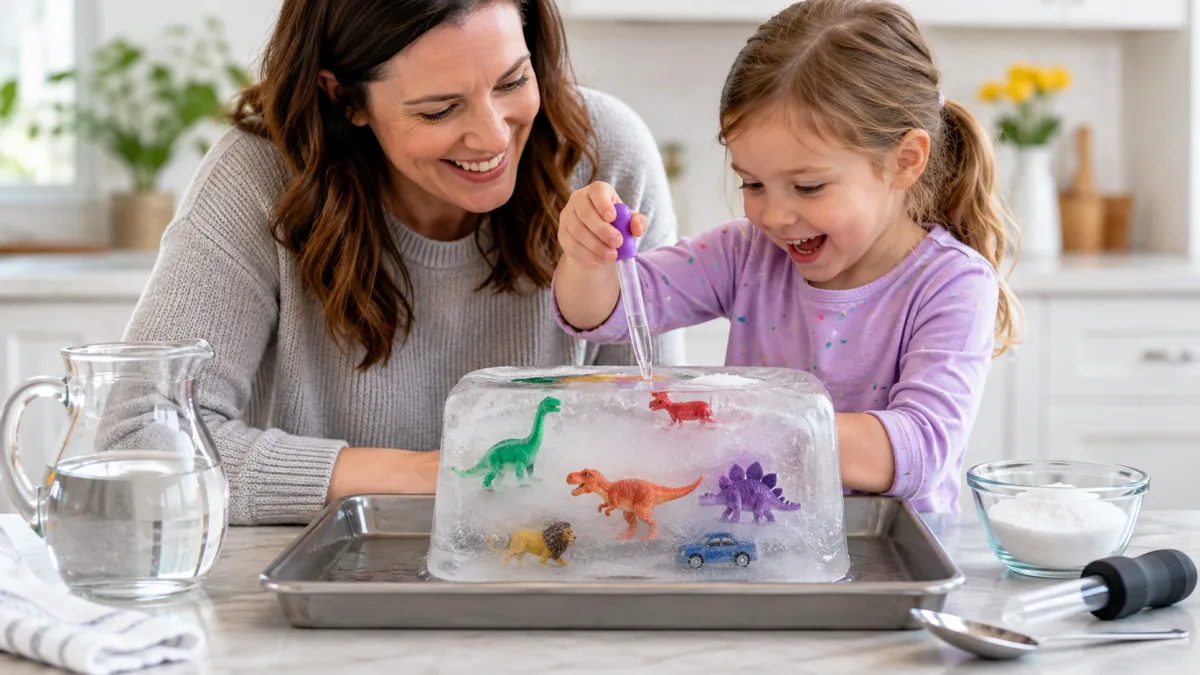
The short version
- Freeze in two stages so the toys are suspended, not all at the bottom.
- Warm water, not hot.
- Salt is the surprising one — save it for when interest starts to dip.
- Age
- Ages 3–8
- Prep
- 5 min
- Play time
- 50 min
- Mess
- Medium
- Difficulty
- Easy
- Where
- Either
Why kids love this
There is a clear goal — get the dinosaurs out — and visible progress the whole way through. Children keep going long past the point most activities have been abandoned. The methods are the interesting part. Warm water works fast, salt works slowly and dramatically, and a spoon is mostly just satisfying.
What you'll need
- A plastic tub or bowl that fits in your freezer
- Small plastic toys — dinosaurs, animals, cars, figures
- Water
- A jug of warm (not hot) water
- Table salt
- Spoons, pipettes or a turkey baster
- A tray or towel to catch the meltwater
Before you start
Do this the night before. Half-fill the tub, add the toys, freeze for two hours, then top up with water and freeze overnight — that suspends the toys in the middle instead of leaving them all at the bottom. Set up on a tray, or outside, or on the draining board.
How to do it
-
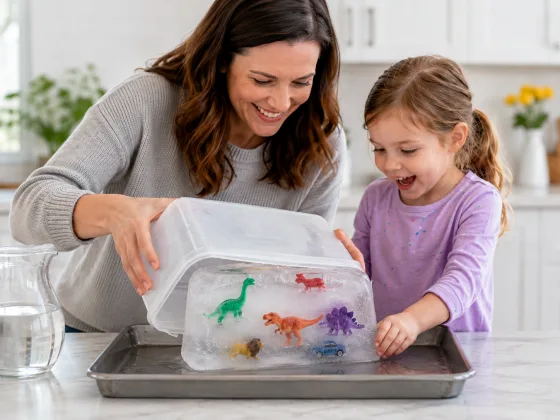
Turn the ice block out of the tub into a tray. Run the outside of the tub under a warm tap for a few seconds if it is stuck.
-
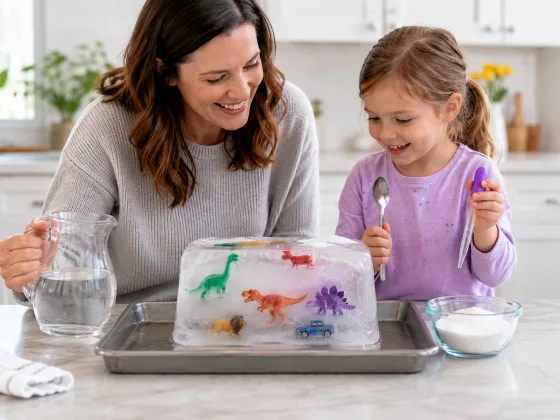
Give your child the warm water, salt and tools.
-
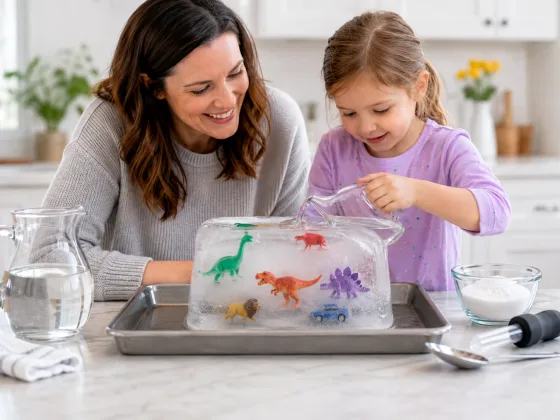
Let them work out what to try first. Do not suggest anything yet.
-
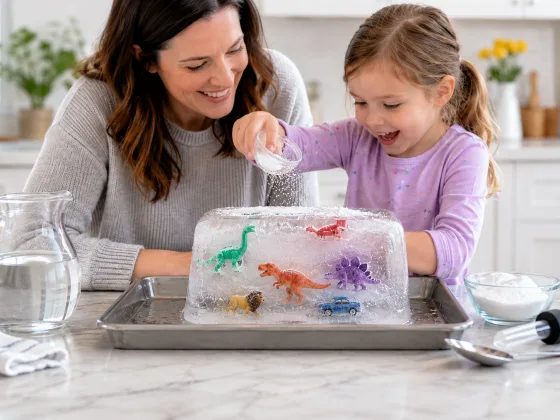
When they slow down, offer the salt: sprinkle it on and watch the tunnels it makes.
-
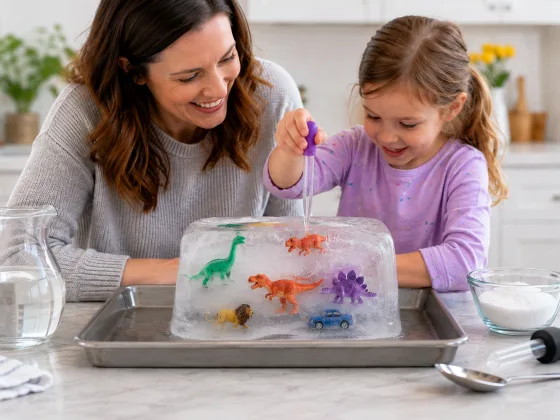
Use the pipette to drip warm water onto one spot and see how much faster it goes.
-
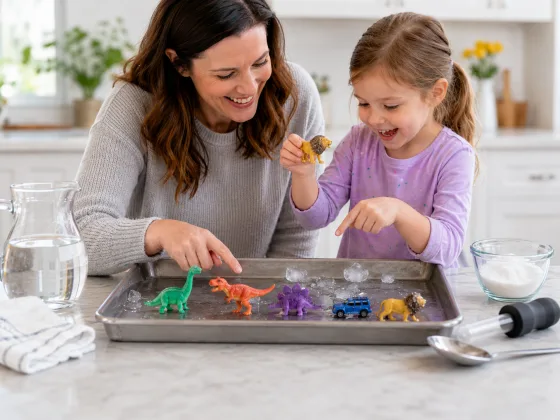
Count the toys as they come free so there is a clear finish.
Make it easier
Use a shallower block so the toys are nearer the surface, and start with warm water rather than salt. A thick block can defeat a three-year-old.
Make it harder
Ask them to predict which method will be fastest and then time each one. Or freeze the block solid and deep so it needs real persistence.
Other ways to play it
- Add food colouring to the water before freezing for coloured ice.
- Freeze in a balloon instead of a tub for an ice sphere — peel the balloon off.
- Freeze letters or numbers and have them read out as they are freed.
- Make two blocks and race.
- Freeze flowers or leaves instead of toys for something prettier.
How it changes by age
- Three: a thin block, warm water, and expect them to mostly pour.
- Four to five: they will try several methods and have strong opinions about which is best.
- Six and up: turn it into an experiment with timings and a prediction first.
What they're learning
Melting, temperature and what salt does to ice — all observed rather than explained. It is also a genuine test of persistence, which is worth as much as the science. Children who keep going at a slow problem are practising something useful.
Clearing up
Pour the meltwater away, rinse the toys and dry them. The whole thing takes two minutes because the mess is only water.