


Dancing Raisins Experiment for Preschoolers
Drop raisins into fizzy water and watch them dance up and down. This easy preschool science experiment uses simple kitchen materials and delivers a big wow moment in under a minute.
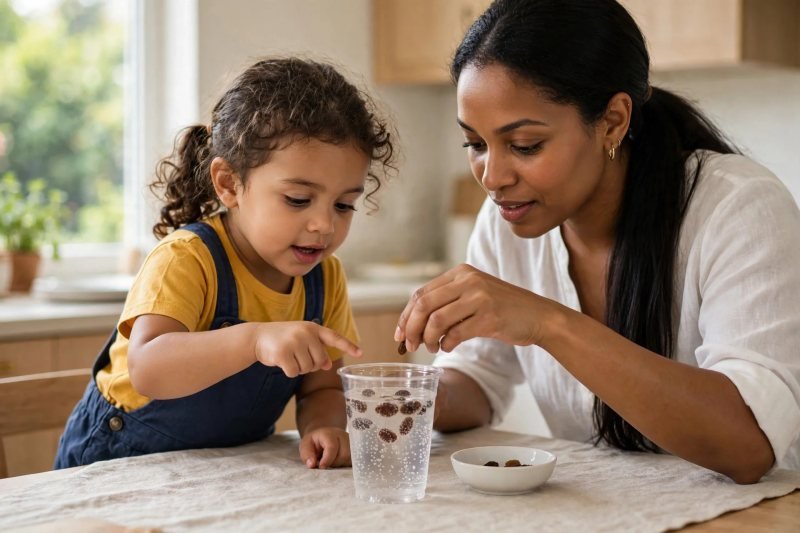
The dancing raisins experiment works by dropping a few raisins into a clear cup of club soda or seltzer. Tiny carbon dioxide bubbles stick to the wrinkled raisins and lift them up like little balloons. When the bubbles pop at the surface, the raisins sink back down, and the cycle repeats — so the raisins appear to dance. It takes two minutes to set up and suits ages 3–4.

The short version
- - You need only three things: a clear plastic cup, freshly opened club soda or seltzer, and a handful of raisins.
- - Raisins sink, bubbles lift them, the bubbles pop at the surface, and the raisins sink again — repeating the cycle.
- - Always use a plastic cup (never glass) and do not eat or drink the mixture afterward.
- - Raisins are a choking hazard for under-3s — ages 3–4 only, with adult supervision.
- - Children learn observation, cause and effect, prediction, and counting through a repeatable demonstration.
- - The dance stops when the soda goes flat, so open the soda right before you start.
- Age
- Ages 3–4
- Prep
- 2 min
- Play time
- 15 min
- Mess
- Low
- Difficulty
- Easy
- Where
- Indoor
Why kids love this
Preschoolers love a surprise they can watch happen. The moment the raisins start bobbing, most children gasp, giggle, and ask to do it again. It feels like magic, yet it is real science — and slow enough for little eyes to follow. Children do the fun parts themselves: dropping in the raisins, counting them, and narrating the show.
What you'll need
- - 1 clear, sturdy plastic cup (not glass, so it cannot break)
- - About 1 cup (8 oz) of club soda or seltzer, freshly opened for maximum fizz
- - 5–6 raisins
- - A small bowl for the raisins
- - A cloth or paper towel for the table
Before you start
Clear a spot at the kitchen table and lay down the cloth. Set the cup in the middle with the bowl of raisins beside it, and have your child sit so the cup is at eye level. Keep the soda sealed until you are ready, since the fizz is what makes the raisins dance.
How to do it
-
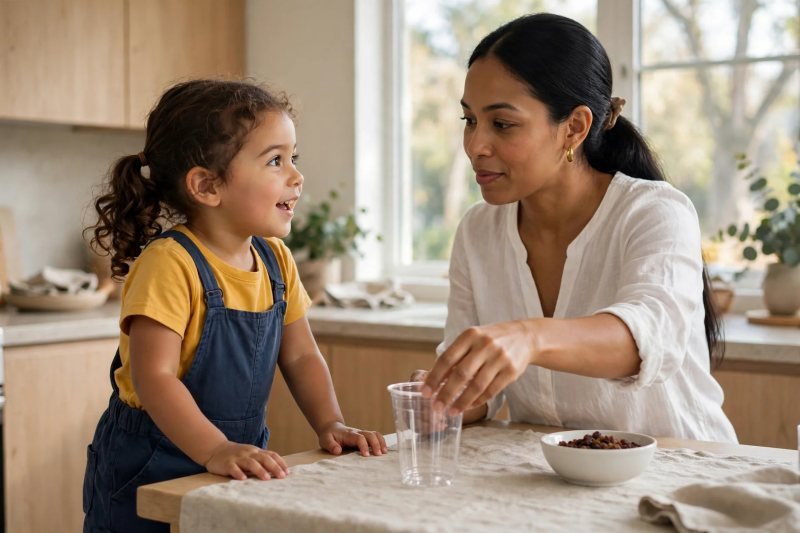
**Step 1 — Set up the cup and raisins.** Set the clear plastic cup on the cloth-covered table, with the bowl of raisins beside it.
-
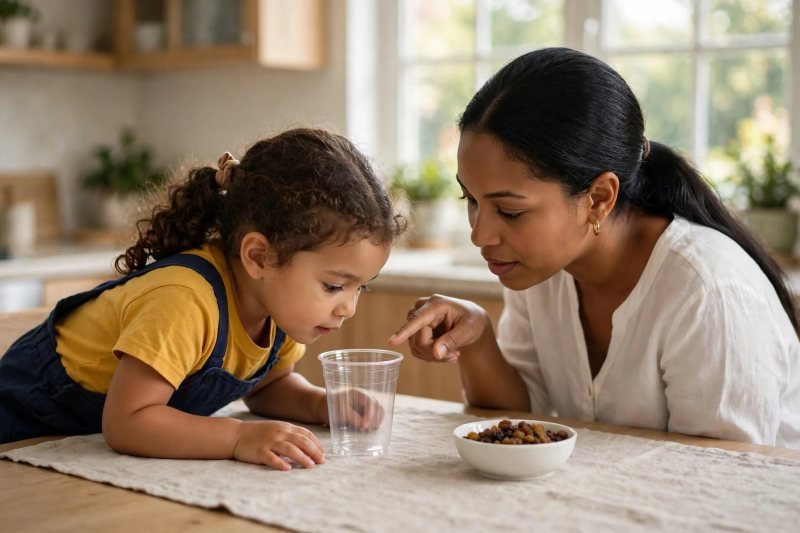
**Step 2 — Sit your child at eye level.** Sit your child at the table so the cup is right at their eye level for the best view.
-
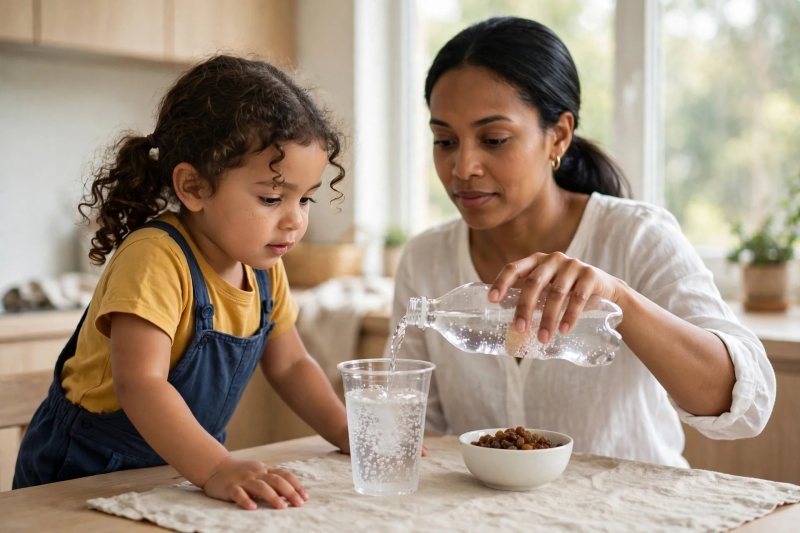
**Step 3 — Pour the fizzy water.** Open the club soda and pour it into the cup until it is about two-thirds full.
-
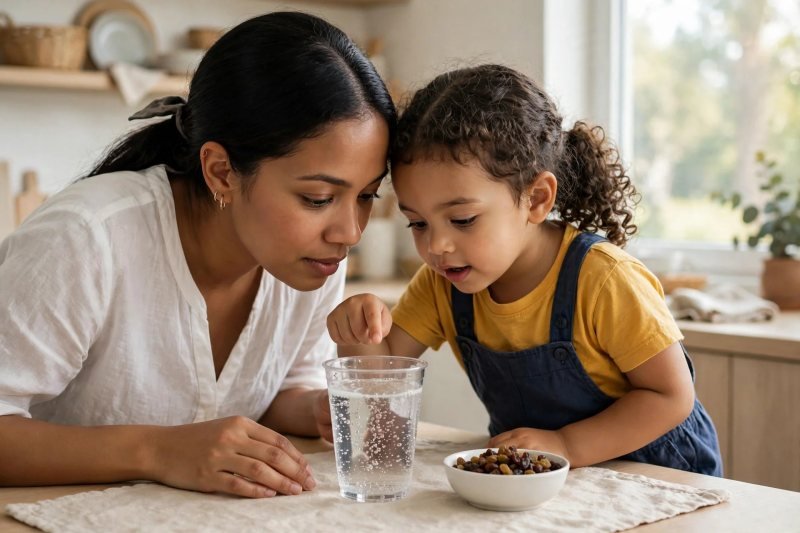
**Step 4 — Watch the bubbles rise.** Look at the fizzy water together and talk about the tiny bubbles rising.
-
**Step 5 — Predict, then drop the raisins.** Ask your child what they think will happen, then let them drop 5–6 raisins in, one at a time.
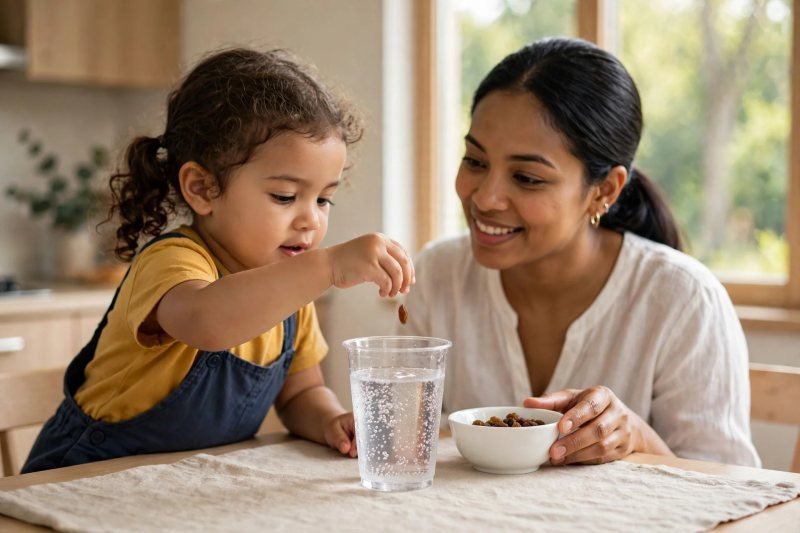
-
**Step 6 — Watch the raisins sink.** Watch together as the raisins sink all the way to the bottom of the cup.
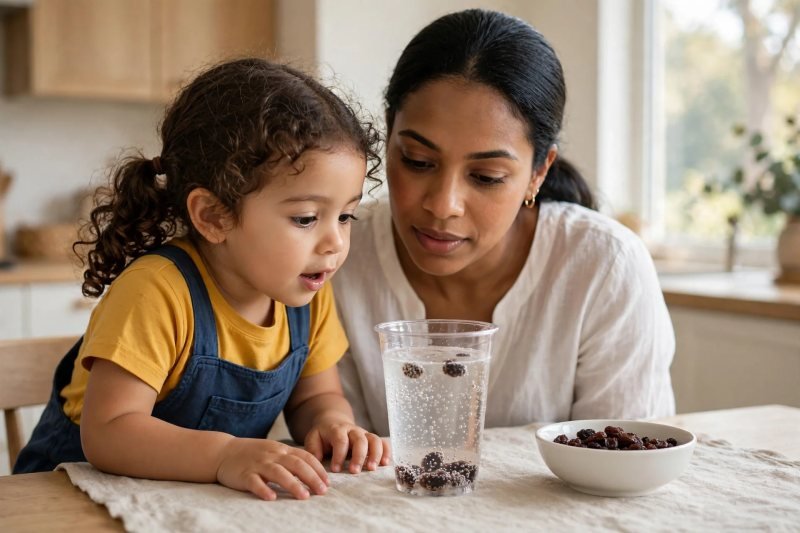
-
**Step 7 — Spot the dancing.** Watch as tiny bubbles stick to the raisins and lift them up — this is the "dance."
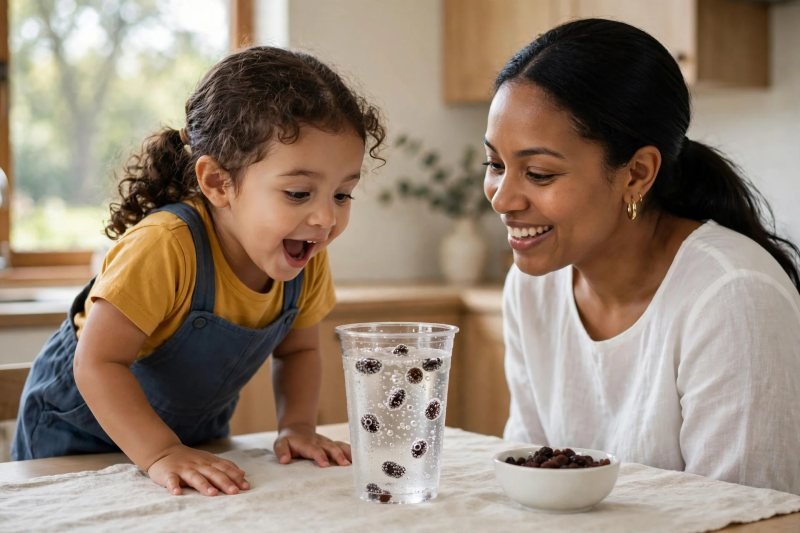
-
**Step 8 — Watch the dance repeat.** Watch the bubbles pop at the surface and the raisins sink back down, then float up again.
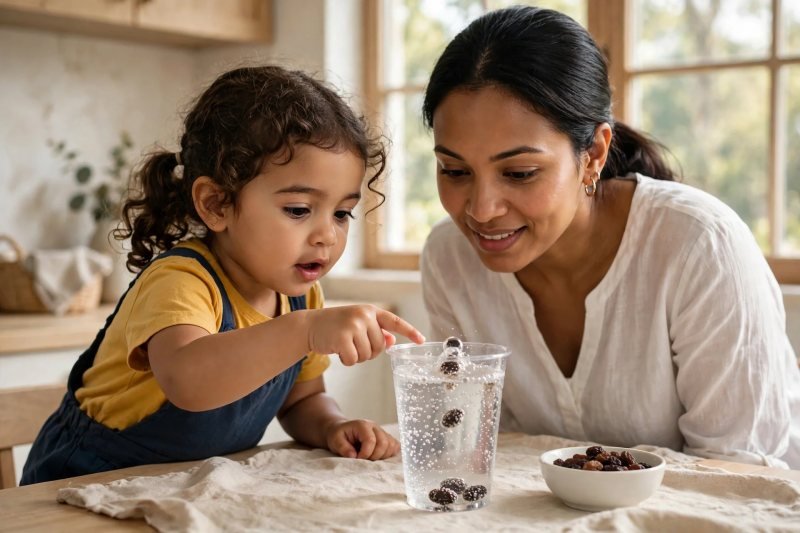
-
**Step 9 — Count and repeat the show.** Count together how many raisins are floating near the top, then add fresh raisins and watch the dance again.
-
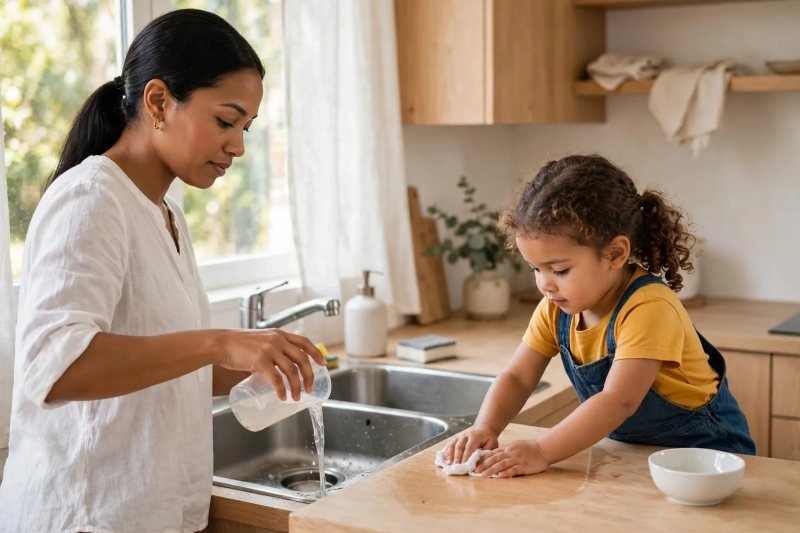
**Step 10 — Clean up together.** Pour the mixture down the sink, wipe the table together, and throw the used raisins away — they are not for eating after the experiment.


Make it easier
Drop the raisins in right after pouring so the fizz is at its strongest. Use a narrower cup so the dance is easier to see, or simply let your child watch while you narrate what is happening.
Make it harder
Set up two cups: one with club soda and one with plain still water. Have your child predict which cup the raisins will dance in, then test it.
Other ways to play it
- - Try corn kernels or small pasta shapes and see if they dance too.
- - Use golden raisins in one cup and dark raisins in another to track the colors.
- - Shine a flashlight through the cup in a dim room to make the rising bubbles glow.
- - Try another fizzy wow moment: the [baking soda and vinegar volcano for preschoolers](/activities/baking-soda-vinegar-volcano-preschool/) uses the same kitchen science.
How it changes by age
- This activity is designed for ages 3–4 with an adult close by the whole time. Raisins are a choking hazard for under-3s, so this is for ages 3 and up who can sit and keep experiment materials out of their mouths.
What they're learning
The dancing raisins experiment builds early science thinking a 3- or 4-year-old can follow: careful observation, cause and effect (bubbles lift the raisins; when the bubbles pop, the raisins sink), and early prediction. Children pick up science words in context — bubble, float, sink, surface — and practice counting. Comparing a fizzy cup with a still-water cup introduces the idea of a fair test. If your child loved the dancing, [color mixing activities for preschoolers](/activities/color-mixing-activities-for-preschoolers/) bring the same cause-and-effect wonder with color, and [bean in a bag seeds sprout](/activities/bean-in-a-bag-seeds-sprout/) trades the instant wow for something growing to watch day by day.
Clearing up
Pour the mixture straight down the sink and rinse the cup. Throw the used raisins in the trash — they are not for eating after the experiment. Wipe the table, and wash the cup and bowl as normal. Cleanup takes about two minutes.
Questions parents ask
Why do raisins dance in soda?
What can I use instead of club soda?
Why aren't my raisins dancing?
Can my child eat the raisins after the experiment?
What age is the dancing raisins experiment for?
Open the soda right before you start, and pour in fresh club soda if the dancing slows down.


