


How We Hear: Simple Sound Experiments for Kids
Five sound experiments for kids that make hearing visible: ripple water with a ringing glass, make rice dance, carry whispers on string, feel music buzz in a balloon, and bend pitch with a ruler. Ages 6–8.
Sound is vibration — something shaking back and forth very fast. These five sound experiments for kids make that shaking visible: a ringing glass ripples water, a banged lid makes rice dance, a tight string carries whispers, a balloon copies a speaker's buzz, and a ruler shows faster shaking sounds higher. Ages 6–8, 30–40 minutes, household items.

The short version
- Sound is vibration: something shaking back and forth really fast.
- Vibrations travel through air, water, and string.
- Faster vibrations make higher sounds; slower ones make lower sounds.
- Your eardrum is a tiny drum skin that copies vibrations for your brain.
- All five experiments use household items and take 30–40 minutes.
- Age
- Ages 6–8
- Prep
- 10 min
- Play time
- 35 min
- Mess
- Low
- Difficulty
- Easy
- Where
- Indoor
Why kids love this
Six-to-eight-year-olds live for the "wait, WHAT?!" moment. Rice dances on a drum nobody touched. A glass of water ripples to a ring they can barely hear. Their whisper crosses the room on string. These five sound experiments for kids deliver those moments with no screen, no kit — just household things doing extraordinary tricks.
What you'll need
- 1 clear drinking glass or sturdy plastic cup
- 1 metal teaspoon
- Water and a pitcher
- 1 mixing bowl, plastic wrap, 1 wide rubber band
- 1 teaspoon of uncooked rice
- 1 pot lid or baking sheet
- 1 balloon, inflated and knotted
- A phone or small speaker with music
- 2 paper cups, 10 feet of string, 2 paper clips
- 1 ruler (12 inches or longer), paper towels
Before you start
Clear the table and set out five stations. Fill the pitcher; let your child pour. An adult inflates the balloon now, keeping it away from your child's mouth. Cue up a song with a strong beat, volume low.
How to do it
-
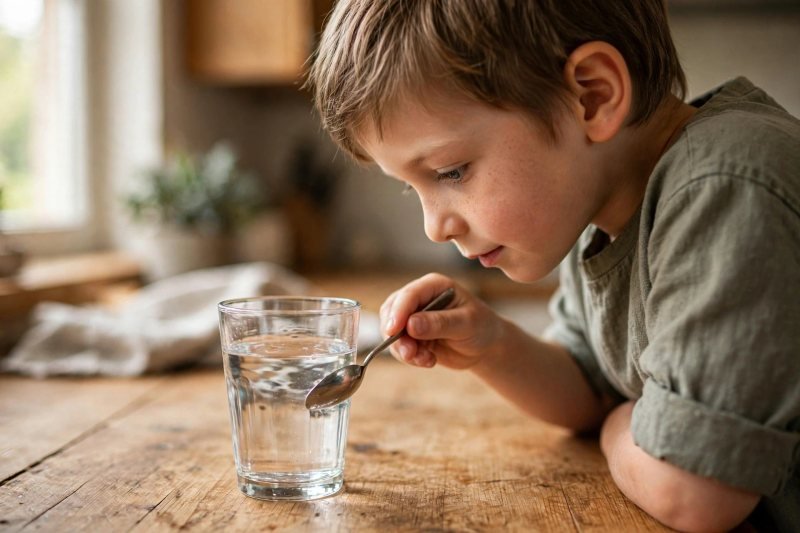
Pour the water. Have your child pour water into the glass until it is nearly full.

-
Tap the glass. Tap the side of the glass GENTLY with the spoon, once, and listen to the ring.
-
Watch the ripples. While it still rings, dip the spoon tip in the water and watch ripples spread — the ringing glass is shaking, moving the water.

-
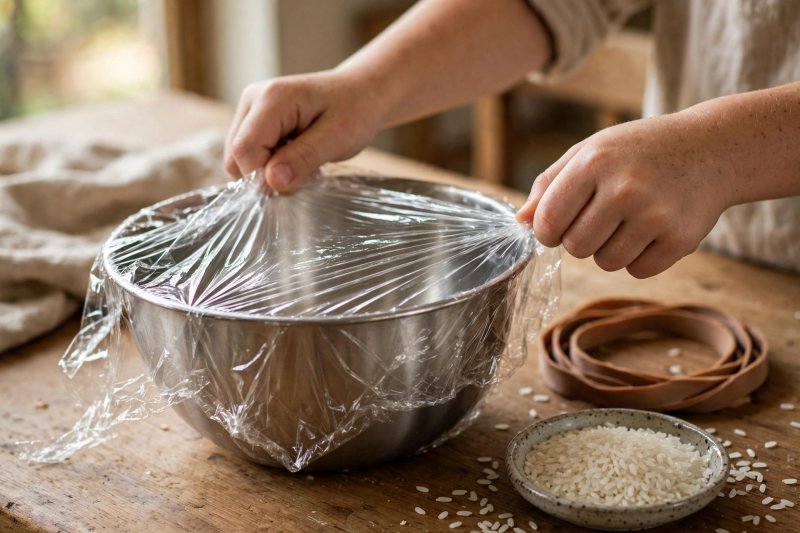
Build the rice drum. Stretch plastic wrap tightly over the bowl like a drum skin, fix it with the rubber band, and sprinkle on the rice.
-
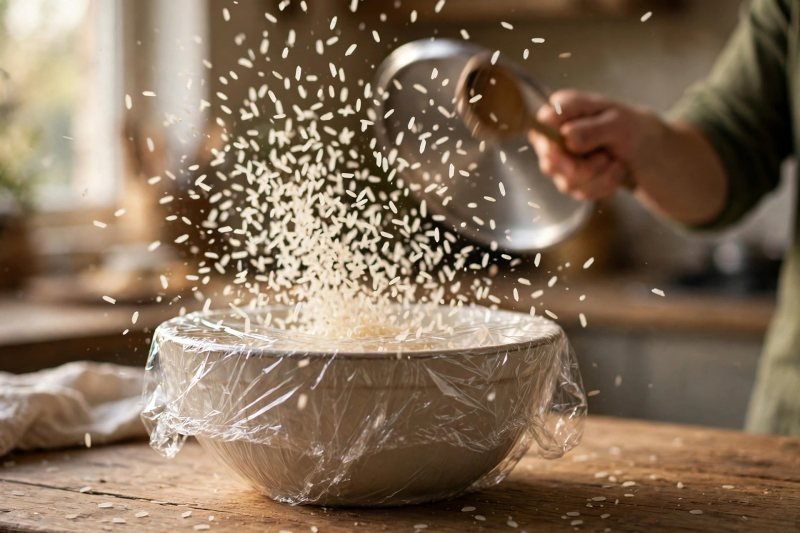
Make the rice dance. Hold the pot lid close to the bowl without touching it and bang it with the spoon — the rice dances, shaken by sound traveling through air alone.
-
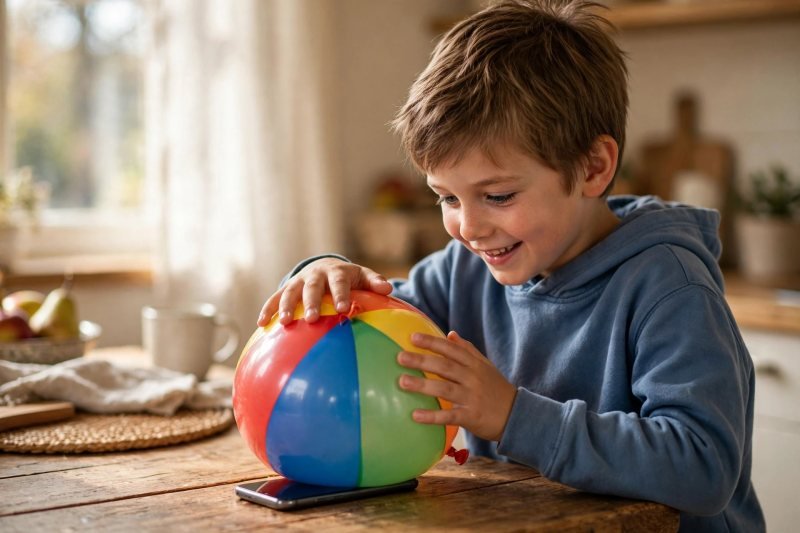
Feel the music buzz. Hold the balloon gently against the phone speaker while music plays, and let your child rest a hand or cheek on it to feel the buzz.
-
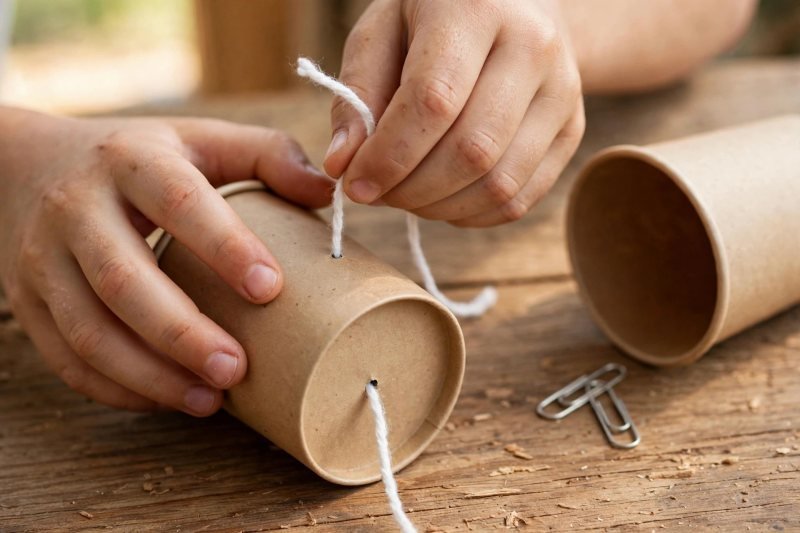
Build the string telephone. Poke a small hole in the bottom of each cup, thread the string through both, and tie a paper clip inside each cup to anchor it.
-
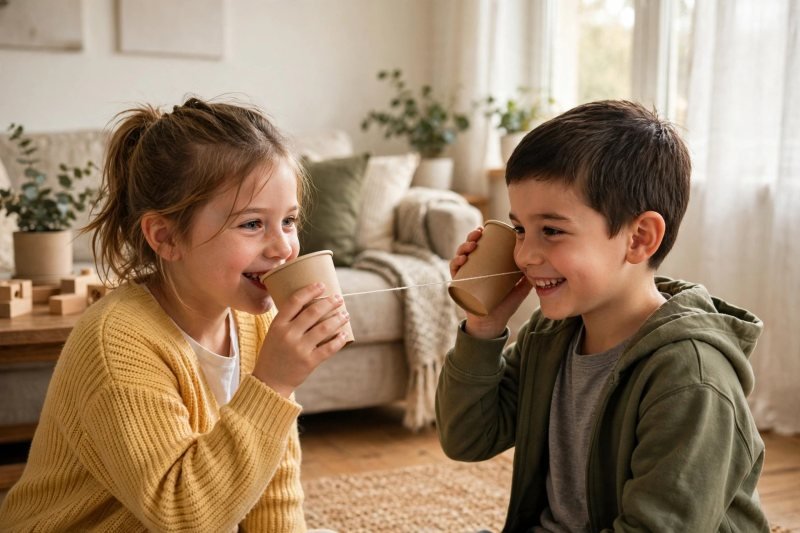
Whisper across the room. Carry the cups to opposite sides of the room, pull the string tight, and whisper into one cup while the other person listens through theirs.
-
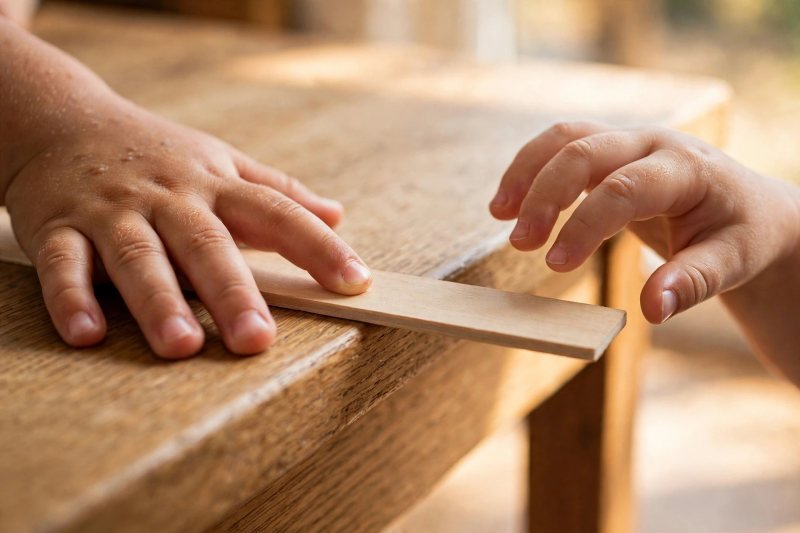
Twang the ruler. Lay the ruler flat on the table with four inches over the edge, press the table end down firmly, and twang the free end.
-
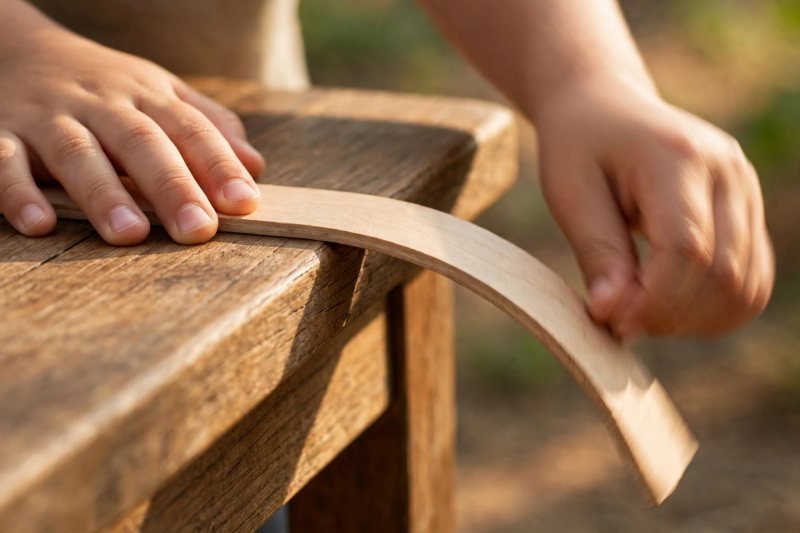
Change the pitch. Slide the ruler out for more overhang and twang again, then slide it back and twang once more — what did all five experiments have in common?


Make it easier
Do just three: the water ripple, the rice dance, and the ruler twang. The adult handles glass tapping, balloon inflation, and string threading; the child pours, sprinkles, watches, and twangs.
Make it harder
Make it a lab report: your child draws each experiment and writes one sentence naming what was shaking — glass, air, speaker, string, ruler. Then test variables: does the rice dance more when the lid is closer? Which ruler length sounds highest?
Other ways to play it
- Flashlight waves: In a dim room, shine a flashlight at the glass while the spoon ripples the water — dancing light patterns appear on the wall.
- Throat check: Hum with fingers lightly on the throat, then hum higher and lower — feel the voice shake faster and slower.
- Pillow drum: Repeat the rice dance with the bowl on a pillow — soft surfaces soak up shaking.
- Yarn phone: Build the telephone with yarn — thicker lines carry the shaking less crisply.
How it changes by age
- Six: Do it side by side, say the "shaking" idea each time, and let your child pour, sprinkle, and twang while the adult taps the glass.
- Seven: Hand over the spoon for gentle tapping, and let them build the telephone while you check the knots.
- Eight: Let them run the sequence and explain each experiment back — teaching is how the idea sticks.
What they're learning
These sound experiments for kids teach one honest idea: sound is vibration — something shaking back and forth very fast. The shaking travels through air, water, or string to the ear, where a tiny drum-like eardrum copies it and the brain reads it as sound. The ruler adds the pitch rule: faster shaking sounds higher.
Clearing up
Pour the water into a plant, shake the rice into the trash, and wipe the table. The string telephone keeps well — coil the string and save the cups.
Questions parents ask
How do you explain sound to a 7-year-old?
Why does rice dance on plastic wrap when you bang a lid nearby?
How does a string telephone actually work?
Why does a shorter ruler make a higher sound?
Are these sound experiments safe for young kids?

save it for later
Pin this for the next rainy afternoon
Keep it on a board so it is there when you need it, rather than when you happened to find it.
Save to Pinterest


