


Five Senses Activities for Toddlers
Five senses activities for toddlers that turn everyday moments into sensory discovery: color cups, sealed shakers, herb sniffing, yogurt painting and warm-cool water play. Simple, safe fun for ages 2–3.
Five senses activities for toddlers are simple, safe sensory games helping 2–3-year-olds explore sight, hearing, smell, taste and touch. Try color cups, sealed shakers, herb sniffing, yogurt painting and warm-cool water play. One sense per session, large mouth-safe items, narrate what they notice.

The short version
- Five senses, two simple activities each — all with household items.
- One sense per session; 10–15 happy minutes is complete for a 2-year-old.
- Large and mouth-safe only; lids taped shut by an adult.
- Narrate play ("loud shake!", "sticky!") — your words become their vocabulary.
- Free exploring beats rule games; comparing two things is enough challenge.
- Allergies checked; water supervised at arm's reach; bins emptied after.
- Age
- Ages 2–3
- Mess
- Some
- Difficulty
- Easy
- Where
- Both
Why kids love this
Toddlers learn with their whole bodies: they touch, sniff, shake and taste everything before they can explain it. These activities invite exactly that — nothing to finish, no right answers. They explore while you name what happens: "You hear the rice! That yogurt feels cold!" Your words during play become the words they use later.
What you'll need
- Large translucent cups in red, blue, yellow
- Bubble solution with wand
- Two large clear bottles, screw-on lids, packing tape
- Dry rice; large dry pasta shells
- Paper cups, cotton balls, vanilla, lemon juice, cocoa
- Fresh mint or basil
- Plain yogurt, food coloring, one large tray
- Familiar foods: banana, apple slices, rice cakes, avocado
- Contact paper, large pom-poms, fabric scraps, felt shapes
- Two shallow bins, big cups, sponges, floor towel
Before you start
One sense per session. Sit at their level. Toilet-roll test: anything fitting through the tube is too small. Allergies checked before smell/taste play; familiar foods only. Towel down for yogurt and water.
How to do it
-
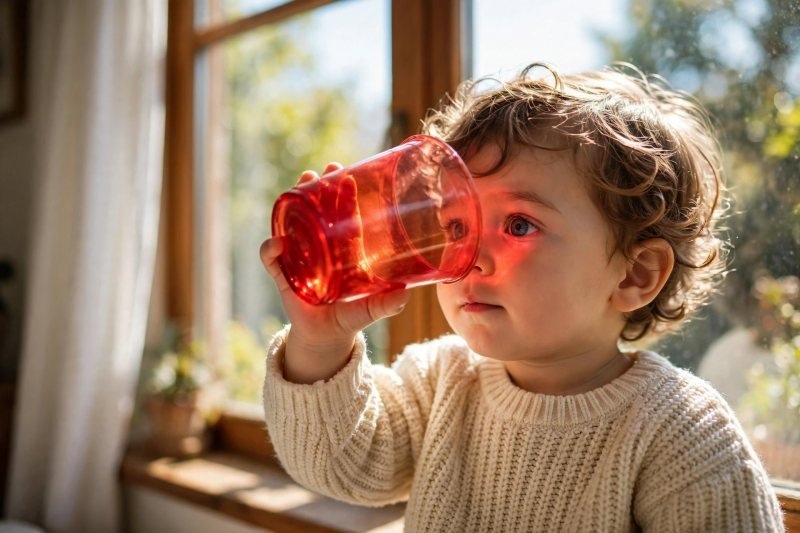
Peek through color cups. Hand your toddler a translucent cup; hold it to a window and look through — "Everything looks red!" Swap colors. Looking is the activity.
-
Watch and pop bubbles. Blow bubbles; your toddler watches them float, then pops one with a fingertip. Builds tracking and hand-eye coordination.

-
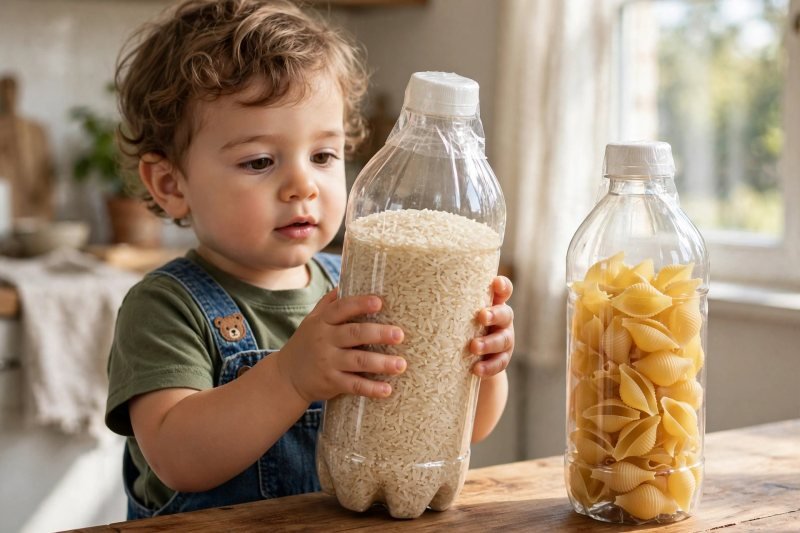
Shake the sealed bottles. Rice in one bottle, pasta shells in the other. Lids on tight, taped by you. Shake: loud! Shake: soft! Two sounds, endless shaking.
-
Play the animal-sound game. Sit by an open window; listen one minute. Name it — "A dog! Woof woof!" — copy it, invite your toddler along. Birds, cars, silly mooing all count.

-
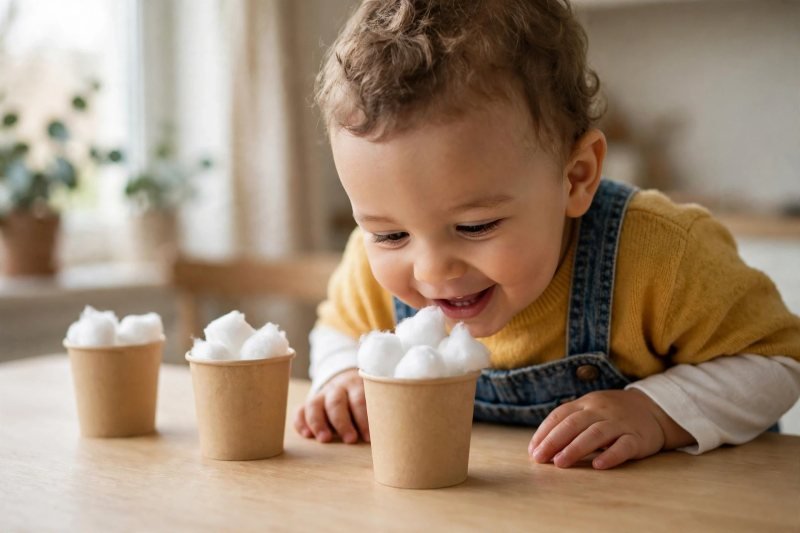
Sniff the smell cups. Vanilla, lemon, cocoa on cotton balls in paper cups. Your toddler sniffs each; you say it: "Mmm, sweet vanilla." Sniffing plus the word is the point.
-
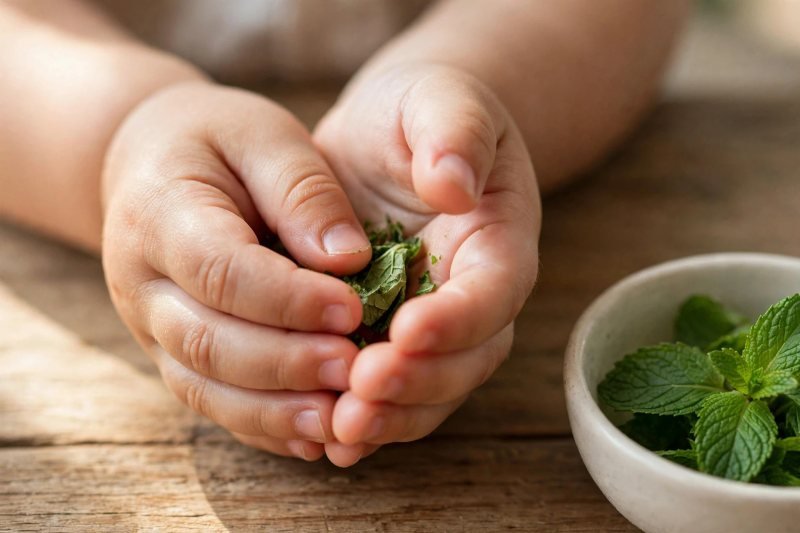
Rub and sniff herbs. Rub a mint or basil leaf gently between palms, lift to nose — the scent bursts out like a magic trick. Tearing leaves releases even more.
-
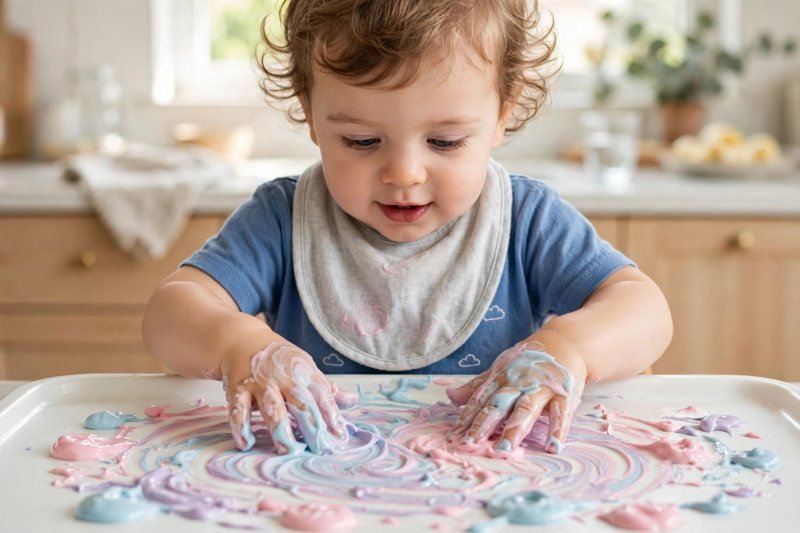
Paint with yogurt. Food coloring stirred into plain yogurt, blobs on a tray. Swirl, smear, lick fingers — it is just yogurt, so tasting is the plan.
-
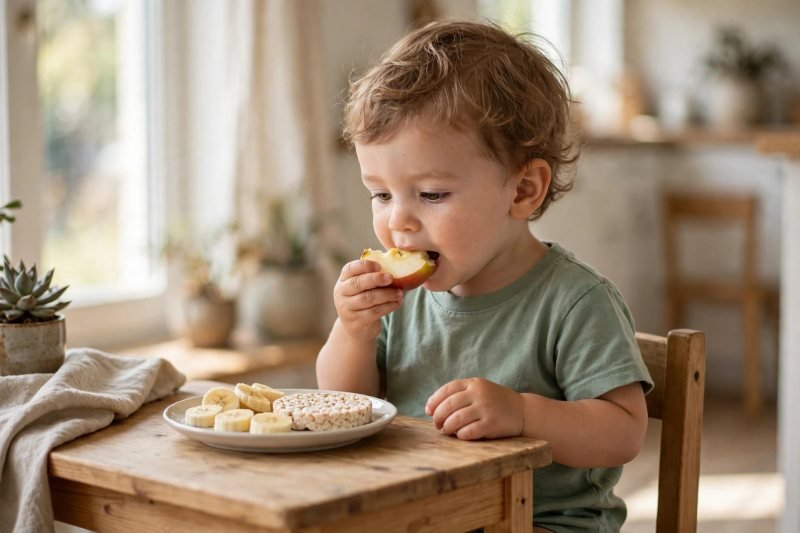
Play crunchy-or-soft. Tiny bites of familiar foods: banana (soft), apple (crunchy), rice cake (crunchy), avocado (soft). Narrate: "Crunchy! That apple goes crunch."
-
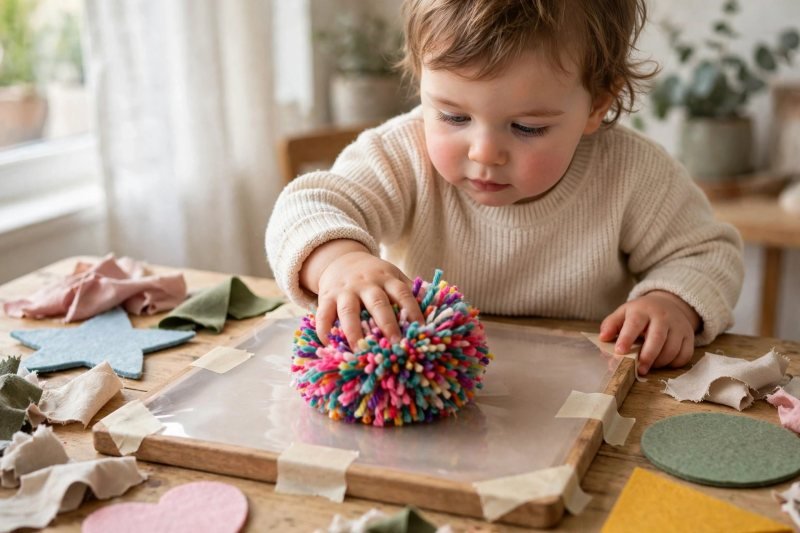
Make sticky contact-paper art. Contact paper sticky-side-up on a tray. Press on big pom-poms, fabric scraps, felt shapes. They stick! Peel off! Stick again!
-
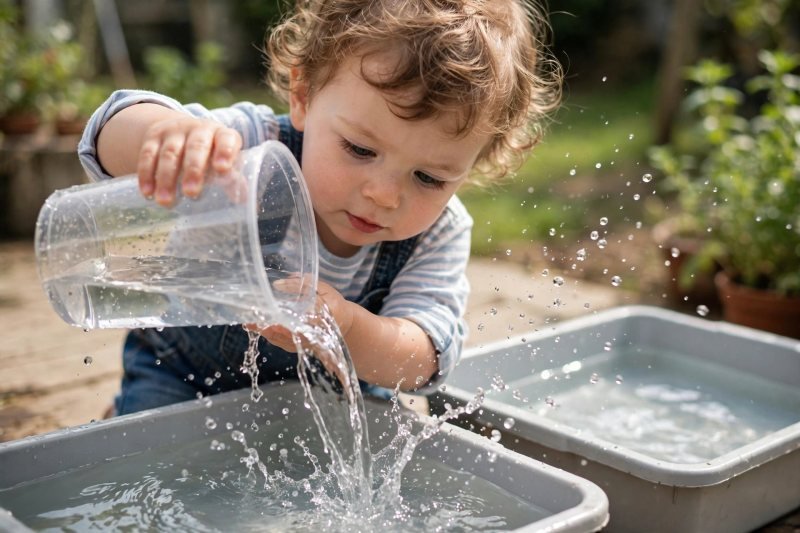
Scoop warm and cool water. One bin warm, one cool. Big cups and sponges for scooping. Dip one hand in each: "Warm! Cool!" Stay beside them; empty bins after.


Make it easier
Skip comparing; let them explore one item freely. Fewer things at once, sit side by side, ten minutes max. Shaking the bottle without noticing the difference is a perfect session. End happy.
Make it harder
Older twos: "Which bottle is louder?" "Warm or cool?" Two color cups — pick a favorite. Match mint leaf to smell cup. Count popped bubbles: "One! Two!" Counting popped bubbles is a first math game — our counting activities for toddlers grow from there.
Other ways to play it
- Bathtub: cups, sponges, washcloth — touch and hearing at once.
- Outdoor: smell cups and shakers at the park; new sounds double the fun.
- Seasonal: fall, rub-and-sniff torn leaves; winter, warm vs. cool washcloth.
- Baby sibling: baby holds a sealed bottle and soft cloth; toddler does the full activity.
- Rainy day: color cups on a gray window look dramatic; bubbles work in a hallway.
- The blending sounds activities turn the listening games into first reading steps, and phonemic awareness activities for toddlers build on the same careful listening.
How it changes by age
- At 2, mouthing, dropping, wandering IS the exploring. Narrate briefly; do not quiz. By 3, most compare unprompted ("This one louder!") and request favorites by name. "More bubbles!" means you have a ritual. For ready-made plans for the next age up, see toddler learning activities at home.
What they're learning
Sensory vocabulary — loud, soft, sweet, crunchy, warm, sticky — the describing language behind reading and science. When they are ready for a first experiment, easy science experiments for toddlers build on the same senses, and the five senses activities for preschoolers stretch the same ideas for 4- and 5-year-olds. Cause and effect: shake and it rattles, rub and it smells. Pouring, tearing, pressing build little hands. Ten slow minutes can reset a cranky afternoon.
Clearing up
Bin cotton balls and cups; compost herbs; rinse tray and bins. Yogurt paint goes in the bin, not the sink. Sealed bottles keep for months.
Questions parents ask
What are five senses activities for toddlers?
How can I teach my 2-year-old about the five senses?
Are sensory activities safe for toddlers who put everything in their mouths?
How long should sensory play last for a 2-year-old?
Step images 1–10 map to steps 1–10 in order (see image plan). Internal links now live in the article body (Age guidance, What they're learning, Make it harder, Variations) — all targets verified live at /activities/<slug>/ on 2026-11-25.
What are the best five senses activities for toddlers? Short, safe, open-ended games: color cups and bubbles for looking, sealed shakers and animal sounds for listening, kitchen herbs for smelling, yogurt and familiar foods for tasting, water and sticky paper for touching. One sense at a time.
How can toddlers explore their sense of sight? Sight play is the easiest starting point: a color cup turns the whole world red, blue, or yellow with one swap, and a drifting bubble gives your toddler a moving target to track and pop.
What hearing games work for 2-year-olds? Hearing games need nothing but a quiet minute: sealed shakers rattle loud or soft on demand, and an open window turns passing dogs, birds, and cars into a listening game.
How do I introduce smell play to a toddler? Smell play is all about the sniff-and-name pair: vanilla, lemon, and cocoa on cotton balls, or a mint leaf rubbed between palms until the scent bursts out.
What taste activities are safe for toddlers? Taste play stays edible and tiny: yogurt finger painting makes tasting the plan, and a crunchy-or-soft round with familiar foods turns every bite into a describing word.
Which touch activities do 2-year-olds love most? Touch play is gloriously messy and simple: sticky contact paper grabs pom-poms and fabric scraps, and warm-and-cool water bins let one hand feel warm while the other feels cool.


