


More and Less Activities
Four more and less activities that teach 4- and 5-year-olds to compare two groups side by side. Pair up crackers, line up toy cars, and let the leftovers reveal which pile has more — no worksheets, just playful math.
More and less activities teach children to compare two groups and decide which has more. Pour crackers into two bowls, line them up in pairs, and whichever row has leftovers has more — no counting required. Say the comparison sentence out loud ("blue has more than red"), play 10–15 minutes, then eat the evidence.

The short version
- Comparing is its own skill — separate from counting, adding, or "one more."
- Pairing items one-to-one is the trick: leftovers show which group has more.
- Never correct a wrong guess — let the pairs show the truth.
- Say the comparison sentence every round ("more than," "less than").
- Age
- Ages 4–5
- Prep
- 5 min
- Play time
- 15 min
- Mess
- Low
- Difficulty
- Easy
- Where
- Indoor
Why kids love this
Because fairness is their native language. No 4-year-old looks at two bowls of crackers and wonders about "quantity" — they think, "I want the bigger one!" These more and less activities turn that instinct into math: pour, pair, and let the leftover row reveal the winner. If your child can count to 10 reliably, they have everything they need. It is a guessing game where the answer is always visible and fair: your child predicts, the pairs prove it, then they eat the evidence.
What does "more and less" mean for preschoolers? "More" means "this pile wins" and "less" means "this pile loses." That's enough to start. The real idea — comparing two quantities — arrives through the hands: pour, pair, point at the leftovers. Note the difference from one more, one less games, where one group grows or shrinks by a single item. Here nothing changes — two groups sit side by side and your child judges them against each other.
Which games teach more and less?
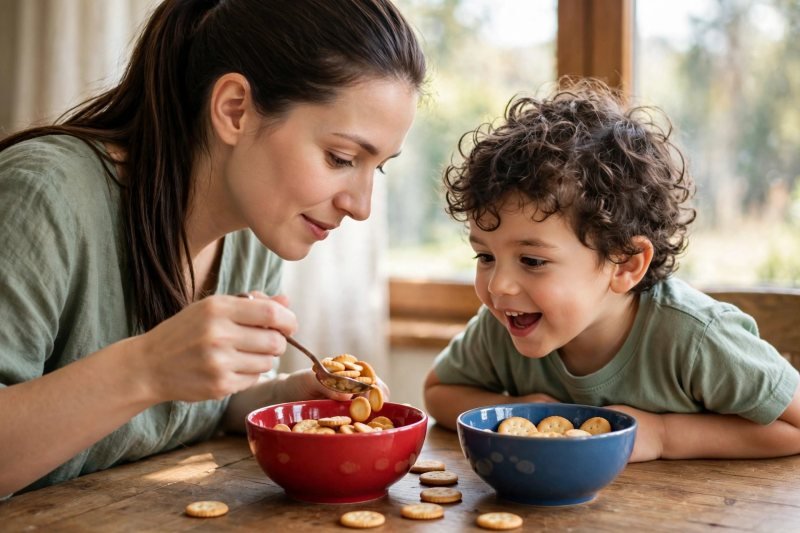
The Two Bowls Taste-Off. Two bowls, one scoop each, pair the crackers in rows and see who wins. The full step-by-step is in the Instructions below — play it first.
Cracker Train Race. Line crackers into two "trains" and race them across the table. "The blue train is LONGER — it has MORE cars!" Then pair the cars off. A long spread-out train and a short bunched-up one pair up identically, and that surprise is worth the whole game.
Car Convoy. Park 4 cars in a row and 7 trucks beside them. "Which team has MORE vehicles?" Pair them nose to tail — the three leftover trucks win.
When should I introduce "fewer," "equal," and "the same"? "Less" and "fewer" can live side by side from day one — "the red bowl has LESS crackers... which really means FEWER crackers!" Say both, explain nothing. "Equal" and "the same" arrive when the paired rows end at exactly the same place: no leftovers, no winner. Celebrate it — "Nobody has more! They're THE SAME!" Written symbols (> < =) come later, around age 5–6.
What you'll need
- Two bowls in different colors (red and blue work perfectly)
- A box of small round crackers (or blueberries, pom-poms, or big buttons)
- A clear table
Before you start
Set the bowls and the snack pile on the table — nothing else to prepare. Check snacks for choking safety (use larger items if younger siblings join in) and keep groups under 8 items each so the rows stay manageable.
How to do it
-
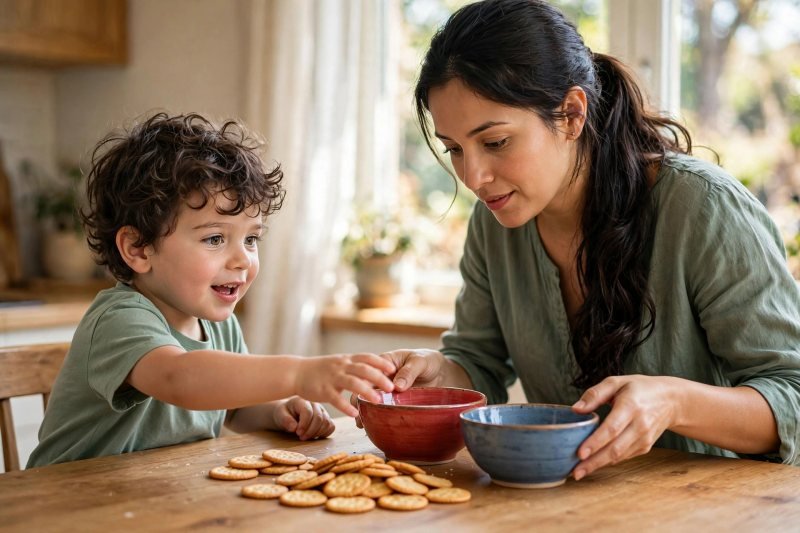
Set out two bowls and a cracker pile. Set out a red and a blue bowl and pile crackers on the table.
-
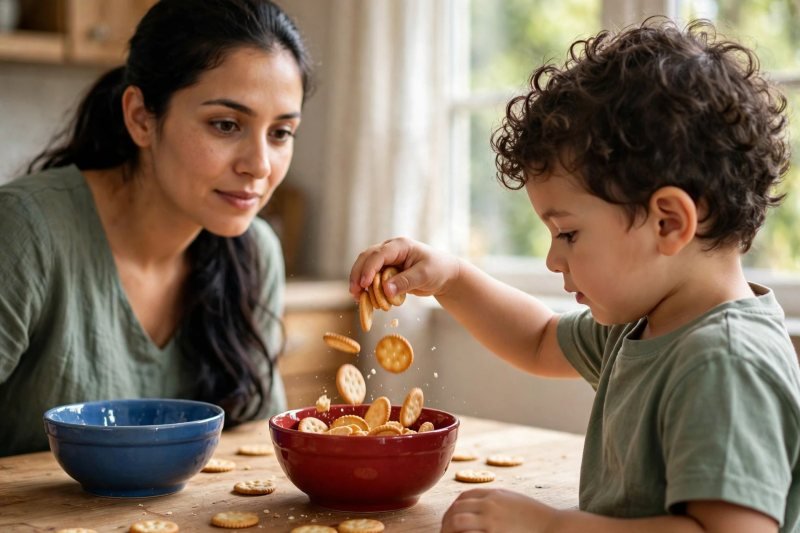
Fill the red bowl first. Your child drops a small handful of crackers into the red bowl.
-
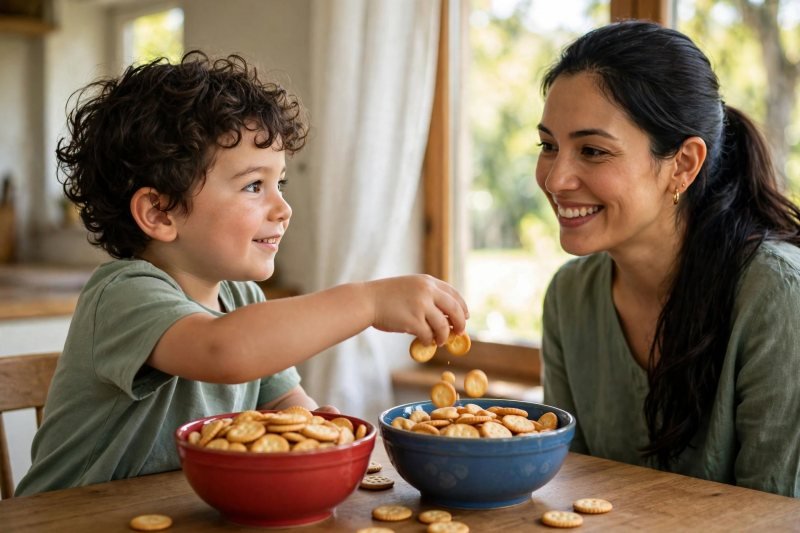
Fill the blue bowl without peeking. Now a handful into the blue bowl — no peeking at which got more!
-
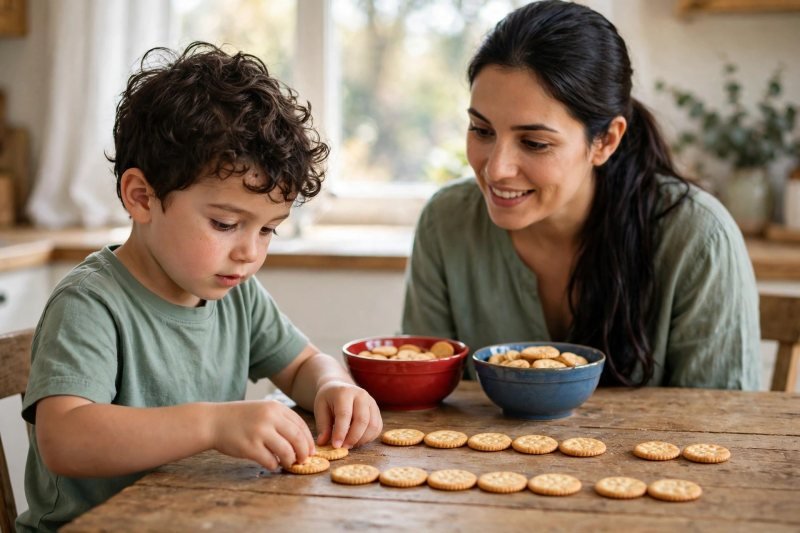
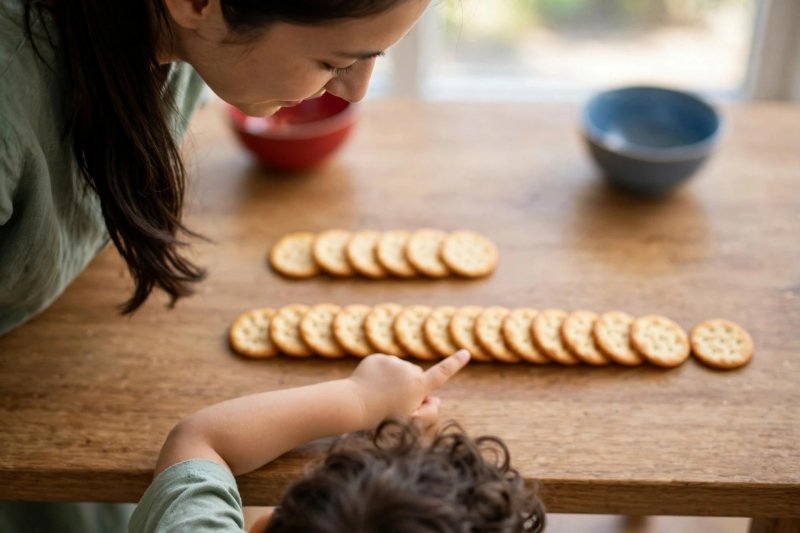
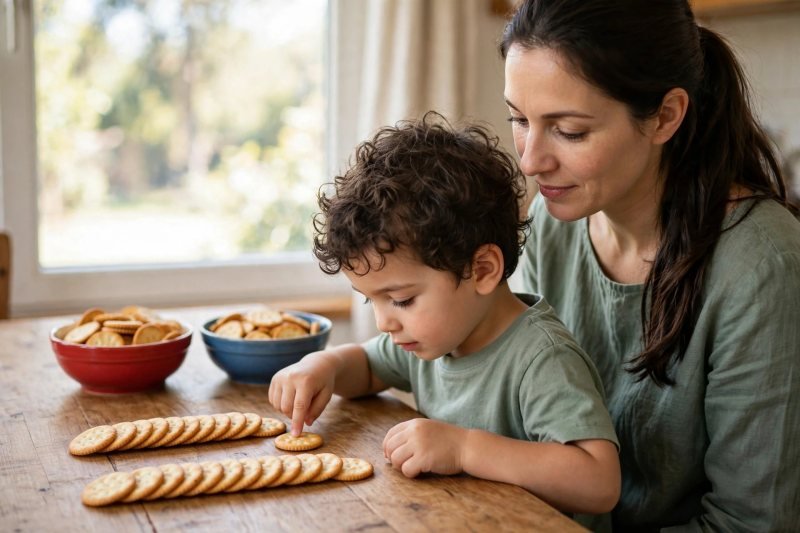
Pair the crackers into two rows. Line the crackers from each bowl into two rows, pairing each cracker with one from the other bowl.
-
Spot the leftovers to find more. The row that sticks out past its partner has MORE.
-
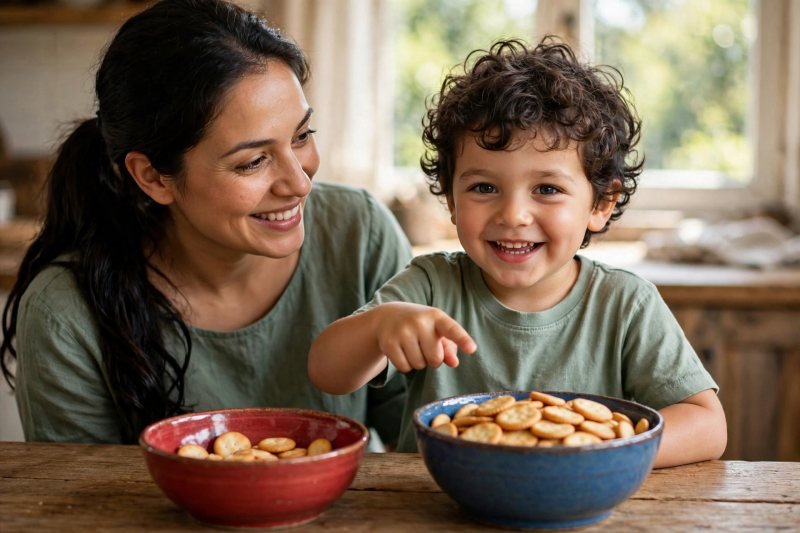
Say the comparison sentence. Point and say it proudly: "The blue bowl has MORE crackers than the red bowl!"
-
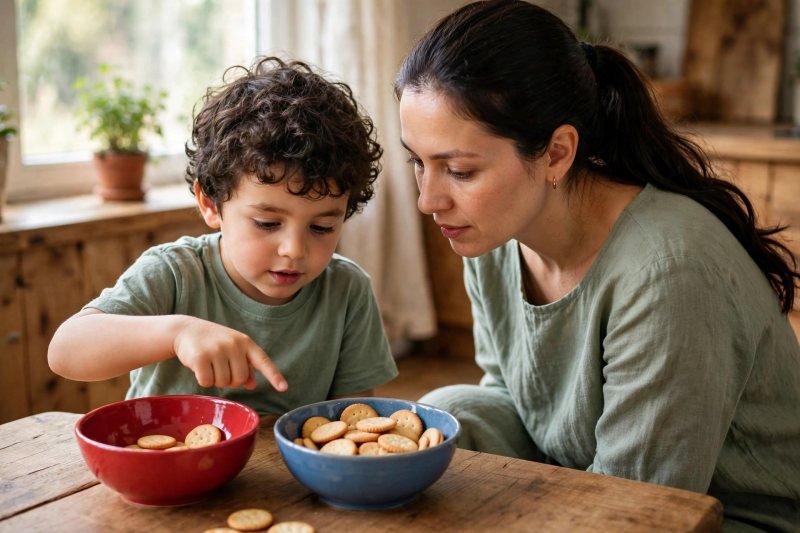
Flip it and say less. "The red bowl has LESS — FEWER — crackers than the blue bowl."
-
Count both rows to check. Count both rows, touching each cracker, to check the match-up was right.
-
Swap roles and play again. Swap roles: you scoop while your child predicts, pairs, and announces the winner.
-
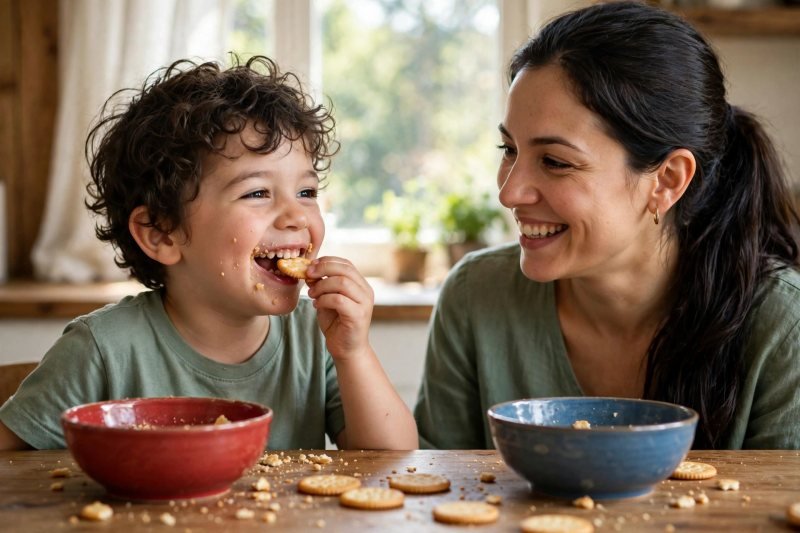
Eat the evidence. Crunch through the rows one cracker at a time — you just ate the answer.


Make it easier
Start obvious: 3 crackers in one bowl, 8 in the other. Do the pairing rows yourself while your child points at the leftovers. Skip the counting check — eyes and pairs are enough at first.
Make it harder
Add a third bowl and find the most, the least, and the middle one. Ask "how many more?" and count the leftovers — the first step toward subtraction thinking, and counting to 20 activities builds the counting range these comparisons need. Once comparing feels easy, comparing numbers games stretches the same skill to bigger groups.
Other ways to play it
- Blind scoops: use an opaque mug so nobody sees the amounts — the reveal is dramatic.
- Outside edition: collect pebbles into two buckets and pair them on the ground.
- Sibling edition: each child fills a bowl secretly, then they pair up and declare the winner.
How it changes by age
- The sweet spot is ages 4–5, when children count to 10 confidently but haven't learned to compare quantities on purpose. Three-year-olds can play the obvious-difference version with help. If counting is shaky, our counting games for preschoolers build the confidence this game leans on.
What they're learning
Comparing quantities: which of two groups has more — distinct from counting. One-to-one matching: pairing items to compare without counting. Comparison vocabulary: more, less, fewer, most, least, equal, the same. Prediction and checking: guessing before proving — the scientific habit in miniature.
Clearing up
Stack the bowls and sweep crumbs into a napkin. Buttons go back in the jar: pair them in as one last comparing round.
Questions parents ask
"More and less" vs "one more, one less" — what's the difference?
At what age can children compare groups for more and less?
How do you teach more and less without worksheets?
What's the difference between "less" and "fewer"?
My child thinks the spread-out group has more. Why?
When should children use "equal" and "the same"?
The sentence does the teaching: a child who says "the blue bowl has MORE crackers than the red bowl" owns the comparison. Never race them to the answer — the pairs correct gently, which is why they work. More floor games in the same spirit live in toddler learning activities at home.

save it for later
Pin this for the next rainy afternoon
Keep it on a board so it is there when you need it, rather than when you happened to find it.
Save to Pinterest


