


Counting to 10 Activities: Your Toddler's First Big Math Milestone
Counting to 10 activities for toddlers, built as a 10-step plan toward your child's first big math milestone. Take your 2-year-old from hearing numbers to counting ten real objects on their own — with signs of readiness, no worksheets, and zero pressure.
Most toddlers learn to count to 10 between ages 2 and 3 through short, playful counting moments built into daily life — stairs, snacks, fingers, and toys, touching each object as it's counted. The milestone has three parts: saying the numbers in order, matching one number to each object, and knowing the last number tells you how many. Weeks of joyful repetition, not drilling, get them there.

The short version
- Counting to 10 is really three skills — the word order, one-to-one matching, and cardinality — arriving one at a time.
- Narrate numbers for weeks before expecting your toddler to count; listening is the first phase, not a delay.
- Touch one object per number, every time; the touching is the skill.
- Short, happy bursts beat long sessions — stop while it's fun.
- Skipping numbers ("one, two, five, ten!") is normal development, not failure.
- Celebrate the first solo count to 10 like the milestone it is.
- Age
- Ages 2–3
- Prep
- 5 min
- Mess
- Low
- Difficulty
- Easy
- Where
- Both
Why kids love this
Because every step is a game with a grown-up who is fully, gloriously paying attention. The stairs ritual, the rocket blast-off, the trail of crackers that ends in eating the evidence — counting to 10 isn't a lesson, it's the soundtrack to the best parts of the day. And the moment they count all ten alone and the whole room erupts? That's the feeling that makes them want to learn the next thing. ## What does the counting to 10 milestone actually look like? "Counting to 10" sounds like one skill, but it arrives in three parts. First comes **rote counting**: saying the number words in order, usually with a few missing ("one, two, five, ten!"). Most children start this around age 2 — it's rhythm and memory. Next comes **one-to-one correspondence**: touching one object per number word, without skipping or doubling up. This typically clicks between 2 and 3, and it's the real work. Last comes **cardinality**: knowing the last number counted tells you how many. Most children get there toward age 3. A toddler who chants to 10 but can't count five apples hasn't failed — they're on part one. This plan builds all three in order. ## How do I know my toddler is ready to count to 10? Watch for these signs, typically around age 2. Your toddler **notices small quantities** — holding up a hand and announcing "two!" whether or not it's two. They **echo number words** after you, especially fun ones like five and ten. They **point at things in sequence**, even without numbers — pointing is one-to-one correspondence waiting for its soundtrack. They **love counting rituals**: the stairs, the "ready, steady, go!", the bedtime countdown. And they ask for **"more"** — more crackers, more swing pushes. If none of these are showing yet, just keep narrating numbers; readiness usually follows exposure. The normal range here is wide. ## How long does it take a toddler to learn to count to 10? Most children take **several weeks to a few months** of daily playful counting to go from echoing numbers to counting ten objects accurately. The path zigzags: perfect to 7 on Tuesday, forgetting 4 on Wednesday. That's rehearsal, not regression — it's how the sequence settles into memory. The typical order: joining in on 1–3, then reaching 5, then a long plateau where 6–10 get muddled, then a sudden jump to the full 10. You can't rush the plateau, but you can make it fun — and that's what the ten steps below do. Aim for five to fifteen minutes of counting play a day.
What you'll need
- Things you already own: stairs, toy cars or blocks (10), crackers or apple slices, cushions, a laundry basket, rolled socks
- Bathtime: rubber ducks or cups
- Garden: a path, kerbs, or a patio for stomping and hopping
- Nothing to buy, nothing to print.
Before you start
Count out ten chunky, mouth-safe objects for the counting trail (step 7) — large crackers, big blocks, or chunky toy cars. Line up five smaller toys for step 6. Clear a little floor space for the clap-and-hop step. Five minutes, tops.
How to do it
-
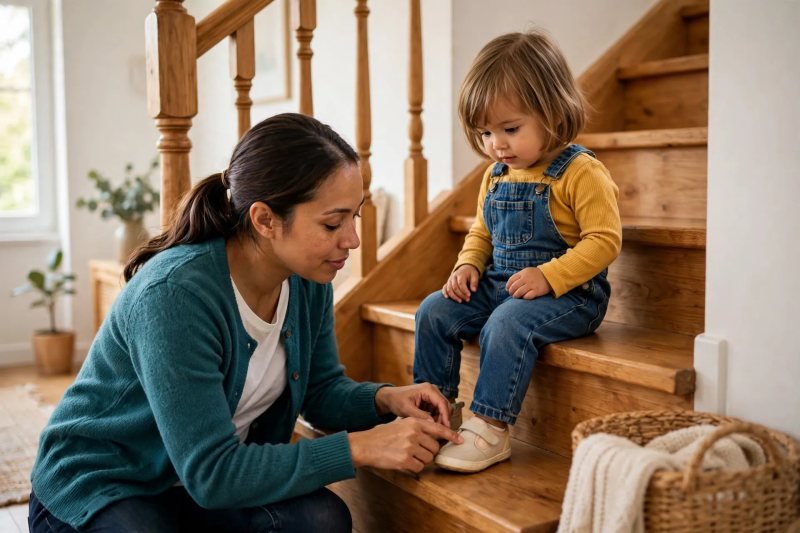
**Narrate numbers everywhere, with no expectations.** For a full week, count out loud during routines you already have: shoes on the stairs, grapes onto the plate, pushes on the swing. Count slowly — about one number per second — touching each thing. Don't ask your toddler to join in. You're laying the soundtrack they'll sing to later.
-
**Count together, touching as you go.** Pick one ritual — the stairs work beautifully — and place your toddler's hand on each step as you both say the number. Keep it to 1–5. The touch-per-number habit built here is the foundation of everything that follows.
-
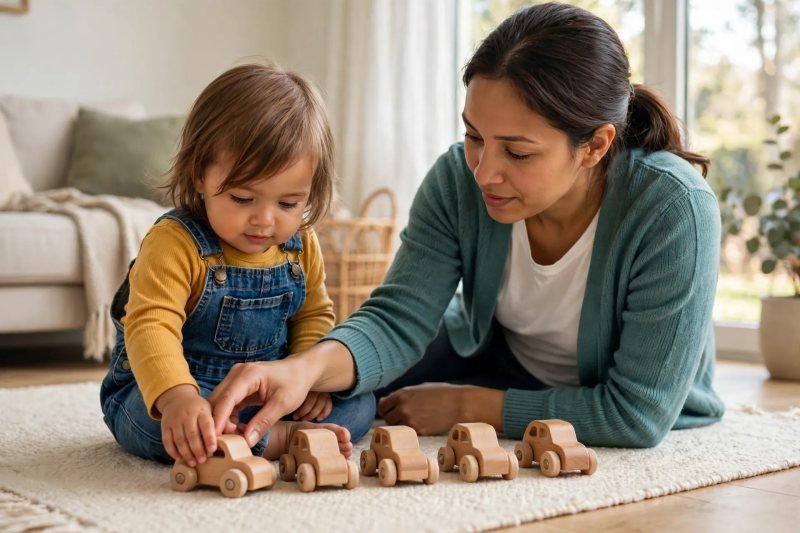
**Play echo counting.** Say "one" and pause with an expectant smile; when your toddler answers, cheer and say "two." Celebrate the joining-in, not the accuracy. Echoing teaches that counting is something people do *together* — and turns your listener into a participant.

-
**Make it physical: clap, stomp, and hop each number.** Clap once and say "one," twice for "two," building to five. Then stomp it on the garden path or hop it across the cushions. One action, one number — the body spaces the count out, and restless toddlers will clap-count for ages.

-
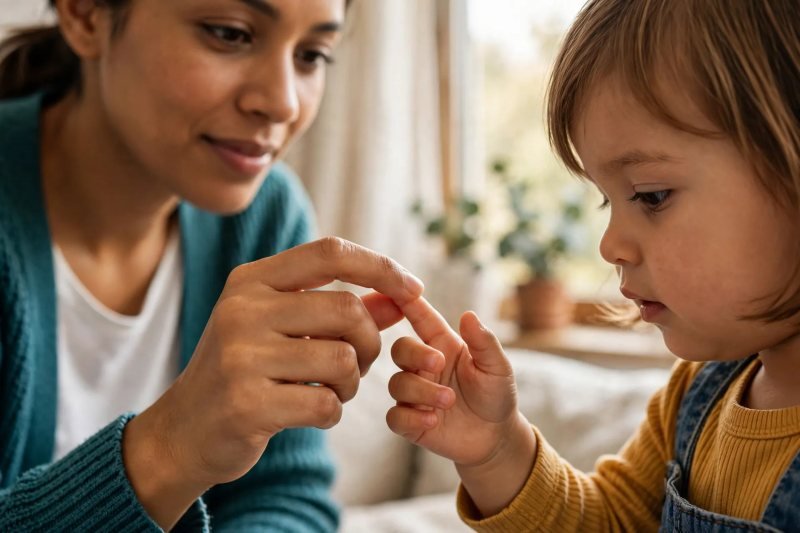
**Count fingers and toes together.** Hold up your fingers one at a time — wiggle each as you name it — then help your toddler copy on their own hand. Count toes at bathtime. Fingers are the original counting device: always attached, always in order, endlessly interesting.
-
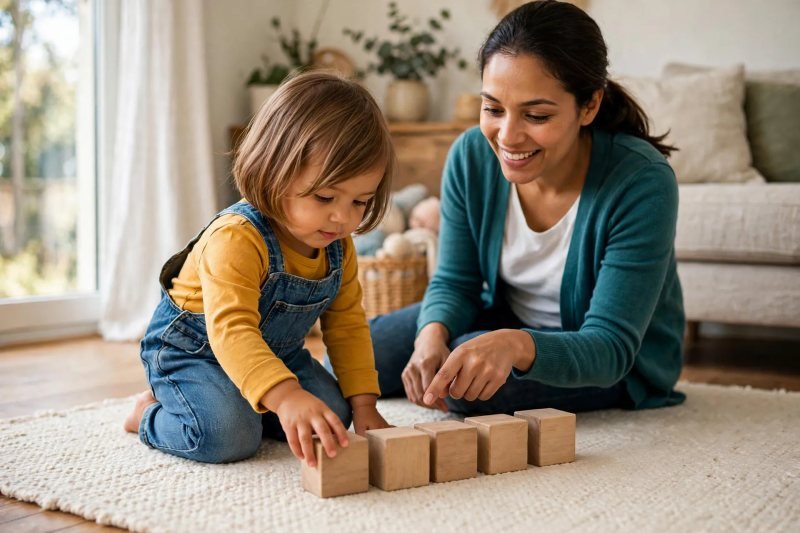
**Line things up and touch-count them.** Line up five toy cars or blocks and count together, one finger-touch per object. Lining up first teaches a real math insight: counting needs organization. If your toddler double-touches or skips one, just model it again slowly — correction by example, never criticism.
-
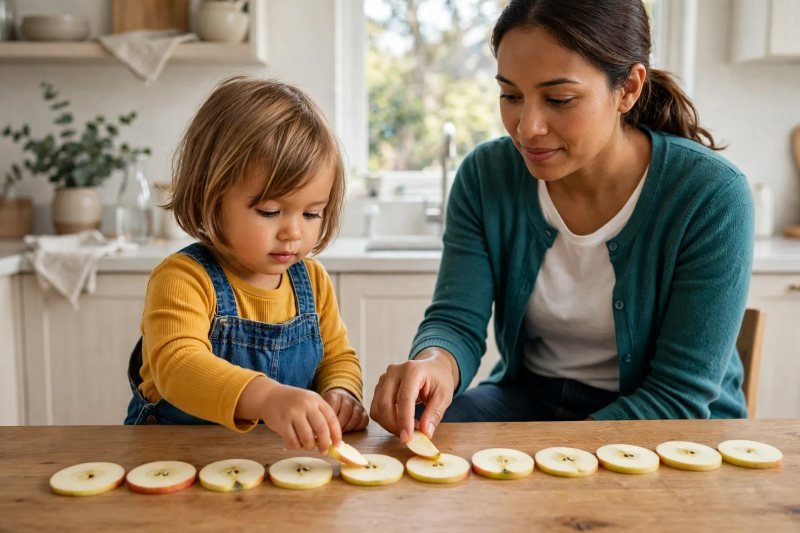
**Build a counting trail to 10.** Lay ten crackers, apple slices, or blocks in a long line and count the whole way, touching each one. Let your toddler eat each piece as it's counted. The trail makes 6–10 concrete and gives the milestone its finish line. Repeat daily — this is the centerpiece.
-
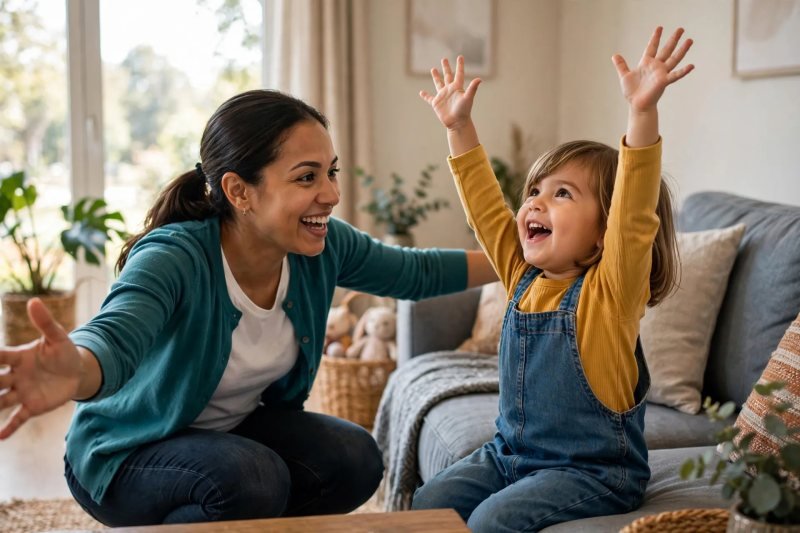
**Count backwards from 10.** Blast off like a rocket — "ten… nine… eight…" — and launch off the sofa. Or count bath ducks back into the water one at a time. Backwards counting strengthens the sequence from the other end, and toddlers love the drama. Expect the low numbers to tangle; that's normal.
-
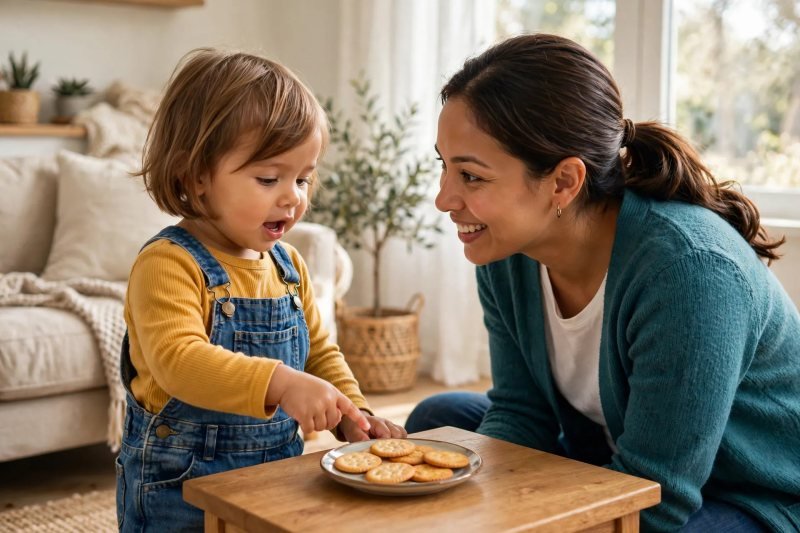
**Ask "how many?" and let them answer.** After counting the cars or crackers together, pause: "So… how many?" If they say the last number counted, that's cardinality — the third part of the milestone — clicking into place. If they just recount, smile and say "five! There are five!" They'll answer unprompted in a few weeks.
-
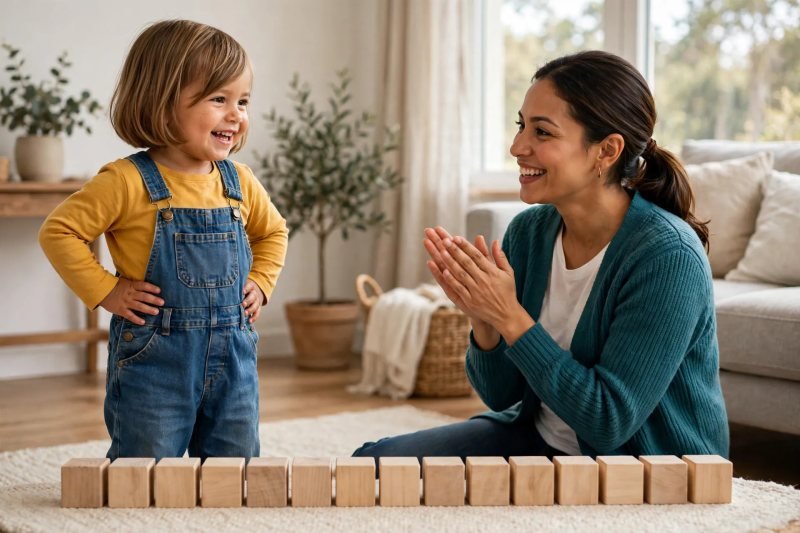
**Hand it over and celebrate.** Set out ten blocks in a line, step back, and say "can you count them all by yourself?" Don't prompt the numbers. Celebrate the attempt whatever happens; when the full ten lands, make it a moment. Then do it again tomorrow, because milestones are kept by repetition.


Make it easier
Stay on steps 1–3 as long as you like — narrating, touching, and echoing to 5 is plenty for a young 2-year-old. You do all the counting; your toddler just watches, listens, or touches along. Slow right down — one number per object, with a pause between. Count the same three or four objects every time; familiarity breeds confidence.
Make it harder
Extend the trail to 12, then 15, then 20. Count backwards from 10 without the rocket theatrics — pure sequence. Count two groups and put them together ("three red cars and two blue cars — how many altogether?"). Count on from a different start: begin the trail at 3, or count every other block.
Other ways to play it
- **Ten fingers, ten toes:** the bathtime full-body count — fingers first, then toes, all the way to 20 if they're game.
- **Counting walk:** count ten steps on a walk, then start again — kerbs and gates make natural counting stations.
- **Laundry count:** count ten rolled socks into the basket, one throw per number.
- **Book count:** count ten animals or spots on a favourite picture-book page.
- For more number-rich play, our counting activities for toddlers collection has 25 everyday counting games that pair perfectly with this milestone plan.
How it changes by age
- Ages 2–3. Most 2-year-olds live in steps 1–5: echoing, touching, and joyful inaccuracy up to 5. Around 2½ to 3, one-to-one counting to 10 typically becomes possible, and "how many?" starts getting real answers.
- Under-2s aren't the audience — but narrating numbers around them (step 1 on repeat) builds the ears for it later.
- If your 3-year-old isn't there yet, stay playful; the range of normal is wide.
- When counting to 10 feels easy, our counting to 20 activities stretch the trail further — and for older kids, addition games for kindergarten picks up where this milestone leaves off.
What they're learning
**Number sequence:** the number words in fixed order, forwards and eventually backwards. **One-to-one correspondence:** one number word per object — the heart of real counting. **Cardinality:** the last number counted answers "how many?" **Subitising beginnings:** recognising 1–3 at a glance without counting. **Persistence:** sticking with something tricky because it's fun — a habit that outlasts counting. **Math vocabulary:** more, less, altogether, how many, first, last.
Clearing up
The counting trail eats itself — that's the design. Blocks go back in the box (count them going in, obviously), cars park in their row, and cracker crumbs sweep up in seconds. The whole plan tidies in under five minutes, usually with a toddler "helping" by recounting everything on the way back.
Questions parents ask
When do toddlers typically count to 10?
My 2-year-old can say numbers to 10 but can't count objects. Is that normal?
How can I tell the difference between rote counting and real counting?
Should I correct my toddler when they say the numbers in the wrong order?
What comes after counting to 10?
My toddler could count to 10 and now won't. What happened?
The milestone matters less than the feeling. A toddler who reaches 10 believing numbers are a joyful game will go further, faster, than one drilled to it — so protect the fun above the number. If your house now echoes with shouted rocket countdowns, the plan is working. When the solo count to 10 finally lands, write the date down. You'll want to remember it.

save it for later
Pin this for the next rainy afternoon
Keep it on a board so it is there when you need it, rather than when you happened to find it.
Save to Pinterest
