


Counting Games for Preschoolers That Build Real Number Sense
Ten counting games for preschoolers that build real number sense — not just reciting numbers. Roll-and-count bears, sock toss, color number hunts, and kitchen counting games for ages 3–4, all using things you already own.
The best counting games for preschoolers build number sense, not just reciting: roll a die and count out that many toys, toss socks into a basket and count each one, or clap a number of times together. Count slowly, touch each object as you say its number, and keep it to 10–15 fun minutes.

The short version
- Counting games for preschoolers should build number sense — knowing what numbers mean — not just reciting "1, 2, 3" from memory.
- Touch one object per number: little fingers on little toys is how one-to-one correspondence clicks.
- Count out loud slowly. Speed is the enemy of accuracy at age 3–4.
- Keep numbers small to start: 1–5 first, then stretch toward 10 when it feels easy.
- Play 10–15 minutes and stop while they're laughing — you'll get "again!" tomorrow.
- Recount together instead of correcting: "let's check that one" beats "no, that's wrong."
- Age
- Ages 3–4
- Prep
- 5 min
- Play time
- 15 min
- Mess
- Low
- Difficulty
- Easy
- Where
- Both
Why kids love this
Because every game ends with a giggle, a snack, or a spectacular crash. Nothing here looks like learning — socks fly, towers topple, water drips, and somebody always gets to shout the numbers at full volume. Children come back to these games because they're play first, and the counting just happens to be hiding inside.
What you'll need
- One die (borrow from any board game)
- Small countable toys: plastic animals, counting bears, or blocks
- Two small bowls and a counting snack (crackers, blueberries, cereal pieces)
- A basket or bag for the number hunt
- Rolled-up socks and a laundry basket
- Floor cushions or paper plates
- A cup of water, an eyedropper or turkey baster, and a towel
- A paper grocery bag (for the real-world finale)
Before you start
Almost none. Toss the countable toys in a bowl, roll up a few pairs of socks, and clear a small patch of floor. For Drip-Drop Counting, set the cup on a towel. Most games start within two minutes of "let's play" — the Grocery Bag Count needs no prep at all, just a shopping trip.
How to do it
-
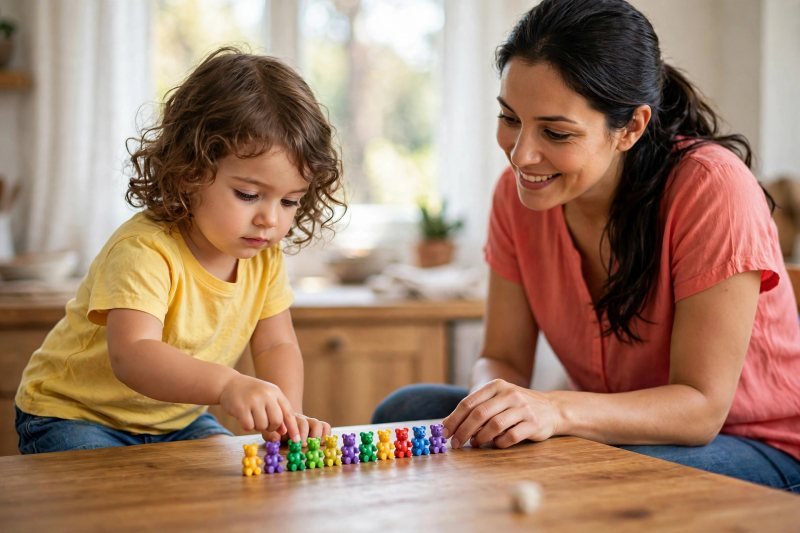
1. **Roll-and-Count Bears.** You need one die and a handful of small toys — plastic animals, counting bears, blocks, anything countable. Roll the die together and count the dots. Now your child lines up exactly that many toys, touching each one as they count: "one, two, three." The lineup turns the die's dots into real things and gives little fingers one-to-one practice. Starting out? Cover the 4, 5, and 6 faces with stickers so every roll stays small.
-
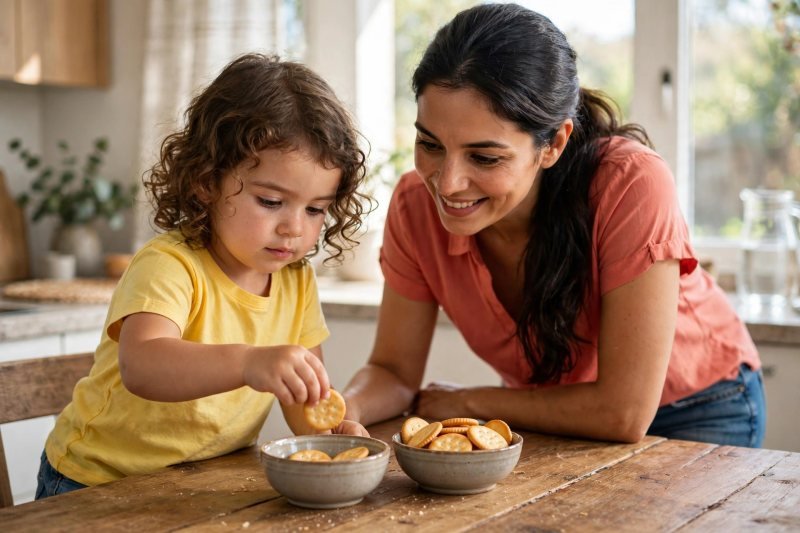
2. **Snack Cup Counting.** You need two small bowls and a snack — crackers, blueberries, cereal pieces. Count 5 pieces into the first bowl together, touching each one. "How many in this bowl?" Then fill the second bowl. Now: "which bowl has more?" Same in both? "Same!" Comparing the bowls sneaks in the idea that numbers tell you how much — and eating the evidence is the best part.
-
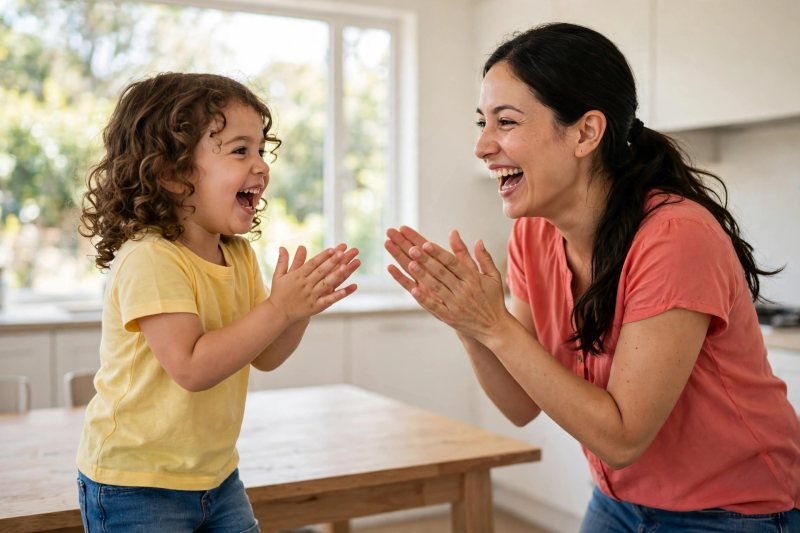
3. **Clap-and-Stomp Count.** No materials at all. You say a number — "four!" — and your child claps exactly four times, counting each clap out loud. Then stomp it. Then jump it. Counting actions teaches that numbers count events too, and big movements slow speedy counters down. Take turns: now they pick the number and you clap. Grown-ups counting wrong on purpose gets the biggest laughs — and the most careful recounting.
-
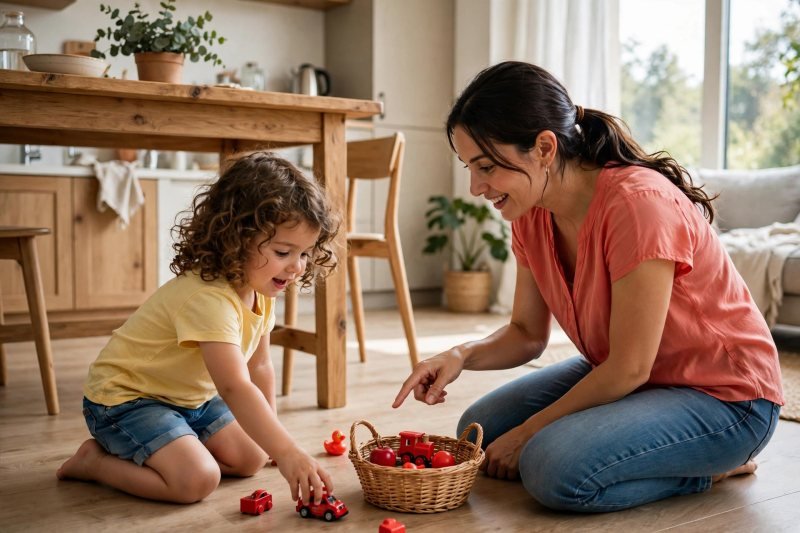
4. **Color Number Hunt.** You need a basket or bag. Call out a color and a number: "Find 3 red things!" Your child races around collecting, then you count the finds together to check: really 3? Too many? Take one back. Too few? Hunt again. The checking step is the math — it teaches that counting verifies, building the habit of counting to find out instead of guessing.
-
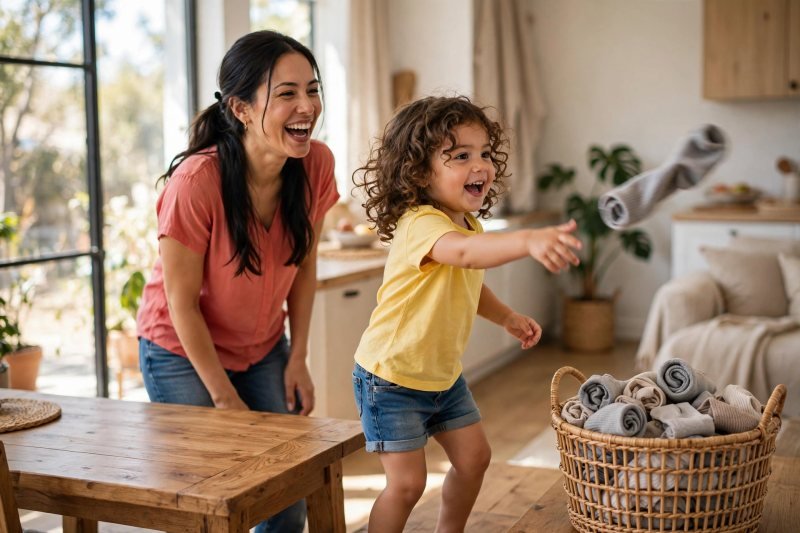
5. **Sock Toss Count.** You need rolled-up socks and a laundry basket. Stand a few steps back and take turns tossing. Every sock that lands in gets counted — out loud, together, in order: "one… two… three!" Misses don't count, which is merciless and hilarious. It's brilliant for counting in sequence without losing your place, because the pile in the basket keeps growing and there's no way to fake it.
-
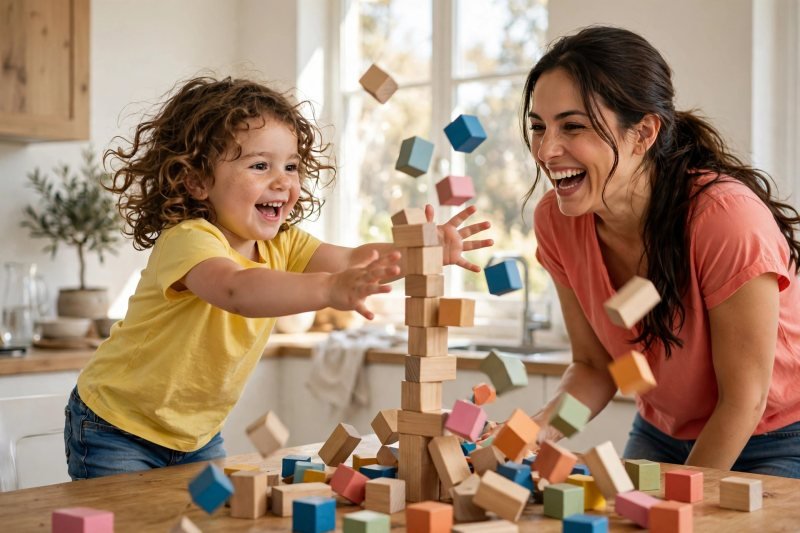
6. **Build-and-Topple Towers.** You need blocks. Build a tower of exactly 5, counting each block as it goes on: "one, two, three, four, five." Now — the best part — knock it down. Count the scattered blocks again: still five! Nothing added, nothing taken away. That's conservation of number, and preschoolers find it genuinely astonishing the first few times. Try 6 next, then 7.
-
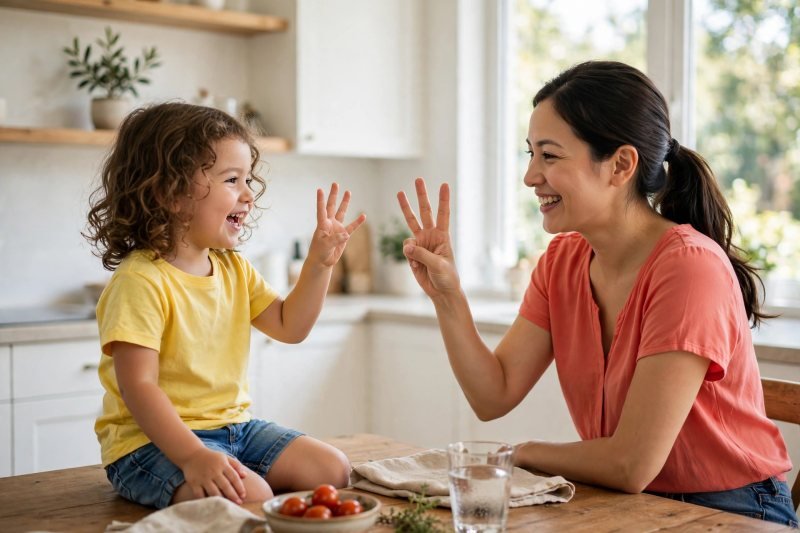
7. **Fingers Up!** No materials — their hands are the counters. Hold up your hand: "make yours look like mine — three fingers!" Count the fingers together. Then they boss you around: "show me four!" Fingers are a child's first subitizing tool — after enough rounds they'll just see three without counting. Play it in the car, in line at the store, anywhere. Bonus: "show me the same number on both hands!"
-
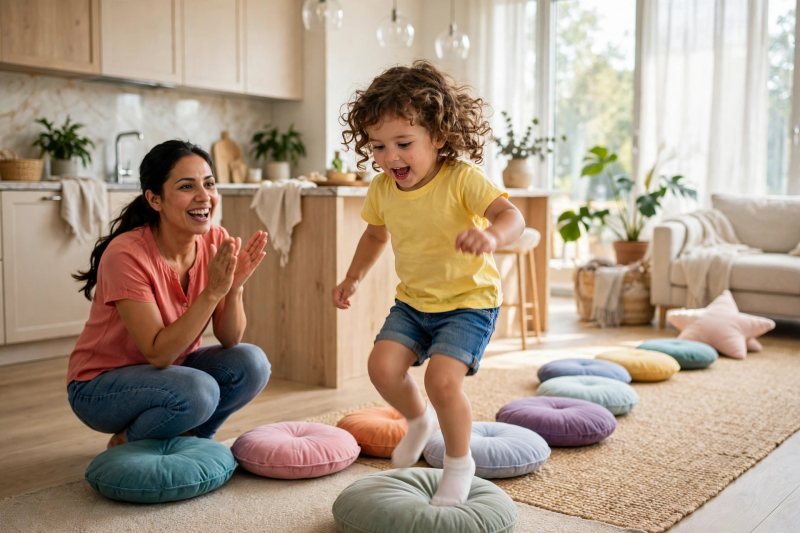
8. **Cushion Hop Counting.** You need floor cushions or paper plates. Lay them in a wiggly path. Your child hops cushion to cushion, saying one number per hop: "one! two! three!" Fall off? Start the count again. One number per hop is the whole game — each number word links to exactly one action, and wiggly kids who can't sit through table counting will hop this path twice. End at a "prize" cushion for a big finish.
-
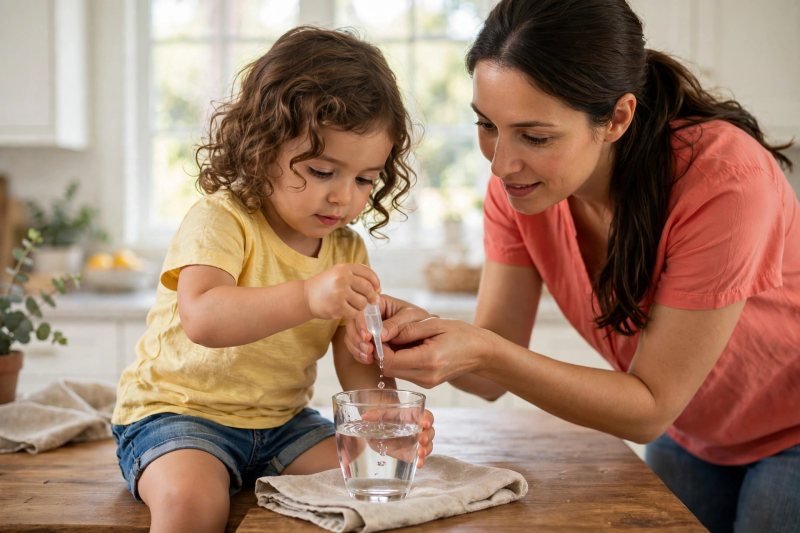
9. **Drip-Drop Counting.** You need a cup of water, an eyedropper or turkey baster, and a towel underneath. Squeeze one drop at a time into the cup, counting each drop: "one… two… three…" Water play forces slowness — you can't rush a dropper — so speedy counters finally match one number to one drop. Mark the water level with a rubber band, add 10 more drops, and watch it rise: early measurement sneaking in too.
-
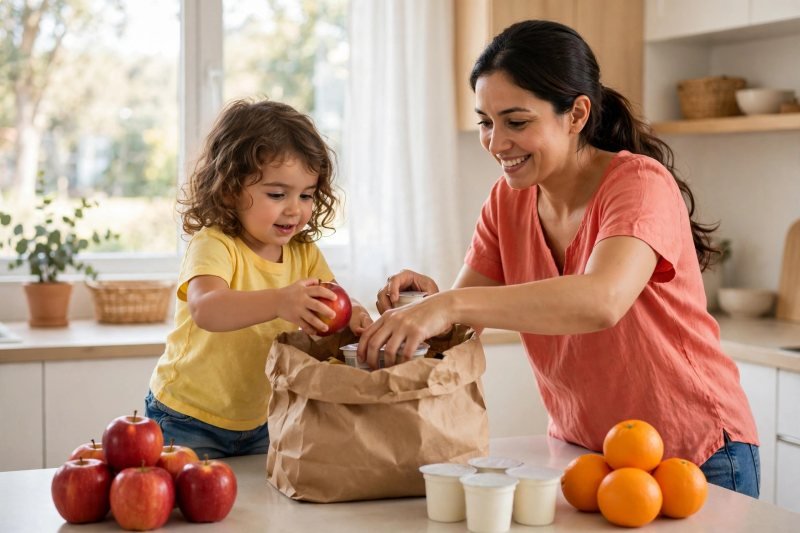
10. **Grocery Bag Count.** No setup — this happens at the kitchen counter after shopping. As each item comes out of the bag, your child counts it: "one apple, two apples…" Group the same items as you go: "how many yogurts? How many apples?" Then the finale: "which group has the most?" Real-world counting sticks because the numbers attach to something that actually happened — and your groceries get unpacked by a very proud helper.


Make it easier
Keep every count at 5 or below: cover the 4, 5, 6 faces of the die with stickers, hunt for 2 or 3 things. Count together, every time — your voice keeps the rhythm when theirs rushes. Line objects up in a row before counting; scattered piles are much harder. Let them touch each object as they count. Fingers on things is the whole technique.
Make it harder
Stretch counts from 5 toward 10 once 5 feels easy and a little bit boring. Ask "how many more do we need to make 5?" — that's the first step toward addition. Hunt for two colors at once: "3 red things AND 2 blue things — how many altogether?" Roll two dice and count out the total in toys. Play Fingers Up! with both hands: "show me 7!"
Other ways to play it
- Outdoor version: hunt for sticks, leaves, and pebbles in the garden; hop between chalk circles on the sidewalk.
- Bath version: drip-drop counting works beautifully with a bath-time cup and a sponge.
- Sibling version: older kids count to 20 or keep score; younger ones just echo the last number.
- Quiet version: Roll-and-Count Bears and Fingers Up! make perfect calm-down or waiting-room games.
How it changes by age
- Ages 3–4. Younger threes should keep counts at 5 or below with big, easy-to-grab objects; older fours can stretch toward 10 and start comparing groups ("which has more?"). Follow your child's ease, not their birthday — if 5 feels effortless, try 6; if they keep losing count, drop back to 3 with no fuss.
What they're learning
One-to-one correspondence: one touch, one number — the foundation of all counting (games 1–4). Cardinality: the last number said is how many there are. Conservation of number: a group stays the same number even when it's scattered (Build-and-Topple). Subitizing: recognizing small quantities without counting, starting with fingers. Comparing: more, fewer, and same — the beginnings of measurement thinking.
Clearing up
Two minutes: toys back in their bowl, socks back in the drawer (the basket's already there), cushions back on the couch. Let your child do the sorting — counting the toys back into the bowl is one last sneaky round of counting.
Questions parents ask
What is number sense in preschoolers?
My preschooler skips numbers when counting. Is that normal?
How high should my 3-year-old be able to count?
Should I teach my preschooler to write numbers yet?
My child can recite to 20 but can't count out 5 crackers. What's going on?
How long should a counting game last?
Zero pressure, zero guilt. If your child would rather line the bears up in a parade than count them, that's fine — the counting games will still be there tomorrow. And if they ask to play Sock Toss three days in a row, the number sense is working exactly as it should. Play first, math follows.

save it for later
Pin this for the next rainy afternoon
Keep it on a board so it is there when you need it, rather than when you happened to find it.
Save to Pinterest