


Repeating Patterns in Reception: A UK Parent's Guide
A UK parent's guide to repeating patterns in Reception: classroom pattern work plus ten pattern ideas for your 4- or 5-year-old.
In Reception, repeating patterns means noticing, copying, continuing and creating simple sequences like red-blue-red-blue or clap-stomp-clap-stomp. Practise ten minutes a few times a week: breakfast rows, sock washing lines, potato-print bunting and toy parades. Model the pattern yourself first, then let your child copy, continue and invent.

The short version
- In Reception, pattern work is hands-on: children copy, continue, spot mistakes in, and invent sequences like AB, ABC and AAB.
- Model first — build the pattern yourself while saying each part aloud.
- Follow the sequence: copy, continue, find a deliberate mistake, then invent a new pattern.
- Keep rows short (four to six pieces), pieces chunky, sessions ten to fifteen minutes.
- Signs of progress: they continue your pattern, catch a wrong piece, describe the rule, and invent their own.
- Patterns are early maths in action — sequencing, predicting and describing rules feed into counting in steps and times tables.
- Age
- Ages 4–5
- Prep
- 5 min
- Play time
- 15 min
- Mess
- Low
- Difficulty
- Easy
- Where
- Both
Why kids love this
In Reception, patterns are woven through the school day, not taught as formal lessons. At carpet time, children copy the teacher's clap-stomp rhythm; at choosing time, the maths area has pattern cards to copy. Teachers simply watch — can your child notice a repeat, copy it, and keep it going?
Patterns feel like a secret code children can crack — and four- and five-year-olds love cracking codes. Guessing "what comes next" is a real thrill, and many ideas end with something to show off.
What you'll need
- No idea needs all of these: coloured cubes, pegs or counters in two colours; raisins, banana slices, blueberries; string and pegs; odd socks; two potatoes, a blunt knife (adults only), paint; toy vehicles in two types; conkers and leaves.
Before you start
1. Pick one idea below — just one. 2. Set out the materials. Start with AB.
How to do it
-
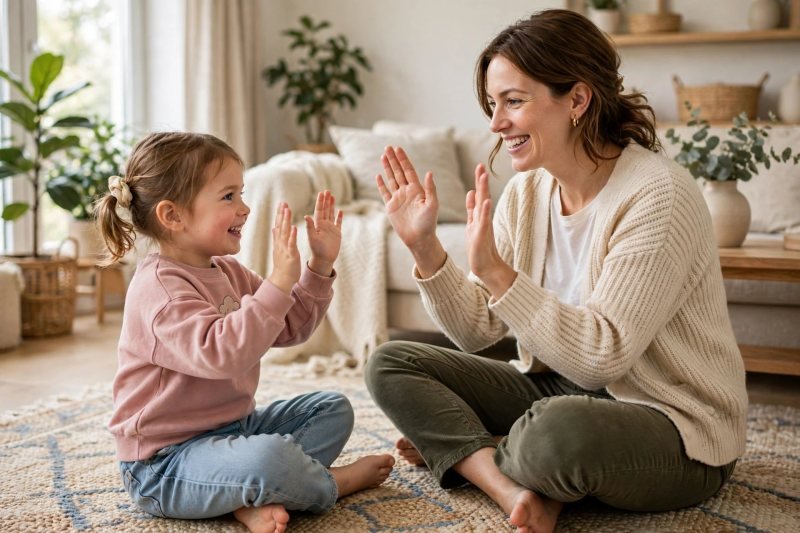
Play the hello-goodbye register wave. Sit in a row and take the register: wave-clap, wave-clap, saying each aloud. Your child copies, then leads.
-
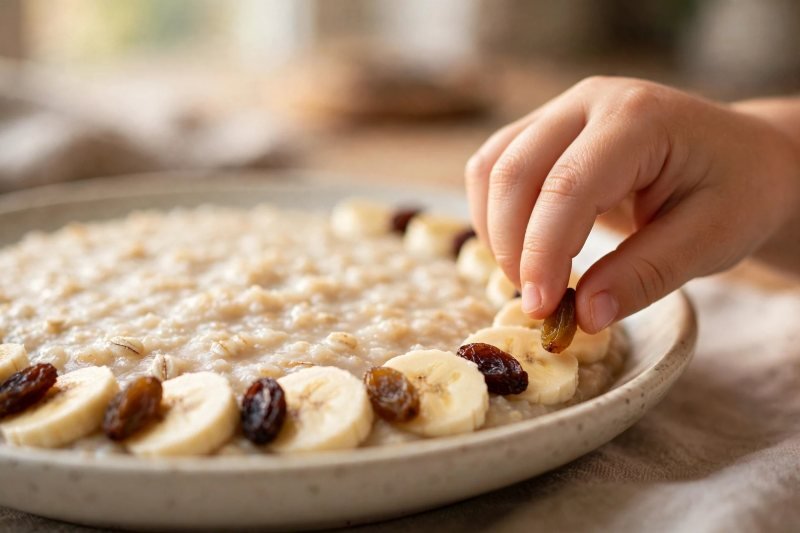
Line up a porridge topping row. At breakfast, line toppings along the plate's edge: raisin, banana slice, raisin, banana slice. Your child continues, then fills the gap.
-
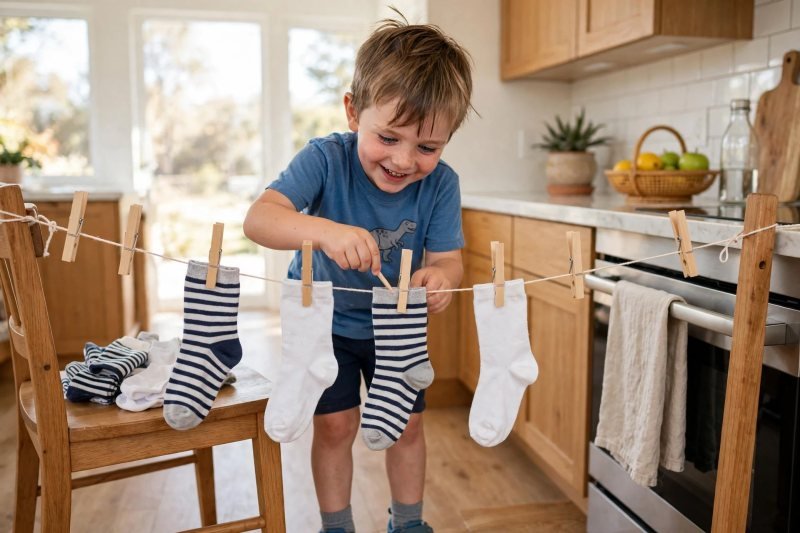
Peg a mini washing line. Tie string between two chairs. Peg up an AB sock pattern — stripy, plain, stripy. Your child continues.
-
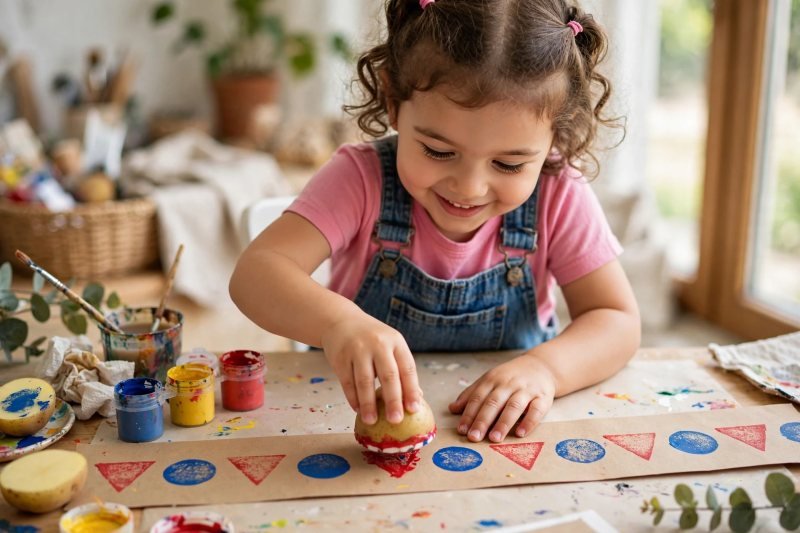
Print potato-print bunting. Halve two potatoes (adult job); press a circle into one face, a triangle into the other. Your child prints an AB flag row in two colours.
-
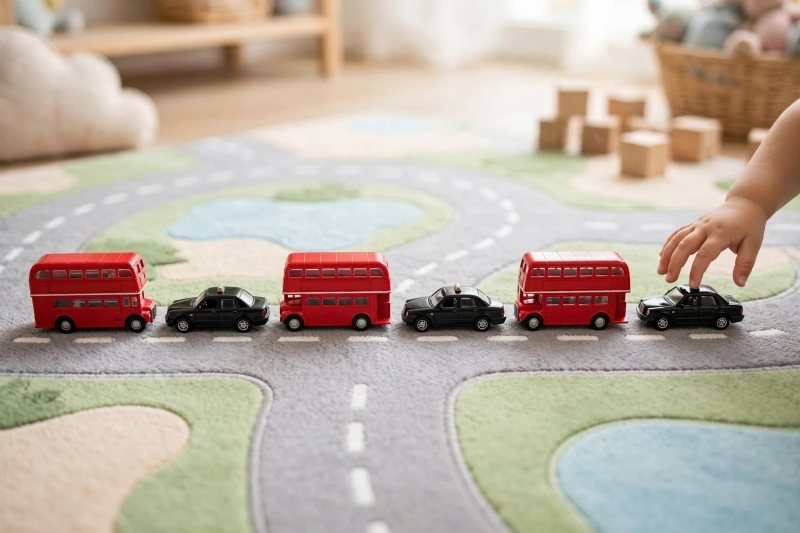
March a red bus, black cab parade. Line up toy vehicles in two types: red bus, black cab, red bus, black cab. Your child continues the parade down a rug-edge "road."
-
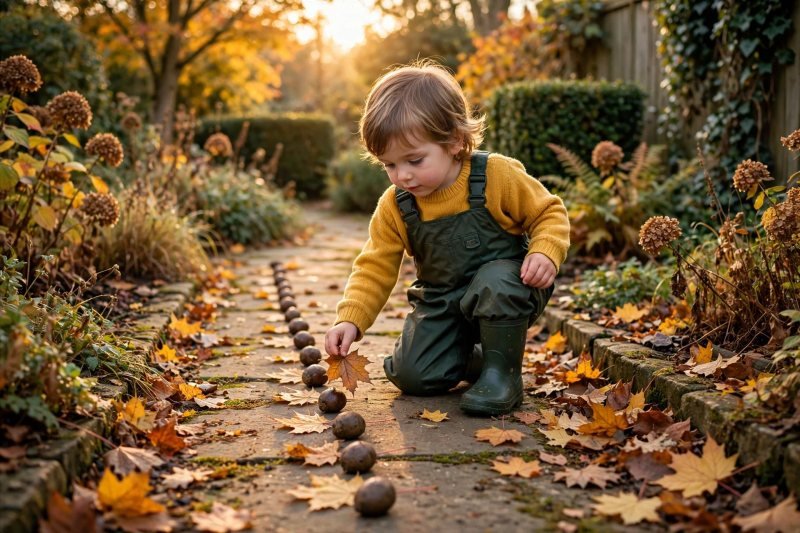
Lay a conker-and-leaf garden path. Collect conkers and fallen leaves. Lay an AB line along the garden path: conker, leaf, conker, leaf. Your child extends it.
-
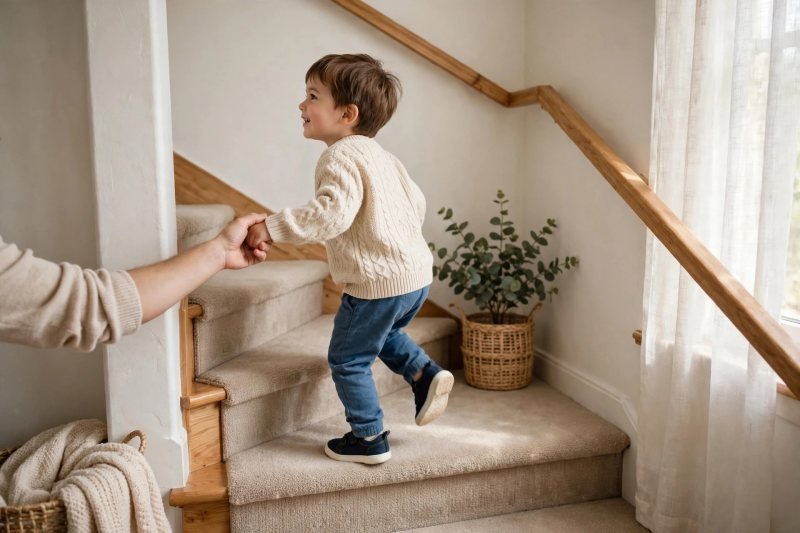
Hop the staircase in twos. Climb step-step-hop, chanting "one, two, HOP" — you first, your child following. At the top, count the stairs in twos. Stay beside them.
-
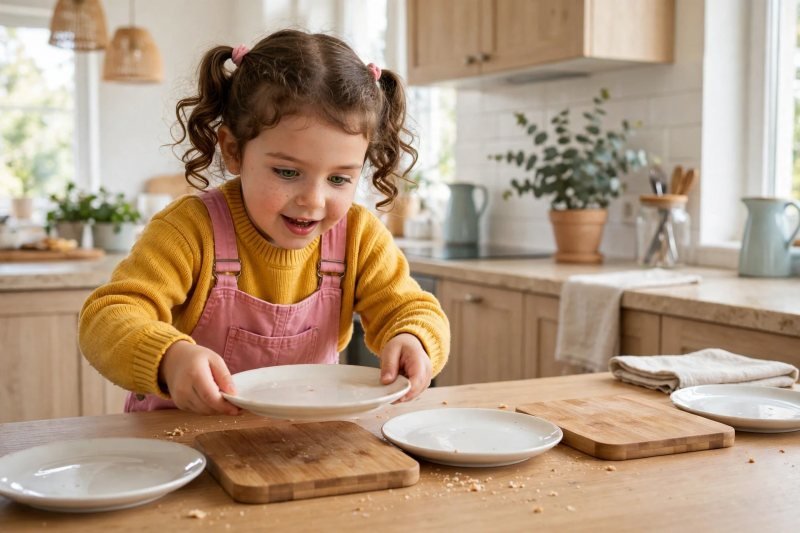
Spot kitchen shapes. Hunt the kitchen for circles and squares — a plate, a board, a tin lid, a tea towel. Line them in an AB row; your child continues.
-
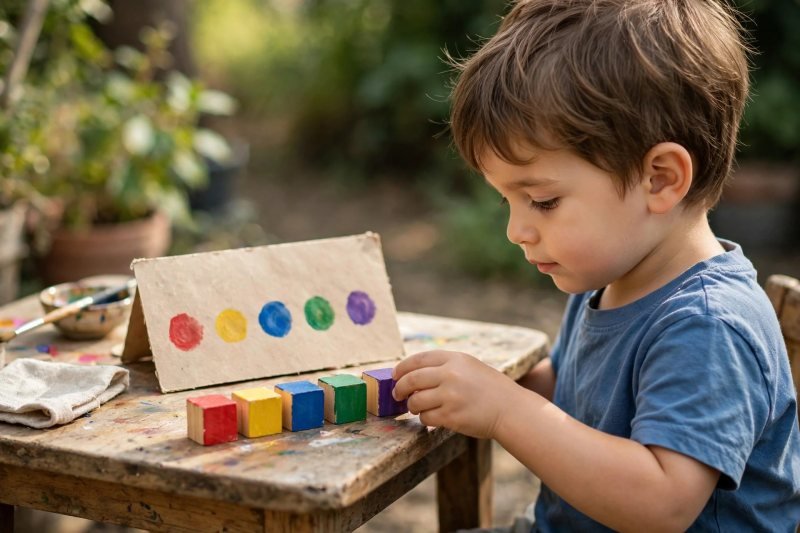
Copy patterns at a pattern card station. Stick an AB dot row on card; set out matching cubes. Your child copies it beneath. Then flip it: they make a card, you copy — with one mistake.
-
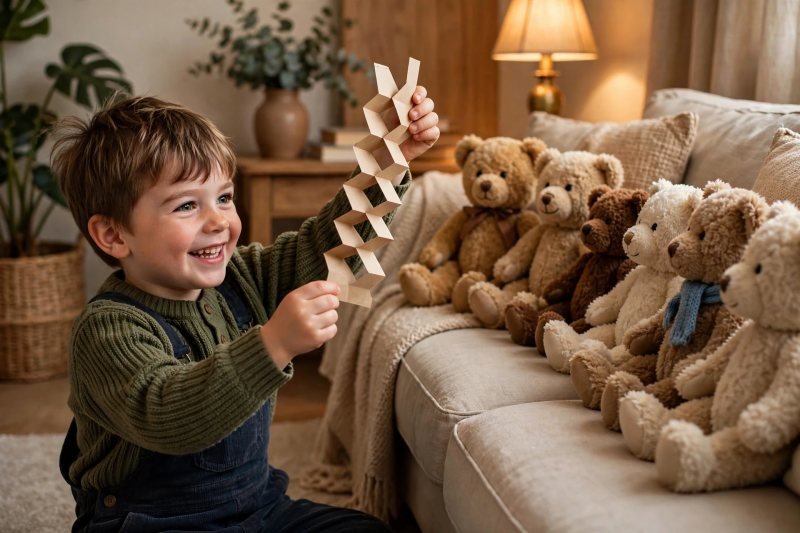
Hold a show-and-tell pattern parade. Your child presents their favourite pattern of the week to family plus teddy guests: "My pattern goes red, blue, red, blue!" Applaud and let them bow.


Make it easier
Stay at AB as long as it takes: wave-clap, two toppings, two sock designs. Shorten rows to three or four pieces; let your child only COPY — copying is a complete stage. Use big chunky items: large cubes, banana slices, whole socks. Sorting first: shape sorting activities build the same matching eye.
Make it harder
Move to ABC: three toppings, three sock designs, three vehicle types. Try AAB and ABB ("circle, circle, triangle") — the doubled unit is the first challenge. Play "find my mistake": one wrong piece to diagnose and fix. Count the repeats: "how many red-blue pairs fit?" — see our counting games for preschoolers.
Other ways to play it
- Bath version: float a parade — duck, boat, duck, boat.
- Car version: spot patterns out of the window — red car, blue car.
- Rainy-day version: the washing line, pattern cards and show and tell suit grey afternoons.
- Grandparent version: present the week's best pattern down a video call, reading it aloud.
- Younger siblings: shape activities for toddlers start simpler.
How it changes by age
- Ages 4–5. Younger fours — especially summer-born children — should live at AB for a good while. Older fours who find AB easy are ready for ABC, AAB and "find my mistake." Follow their ease, not the birthday. For younger children, our AB patterns for preschoolers starts simpler. For the counting underneath, counting to 10 activities.
What they're learning
Repeating patterns are early maths wearing a disguise. Copying and continuing sequences builds the sequencing and predicting muscles behind counting in twos, fives and tens, odd and even numbers, and times tables. They absorb rich maths vocabulary too: repeat, pattern, next, rule, continue. Number names: number recognition activities for preschoolers pair with pattern reading.
Clearing up
Let the bunting dry flat, then hang it. Wipe paint off while wet; wash the potato halves and reuse them. Unpeg the washing line; pop the socks in the laundry basket. Sweep up conkers and leaves.
Questions parents ask
What are repeating patterns in Reception?
What should my Reception child be able to do with patterns?
How can I practise repeating patterns at home?
What comes after AB patterns?
Do repeating patterns really help with maths?
You need buy nothing — no worksheets, apps or flashcards. Pattern work lives in everyday moments: the stripy socks, the breakfast plate, the walk to school. Ten minutes, a few times a week, beats formal sessions. Ask the teacher at parents' evening what patterns the class is doing, then echo it at home.

save it for later
Pin this for the next rainy afternoon
Keep it on a board so it is there when you need it, rather than when you happened to find it.
Save to Pinterest

